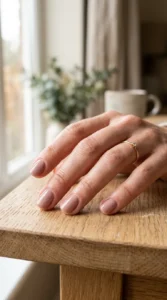
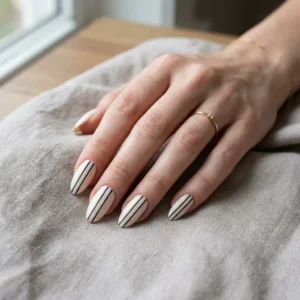
Bare nails are the ultimate expression of “quiet luxury 2.0” — a manicure that looks like your natural nail, only better, cleaner, and more expensive. Instead of loud colors or maximalist nail art, the bare nails trend leans into sheer, skin-tone-matching polish, glass-like shine, and flawless shaping that reads as effortless while actually requiring precise technique underneath.
This guide covers what the bare nails trend actually looks like, why it’s having a moment in 2026, the techniques that separate a great bare set from a boring one, and how to get the look at the salon or at home.
What Are Bare Nails?
This look describes a manicure built around sheer, natural-toned polish — think barely-there pinks, milky nudes, and soft skin-matching shades — finished with a glass-like glossy top coat. The goal isn’t “no polish,” it’s a manicure that looks like an elevated, flawless version of your bare nail: even tone, glassy shine, and a clean, well-shaped free edge. It’s the nail equivalent of “your skin but better” makeup — understated on the surface, but built on careful prep and precise technique.
The trend is often labeled “quiet-luxury 2.0” because it takes the original quiet luxury manicure — simple, glossy, neutral — and refines it further, with more attention to nail shape, cuticle work, and the specific undertone of the sheer polish used.
Why Bare Nails Are Trending in 2026
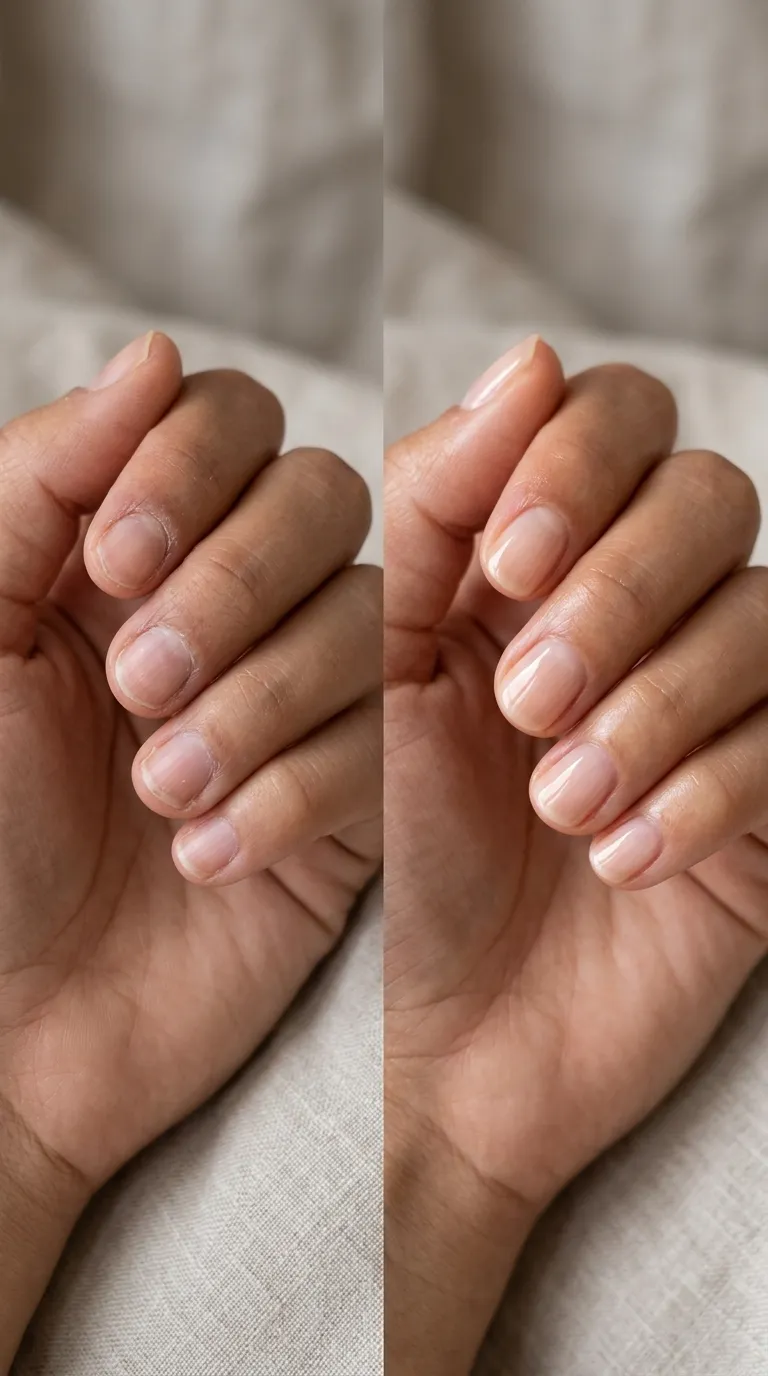
- Quiet luxury keeps evolving. As the broader minimalist, wealth-signaling aesthetic matures, this technique represent the natural next step after simple solid colors — even more understated, even more detail-focused.
- It photographs as effortlessly expensive. A flawless bare manicure reads as high-maintenance in the best way, without showing any visible “effort” the way bold nail art does.
- It goes with everything. Since this manicure are designed to look like an elevated version of your natural nail, they never clash with an outfit, which makes the look genuinely low-effort to style around despite the technical skill it requires to execute well.
- It’s a reaction to maximalist nail art fatigue. After several seasons of heavy 3D nail art and elaborate chrome designs, the style offer a deliberate contrast for anyone ready for something calmer.
Beauty coverage from outlets like Marie Claire and CosmoGlo both point to understated, skin-toned manicures as a defining quiet-luxury look for 2026, distinct from the bolder nail art trends of past seasons.
The Techniques That Make Bare Nails Look Expensive
Precise Shaping
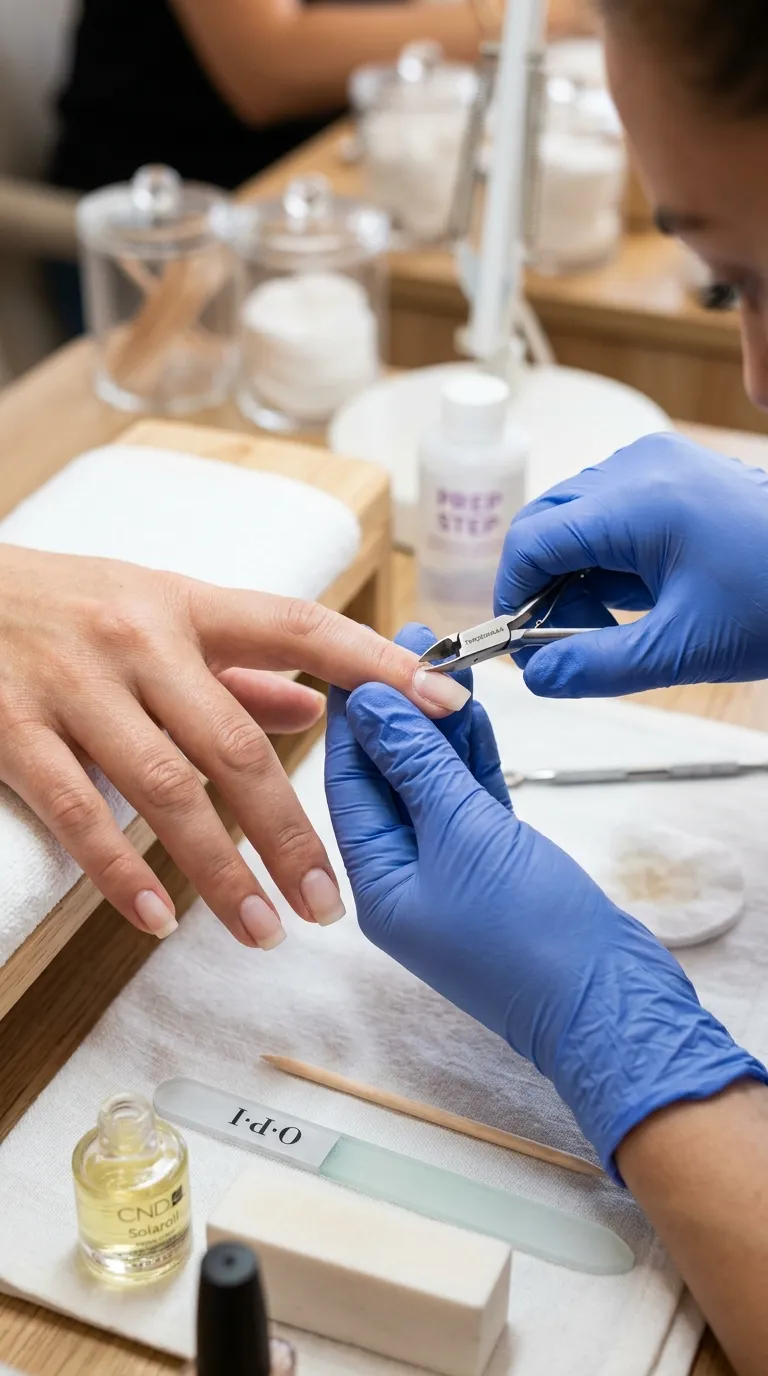
Because there’s no color or art to distract the eye, nail shape does more visual work in a bare set than in almost any other style. Clean, symmetrical sides and a well-proportioned free edge matter more here than in a bold color set, where minor shape inconsistencies are easier to hide.
Cuticle and Nail Bed Prep
A bare manicure lives or dies on nail bed condition. Immaculate cuticle work, buffing, and a healthy-looking nail bed are non-negotiable, since there’s no polish color to mask unevenness or dryness.
Glass-Like Top Coat
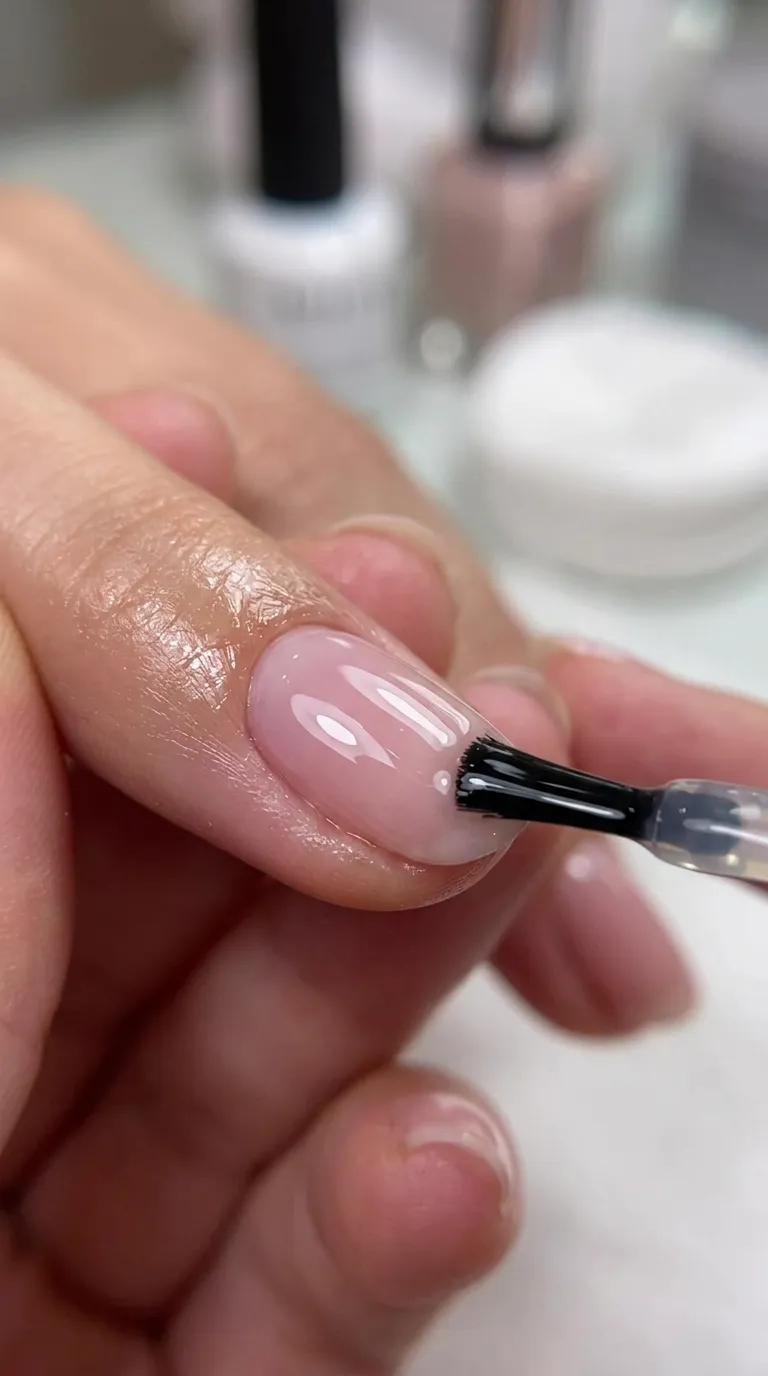
The shine level separates an intentional bare manicure from a plain unpolished nail. A high-build, glass-like gel top coat gives the nail a glossy, almost wet-look finish that reads as deliberate and polished rather than simply undone.
The Right Undertone
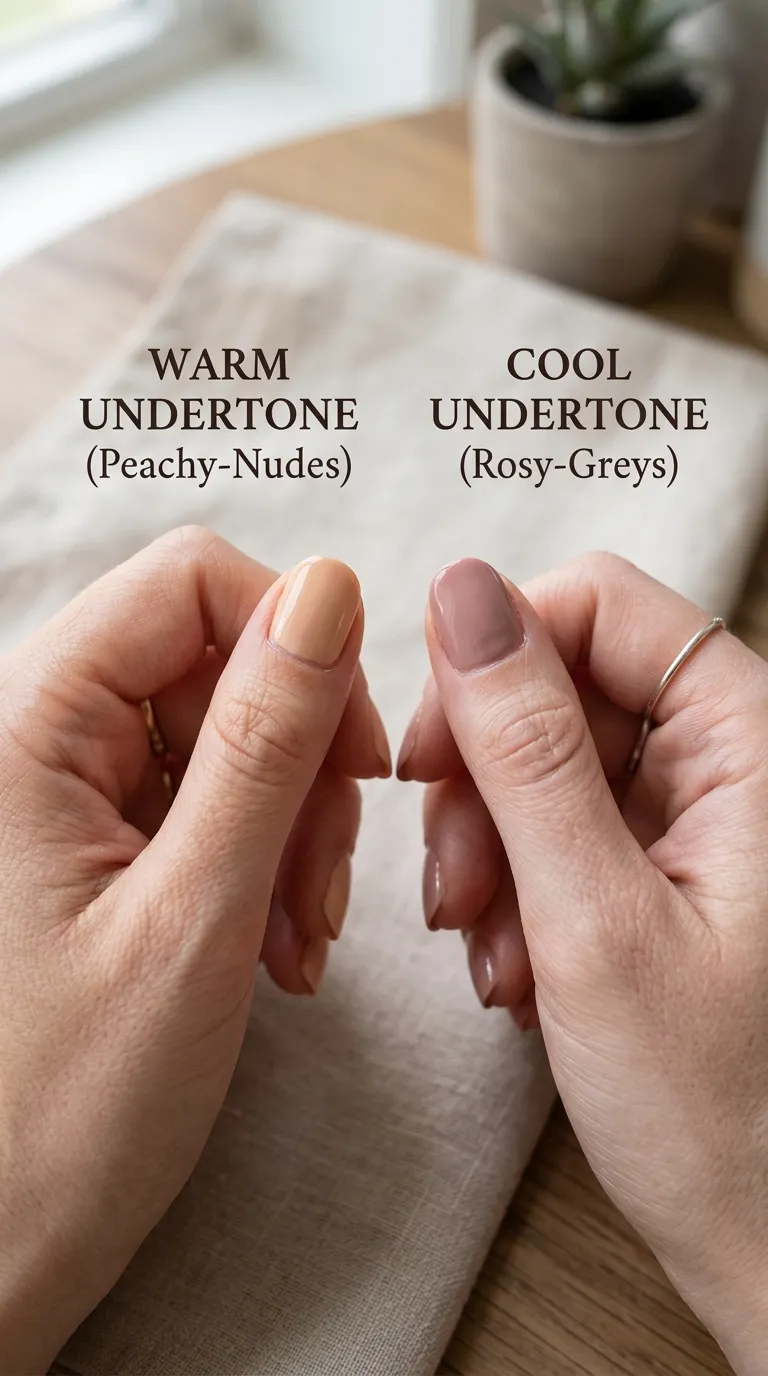
A truly flattering bare manicure matches your specific skin undertone rather than using a single “one nude fits all” shade. Warmer undertones typically suit peachy or warm beige sheers, while cooler undertones look best in soft pink or rosy sheers.
Bare Nail Design Ideas
1. Classic Milky Sheer
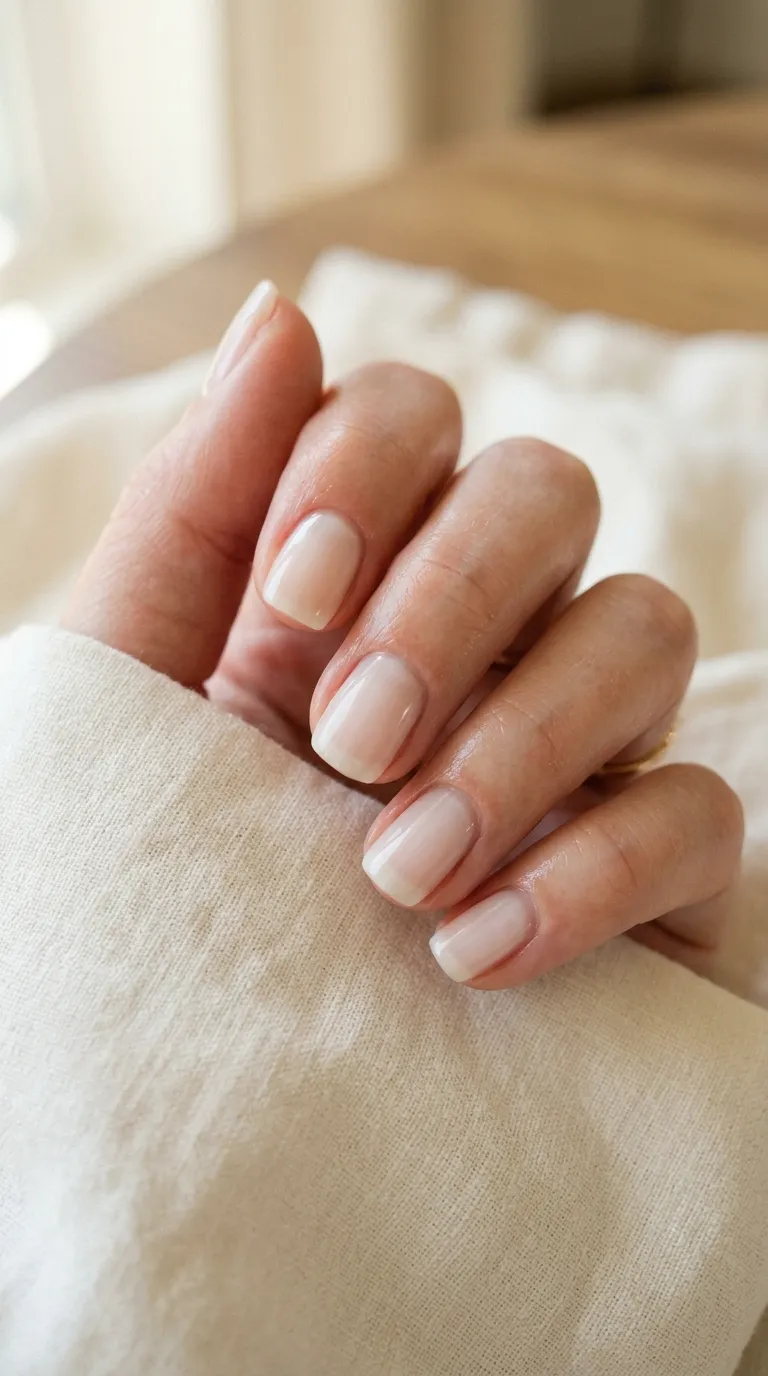
A soft, slightly opaque milky white-pink polish that reads as clean and soap-like — the most universally wearable version of the trend.
2. Barely-There Pink
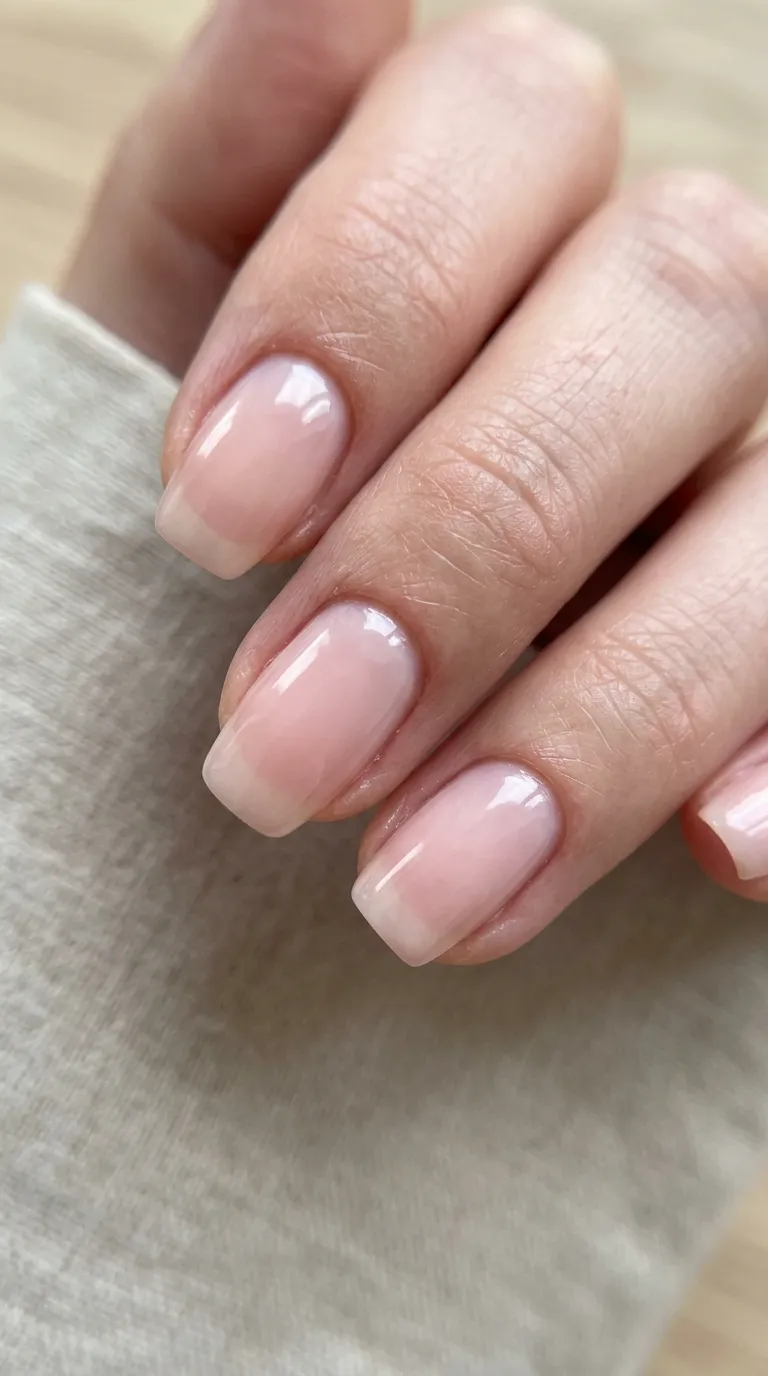
A sheer, natural pink that’s just a shade or two deeper than your actual nail bed — the closest thing to “your nails but better.”
3. Glass Skin Nails
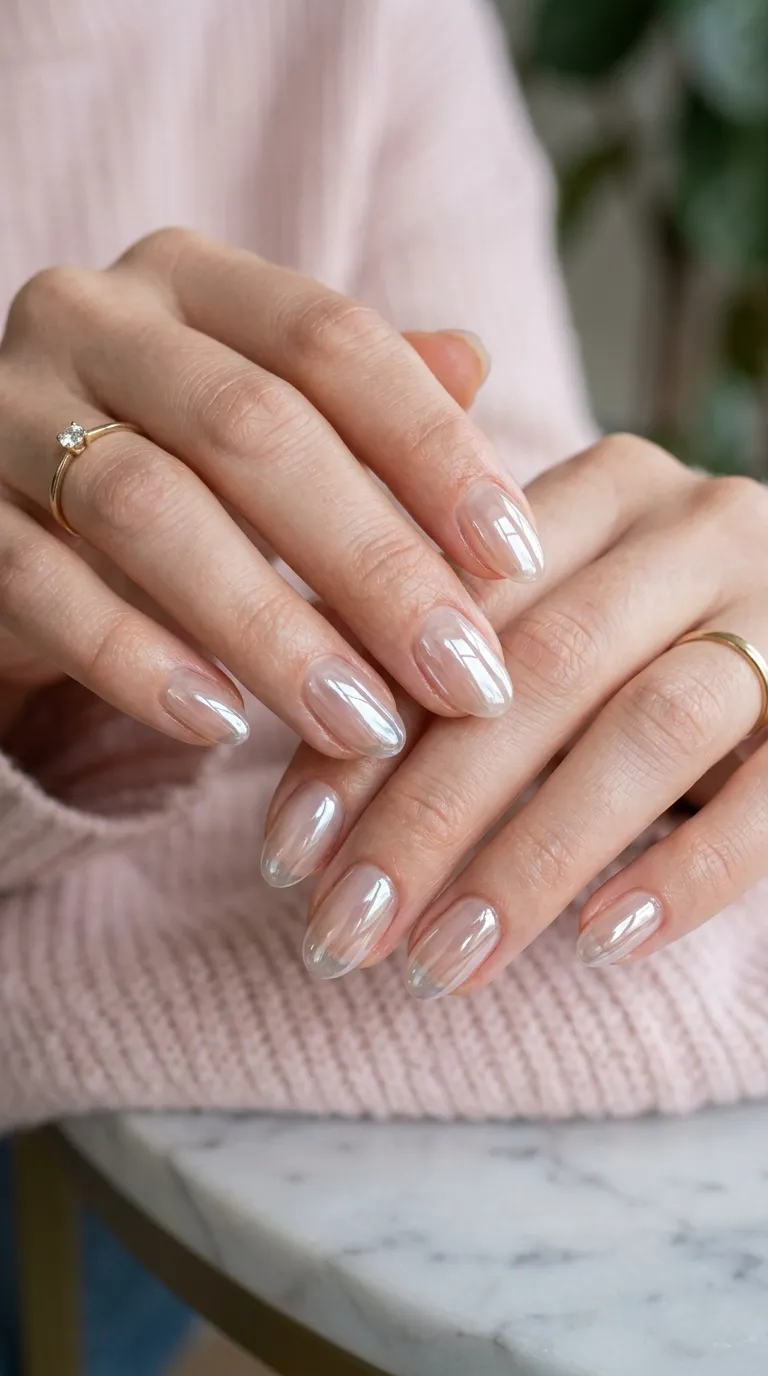
An ultra-glossy, high-shine sheer nude designed to mimic the “glass skin” makeup trend — dewy, reflective, and almost translucent.
4. Bare with a Micro French Tip
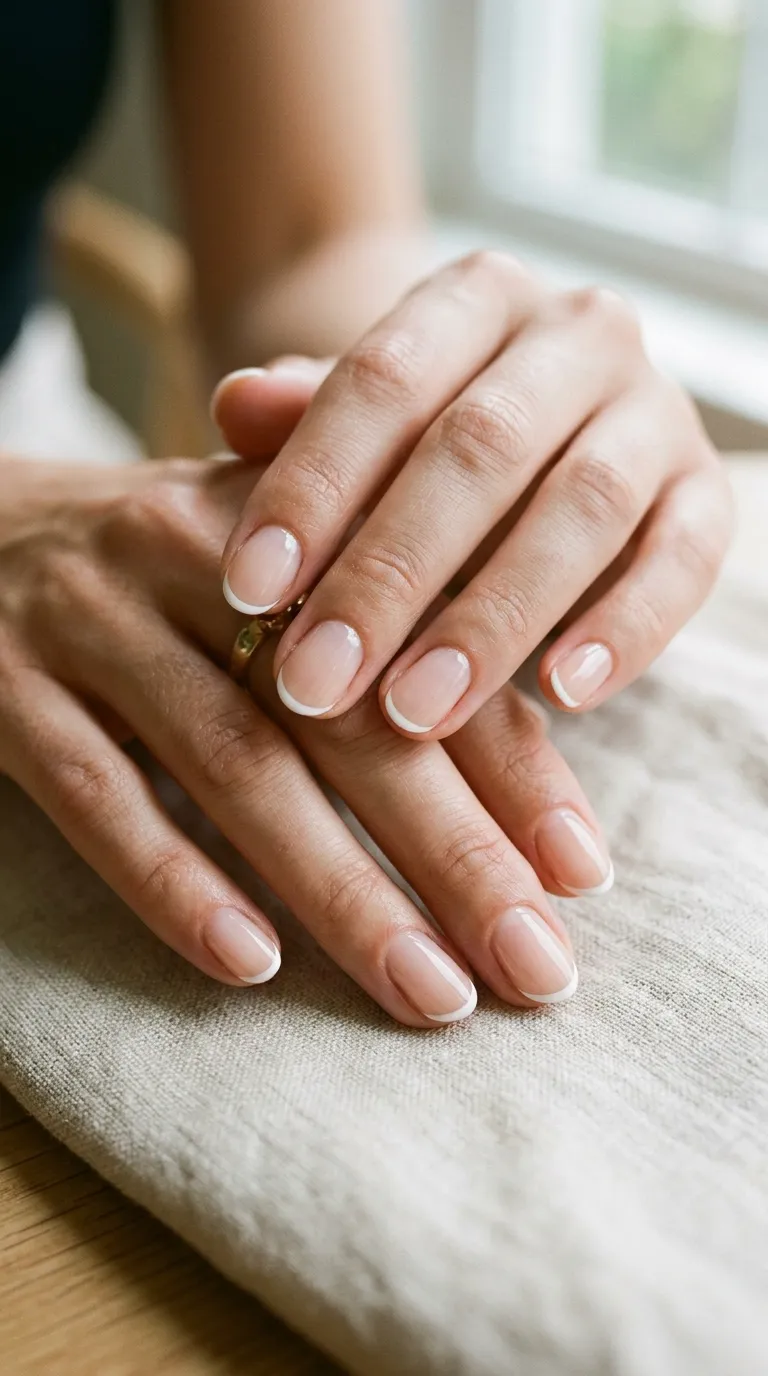
An ultra-thin, barely-there white line at the tip over a sheer nude base — a quieter, more refined take on the classic French manicure.
5. Soft Buffed Shine (No Polish)
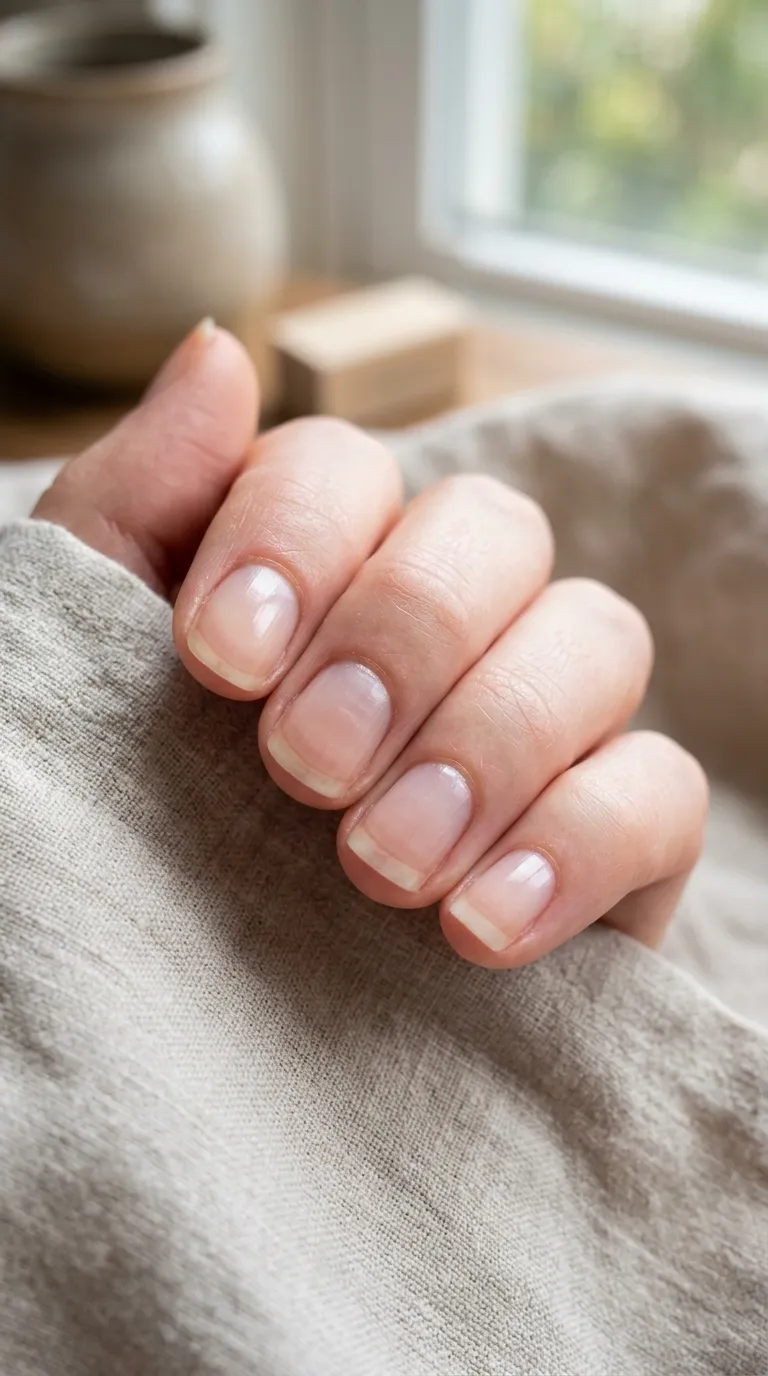
For the most minimal version of the trend, a buffed, polish-free nail with cuticle oil and a high-shine buffer achieves the bare-but-elevated look without any product at all.
6. Sheer Nude with a Single Line Detail
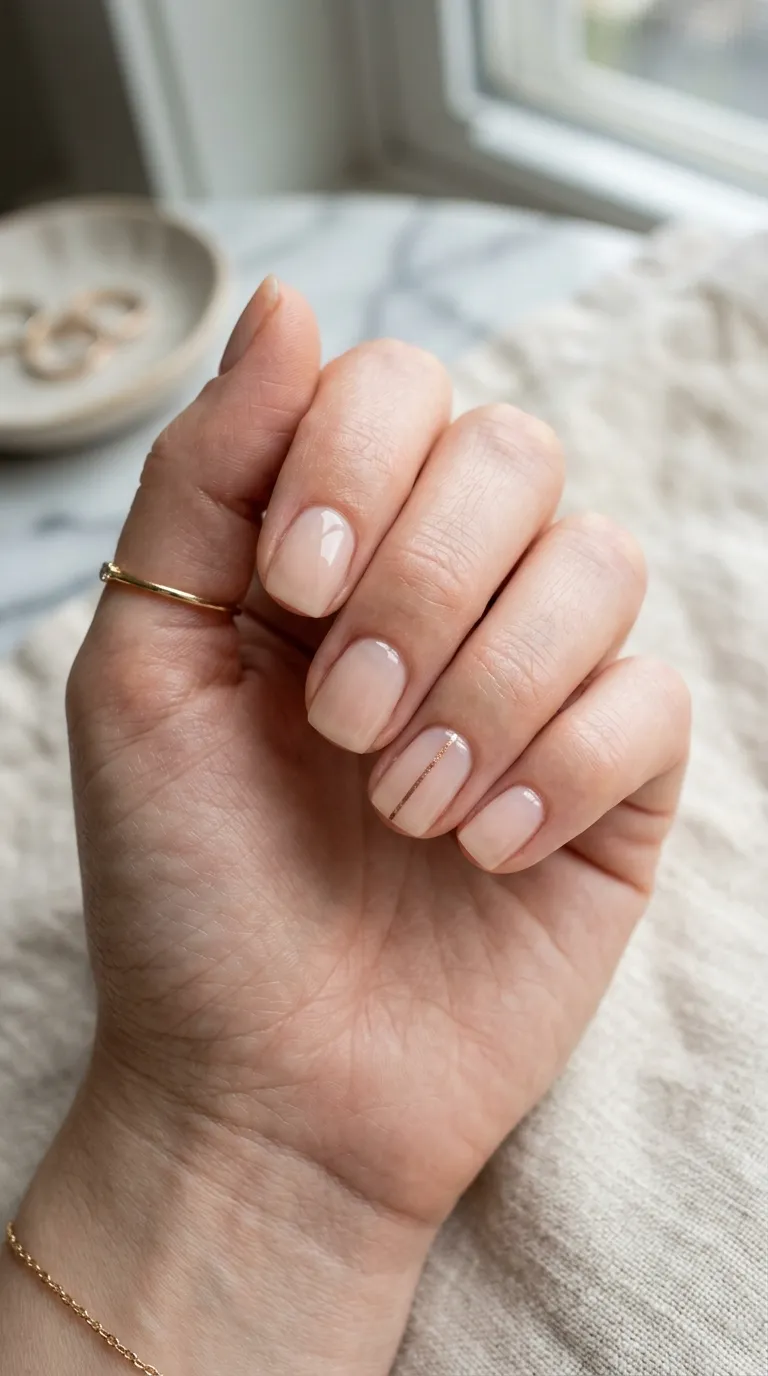
One thin gold or white line traced along the cuticle or center of an otherwise bare nail adds a small design moment without breaking the overall quiet aesthetic.
Which Nail Shapes Work Best
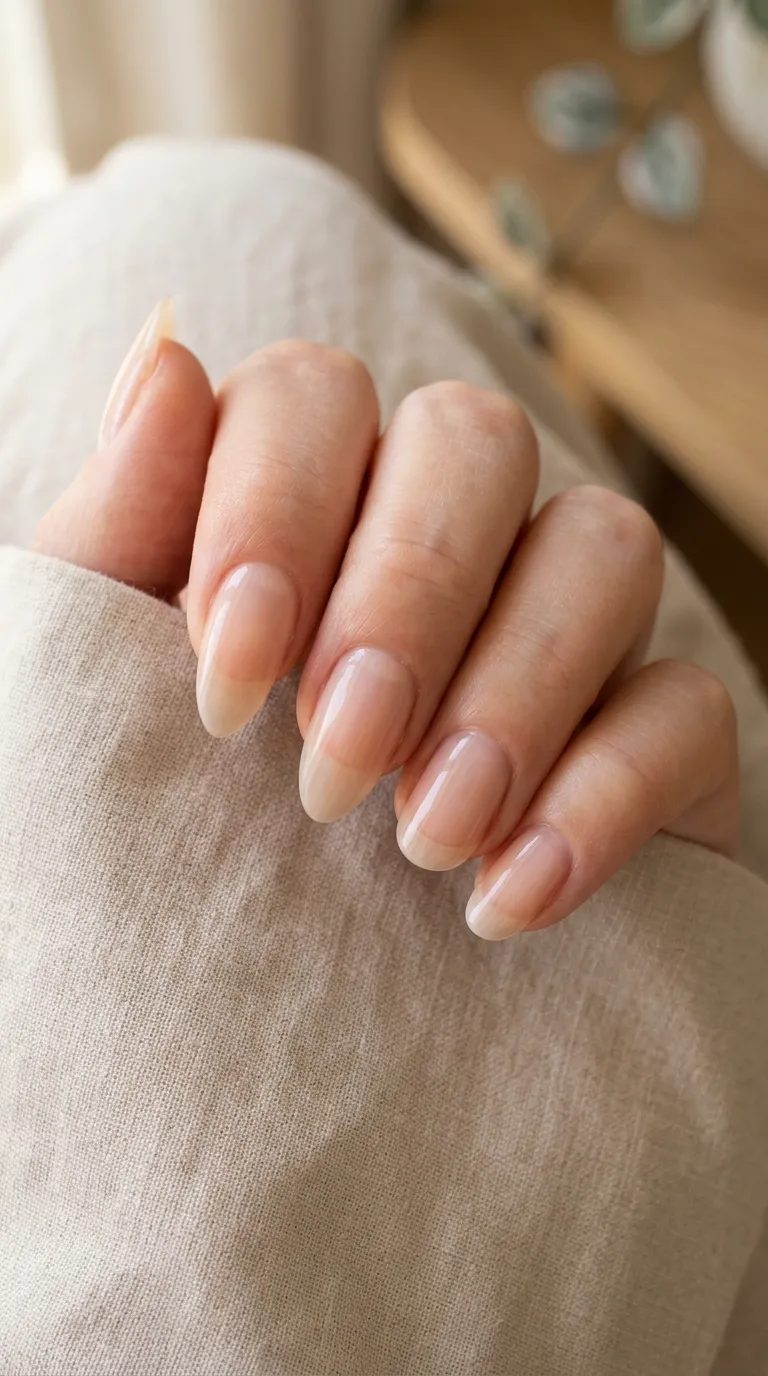
This style works on every shape, but the trend is most associated with short-to-medium, naturally proportioned shapes — squoval, soft square, and short oval — since these read as the most “your nails, just better” rather than an obvious extension or dramatic shape change. Almond and oval shapes also work well for anyone wanting a slightly more elongated look while keeping the overall effect understated. Very long or dramatic shapes like stiletto tend to work against the trend’s whole point, since they read as a statement regardless of color.
How to Ask for Bare Nails at the Salon
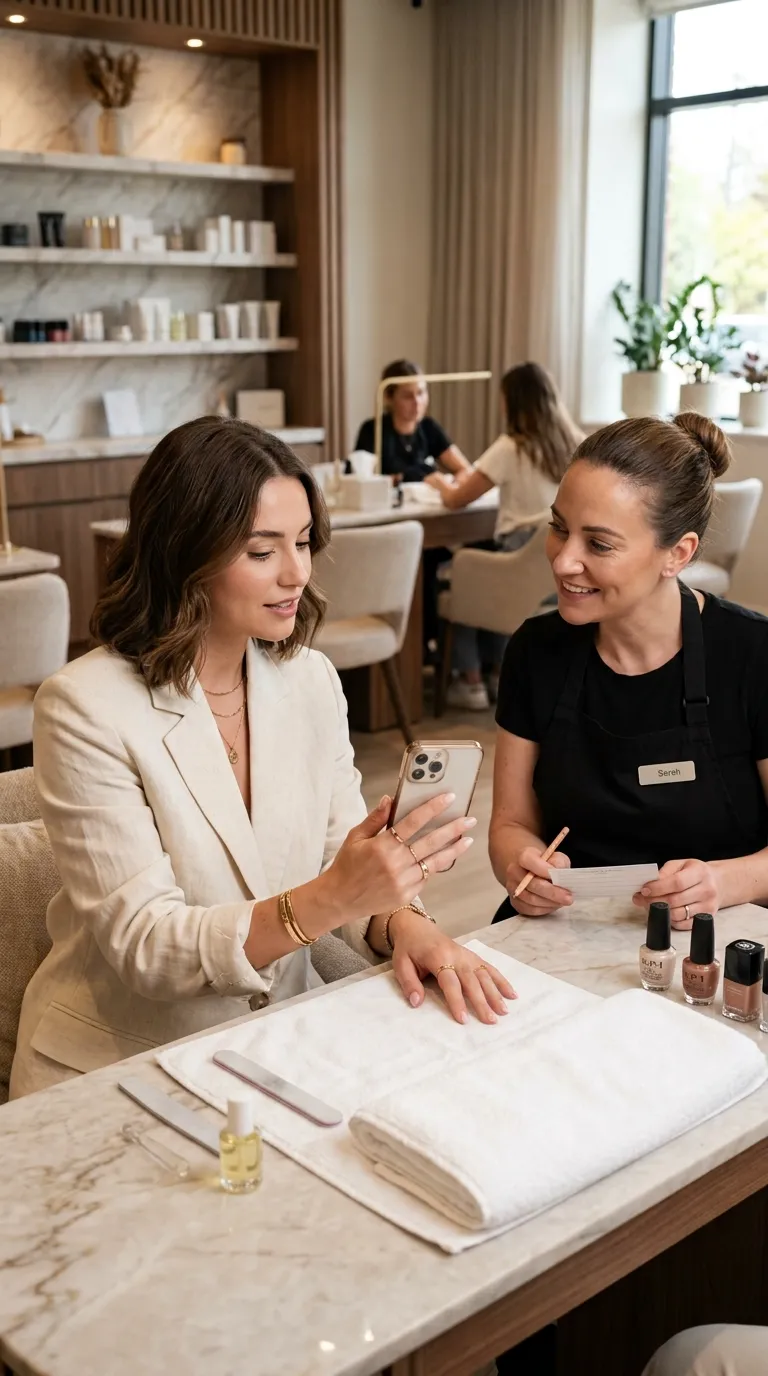
Bring up your undertone specifically — ask your nail artist to help match a sheer polish to your actual skin tone rather than picking a generic “nude.” Emphasize that shaping and cuticle work matter as much as the polish itself, and ask for a high-gloss, glass-like top coat rather than a standard finish, since that’s what gives the trend its signature elevated look.
DIY Tips for Bare Nails at Home
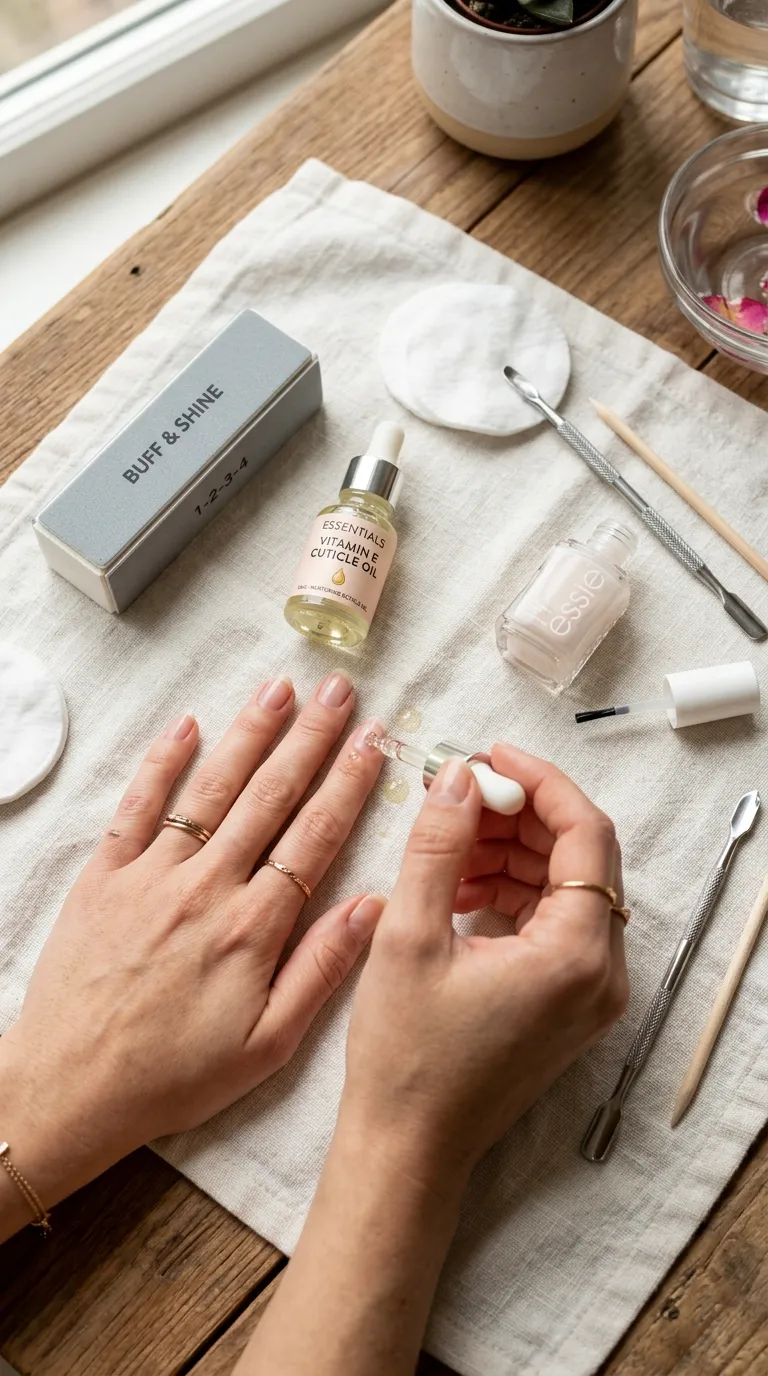
Start with excellent nail prep — buff the nail bed lightly, push back and moisturize cuticles, and file your shape carefully before applying any color, since imperfections show more in a bare set than in a bold one. Apply your sheer polish in thin layers to avoid streaking, and finish with a high-shine, gel-look top coat for the glassy effect. If you’re skipping polish entirely, a good hand and cuticle buffer paired with daily cuticle oil is the fastest way to get a healthy, glossy bare nail without any product.
Best Occasions for Bare Nails
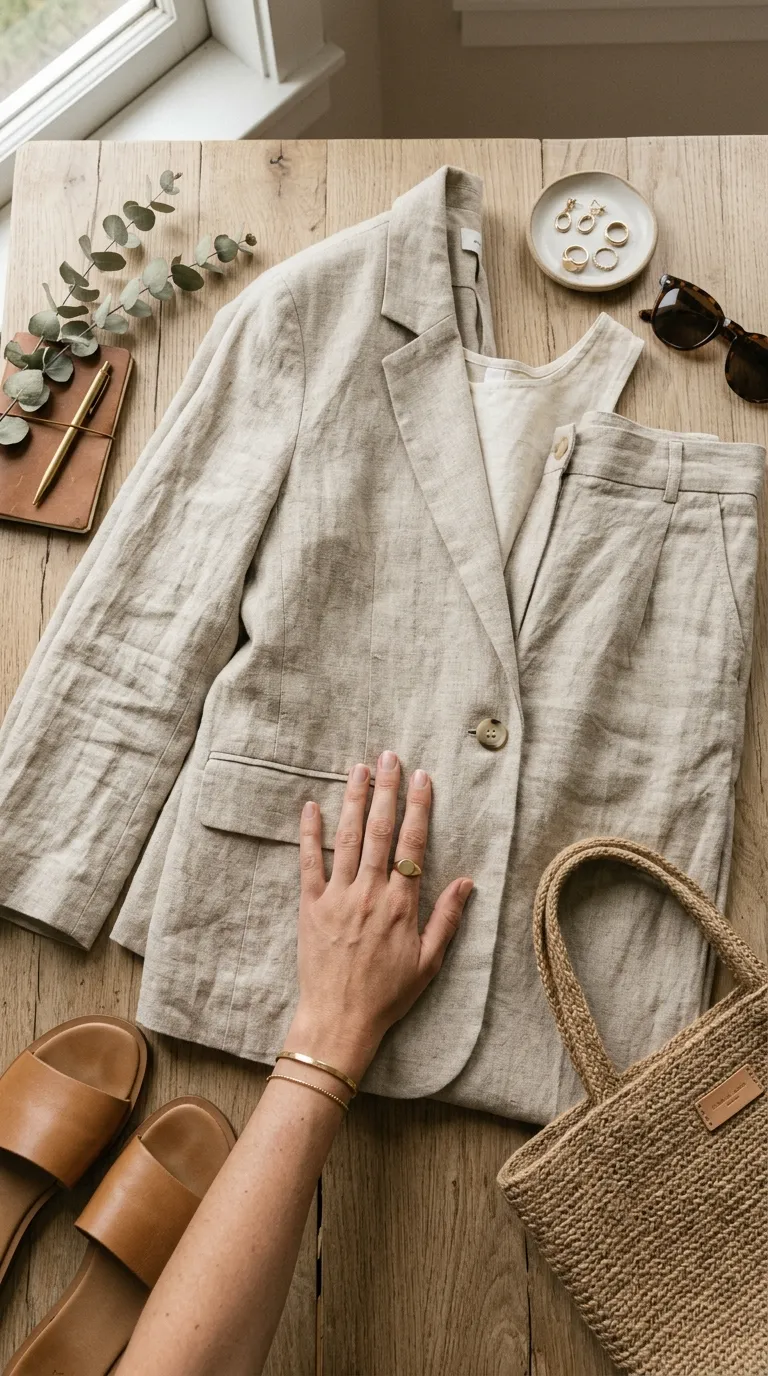
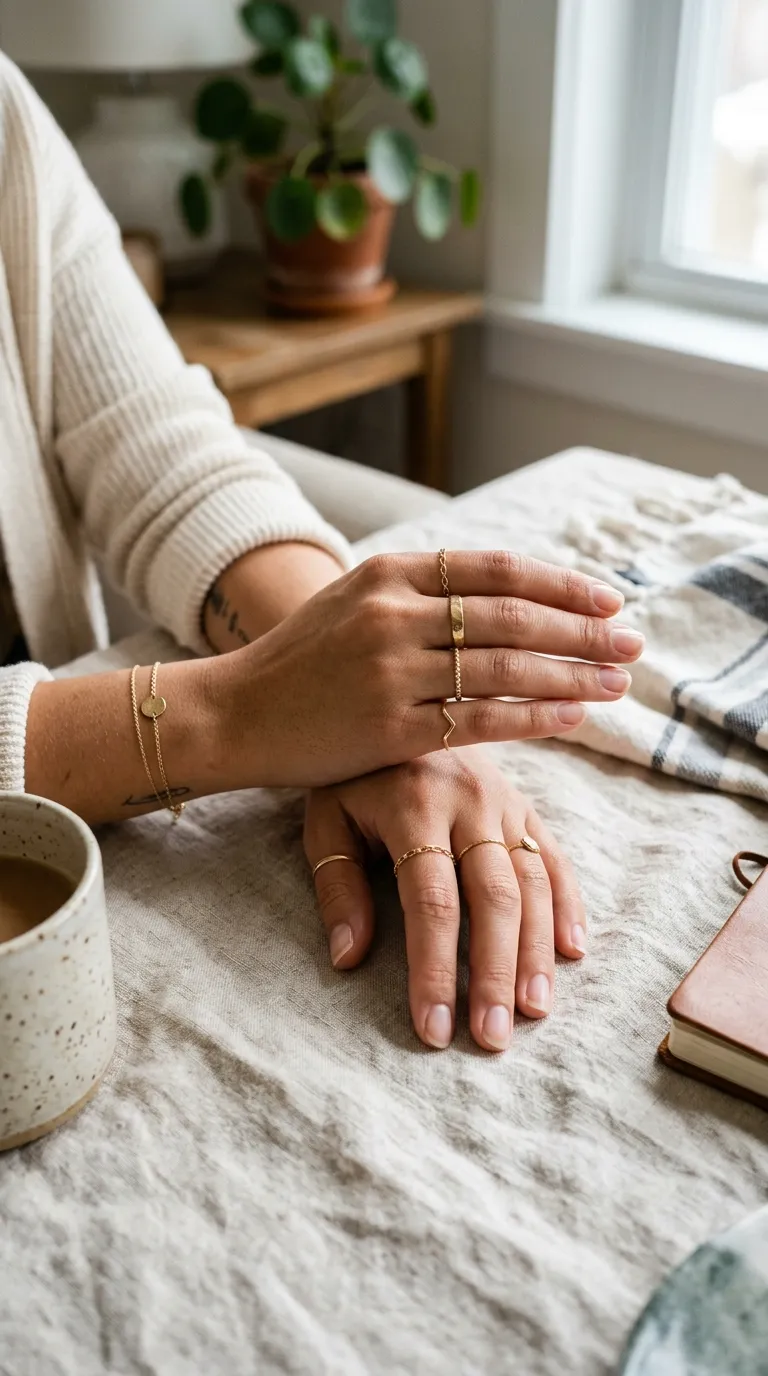
This trend works across nearly every setting, which is part of the appeal — they’re appropriate for the office, weddings, job interviews, and formal events, while also being subtle enough for daily wear. This versatility makes the look especially popular for brides and bridal parties who want their manicure to photograph well without competing with the dress or jewelry.
How to Make the Look Last
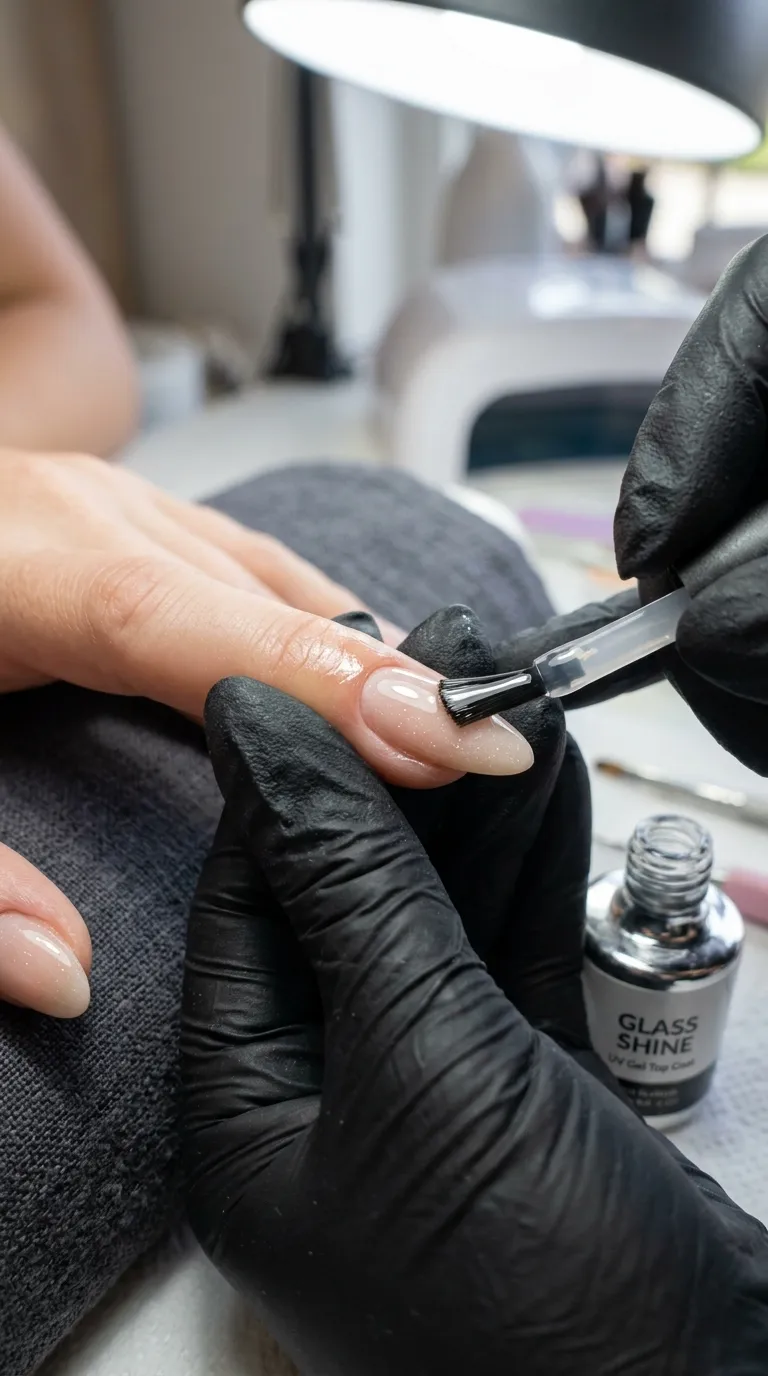
- Reapply top coat every few days to maintain the glassy shine, since sheer polishes show dullness faster than pigmented colors.
- Keep cuticles consistently moisturized — dry cuticles are far more visible against a minimal manicure.
- Avoid letting regrowth go too long between fills, since the whole point of the look is a clean, seamless nail bed.
- Buff gently between applications rather than filing aggressively, to keep the nail surface smooth for the glass-like top coat to sit properly.
What You Need for a DIY Application
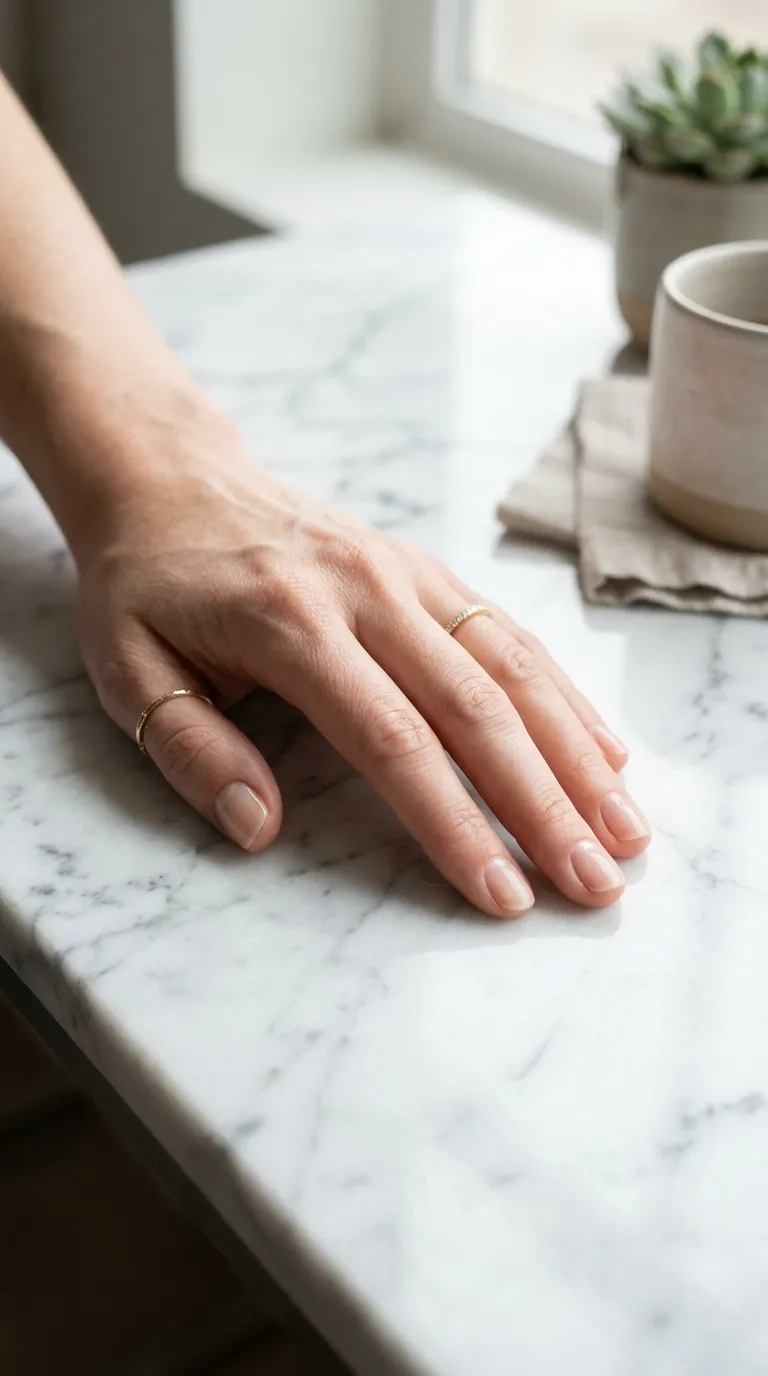
A ridge-filling base coat is more important here than with any bold color, since a sheer polish shows every imperfection in the natural nail plate underneath. Invest in a good cuticle pusher and gentle exfoliating tool — most of the visible difference between a salon bare manicure and an at-home attempt comes down to cuticle prep rather than the polish itself. Choose two or three sheer shades in slightly different undertones so you can test which reads most naturally against your own skin before committing to a full set, and finish every application with a dedicated high-shine, gel-look top coat rather than a standard one, since a flat finish undercuts the entire point of the look.
A nail buffer in a fine grit is also worth keeping on hand even between polish applications — regularly buffing the nail surface (not aggressively, just enough to smooth ridges) keeps the base even so the sheer color and top coat sit as cleanly as possible.
Where the Trend Is Headed
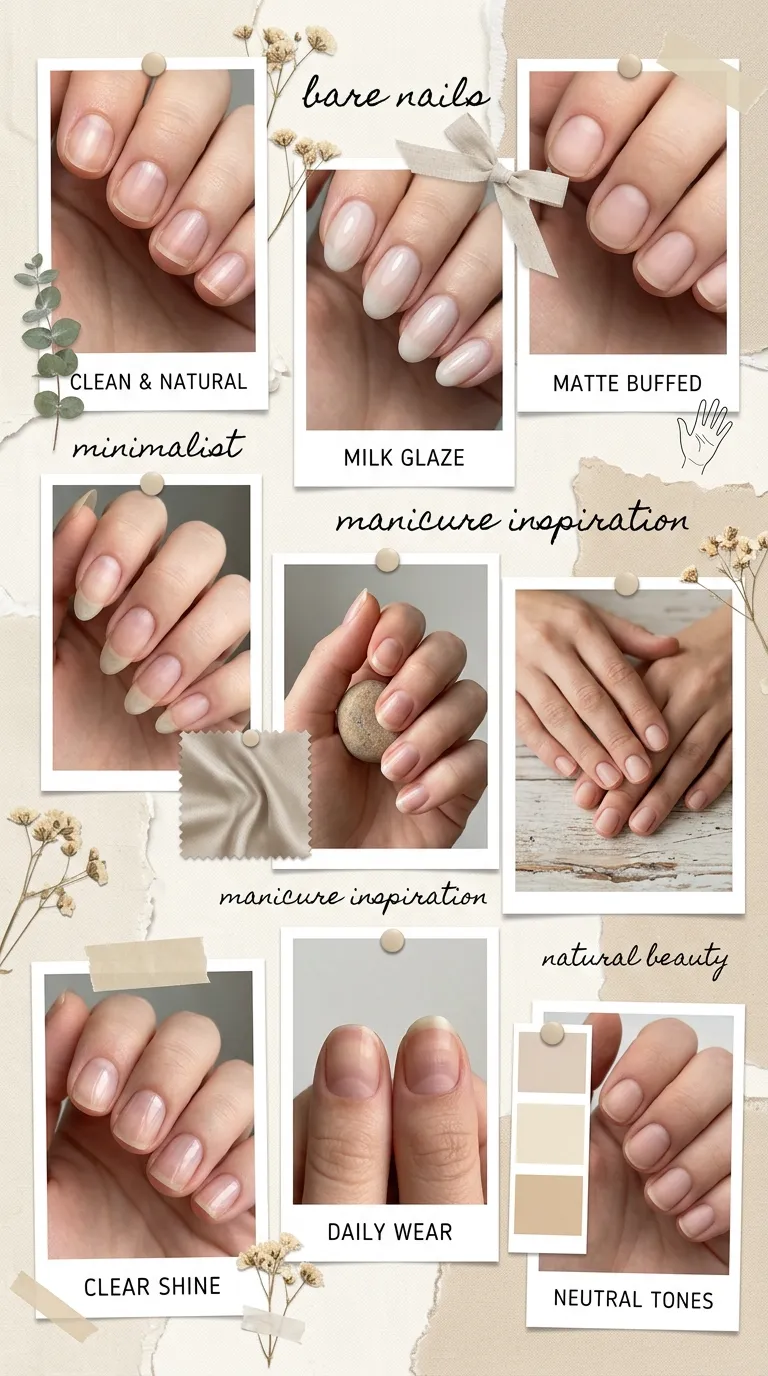
As the broader quiet luxury aesthetic keeps maturing across fashion and beauty, expect this manicure style to keep splitting into more precise sub-versions rather than fading into a single generic “nude nails” category. Salons are increasingly offering undertone-matching consultations specifically for sheer manicures, treating the shade selection with the same care once reserved for foundation matching. Expect glass-like, high-build top coats to become a standard menu item rather than a specialty request, and expect the completely polish-free buffed version to keep growing alongside it as an even lower-maintenance alternative for the same aesthetic goal.
This Trend Compared to Other Minimalist Nail Looks
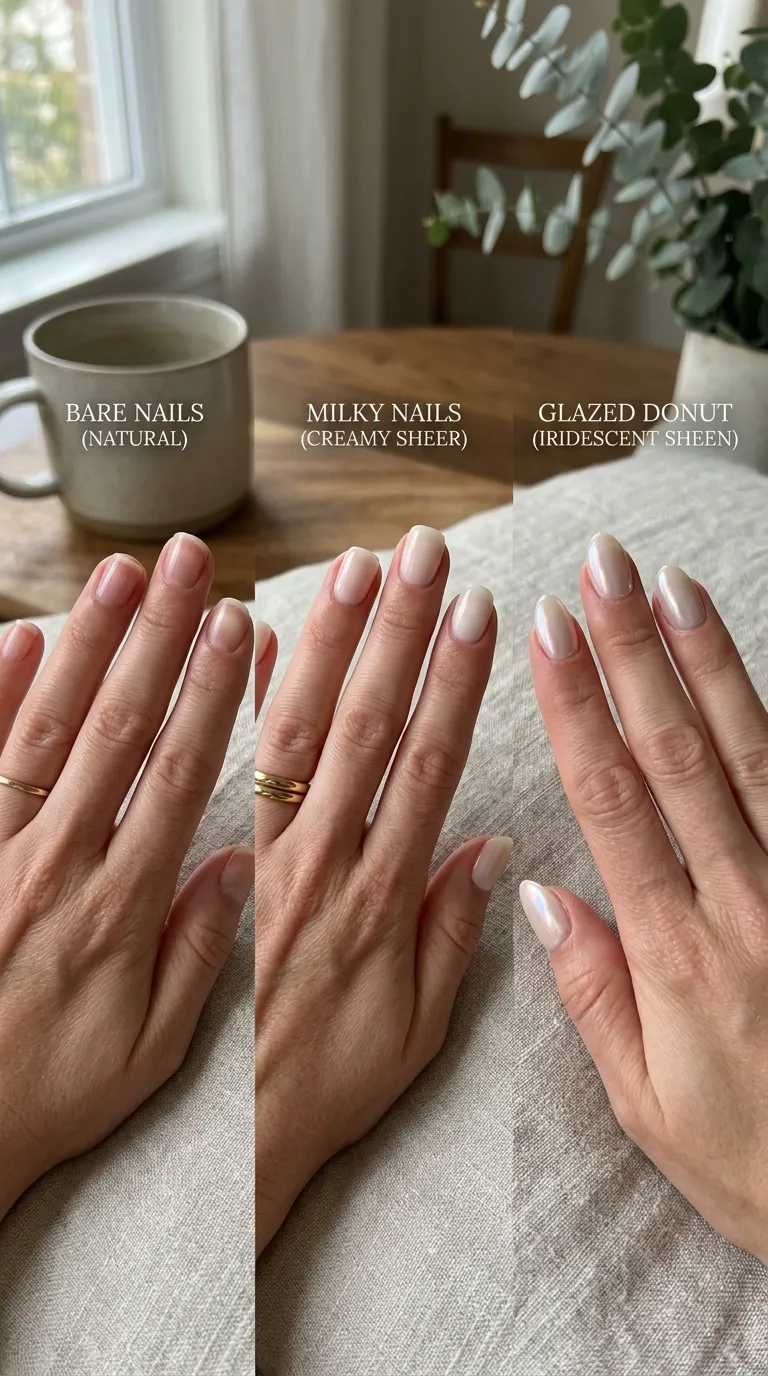
If you’re weighing this style against other pared-back options, a few distinctions are useful. Compared to a classic milky white or soap manicure, this trend leans slightly more skin-toned and personalized rather than uniformly white, since the whole point is matching your specific undertone. Against the soft blue-purple palette in our periwinkle nails guide, this style stays entirely neutral rather than introducing any color at all, which makes it the more conservative option for workplaces with strict dress codes. And unlike a plain, unstyled natural nail, the difference comes down entirely to technique — precise shaping, cuticle work, and a glass-like top coat are what separate an intentional bare manicure from one that just looks unfinished.
For anyone who wants a small amount of color without leaving the minimalist family entirely, pairing one bare nail with one soft accent nail from a gentler palette is an easy way to bridge the two styles without feeling like an abrupt visual jump between one manicure and the next.
Common Mistakes to Avoid With Bare Nails
Because the look relies on precision rather than color to hide flaws, a few small missteps can make this manicure look unfinished instead of expensive. The most common mistake is skipping the buffing step. Without a light buff to smooth ridges, even a sheer polish or glass-like top coat will sit unevenly and catch the light in the wrong places, making the nail look dull rather than glossy. Take the time to buff gently before applying any product, and the rest of the manicure will hold up much better.
Another frequent issue is choosing an undertone that fights with your skin. A sheer pink that leans too cool can look chalky against warm skin, while a peachy nude can look muddy against cool undertones. If you are unsure which direction to go, test a small swatch on your nail in daylight before committing to a full set, since indoor lighting can be misleading.
Overworking the cuticles is another trap. the style put the nail bed on full display, so aggressive cutting or pushing can leave redness and irritation that draws more attention than the polish itself. A gentle cuticle oil routine in the days before your manicure does more for the finished look than last-minute trimming. Finally, resist the urge to skip a top coat entirely in the name of keeping things minimal — an unsealed nail chips faster and loses its glassy shine within a day or two, which defeats the purpose of a quiet-luxury manicure that is meant to look effortless for weeks.
How Bare Nails Fit Into a Broader Beauty Routine
Part of why this trend has staying power is that it works with almost any beauty routine rather than competing with it. Because the nails read as neutral, they pair naturally with bold makeup choices like a red lip or a smoky eye without pulling focus away from the face, and they sit just as comfortably alongside a completely bare-faced, skincare-first look. This flexibility is one reason nail artists describe this finish as a foundational style rather than a passing trend — it adapts to whatever the rest of the look is doing that day.
The trend also mirrors what has been happening in skincare over the past few years, where the goal has shifted from visible product to the appearance of naturally healthy skin. Bare nails apply that same philosophy to hands: the aim is not to look like you are wearing nothing, but to look like your nails are simply in excellent condition. That makes hand care — moisturizing, gentle exfoliation, and consistent cuticle oil — a bigger part of the overall result than the polish itself, which is part of why this look tends to appeal to people who already invest time in skincare.
For anyone building out a full quiet-luxury beauty routine, bare nails are usually the easiest piece to adopt first, since they require less commitment than a full wardrobe or makeup shift and can be tried with a single at-home manicure before booking a salon appointment.
Bare Nails on Different Nail Types and Textures
Not every nail bed behaves the same way under a sheer finish, and knowing how your particular nail type reacts can save you a frustrating first attempt. Naturally ridged nails tend to show more texture under bare polish than under an opaque color, since there is nothing to visually smooth things out. If your nails have noticeable ridges, a ridge-filling base coat before the sheer polish or glass-like top coat makes a bigger difference here than it would with a pigmented shade.
Very short or bitten nails can still work well with this trend, and in some ways benefit from it more than longer shapes. Because bare nails are about the quality of the finish rather than length or dramatic shape, a short, neatly buffed nail with a glassy top coat can look just as polished as a long almond set. This makes the look a popular starting point for people who are growing out damaged nails and want something presentable in the meantime, without committing to acrylics or gel extensions.
On the other end, longer nails — whether natural or extensions — tend to show off the glass-like top coat technique especially well, since there is more surface area to catch the light. If you already have length, ask your nail tech to lean into the glass-skin finish rather than a fully matte buffed look, since the reflective quality tends to read as more deliberate on longer nails.
People with naturally yellow-toned or discolored nail beds, often from years of dark polish or gel without breaks, may find that a completely bare, unpolished buff draws attention to discoloration. In that case, a barely-there sheer pink or milky white finish is usually a better starting point than going fully polish-free, since it evens out tone while still keeping the minimal aesthetic. A nail tech can also recommend a short polish break combined with a strengthening treatment if discoloration is significant, since bare nails genuinely do look best on a healthy nail bed.
Frequently Asked Questions About Bare Nails
What is the bare nails trend?
Bare nails is a manicure trend built around sheer, natural-toned polish and a glossy, glass-like finish, designed to look like an elevated version of your natural nail rather than an obvious color statement.
How is this different from a regular nude manicure?
The bare nails trend puts more emphasis on matching your specific undertone, precise shaping, and a high-gloss finish, rather than using a single generic nude shade.
Do bare nails work for every skin tone?
Yes, since the trend is built around matching the polish to your specific undertone rather than a one-size-fits-all shade, it can be adapted to flatter any skin tone.
Is bare nails a good choice for a wedding?
Yes, bare nails are increasingly popular for weddings, since the understated, glossy finish photographs well and doesn’t compete with the dress or jewelry.
Can I get bare nails without any polish?
Yes, a buffed, polish-free nail with cuticle oil and a glossy buffer can achieve a similar bare-but-elevated look without any product at all.
How do I keep bare nails from looking plain?
Focus on nail shape, cuticle care, and a high-shine top coat — these details are what separate an intentional bare manicure from a nail that simply looks unpolished.
Can I get bare nails with gel or acrylic extensions?
Yes — many nail techs apply the bare nail finish over gel or acrylic extensions rather than only natural nails, using a sheer builder gel or a milky pink gel base to get the same soft, glass-like effect on a longer, more uniform shape.
How much does a bare nails manicure typically cost?
Pricing is usually similar to a standard gel manicure, though salons that specialize in the glass-skin or chrome-buff technique may charge slightly more for the extra prep and buffing time involved in getting the finish right.
Final Thoughts on Bare Nails
Bare nails prove that quiet luxury still has room to evolve — the trend rewards precision and skin-matching over color or embellishment, which makes it one of the more technically demanding “simple” looks in nail art right now. Whether you go for a milky sheer, a barely-there pink, or a completely polish-free buffed finish, the goal is the same: nails that look like the best possible version of themselves. Bring your undertone and your reference photo to your next appointment and let your nail artist build the details from there.
If you are trying bare nails for the first time, start with a shorter, more forgiving shape and a barely-there pink before moving to a fully sheer or polish-free finish — it gives you a chance to see how your specific nail bed and undertone photograph and wear over a week before committing to the more advanced glass-skin technique.
Seasonally, bare nails tend to peak in spring and summer when hands are more visible, but the look works year-round since it never clashes with whatever else is trending in makeup or fashion. If you keep a standing manicure appointment, ask your tech to alternate between a bare set and a color set every other visit — it gives your natural nails a lighter, less product-heavy month in between while keeping the overall rotation interesting.
Compare Before You Choose
See the Closest Alternatives
Compare nearby shapes, colors and finishes before picking a final reference.
Recommended Next
Basic Back to School Nails: 15 Easy Designs for Busy Mornings (2026)
Read the guide →