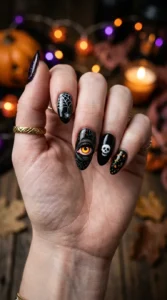
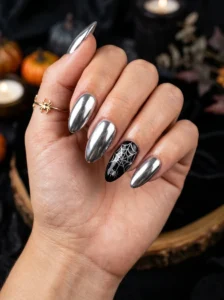
Velvet nails use an ultra-matte, almost powdery finish to mimic the soft, light-absorbing texture of real velvet fabric. Unlike a standard matte top coat, true velvet-finish polish has a slightly fuzzy, no-shine quality that photographs with a soft, almost 3D depth — which is exactly why it’s become one of the defining textures of fall and winter nail trends, especially in deep jewel tones.
Below are 11 velvet matte nail designs organized into four sub-styles — classic velvet matte, velvet ombre, velvet accent and French tip, and jewel-tone velvet — so you can find the version that matches your effort level. For more fall color inspiration, see our fall nail color trends guide, and for a related deep tone, check out our blue fall nails post.
What Makes a Finish “Velvet”?
True velvet-finish nail polish uses a specific formula (often called “velvet matte” or “suede” polish) that dries with an ultra-flat, light-absorbing surface — flatter and softer-looking than a standard matte top coat over regular polish. It’s most commonly worn in deep jewel tones like burgundy, forest green, and navy, since the fabric it’s named for is traditionally associated with rich, saturated colors rather than pastels.
Classic Velvet Matte Nails
A single, solid coat of velvet-finish polish in a deep, rich color. This is the most wearable version and the easiest to execute since it’s just one confident color with no blending or pattern involved — the texture itself does all the visual work.
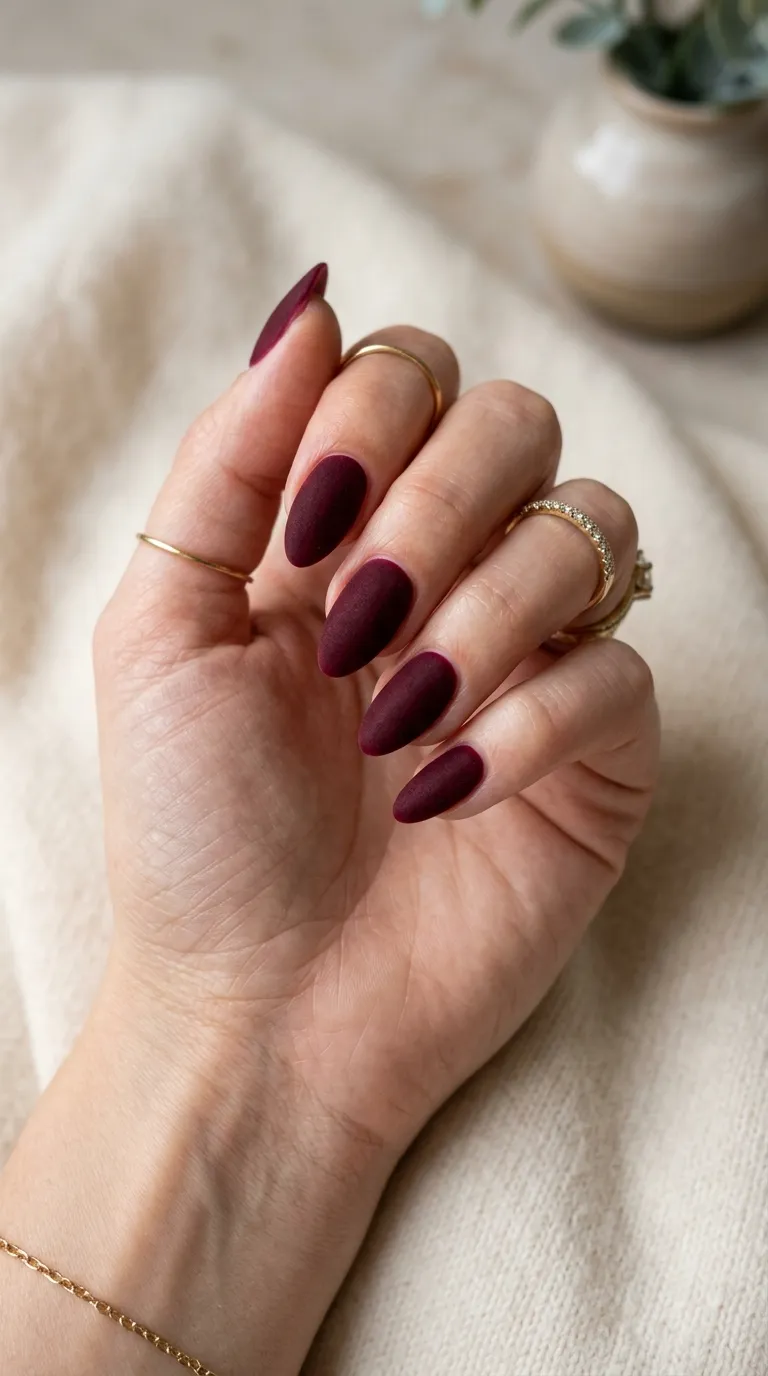
Deep burgundy velvet matte, full set
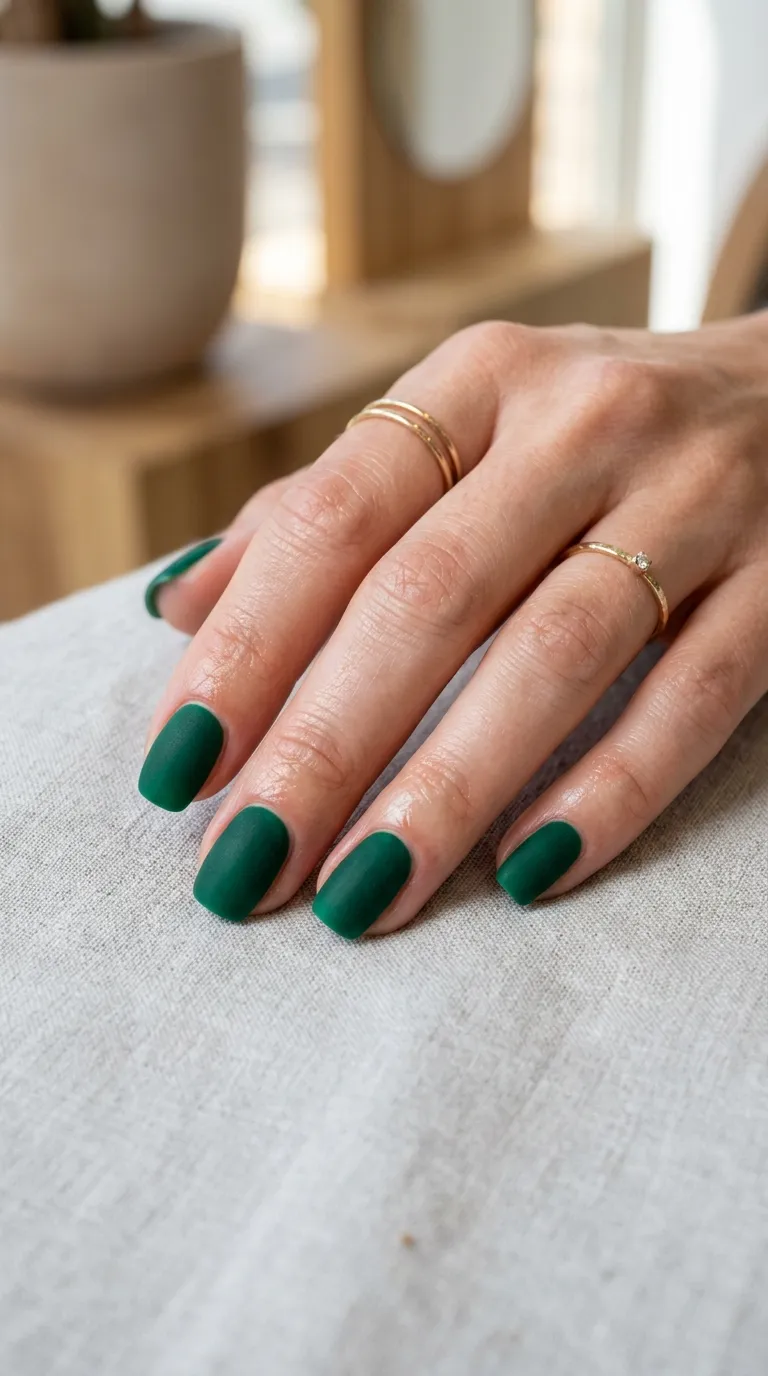
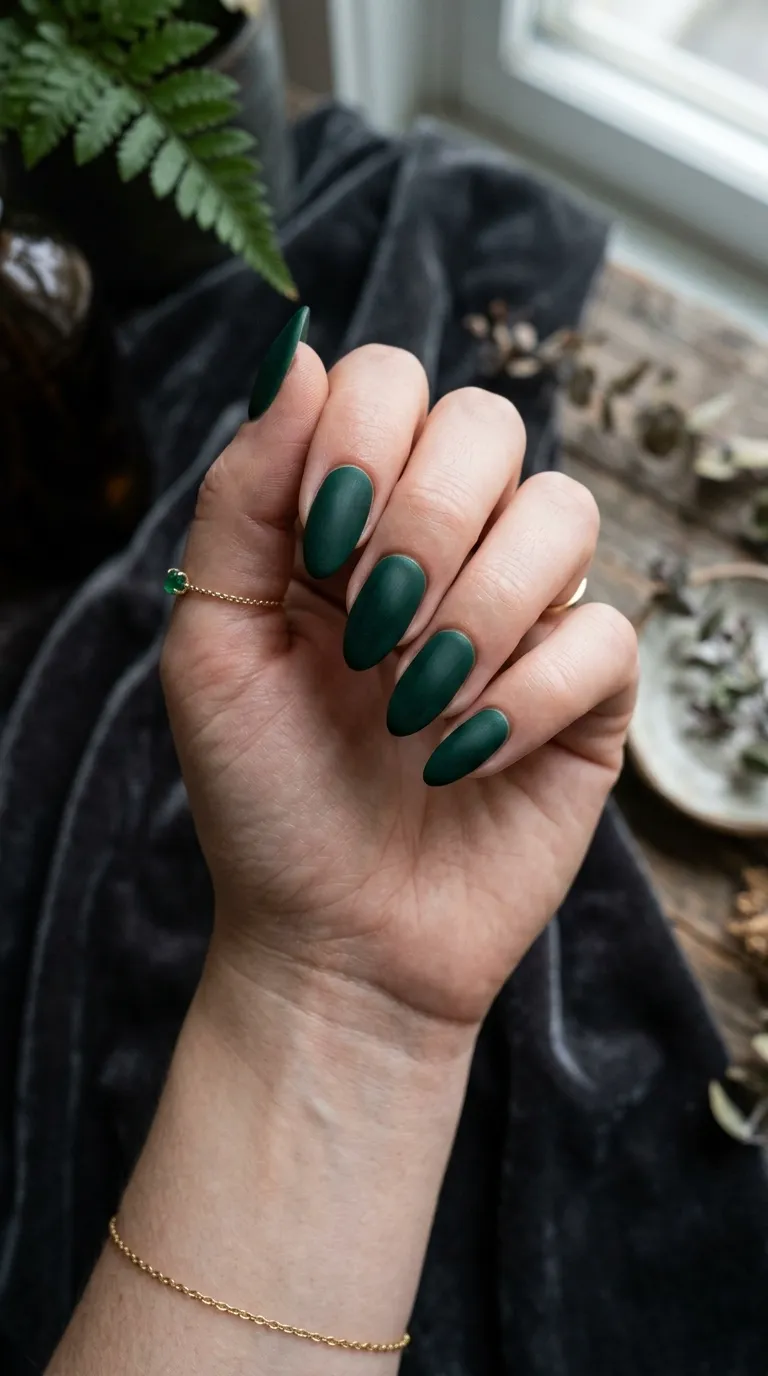
Forest green velvet matte for a moodier jewel tone
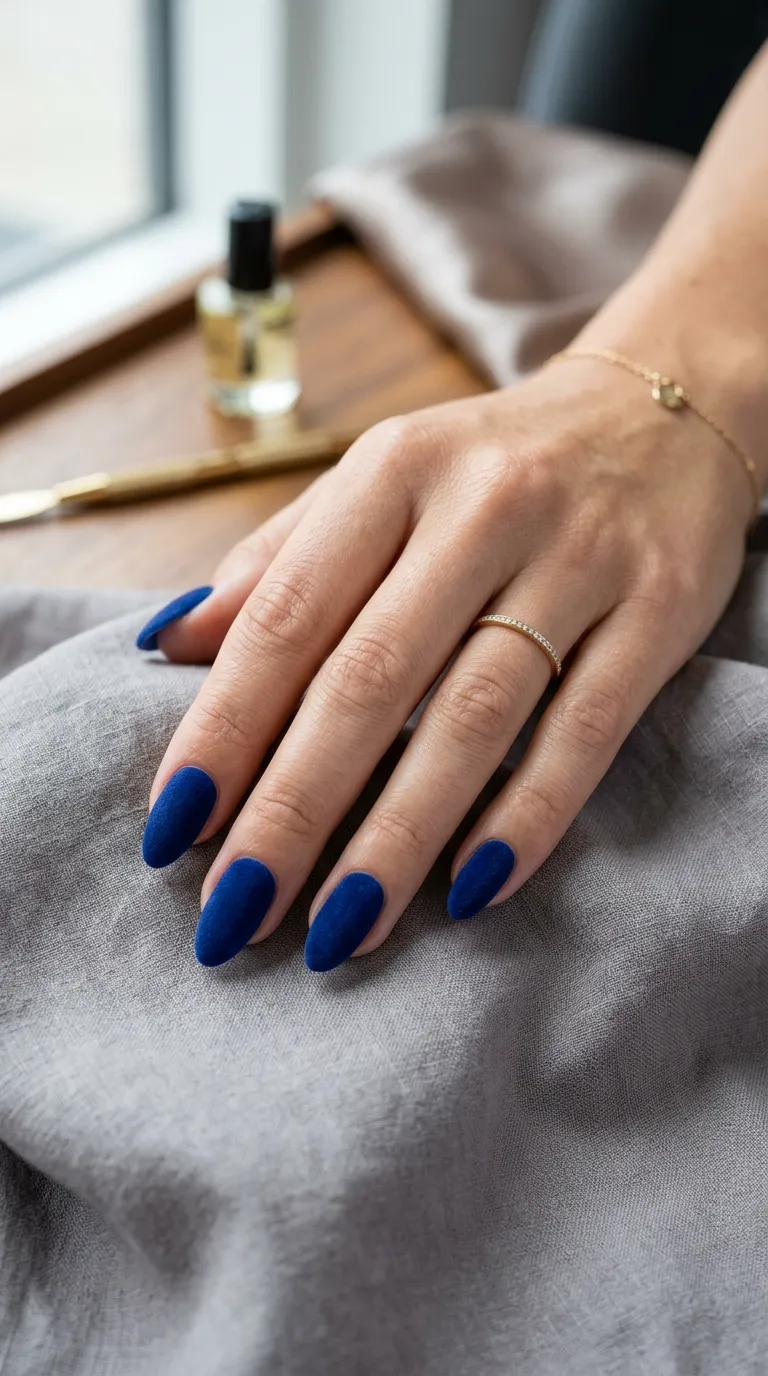
Navy velvet matte for a cooler, deep alternative
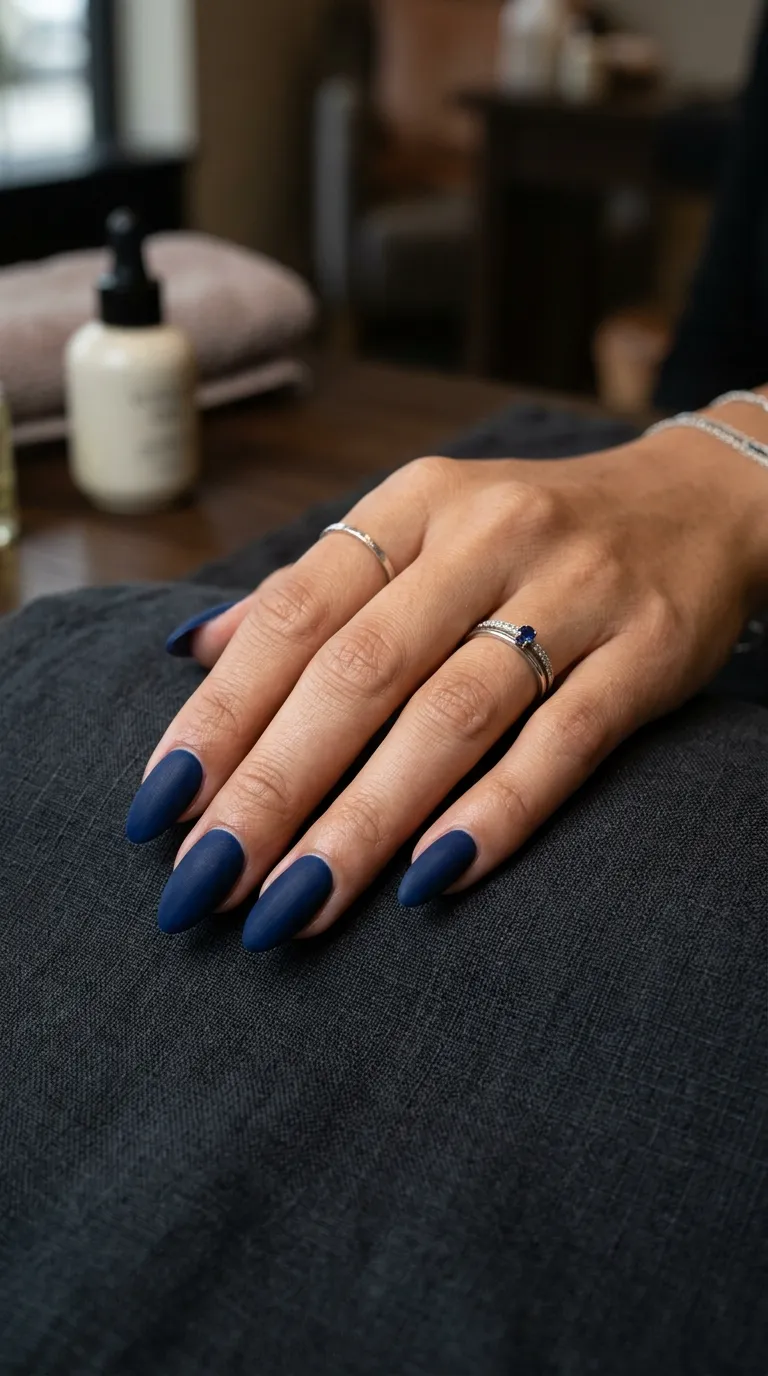
Black velvet matte for maximum drama
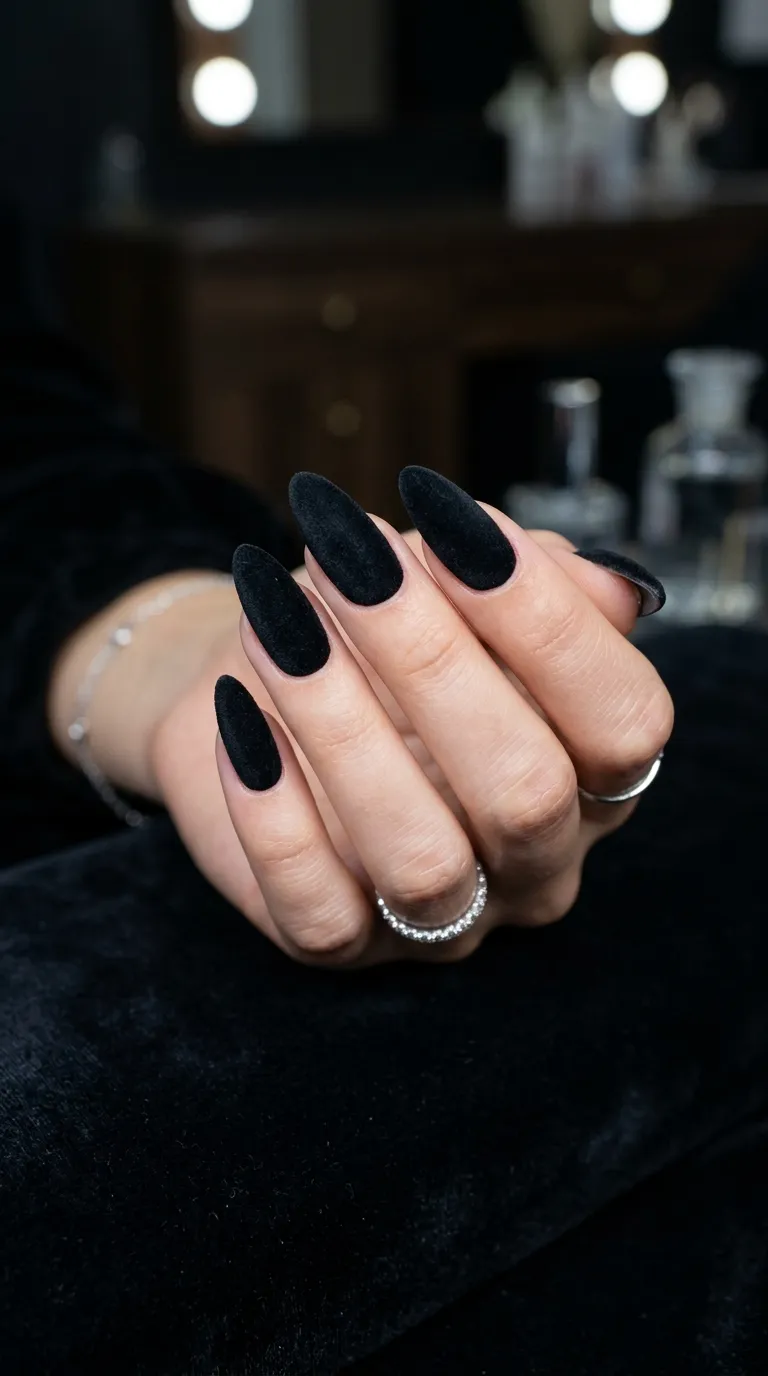
Velvet Ombre Nails
A gradient version that fades between two velvet-finish shades — often a deep jewel tone at the cuticle fading into black at the tip, or the reverse. Because velvet finish is already matte, the blend reads softer and more subtle than a glossy ombre would.
Burgundy-to-black velvet ombre
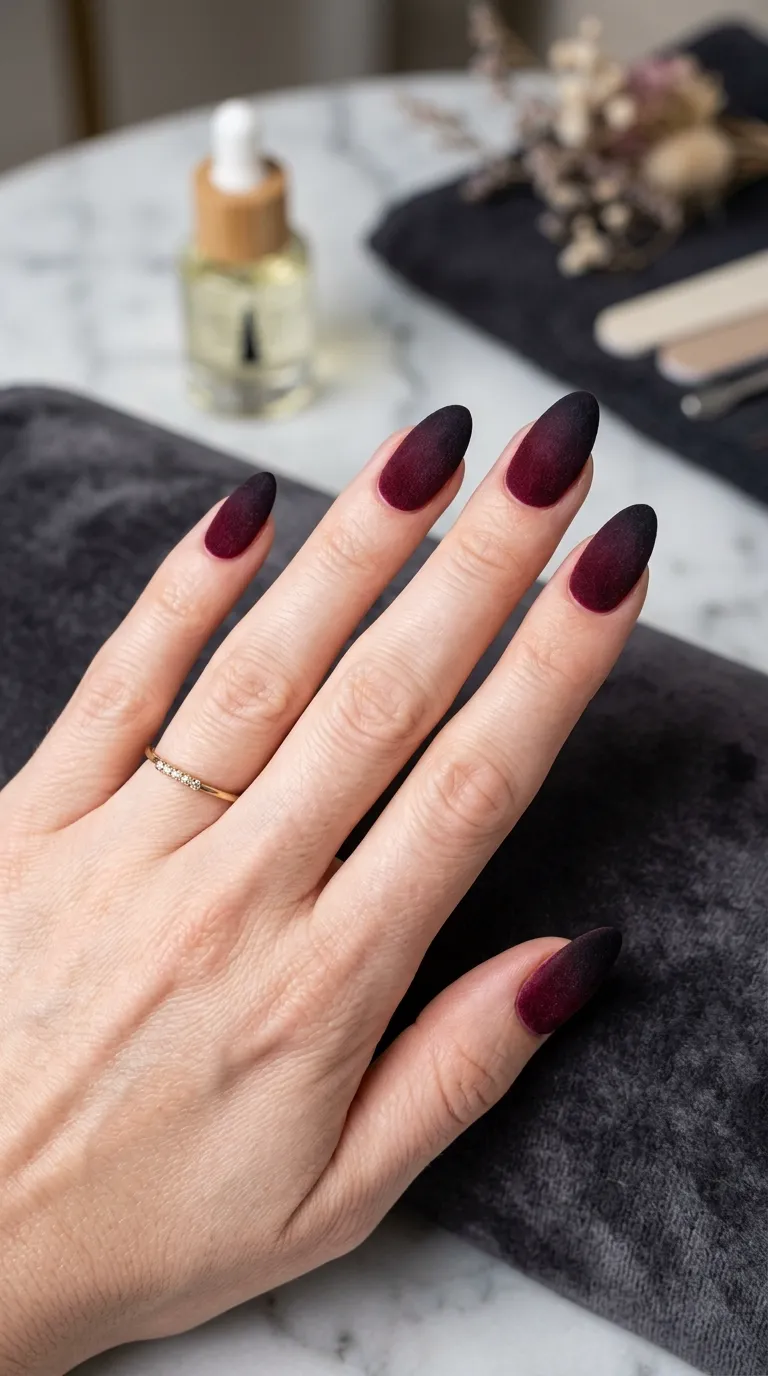
Forest green-to-black velvet ombre
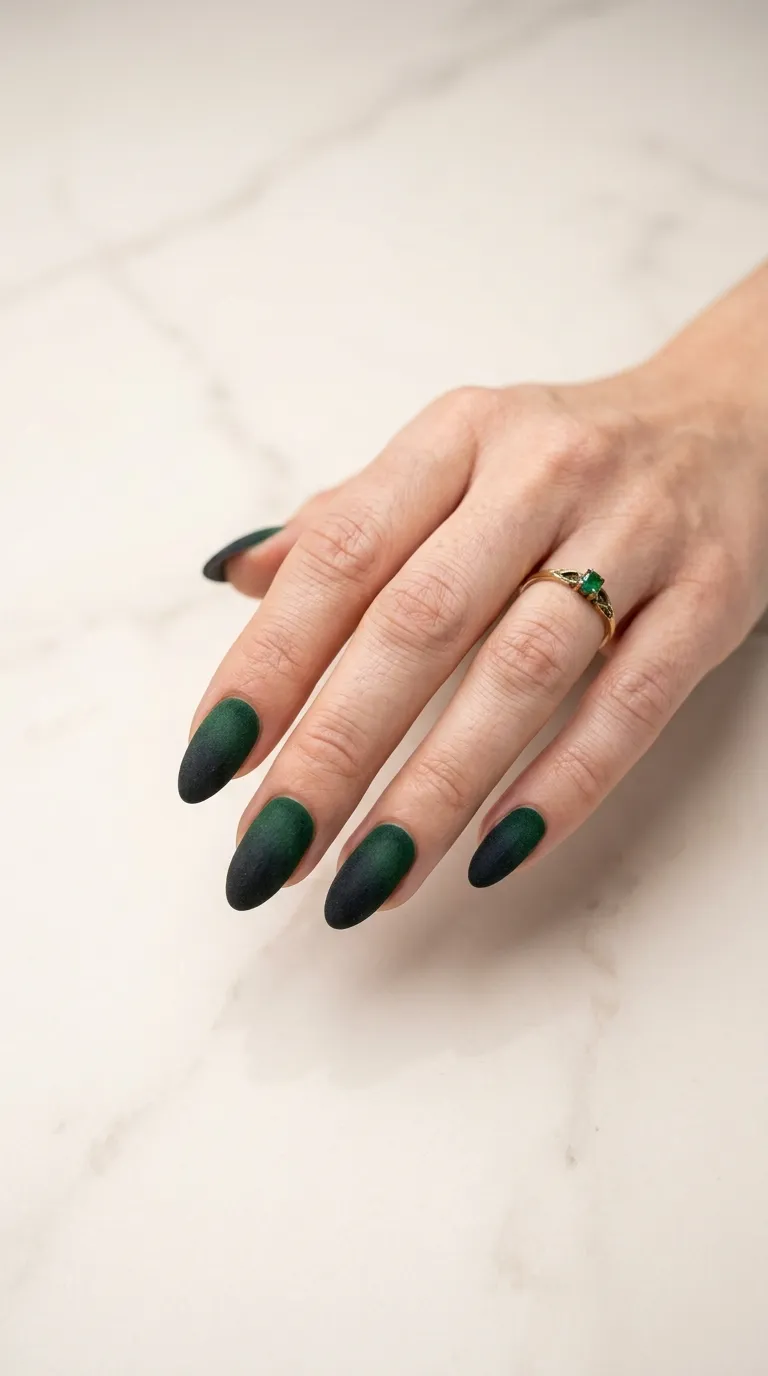
Velvet Accent and French Tip Nails
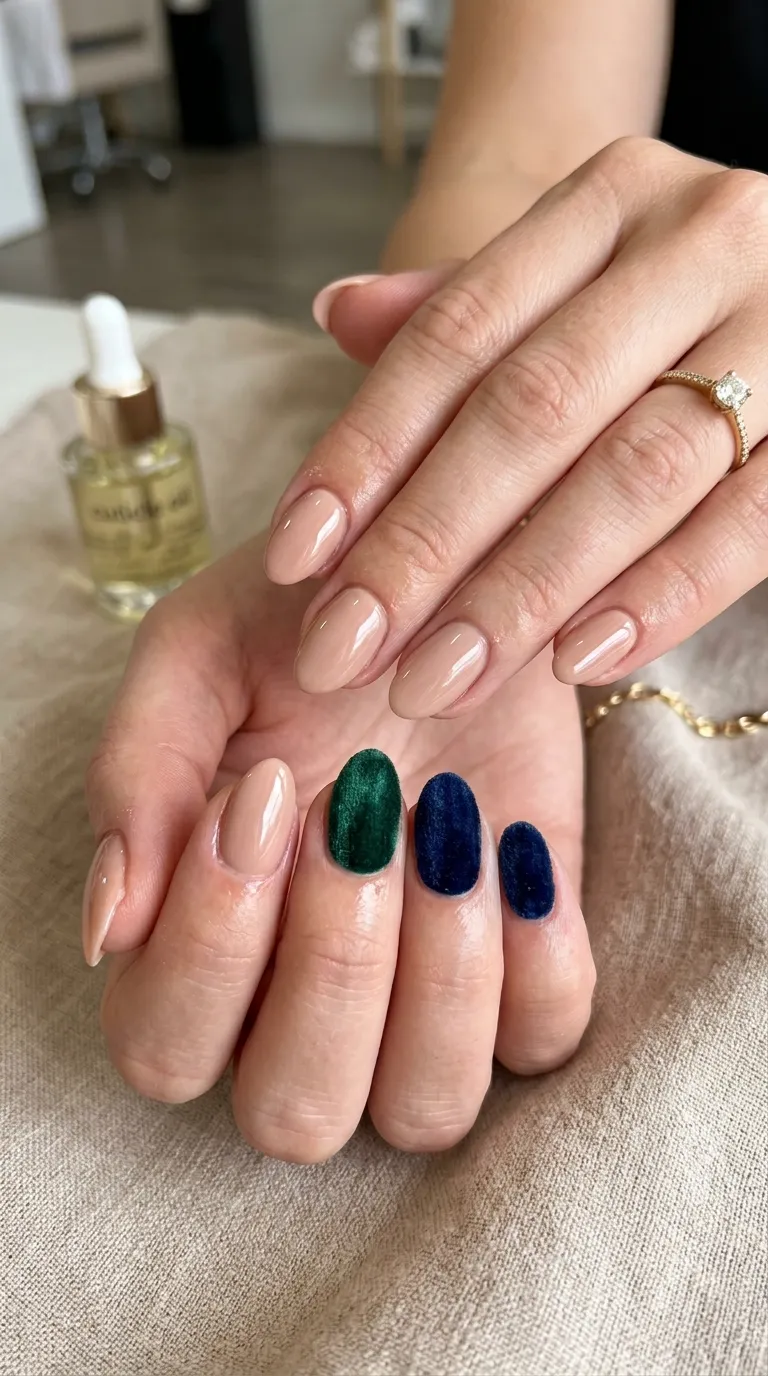
For anyone who wants the texture without a full solid set, velvet works well as a French tip swapped in for classic white or as a single accent nail against a glossy nude base. Mixing a glossy finish with one matte velvet nail also creates a nice textural contrast within the same set.
Glossy nude base with one velvet burgundy accent nail
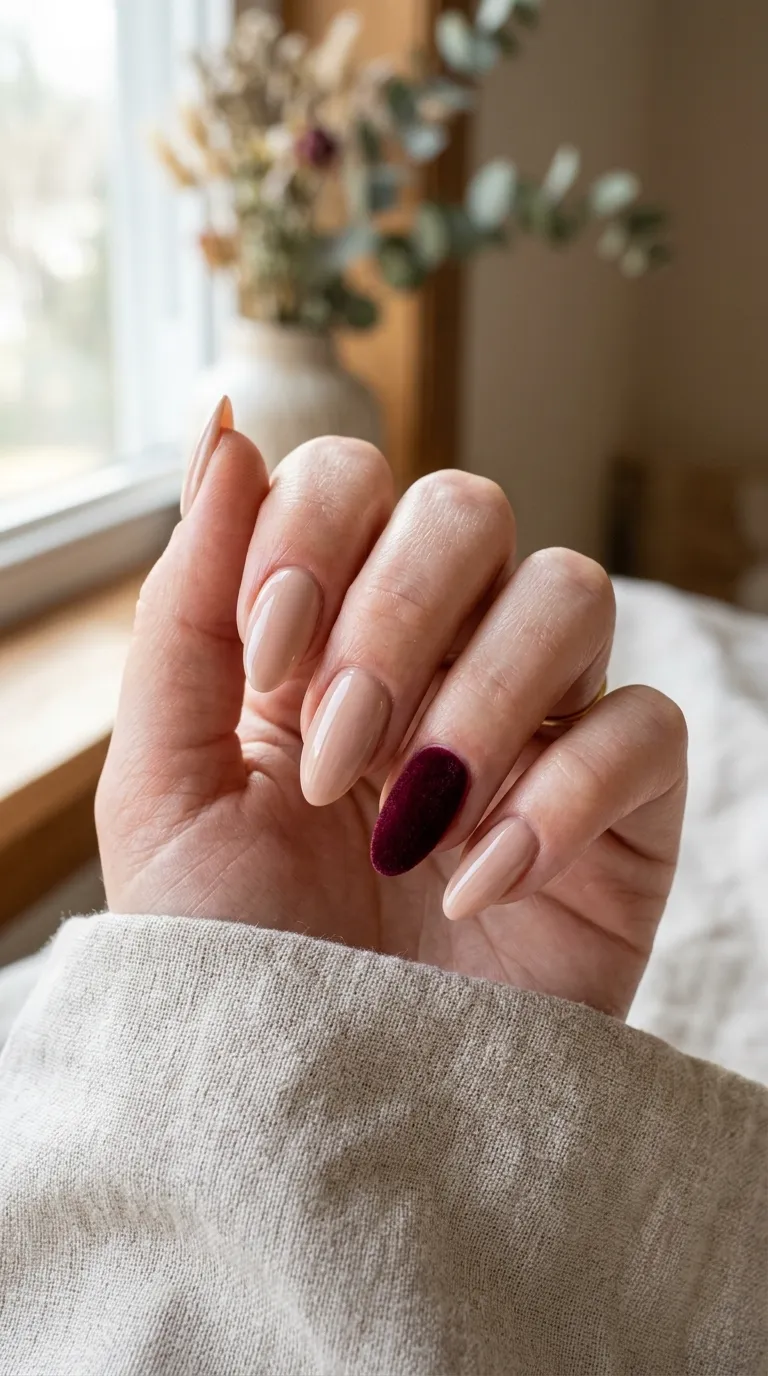
Velvet-finish French tip over a glossy nude base
Jewel-Tone Velvet Nails
The most editorial sub-style: rich, saturated jewel tones — emerald, sapphire, amethyst, ruby — all rendered in the velvet finish. This is the version most associated with formal fall and winter events, since the deep colors and soft texture read as luxurious rather than casual.
Emerald green velvet matte
Sapphire blue velvet matte
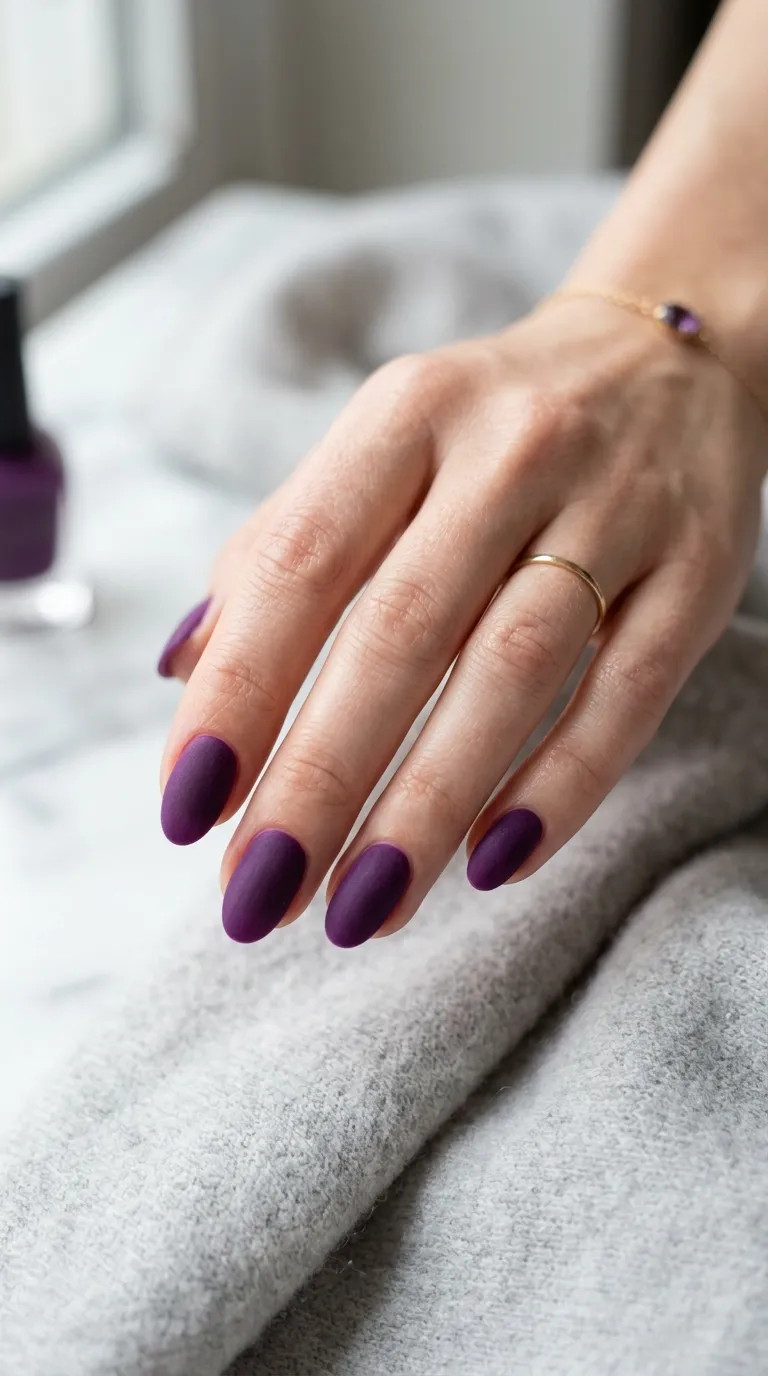
Amethyst purple velvet matte
Velvet Nails by Occasion
For the office, the classic solid version in a deep neutral like chocolate-brown or navy stays professional while still bringing the texture trend in. For a formal fall or winter event — a gala, a holiday party, a formal dinner — jewel-tone velvet gives the most luxurious, photo-ready finish. For everyday wear, the accent-nail version lets you try the texture without fully committing to an all-matte set, which some people find shows fingerprints and smudges more visibly than glossy polish.
Velvet also pairs particularly well with velvet clothing itself — a velvet blazer or dress alongside matching or complementary velvet-finish nails is a coordinated look that shows up often in fall and holiday styling content.
Pairing Velvet Nails With Fall and Winter Outfits
Because velvet finish already carries a formal, luxurious quality, it pairs most naturally with the same rich fabrics that dominate fall and winter wardrobes — real velvet, wool, cashmere, and leather all sit well alongside it. Gold jewelry tends to complement jewel-tone velvet especially well, since both lean into the same “rich and warm” visual language, though silver works fine with cooler tones like sapphire or navy.
For anyone dressing for a holiday party or formal event later in the season, matching or coordinating velvet nail color with a velvet garment — a burgundy velvet dress with burgundy velvet nails, for example — is a small styling detail that photographs well and reads as intentional.
Velvet Nails Aftercare and Longevity
True velvet-finish polish is more delicate than a standard glossy manicure — it scuffs and shows fingerprints more easily since there’s no protective shine layer, and it can’t be sealed with a glossy top coat without losing the matte texture that defines the look. Most people find velvet manicures need a fresh coat every 3-5 days to keep the surface looking clean rather than dull or smudged.
A gel version of velvet finish exists and holds up longer than regular polish, typically two weeks, though the texture may soften slightly compared to a fresh application. Always use a base coat regardless of formula, since the deep jewel-tone pigments used in this trend are prone to staining the natural nail on removal.
Common Velvet Nails Mistakes to Avoid
The most common mistake is sealing a velvet-finish manicure with a glossy top coat, which completely erases the texture the trend is built around — always use a matching matte or velvet-specific top coat if you want to add any protective layer. Touching the nails too soon after application is the second most common issue, since velvet-finish formulas often take slightly longer to fully cure than standard glossy polish, and fingerprints left in a still-soft matte finish are much harder to smooth out than on glossy polish.
Another frequent issue is choosing too light or too bright a color for the velvet finish — pastels and neon shades don’t showcase the deep, rich texture nearly as effectively as jewel tones or dark neutrals do, since part of what reads as “velvet” is the contrast between a saturated color and its light-absorbing matte surface.
How to Choose Your Velvet Nails Style
If you want a low-commitment introduction to the texture, start with the accent-nail or French-tip version. If you have a formal event coming up, jewel-tone velvet in emerald or sapphire gives the most dramatic, photo-ready result. If you’re worried about the matte finish showing wear too quickly, the classic solid version in a very deep, almost-black shade hides smudges better than a lighter jewel tone would.
Real velvet fabric gets its soft, light-absorbing texture from a dense pile weave, which is exactly the visual effect a matte top coat recreates on nails. Matte finishes behave differently than gloss, and gel application tends to hold a matte finish more evenly than regular lacquer.
Velvet finish is a natural fit for the deep oxblood and green in dark academia nails, and a jewel-tone velvet set also works as an evening option from our fall wedding guest nails guide.
Frequently Asked Questions
What’s the difference between velvet finish and a regular matte top coat?
A regular matte top coat is applied over any glossy polish to flatten the shine, while true velvet-finish polish is formulated specifically to dry with a deeper, softer, almost powdery texture that reads as richer than a standard matte finish.
Does velvet-finish polish chip faster than regular polish?
It doesn’t chip faster structurally, but it shows wear (scuffs, smudges, dulling) more visibly than glossy polish because there’s no shine to distract from small surface imperfections. A fresh matte top coat every few days keeps it looking its best.
Can I turn a glossy manicure into a velvet one at home?
Yes — applying a matte top coat over any glossy polish gets you close to the velvet look, though it won’t be quite as deep or textured as a dedicated velvet-finish polish formula, which is worth seeking out specifically if you want the truest version of the trend.
Is velvet finish only for dark colors?
It’s most commonly worn in deep jewel tones and neutrals since that’s where the texture reads most distinctly, but lighter velvet-finish colors exist too — they simply don’t photograph with the same dramatic depth as a very saturated dark shade.
How long does a velvet manicure take at home?
The classic solid version takes about 15-20 minutes including dry time, similar to any solid-color manicure. The ombre sub-style takes closer to 30 minutes because of the extra blending step.
What nail shape works best with velvet finish?
Because it’s a texture and color trend rather than a pattern, velvet finish suits any nail shape equally well. Coffin and almond shapes are often chosen for the jewel-tone sub-style since the elongated shape adds to the dramatic, formal feel, but short square and round shapes work just as well for the everyday classic version.
Bring a physical color swatch or reference photo to your salon appointment if you’re getting velvet done professionally — the exact depth of a jewel tone varies a lot between brands and photos, and a nail tech can match a swatch far more precisely than a verbal description like “deep emerald.”
It’s also worth testing a small patch on one nail before committing to a full set if you’ve never worn a true velvet-finish formula before, since the drying and curing time can differ noticeably from the polish you’re used to.
Final Thoughts
Velvet nails give fall and winter manicures a texture-driven alternative to the usual glossy or chrome finishes, and the jewel-tone sub-style in particular photographs with a depth that flat glossy polish simply can’t match. Start with the classic solid version or a single accent nail if you’re new to the texture, and save the full jewel-tone set for a formal occasion where the extra drama pays off.
Compare Before You Choose
See the Closest Alternatives
Compare nearby shapes, colors and finishes before picking a final reference.
Recommended Next