If you love the polished look of a French manicure but find the bright white tips a little too stark, the American manicure was made for you. This softer, more natural-looking take on the classic tip has quietly become the go-to for brides, professionals, and minimalists who want elegant nails without the high-contrast drama.
So what is an American manicure, exactly — and how is it different from the French, Russian, and Japanese manicures you keep hearing about? This guide breaks down everything: the definition, the key differences between each style, the step-by-step process, who it suits best, the prettiest variations to try, and how to make it last.
Whether you are booking a salon appointment or trying it at home, here is the complete picture for 2026.
What Is an American Manicure?
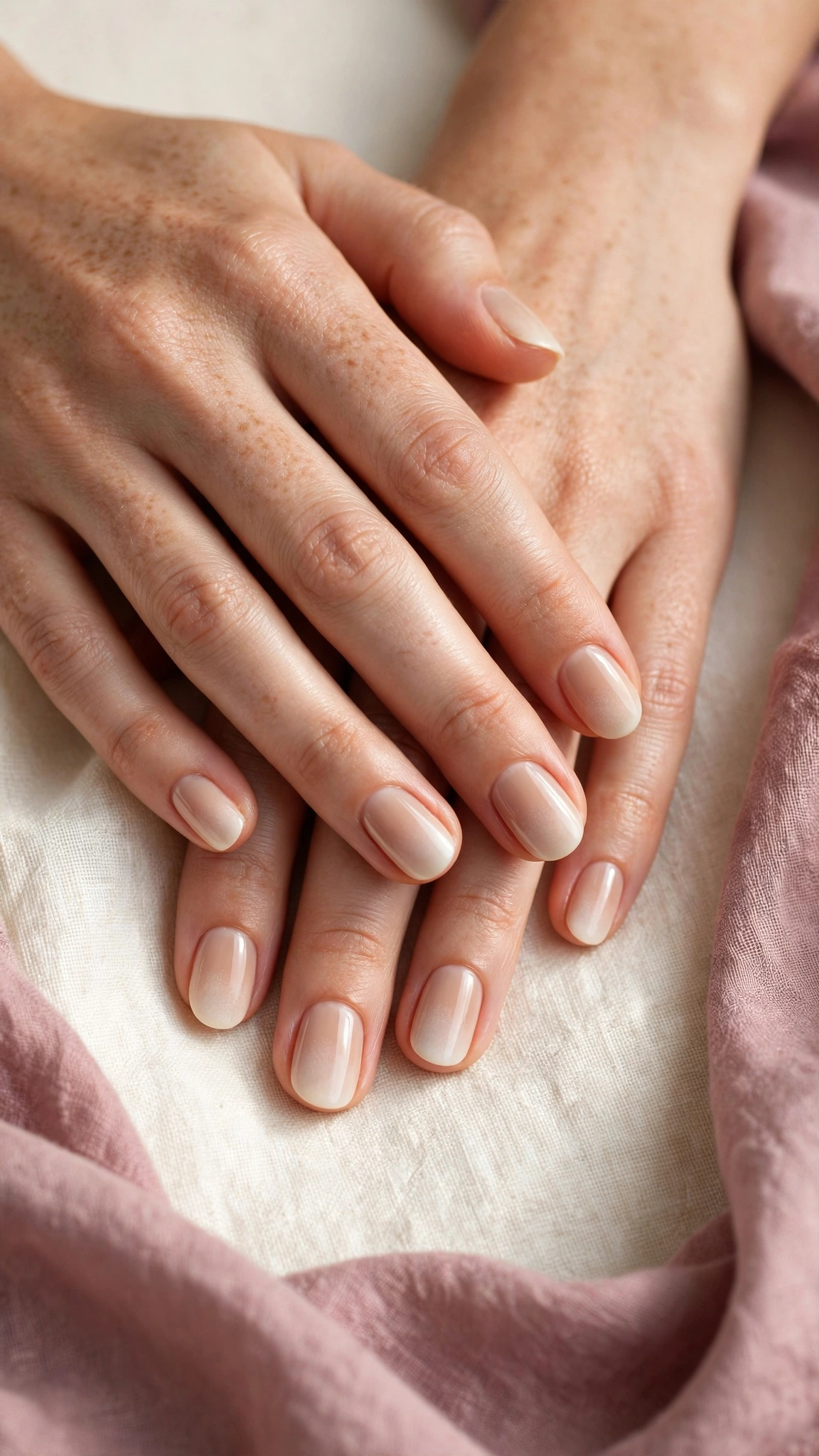
An American manicure is a natural-looking nail style that pairs a sheer nude or skin-tone base with soft, diffused off-white or cream tips. Think of it as the French manicure’s understated sibling: where the French tip draws a crisp, bright white line across the nail, it blends the tip color gently into the base so the transition looks seamless.
According to nail art guides, it was developed as a softer alternative to the French manicure, favoring creamy, muted tones over stark white. The tips are typically painted in an off-white, ivory, or pale beige shade rather than pure white, and the smile line — the curve where the tip meets the base — is deliberately softened instead of sharply defined.
The result reads as “your nails but better.” From a distance, an American manicure can look almost like bare, perfectly healthy nails; up close, the subtle tip detail adds polish and length. That quiet elegance is exactly why it has become a bridal and workplace favorite.
American Manicure vs French Manicure: Key Differences
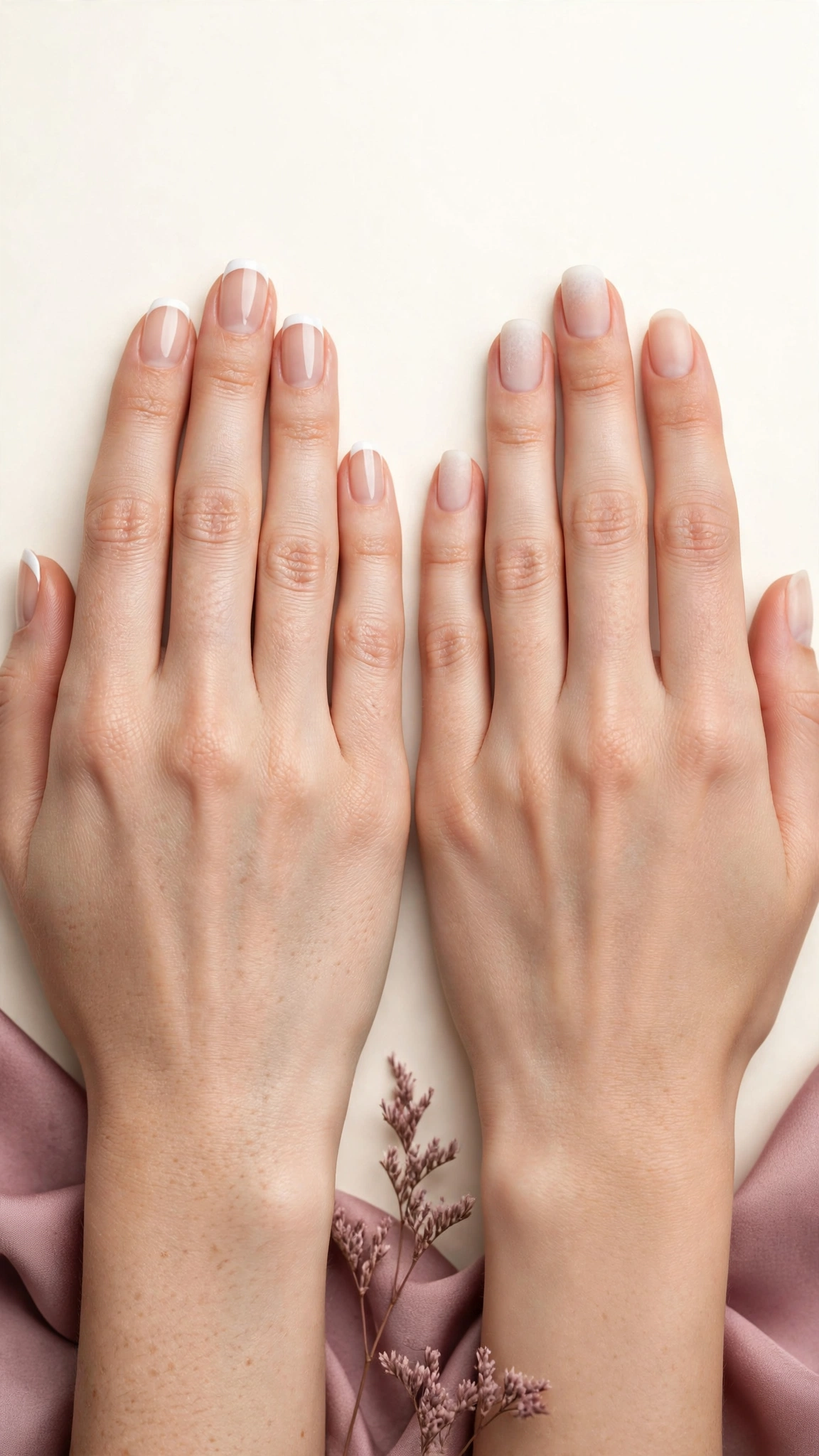
The American manicure and the French manicure share the same basic architecture — a nude base plus a lighter tip — but they differ in every detail that matters. Here is how the two compare:
- Tip color: the French manicure uses bright, opaque white; it uses off-white, ivory, or cream.
- Smile line: French tips have a crisp, sharply defined curve; American tips have a soft, blended transition.
- Base shade: French manicures often use sheer pink; here, nude shades matched to the wearer’s skin tone are the norm.
- Overall effect: French is polished and classic with visible contrast; this style is subtle and natural, almost bare-looking.
- Best nail shape: French traditionally favors square tips; it looks best on oval, almond, or soft squoval shapes.
Neither is objectively better — it comes down to the look you want. If you love the timeless French aesthetic, our French tip nail inspo guide has dozens of variations worth trying. But if bright white tips feel too bold for your everyday style, it gives you the same elongating effect with a fraction of the contrast.
American Manicure vs Russian Manicure
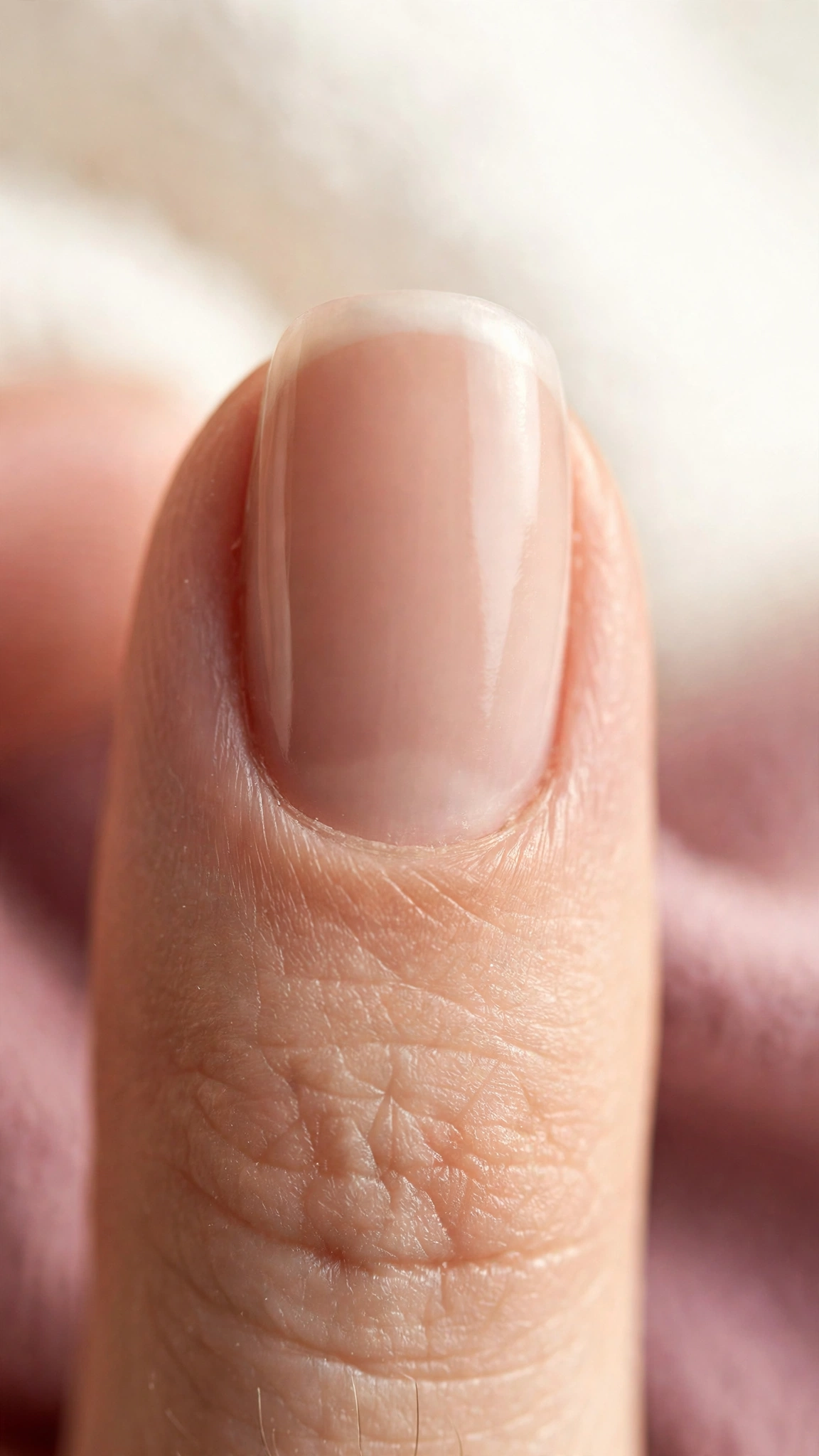
These two are often confused because both promise a clean, refined result — but they are entirely different services. A Russian manicure is a dry, e-file-based cuticle technique that creates an ultra-precise nail edge before polish is applied; it’s a polish style, not a cuticle technique at all.
In practice, the Russian manicure focuses on preparation — meticulous cuticle work with an electric file — while the American style focuses on the finished look: a soft nude base with blended cream tips. According to dermatologists, aggressive cuticle cutting carries infection risks, since the cuticle seals and protects the nail matrix; gentler approaches are safer for most people, which is one reason the low-intervention approach appeals to cautious clients.
For a deep dive into the dry technique, its risks, and proper aftercare, see our Russian manicure guide. If what you want is simply the softest, most natural-looking tip style without intensive cuticle work, the American manicure is the easier and gentler choice.
American Manicure vs Japanese Manicure
The Japanese manicure is a natural-nail treatment that buffs nourishing pastes and powders into the bare nail to create a healthy, glossy shine — no colored polish involved. This style, by contrast, is built on nude and cream shades of polish.
They share a philosophy — both celebrate healthy, natural-looking nails — but they serve different goals. Choose the Japanese manicure when you want to rehabilitate and strengthen bare nails; choose it when you want the polished look of color that still reads as natural.
How It’s Done: Step by Step
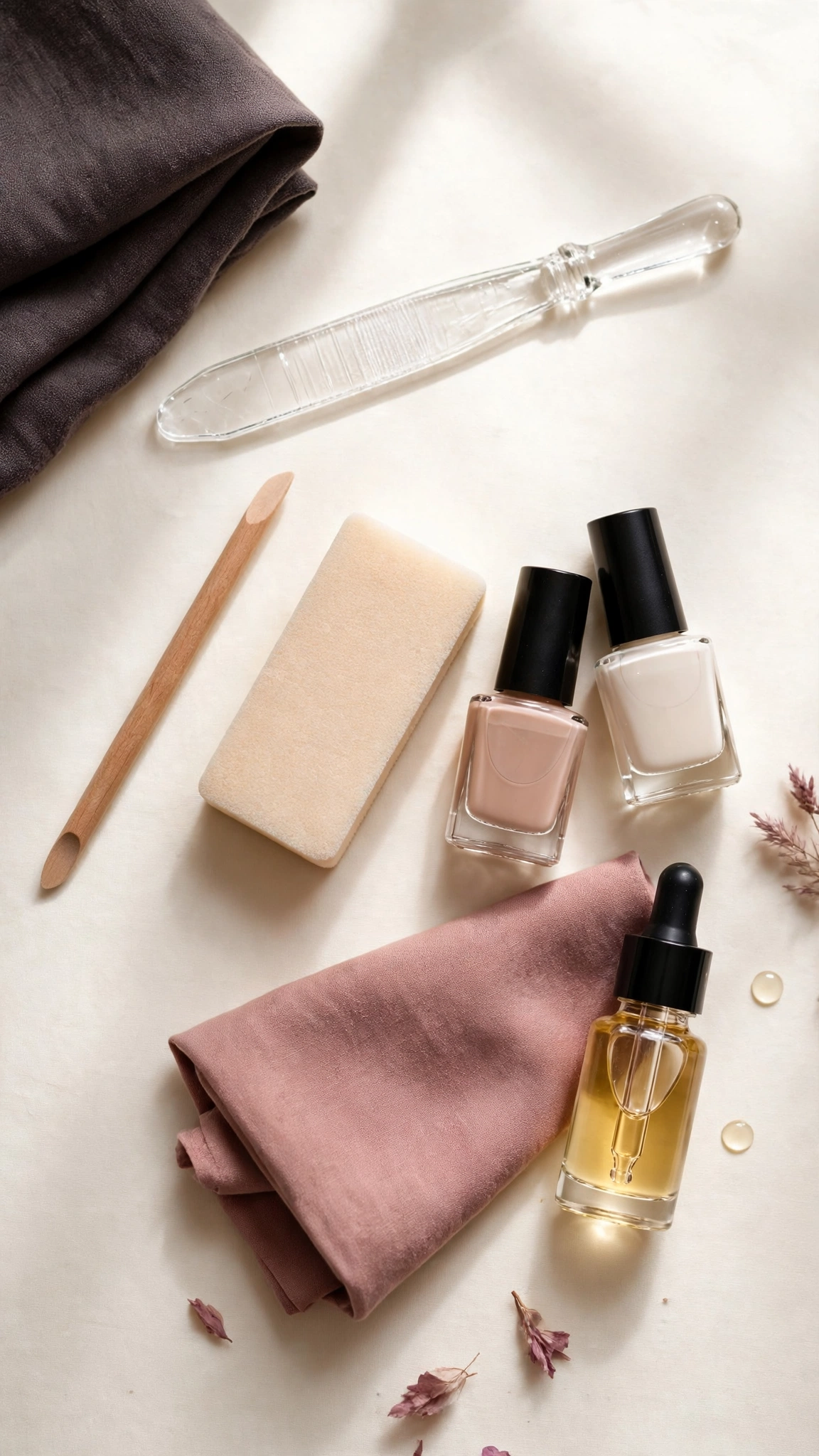
It follows the same basic sequence as any quality manicure, with the signature differences appearing in the color steps. Here is how it is typically done, in the salon or at home:
1. Shape the nails. File into an oval, almond, or soft squoval shape. This style looks most natural on these rounded shapes; sharp square tips fight the soft aesthetic.
2. Care for the cuticles. Soak briefly in warm water, then gently push cuticles back with a wooden stick. Trim only true hangnails — the philosophy here is low-intervention, so less is more.
3. Apply the nude base. Choose a sheer nude that closely matches your skin tone and apply one to two thin coats. The base should even out the nail’s tone without looking opaque — you want a “my nails but better” canvas.
4. Paint the tips. Using an off-white, ivory, or cream shade (never stark white), paint the free edge. Keep the band narrower than a classic French tip and the smile line soft rather than sharply curved.
5. Blend the smile line. This is the defining step. While the tip color is still workable, use a clean brush lightly dampened with polish remover — or a soft dry brush — to feather the edge where tip meets base until the transition looks seamless.
6. Seal with top coat. Finish with a glossy top coat, capping the free edge. The top coat unifies the layers and gives the style its signature healthy sheen.
The whole service typically takes 45 minutes to an hour in a salon — about the same as a French manicure. At home, allow a little extra time for the blending step, since that is where the natural effect is made or lost.
8 Variations Worth Trying
Think of it as a formula, not a single look. Once you understand the nude-base-plus-soft-tip structure, you can adapt it endlessly. Here are eight variations worth trying:
1. Classic Nude and Cream
The original: a skin-tone nude base with ivory tips and a fully blended smile line. Timeless, office-safe, and the version most salons mean when you ask for this style.
2. Soft White Tips
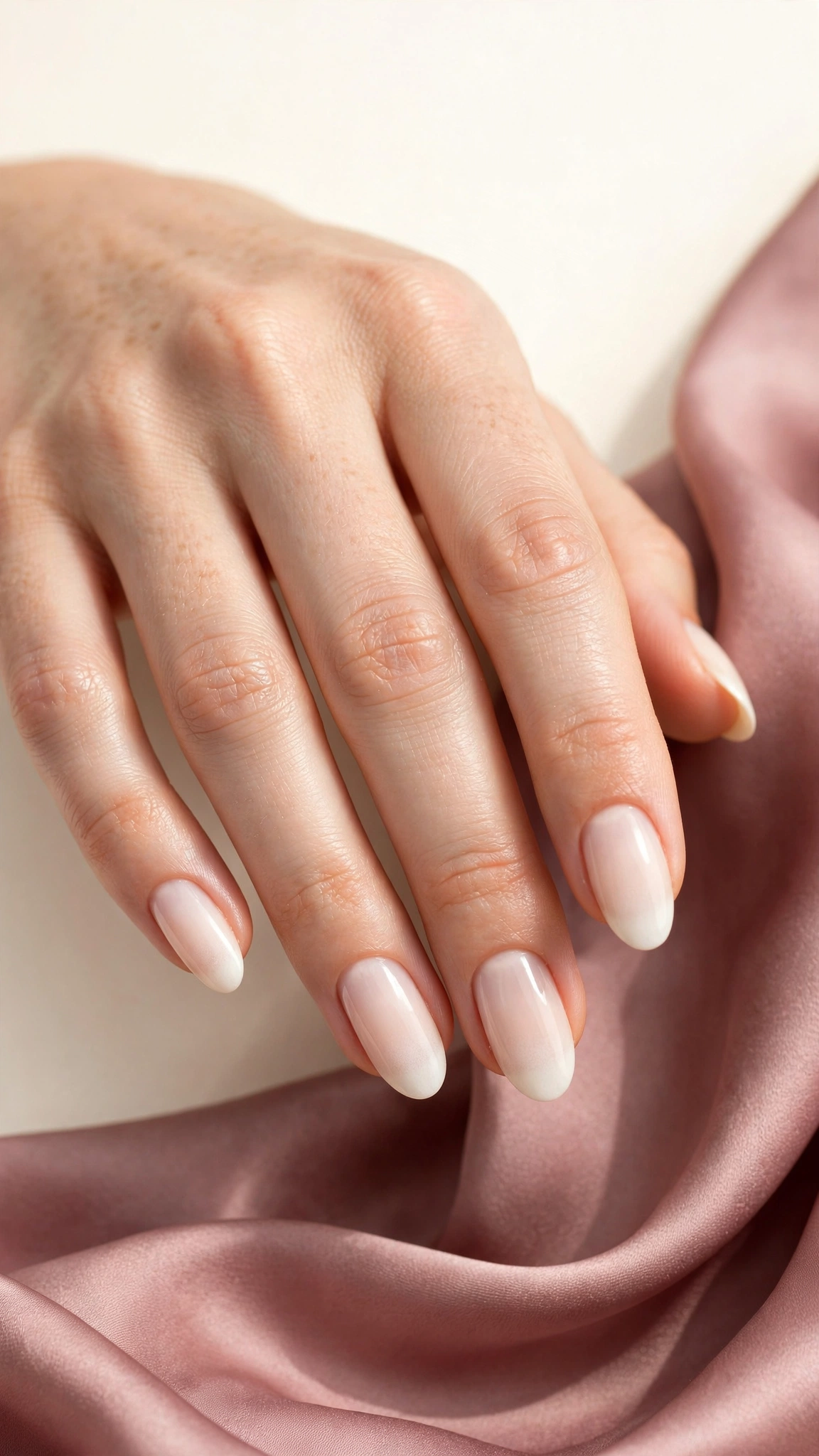
For those who want a whisper more definition, soft white tips sit halfway between French and American. The white is still muted and the edge still blended — just a touch more visible than the classic version.
3. Blush American Manicure
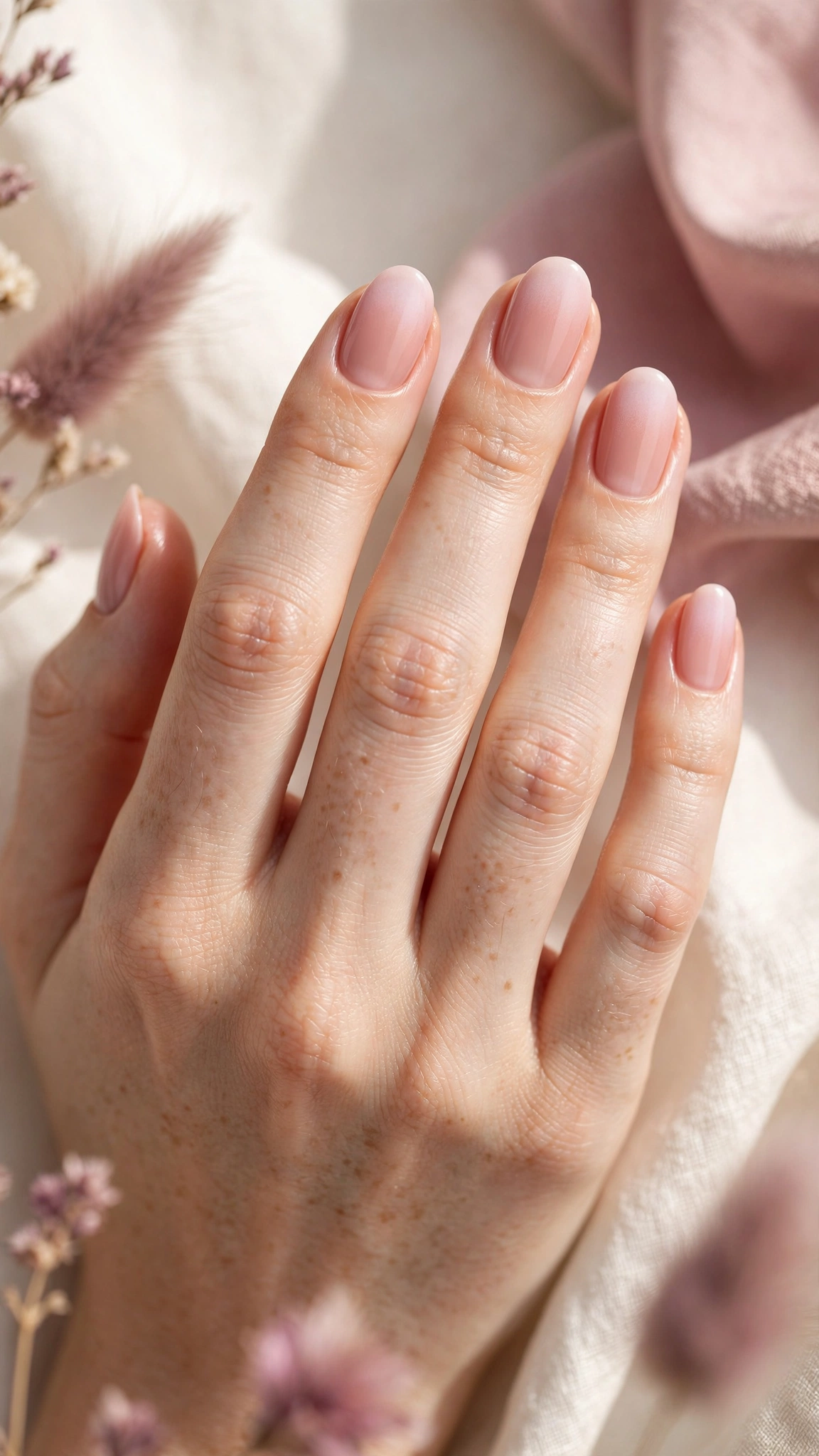
Swap the nude base for a rosy blush tone and the cream tips for pale pink. The blush version flatters cool and fair skin tones beautifully and feels a little more romantic than the neutral original.
4. Micro-Tip American Manicure
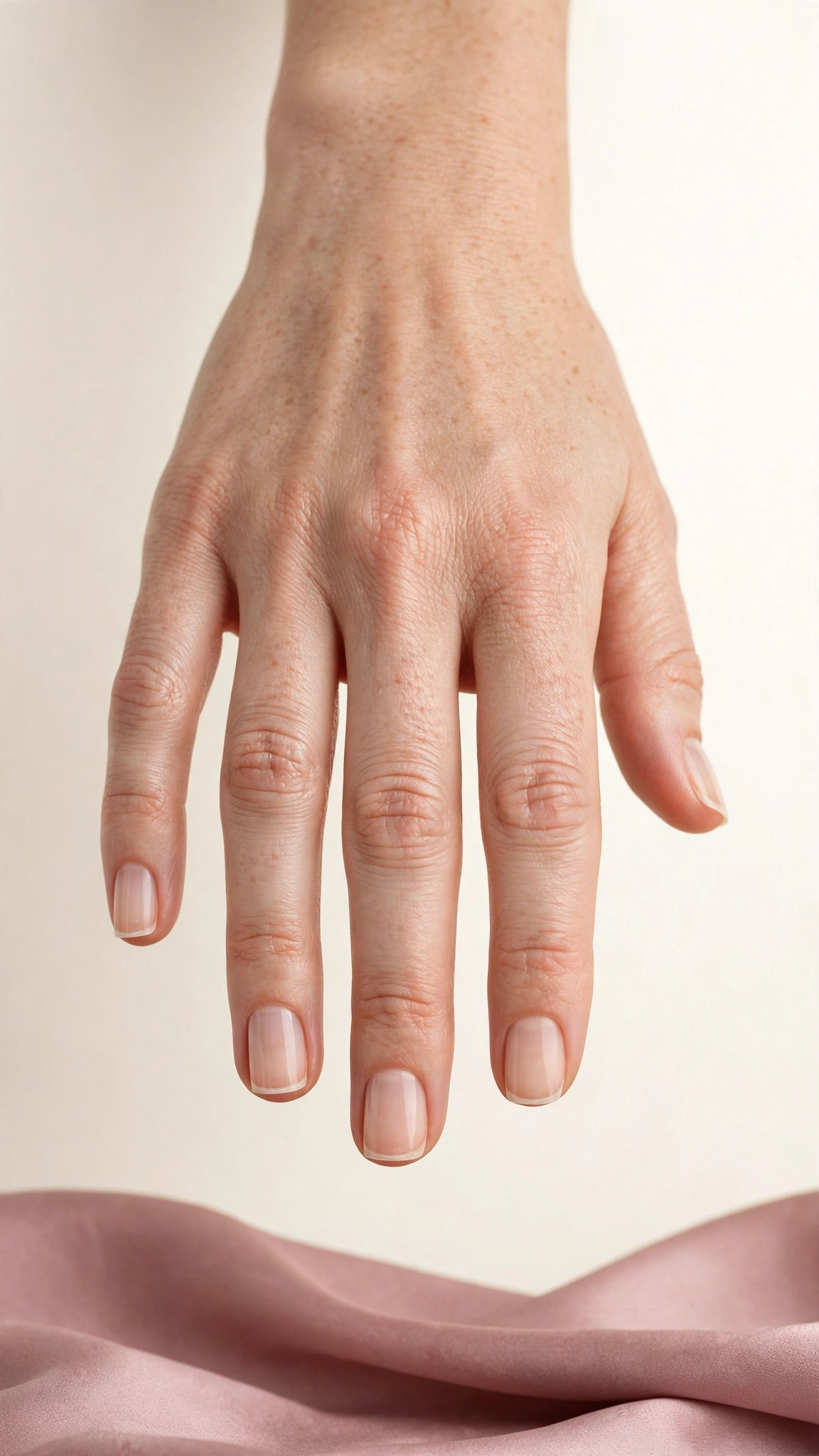
A whisper-thin tip line on short, neat nails — the most minimal version of the style. Perfect for very short nails, conservative workplaces, and anyone who wants the effect to be felt rather than seen.
5. Almond American Manicure
On a medium almond shape, this style looks especially elegant — the tapered shape elongates the fingers while the soft tips keep everything natural. This is the red-carpet version of the style.
6. Short and Natural
This might be the best tip style ever designed for short nails. Because the tips are soft and narrow, they don’t overwhelm a short nail bed the way bold French tips can. For more short-nail inspiration, see our natural nail designs guide.
7. Matte American Manicure
A matte top coat over the classic nude-and-cream combination gives it a modern, velvety finish. Unexpected, understated, and very 2026.
8. Bridal American Manicure
The wedding-day classic: classic nude and cream tips, sometimes with a single subtle accent — a tiny pearl, a whisper of shimmer on the ring finger. It photographs beautifully and never competes with the ring.
How to Ask for It at the Salon
Walking into a salon and asking for an “American manicure” can get mixed results, since not every nail tech uses the term the same way. The clearest way to ask is to describe the outcome you want: a sheer nude base matched to your skin tone, with soft off-white tips and a blended smile line — like a French manicure, but natural-looking rather than high-contrast.
Bringing a reference photo helps enormously, because the term means slightly different things to different technicians. Some hear it as “French manicure with beige tips,” others as “barely-there nude with a hint of white.” A photo removes the ambiguity and gives your tech a concrete target for the tip width, tip color, and blend softness you have in mind.
It also helps to specify three details upfront. First, the base: ask for a sheer nude close to your natural nail bed color, not an opaque beige — opacity is what separates this style from a standard nude manicure. Second, the tip color: request ivory, cream, or off-white explicitly, and say “no stark white” if you want to avoid drifting into French territory. Third, the smile line: ask for it soft and diffused rather than crisp.
On shape, oval or almond will serve the look best; if you wear your nails square, ask your tech to soften the corners into a squoval. And on formula, gel will hold the sheer layers beautifully for two to three weeks, while regular polish keeps the option open to change your mind in a week — both work well with this style.
Finally, manage the cuticle conversation. This look needs only gentle cuticle care — a brief soak and a careful push-back. If a salon proposes aggressive cutting or extensive e-file work as part of the service, that is a different treatment philosophy than the low-intervention approach this look is built on, and it is reasonable to ask for the gentler version.
Who Is It Best For?
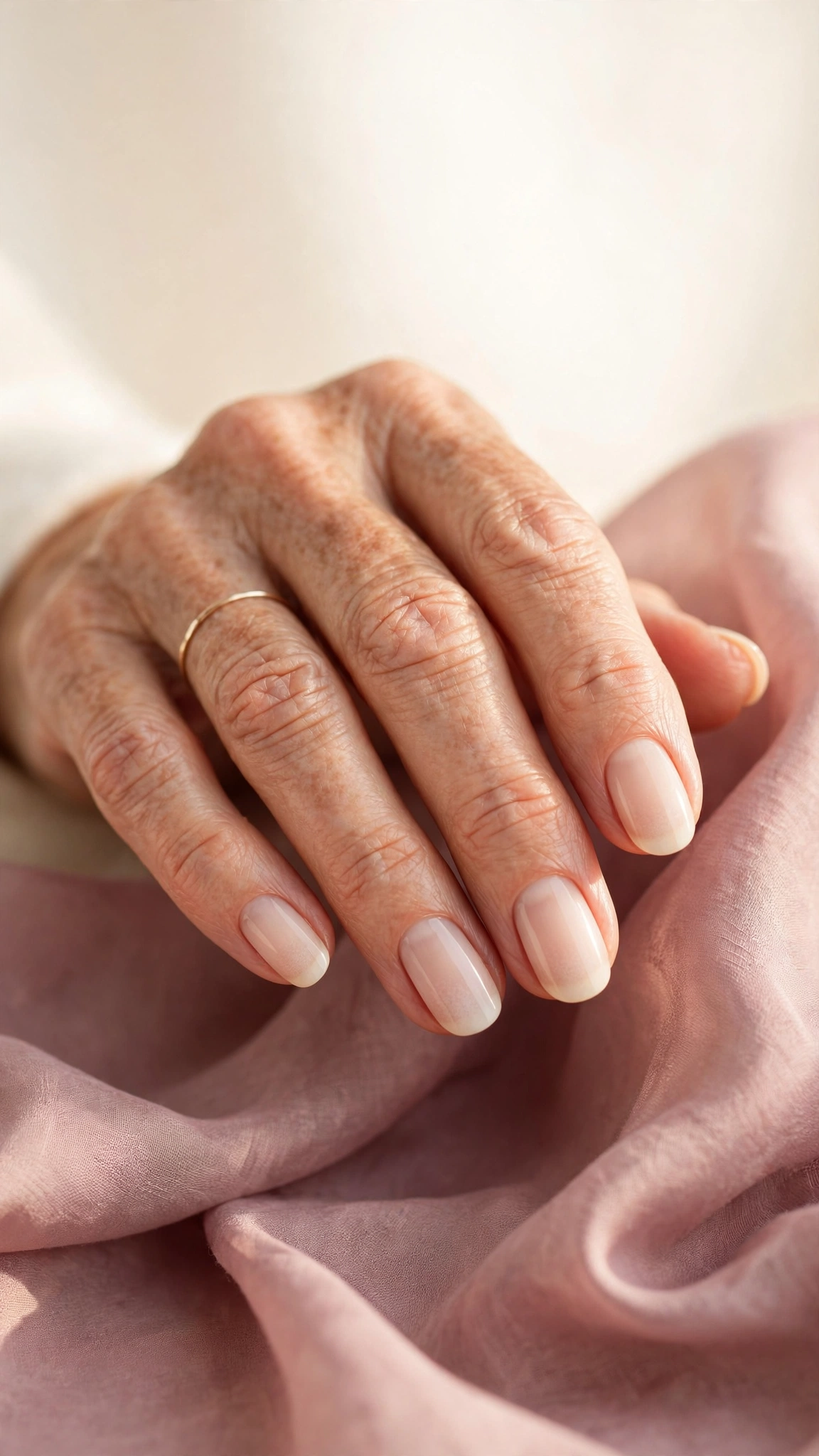
This style suits almost everyone, but it is an especially good choice if you recognize yourself in any of these:
- Brides and wedding guests — timeless in photos and never clashes with an outfit.
- Professionals — polished enough for the boardroom, subtle enough for strict dress codes.
- Minimalists — if you find French tips too bold and bare nails too plain, this is your middle ground.
- Short-nail wearers — the soft, narrow tips flatter short nail beds better than high-contrast French.
- Low-maintenance types — regrowth is far less visible than with stark white tips, so it grows out gracefully.
It is less ideal if you love bold, high-impact nail art — the whole point of this look is restraint. But as a base for special occasions layered over your usual style, even maximalists appreciate it.
A note on skin tones: the “nude” in this style is not one color — it is whatever sheer tone disappears against your nail bed. Fair skin pairs well with sheer pinks and light beiges; medium skin with warm caramels and honey nudes; deep skin with rich mochas and espresso-tinted sheers. When the base matches, the whole manicure looks lit from within; when it doesn’t, even the prettiest tip work looks pasted on. If you are unsure, hold polish bottles against your bare nail in natural daylight — the right one will seem to vanish.
Aftercare: Making It Last
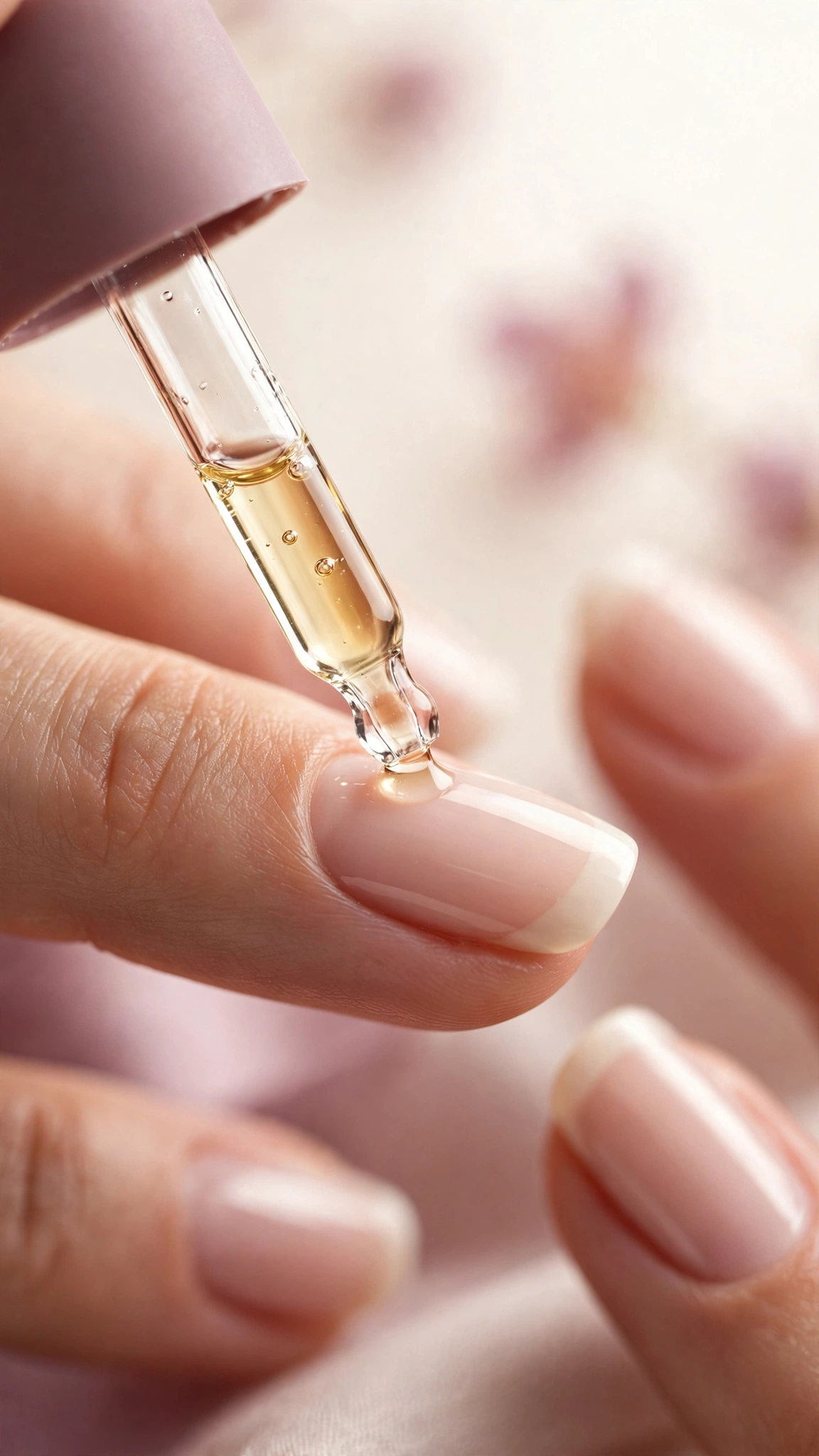
In regular polish, this manicure typically lasts 5 to 7 days; in gel, 2 to 3 weeks. Because the colors are sheer and the tips are soft, chips and regrowth show less than with a French manicure — one of its practical advantages.
To extend wear, cap the free edge with top coat during application, refresh the top coat every few days, and apply cuticle oil daily. According to the American Academy of Dermatology, keeping nails moisturized helps prevent the peeling and breakage that ruin manicures early. Wear gloves for cleaning and dishwashing, and avoid using your nails as tools.
Gel versus regular polish: both formulas suit this style, and the choice comes down to lifestyle. Gel keeps the sheer layers pristine for two to three weeks and resists the tip wear that shows first on pale shades — ideal for weddings, vacations, or anyone who wants to forget about their nails for a while. Regular polish is kinder to the budget, easier to change, and simpler to remove; it is the better pick if you like switching shades weekly. Either way, never peel off gel — according to nail care experts, peeling lifts layers of the natural nail along with the color, so always soak off properly.
For general nail health guidance, the American Academy of Dermatology’s nail care guidance covers moisturizing, trimming, and when to see a dermatologist. Background on manicure techniques is available in the Wikipedia overview of the manicure.
American Manicure FAQ
How long does an American manicure last?
In regular polish, it typically lasts 5 to 7 days; in gel, 2 to 3 weeks — the same as any manicure in that formula. Because the nude base and soft tips are low-contrast, regrowth and minor chips are less visible than with a French manicure, so it tends to look good for longer between appointments.
Is an American manicure better than a French manicure?
Neither is objectively better — they serve different tastes. It is better if you want a natural, understated look with soft off-white tips and a blended smile line. The French manicure is better if you want the classic high-contrast look with bright white tips. Many people who find French tips too stark prefer this style for everyday wear.
Can I do an American manicure at home?
Yes — it is one of the more forgiving salon styles to DIY, because the soft, blended tips hide imperfections far better than crisp French lines. You need a sheer nude polish, an off-white or cream polish, and a top coat. The key skill is the blending step: feathering the smile line so the tip melts into the base. Practice on one nail first to get the pressure right.
What nail shape is best for an American manicure?
Oval, almond, and soft squoval shapes flatter this style most, because their rounded edges echo its soft aesthetic. Sharp square tips can work but fight the natural look slightly. The style also adapts well to short nails, where its narrow, low-contrast tips avoid overwhelming the nail bed.
Does an American manicure damage nails?
It is no more damaging than any standard polish manicure. It doesn’t require aggressive cuticle cutting or harsh prep — the philosophy is deliberately low-intervention. As with any manicure, the main risks come from over-buffing the nail plate and picking off gel polish; according to dermatologists, gentle soak-off removal and regular moisturizing keep nails healthiest.
How much does an American manicure cost?
It typically costs about the same as a French manicure at a given salon, since the service time and skill level are comparable. Prices vary widely by location and salon tier, so it is worth calling ahead — and asking to see photos of the salon’s previous work in this style, since the soft blended tip is harder to execute well than a standard French.
Compare Before You Choose
See the Closest Alternatives
Compare nearby shapes, colors and finishes before picking a final reference.
Recommended Next
Pingback: Russian Manicure: The Ultimate 2026 Guide