Blue has been quietly building toward a moment for a couple of seasons now, but this year it finally arrived in its most sophisticated form. Midnight blue nails have moved from a niche request into one of the defining color stories of the year, with dark blue search interest reportedly climbing sharply year over year as navy crosses over from fashion accessories and interiors into the nail chair. It is easy to see why once you look at a finished set: midnight blue carries the same weight and depth as black, but with a warmth and personality flat black can never quite offer, making it feel bold without tipping into severe.
This site has covered blue nails before, but always in a different register. Our denim blue nails feature focuses on a lighter, more casual wash reminiscent of faded jeans, and other coverage on this site has explored baby blue cat-eye finishes in a much softer, pastel register. Midnight blue nails sit at the opposite end of the color spectrum entirely: deep, almost-black navy with real richness and dimension, built for evening wear as easily as everyday sophistication.
What Exactly Is “Midnight Blue” in Nail Polish Terms
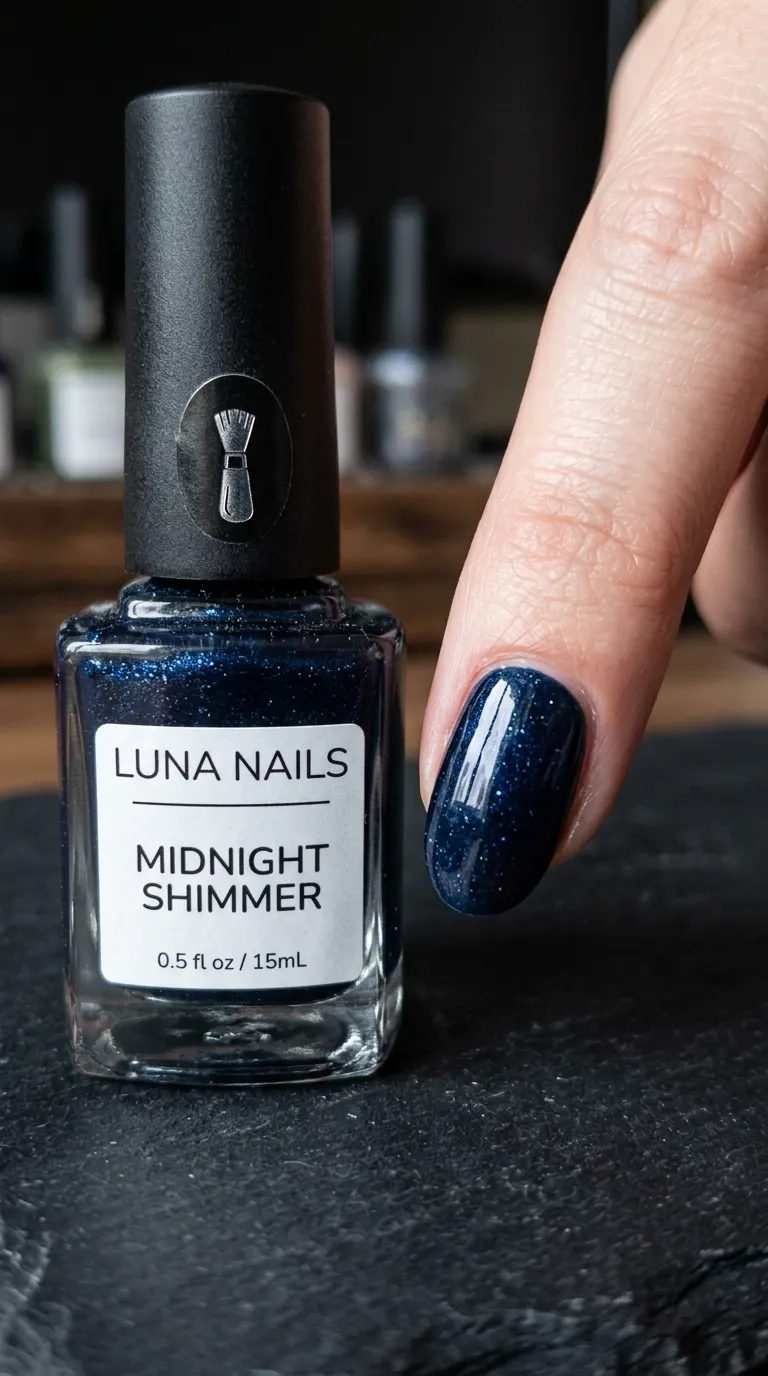
Midnight blue sits in the color family between navy and true black, typically formulated with enough blue pigment to read clearly as blue in direct or natural light, while appearing nearly black under dimmer indoor lighting. This dual nature is part of the appeal: from across a room, a midnight blue manicure can look like a sophisticated black, but up close and in good light, the color reveals its true depth and richness. Formulators achieve this effect using a heavy concentration of blue pigment with just enough black mixed in to deepen the tone without fully desaturating it into a true navy. This distinctive undertone is exactly what gives midnight blue nails their signature look.
How It Differs From Navy and Denim Blue
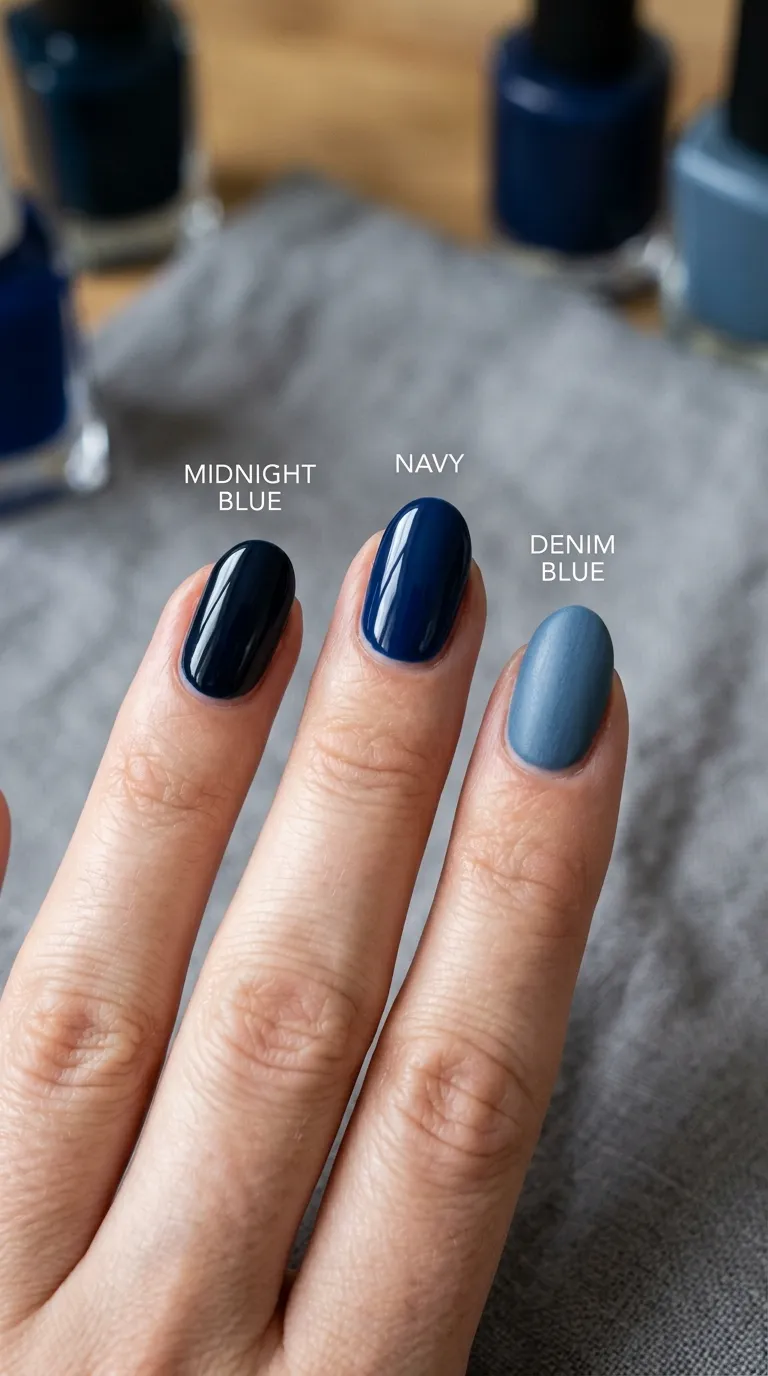
Standard navy polish tends to read clearly as blue even in low light, while midnight blue pushes further toward black, creating that signature “is it blue or is it black” ambiguity depending on lighting conditions. This is a meaningfully different effect from the site’s existing denim blue coverage, which centers on a lighter, more washed-out blue with visible texture reminiscent of faded fabric, worn in a much more casual, everyday context than the polished, evening-appropriate feel of midnight blue. That subtle shift between blue and black is a big part of why midnight blue nails photograph so well in different lighting.
Why Midnight Blue Is Resonating This Year
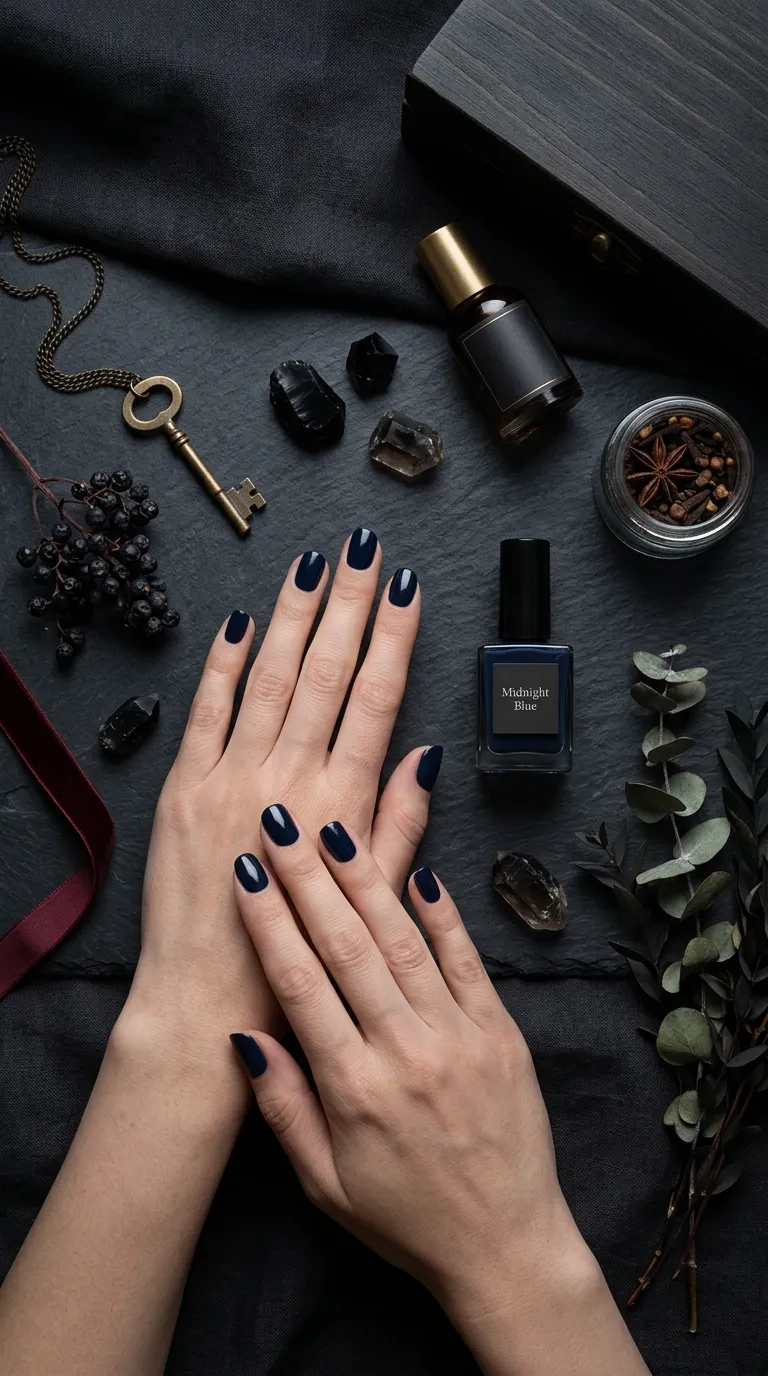
Nail trend analysts have pointed to a broader shift away from warmer tones like burgundy and rust that dominated recent seasons, with cooler, moodier shades stepping in to take their place. Midnight blue benefits enormously from this shift, offering a cool-toned alternative to black that still feels appropriately deep and dramatic for colder months without the starkness some people find severe about true black polish. It’s this cooler, moodier appeal that’s driving so much of the current demand for midnight blue nails, a shift several major beauty publications have also pointed to this year.
There is also a practical styling advantage. Midnight blue nails complement an unusually wide range of other colors and metals, working just as well against warm gold jewelry as against cool silver, and pairing naturally with both neutral and jewel-toned outfits in a way that a truer, brighter blue sometimes struggles to do.
Finish Options Worth Considering
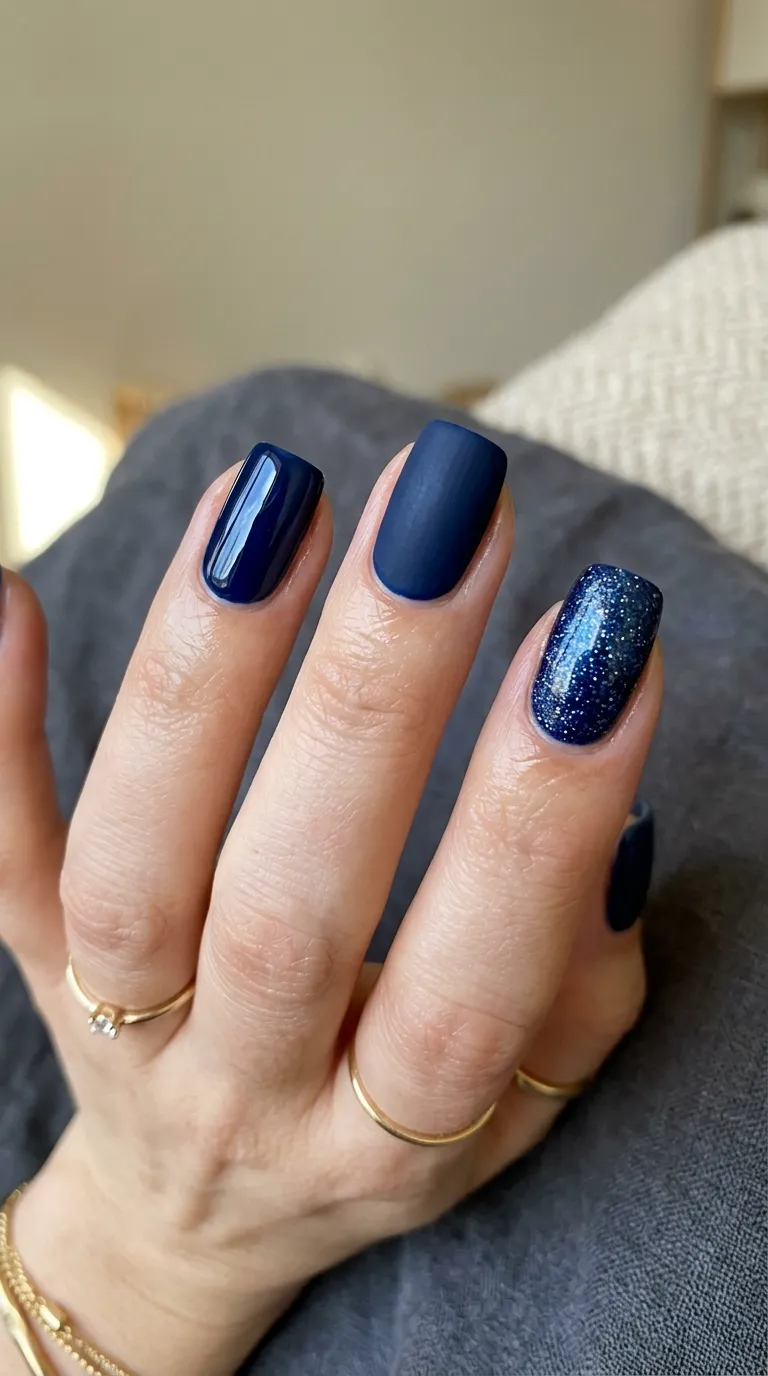
A glossy, high-shine finish tends to showcase the color’s depth most dramatically, letting light catch the subtle blue undertone even in dimmer settings. Matte midnight blue offers a moodier, more understated alternative popular for everyday wear. The most striking option this season, however, has been an aurora or shifting pearlescent finish layered over the deep blue base, which nail industry reporting has noted outperforms the same aurora effect applied to lighter shades, since the dark base provides more contrast for the shifting rainbow shimmer to read clearly. Choosing the right finish is one of the easiest ways to customize midnight blue nails to your personal style.
Midnight Blue Across Different Nail Shapes and Lengths
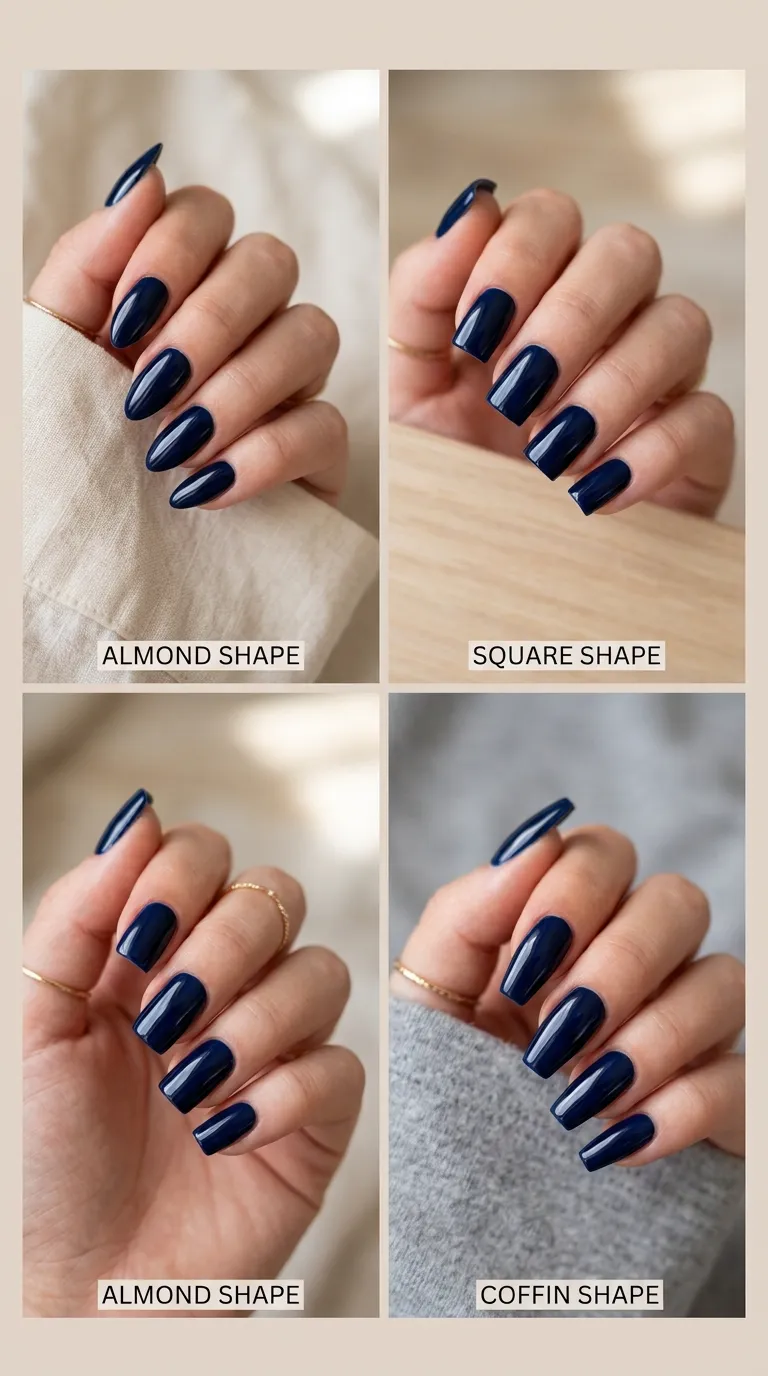
On shorter, almond-shaped nails, midnight blue tends to read as refined and quietly polished, a sophisticated alternative to a classic neutral manicure for anyone wanting a bit more depth without going bold. On longer coffin or stiletto shapes, the same color becomes considerably more dramatic and striking, especially when paired with a glossy, glass-like top coat that emphasizes length and shine simultaneously. This versatility across finishes is one more reason midnight blue nails have stuck around season after season.
A number of clients have also requested a French-style application using midnight blue instead of the classic white tip, creating a dramatic, moody take on a familiar shape that reads as far more editorial than a traditional French manicure while still keeping the same elegant silhouette. Getting this balance right is part of what makes midnight blue nails feel intentional rather than accidental.
Styling Midnight Blue Nails With Your Wardrobe
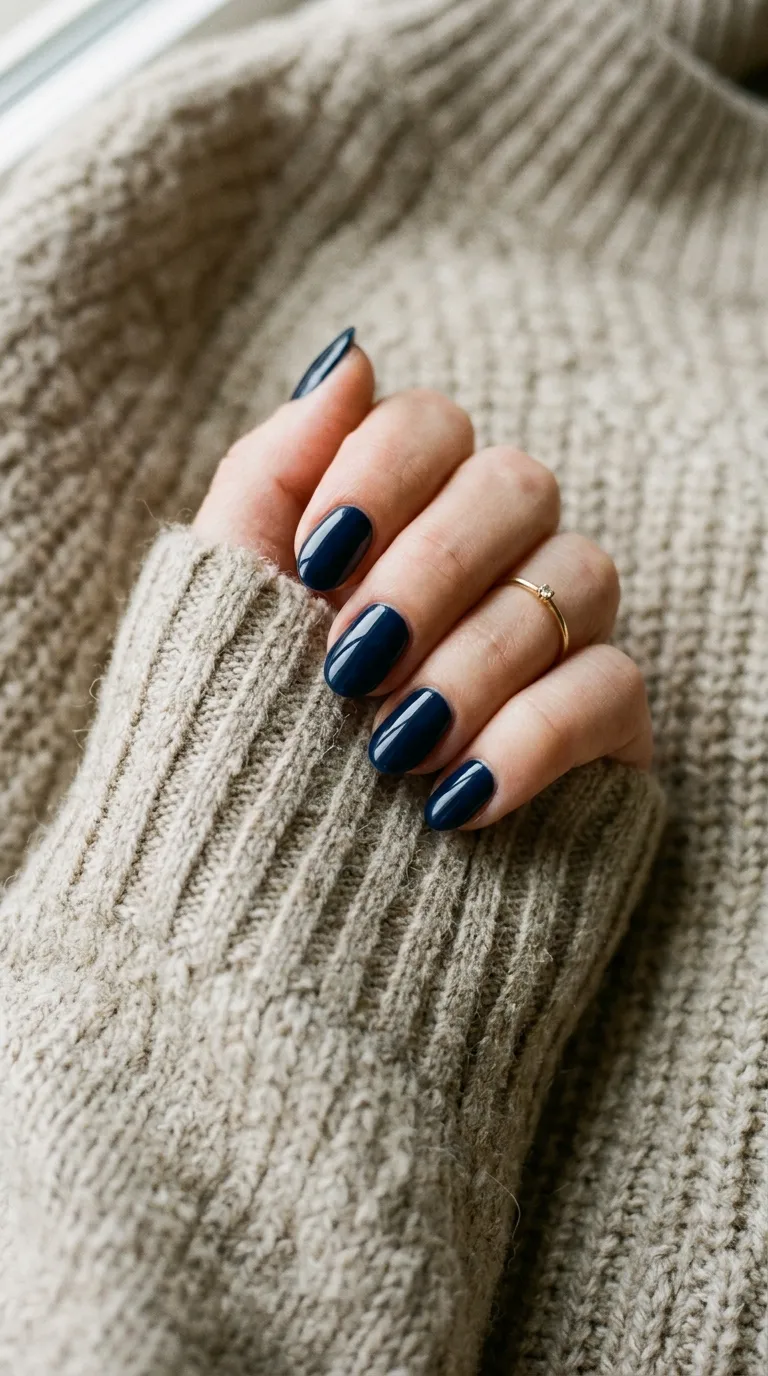
One of the color’s biggest advantages is genuine year-round versatility. In colder months, midnight blue pairs naturally with denim, chunky knits, and cozy neutral tones, adding a touch of depth without clashing the way a brighter blue sometimes can against warm, textured fabrics. During warmer months, the same shade works surprisingly well against lighter, breezier fabrics and metallics, offering an evening-appropriate option that still feels seasonal rather than heavy. These small formulation differences are worth discussing with your technician before committing to midnight blue nails.
For special occasions, midnight blue has become a popular alternative to traditional black for evening wear, offering the same sense of formality and depth with a bit more visual interest once it catches the light. It also plays well alongside coastal-inspired styling; if you have enjoyed browsing the color stories in our Santorini-inspired nail coverage or the sun-drenched palettes in our French Riviera nails feature, midnight blue offers a moodier, evening-appropriate counterpart to those brighter coastal blues, ideal for transitioning a vacation-inspired manicure into cooler weather back home. Considering shape alongside color helps midnight blue nails look polished on any hand.
Pairing Midnight Blue With Nail Art
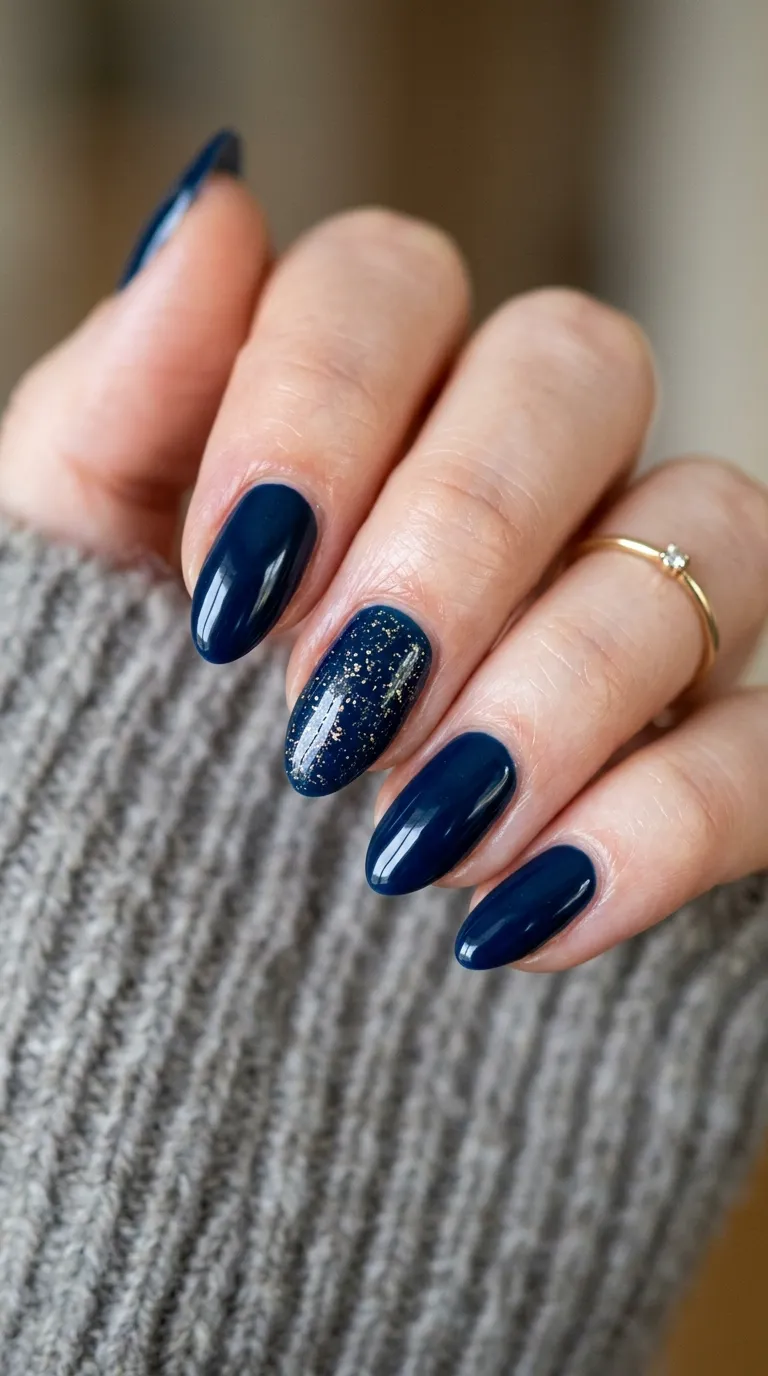
Because the base color reads so richly on its own, many clients keep additional nail art minimal, opting for a single accent nail rather than an all-over pattern. Fine gold or silver linework traces particularly well against the dark base, creating a starry-night effect that has become one of the most requested add-ons this season. A subtle marbled effect, blending the midnight base with small amounts of deep purple or emerald, offers another popular variation for clients wanting a bit more depth without moving away from the overall dark, moody palette. This flexibility across lengths is part of what makes midnight blue nails such an easy trend to adopt.
For clients drawn to more playful color pairings, midnight blue has also shown up as a striking accent alongside the softer, watery finishes covered in our mermaid nails feature, with the deep base providing dramatic contrast against lighter, iridescent teal and seafoam accent nails within the same set. Pairing the right textures and metals with midnight blue nails elevates the overall look considerably.
Application Tips for a Flawless Finish
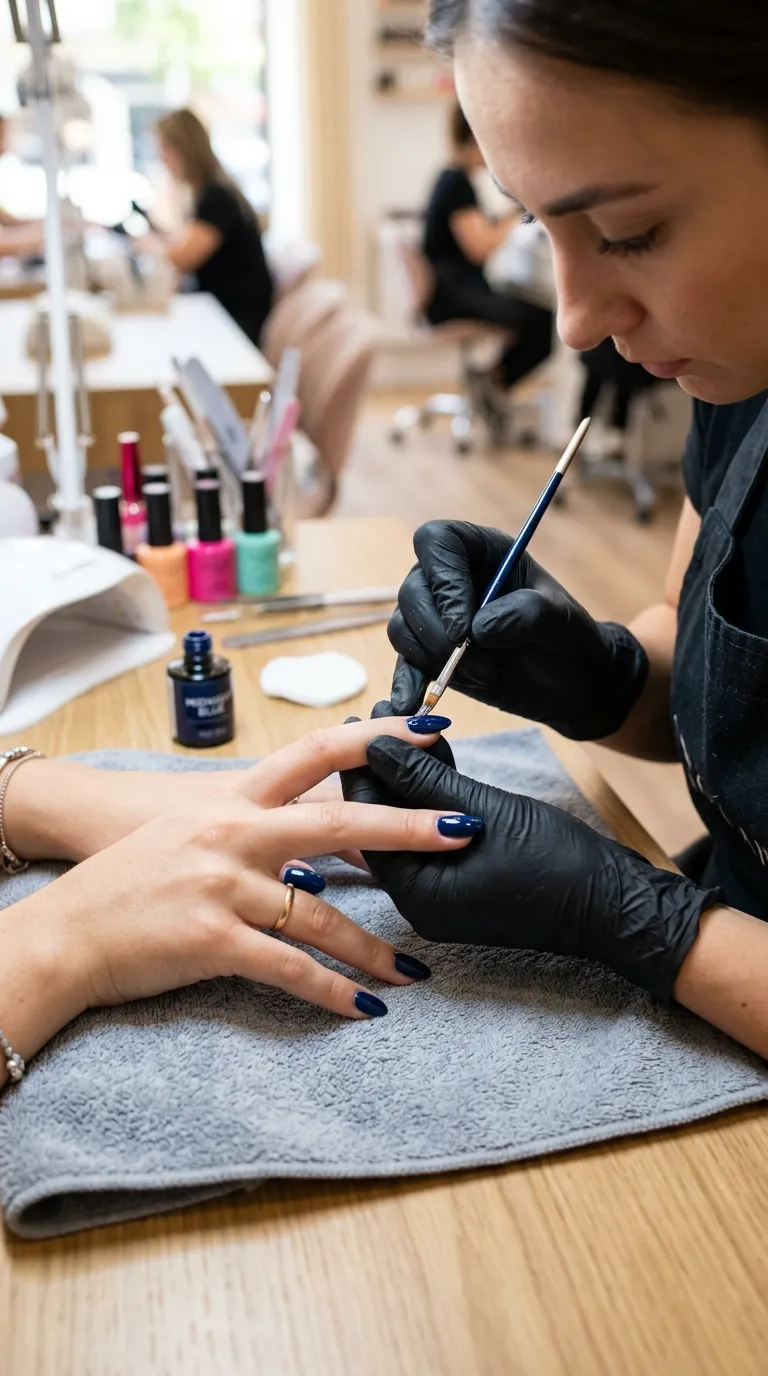
Dark, saturated polishes like midnight blue can sometimes require an extra thin coat to achieve full, even opacity without pooling at the cuticle line, so patience during application pays off. A quality base coat is especially important with darker pigments, both to protect the natural nail from staining and to help the color glide on smoothly without streaking. Two thin coats generally outperform one thick coat for both durability and finish quality, particularly with gel formulas where proper curing between layers affects how evenly the final color sits. Getting the application technique right makes a noticeable difference in how midnight blue nails wear over time, echoing broader expert guidance on caring for dark nail polish.
How Long Midnight Blue Nails Typically Last
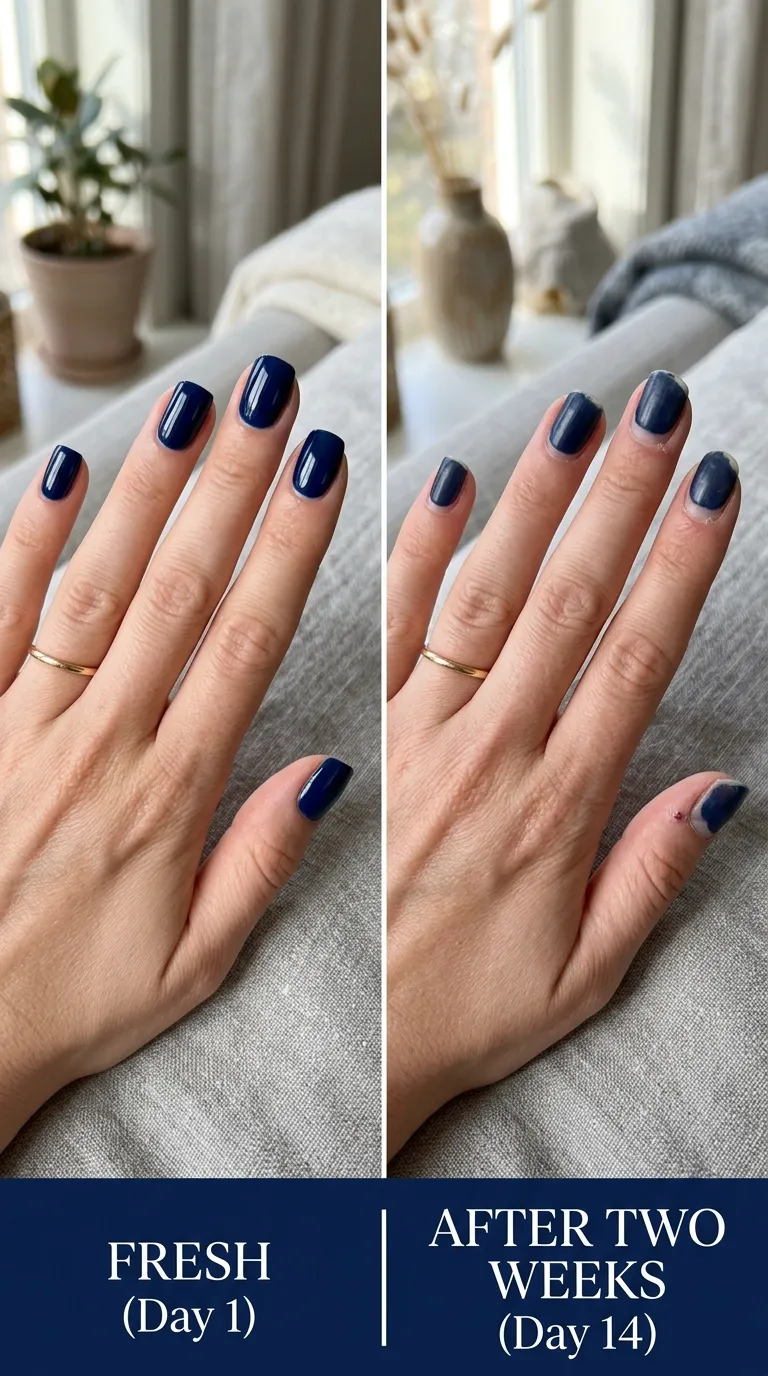
Applied with a quality gel system, midnight blue nails generally hold their color and shine for the standard three to four week fill window. Because the shade is so dark, minor chips can actually be less noticeable than they would be with a lighter polish, though the glossy finish that shows off the color’s depth so well does tend to show scuffing a little faster than a matte alternative, so clients who are hard on their hands may prefer the matte finish option for practical, everyday wear.
Frequently Asked Questions About Midnight Blue Nails
What is the difference between midnight blue and navy nail polish?
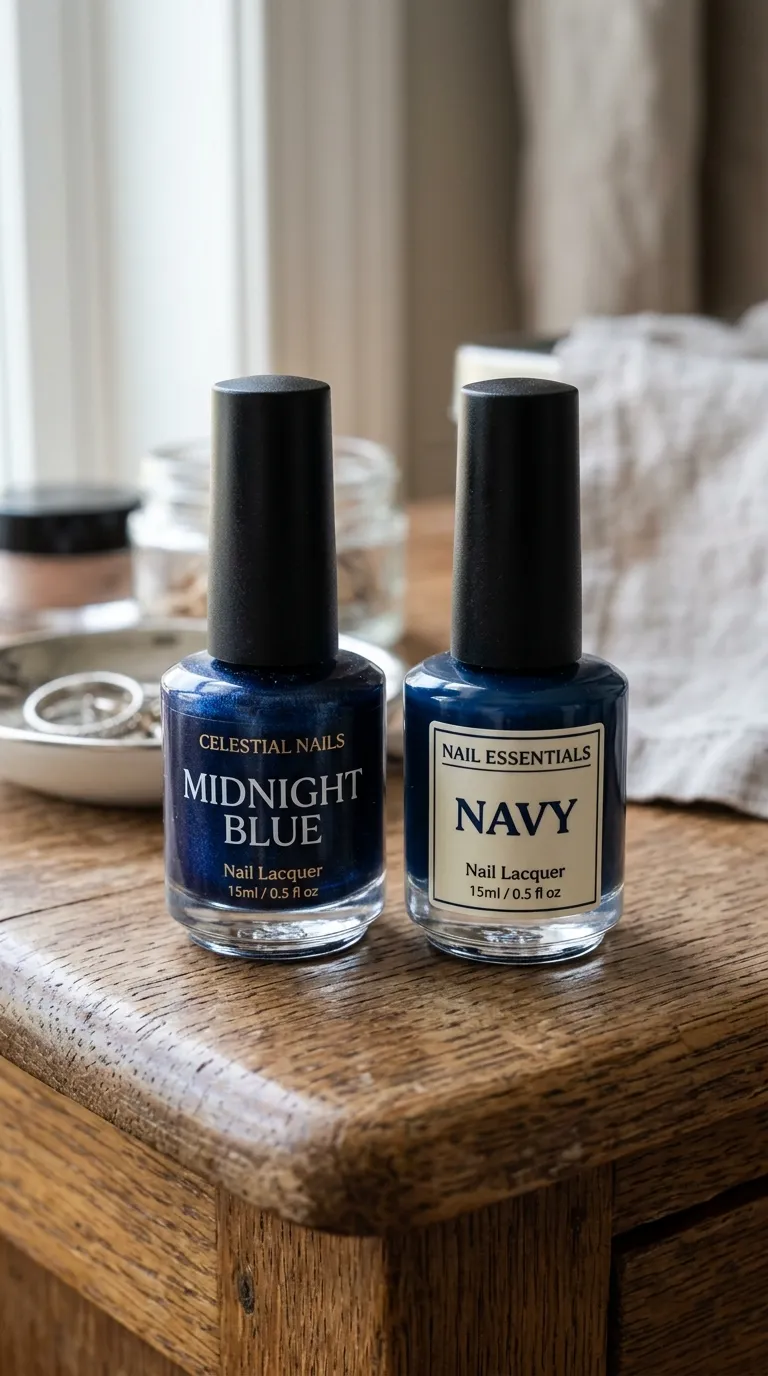
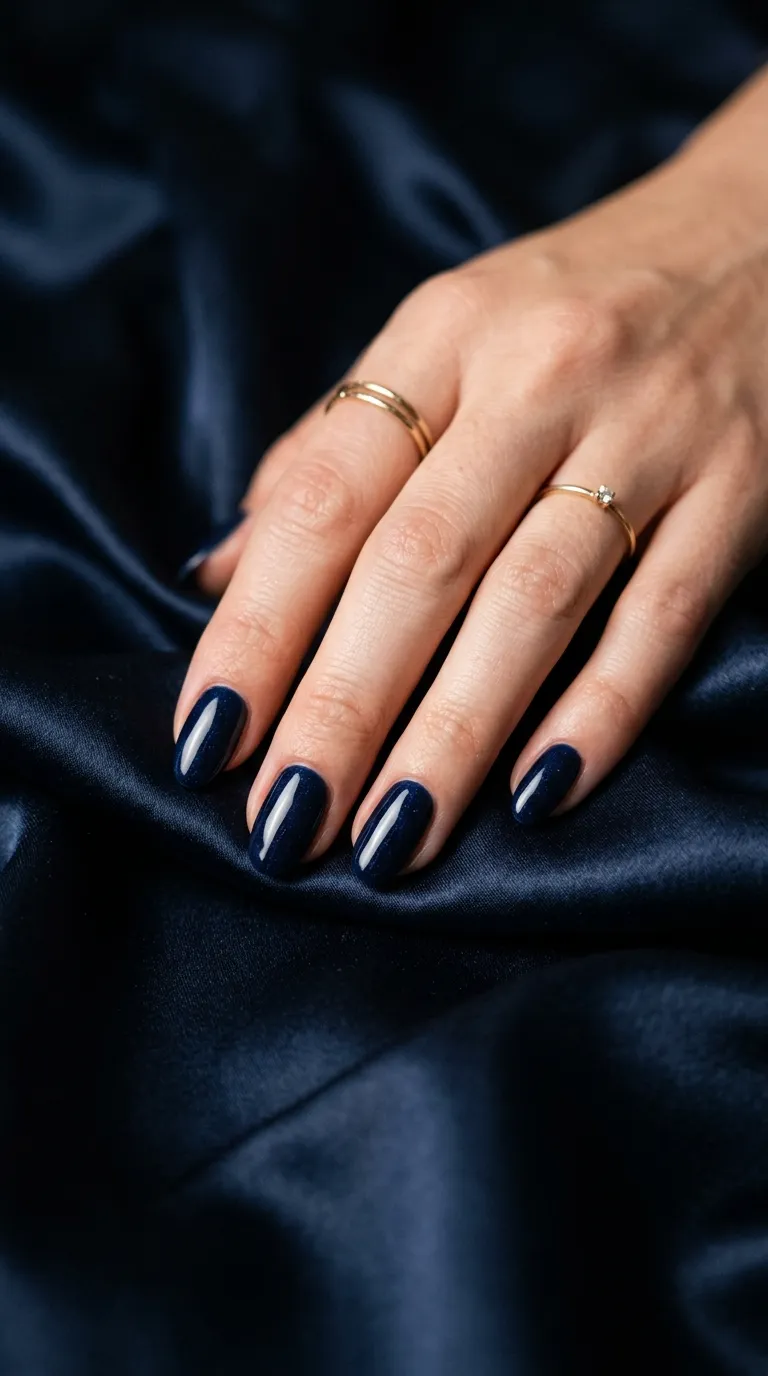
Midnight blue sits closer to black than standard navy, often appearing nearly black in low light while revealing its blue undertone clearly in direct or natural light. Navy tends to read as clearly blue regardless of lighting conditions.
Does midnight blue nail polish work for all skin tones?

Yes. Because the shade sits between navy and black, it tends to complement a wide range of skin tones, offering the same versatility as classic black polish while adding a bit more visual depth and warmth. This broad compatibility is one of the main reasons midnight blue nails have such wide appeal.
Is midnight blue considered a fall or winter color?

While it is especially popular during colder months, midnight blue has become a genuinely year-round shade, working well against both cozy winter textures and lighter summer fabrics, particularly for evening occasions. That year-round flexibility is part of what sets midnight blue nails apart from more seasonal color trends.
What finish is best for midnight blue nails?
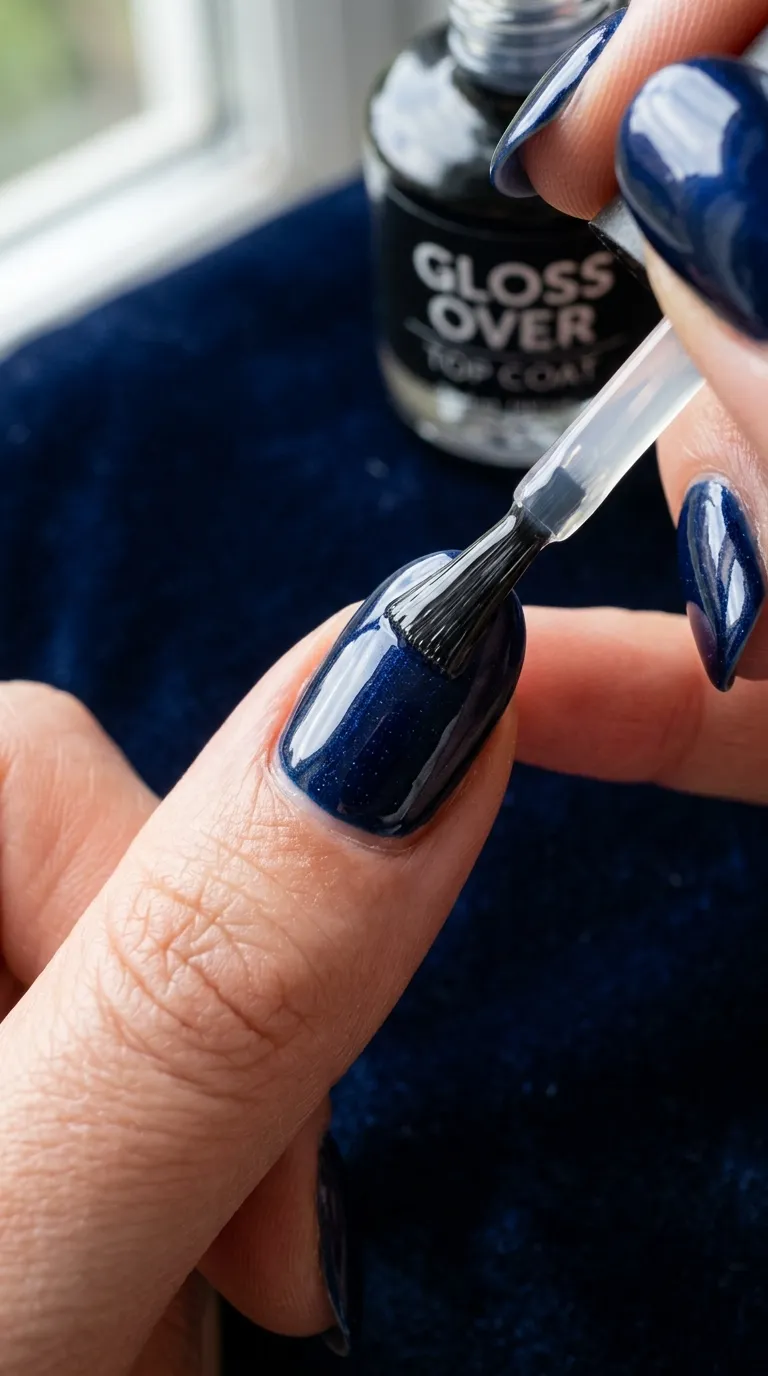
Glossy finishes showcase the color’s depth most dramatically, while matte offers a more understated, everyday-friendly alternative. Aurora or pearlescent finishes layered over the dark base have become especially popular this season for their striking shimmer effect. This makes finish selection an important styling decision for anyone trying midnight blue nails.
How does midnight blue differ from the denim blue nail trend?
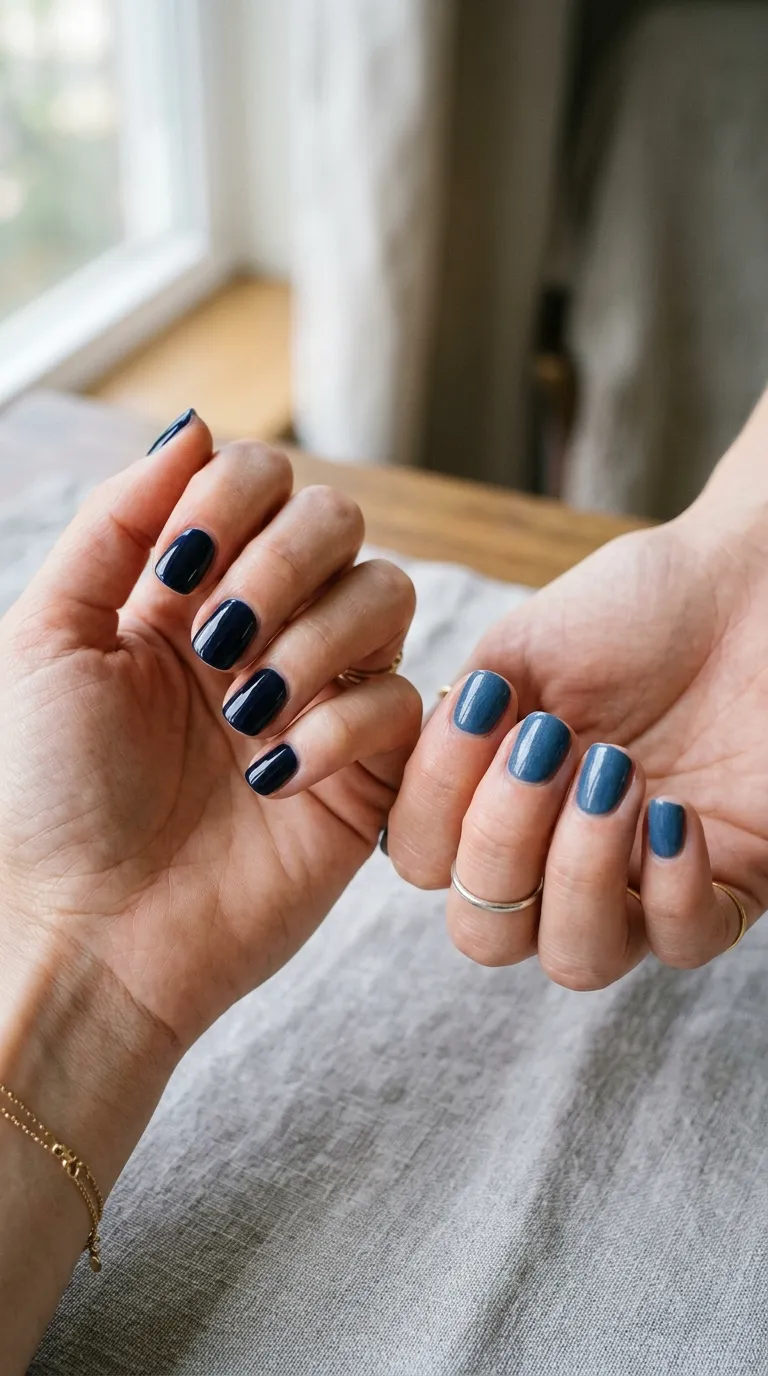
Denim blue nails use a lighter, more washed-out blue with visible texture reminiscent of faded fabric, worn in a casual, everyday context. Midnight blue is a much deeper, richer shade closer to black, typically worn for a more polished or evening-appropriate look.
Can I get midnight blue nails with gel or only regular polish?
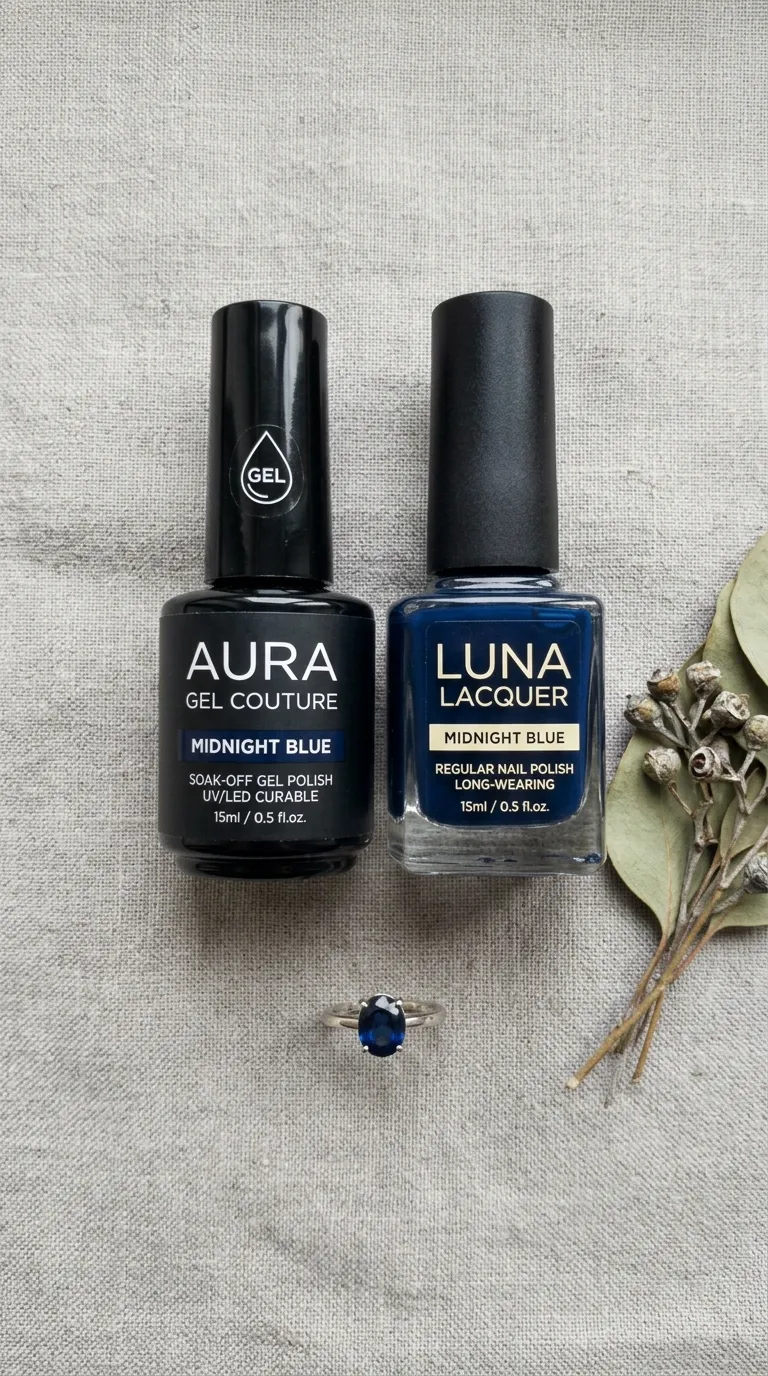
Both options work well, though gel is generally recommended for its longer wear time and ability to hold a smooth, even finish over multiple thin coats, which matters more with darker, more saturated pigments like midnight blue. This makes gel formulas a common recommendation for anyone wanting midnight blue nails to last.
The Rise of Dark, Cool-Toned Manicures
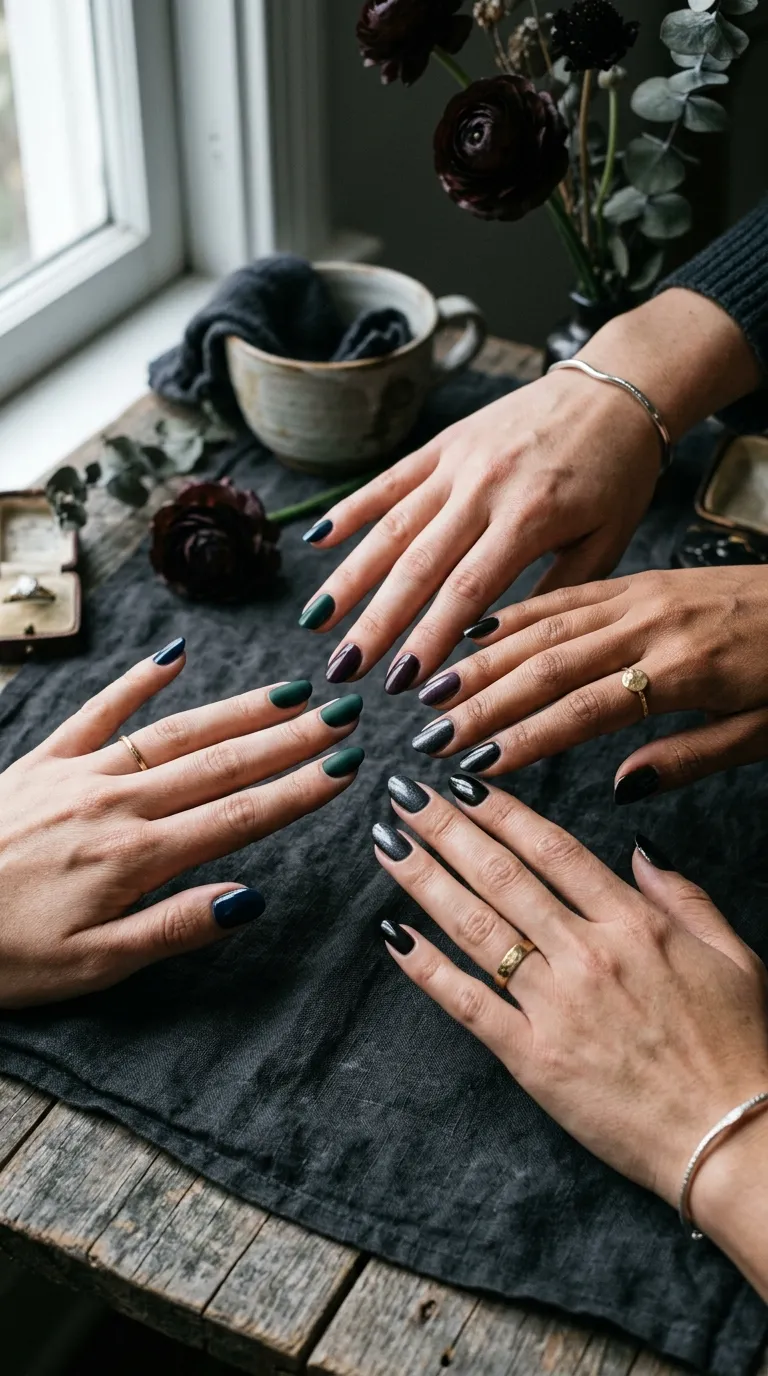
To understand why this particular shade has found such a wide audience, it helps to zoom out to the broader color trends shaping nail art this year. After several seasons dominated by warm, earthy tones, cooler palettes have started reclaiming space across both fashion and beauty. Deep jewel tones, cool grays, and rich indigo shades have all seen renewed interest, and this color story fits naturally within that larger movement rather than standing alone as an isolated trend.
Part of the appeal also comes from how the shade photographs. Under studio lighting or bright indoor settings, it reads as a striking, saturated hue, while in dimmer, ambient lighting it shifts toward a moodier, almost monochrome effect. That range gives the color an unusual amount of flexibility across different settings, from a bright office environment to a dimly lit evening event, without ever looking out of place in either context. Following a consistent care routine, in line with dermatologist-recommended nail care guidance, is the simplest way to keep midnight blue nails looking fresh between appointments.
Choosing the Right Formula and Brand
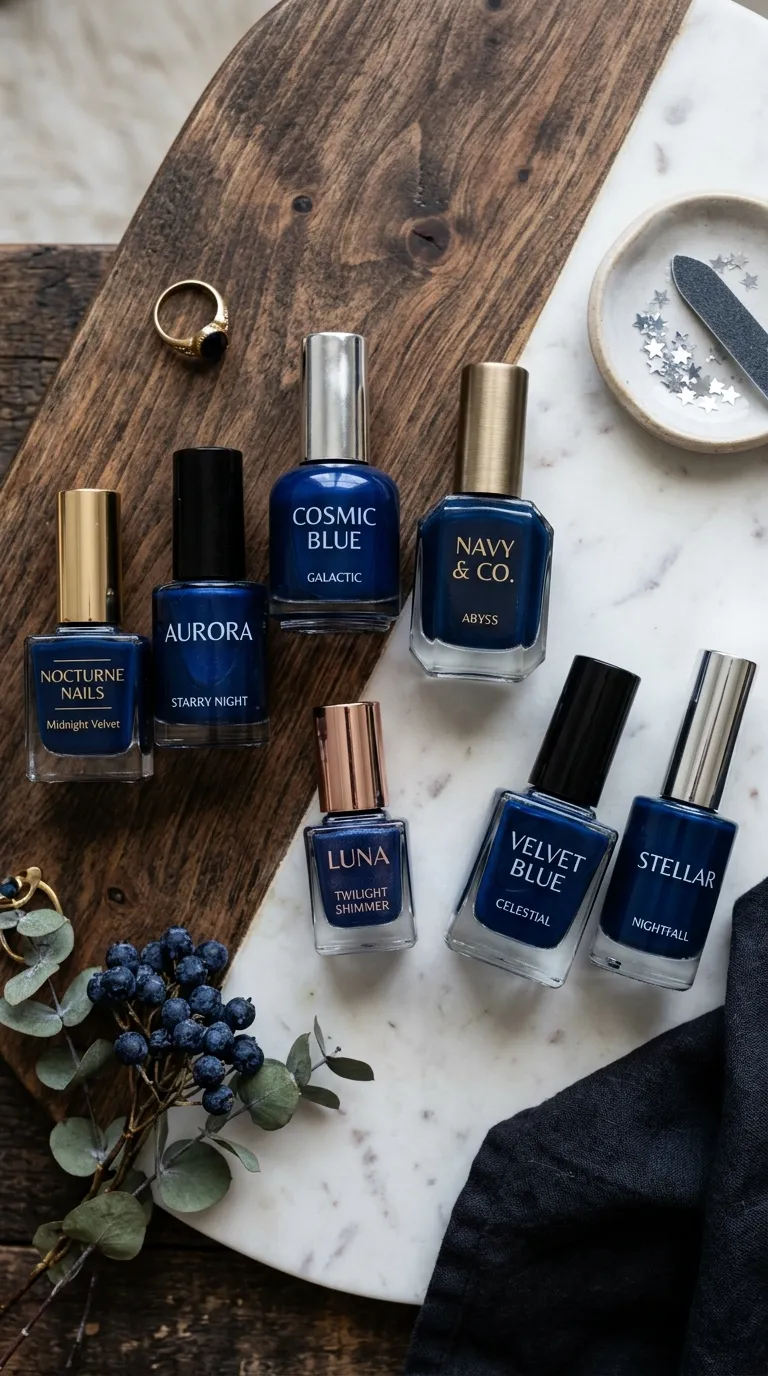
Not all dark polish formulas are created equal, and this is a shade where formula quality genuinely shows. Cheaper formulations sometimes separate or appear streaky when applied in the thin coats necessary for even, opacity-rich coverage, while higher-quality gel and lacquer systems tend to glide on smoothly and build depth evenly across two thin layers. If you are shopping for an at-home version of this color, look for reviews specifically mentioning opacity and application smoothness rather than simply the shade name, since two polishes with nearly identical color swatches can behave very differently once actually applied to the nail.
Salon gel systems generally offer the most reliable results for this particular color family, since professional-grade pigments tend to be more finely milled and less prone to the streaking or patchiness that can sometimes affect drugstore lacquer formulas in very dark, saturated shades.
Caring for Dark Nail Polish Between Appointments
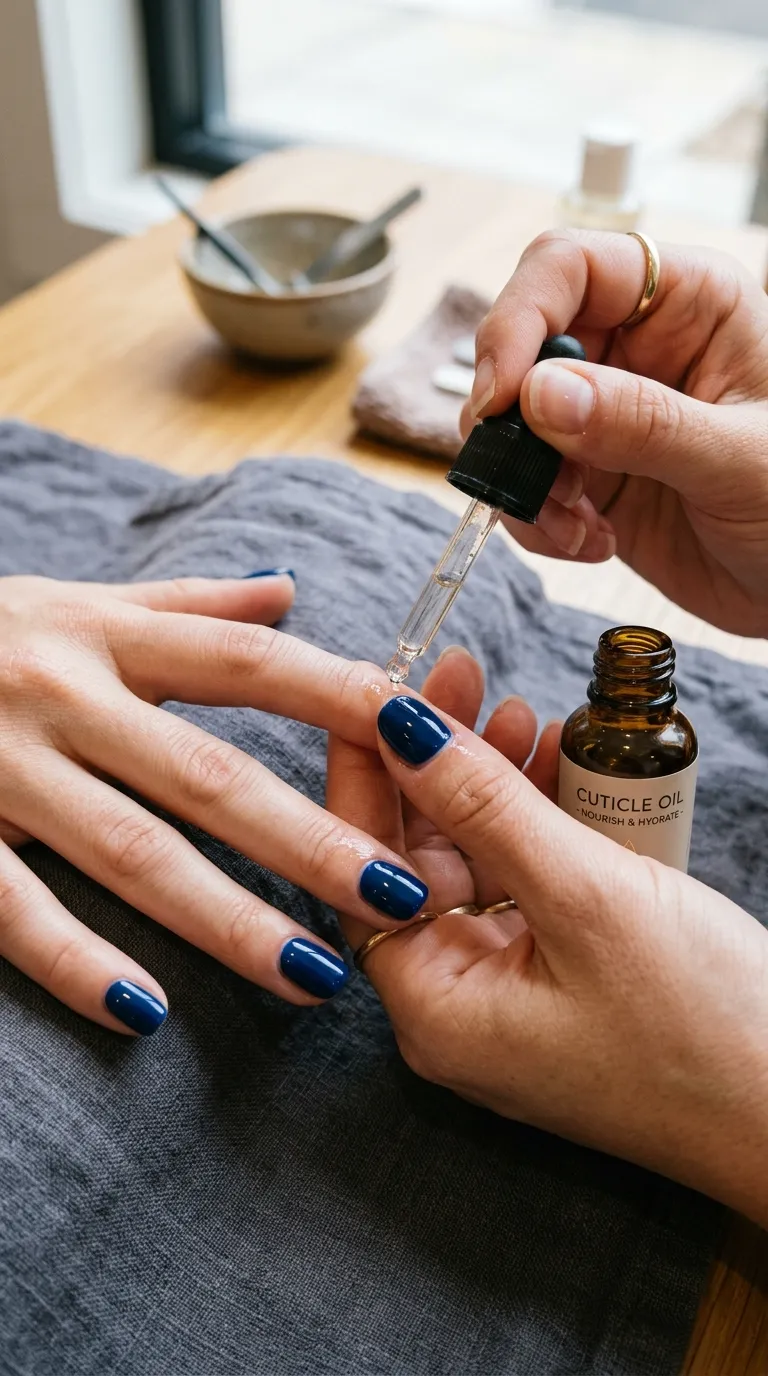
Dark, richly pigmented polish can occasionally stain the natural nail plate if applied without a proper base coat, particularly with repeated wear over several appointments. Always ensure your technician applies a ridge-filling or clear protective base layer first, and if you are painting your own nails at home, never skip this step no matter how good the color payoff looks going on. A quality top coat reapplied every few days between full appointments also helps maintain shine and protect against the everyday scuffing that can dull a glossy, dark finish faster than a lighter shade would show the same wear.
Requesting the Look at Your Salon
Because dark blue shades can vary so widely between brands, bringing a specific reference photo is especially useful for this color family. Terms like “navy,” “indigo,” and the shade discussed throughout this guide are sometimes used loosely across different polish lines, so a visual reference helps ensure your technician mixes or selects a shade that matches what you actually have in mind rather than a lighter navy or a true black instead. If your salon offers custom color mixing, ask whether they can adjust the blue-to-black ratio slightly to land exactly between the two, since even small adjustments can shift the final result noticeably once cured under a gel lamp.
It is also worth discussing finish preference clearly before the appointment begins, since glossy, matte, and shimmer-infused versions of the same base color can look strikingly different once applied, and switching your mind partway through an appointment can add unexpected time and cost.
A Shade Built to Last Past One Trend Cycle
Unlike some viral, highly specific nail colors that fade from relevance within a single season, deep, cool-toned shades in this family have historically shown real staying power across multiple years, likely because they function almost as a neutral within a darker palette rather than a bold, attention-grabbing statement color on their own. That practical versatility suggests this particular shade is likely to remain a reliable go-to option well beyond its current moment of heightened search interest and social media attention, making it a reasonably safe investment for anyone building out a small rotation of go-to gel colors for the colder months ahead.
Final Thoughts Before You Book
If you have been debating between a classic black manicure and something with a little more personality, this deep, cool-toned shade offers a genuinely satisfying middle ground. It carries the same formal, put-together quality as black while rewarding a closer look with real color depth, and it pairs easily with nearly everything already in your wardrobe. Whether you opt for a glossy salon finish, a moody matte alternative, or the shimmering aurora effect that has driven so much of this season’s social media attention, it is a color story with enough range to feel personal no matter how you choose to wear it.
Where to Find Inspiration Before Your Appointment
Beyond social platforms, salon portfolio accounts and beauty editorial features tend to offer the most reliable preview of how this shade actually behaves under different lighting conditions, since heavily filtered social posts can sometimes exaggerate or shift a color’s true tone. Looking for unedited, natural-light photography, ideally showing the finished manicure both indoors and outdoors, gives the clearest sense of how a particular formula will look on your own hands once applied, rather than relying solely on a single, possibly color-corrected image from a feed.
Saving a handful of reference images that show the color in varied lighting, alongside a couple of close-up shots highlighting finish and shine, will make the consultation conversation with your technician far more productive than a single screenshot alone, and it usually results in a finished manicure that matches your expectations much more closely.
In the end, the details that matter most are the ones only visible once the polish is actually on your hands: how it catches window light on a walk outside, how it looks against your specific skin undertone, and how it holds up after a few days of normal wear. No amount of scrolling replaces that first real look at your own freshly finished set.
Compare Before You Choose
See the Closest Alternatives
Compare nearby shapes, colors and finishes before picking a final reference.
Recommended Next
Mismatched Nails 2026: 50+ Mix and Match Ideas That Actually Look Good
Read the guide →