Tuscan nails 2000s are quietly becoming the most talked-about nail trend of the year — and if your For You page hasn’t served them yet, it will. This isn’t a loud, maximalist trend. It’s the opposite: warm terracotta, dusty olive, sun-bleached beige, and the kind of quiet elegance that makes you think of a stone villa in the Italian countryside. It’s old money without the pretension. It’s Y2K nostalgia filtered through linen and earth. And it’s arriving in 2026 at exactly the right moment — when everyone is tired of cold chrome and neon, and craving something that feels genuinely beautiful. Here’s everything you need to know about the Tuscan nail aesthetic, 30 design ideas to save, and exactly how to get them.
Tuscan Nails 2000s: What Makes This Aesthetic Different
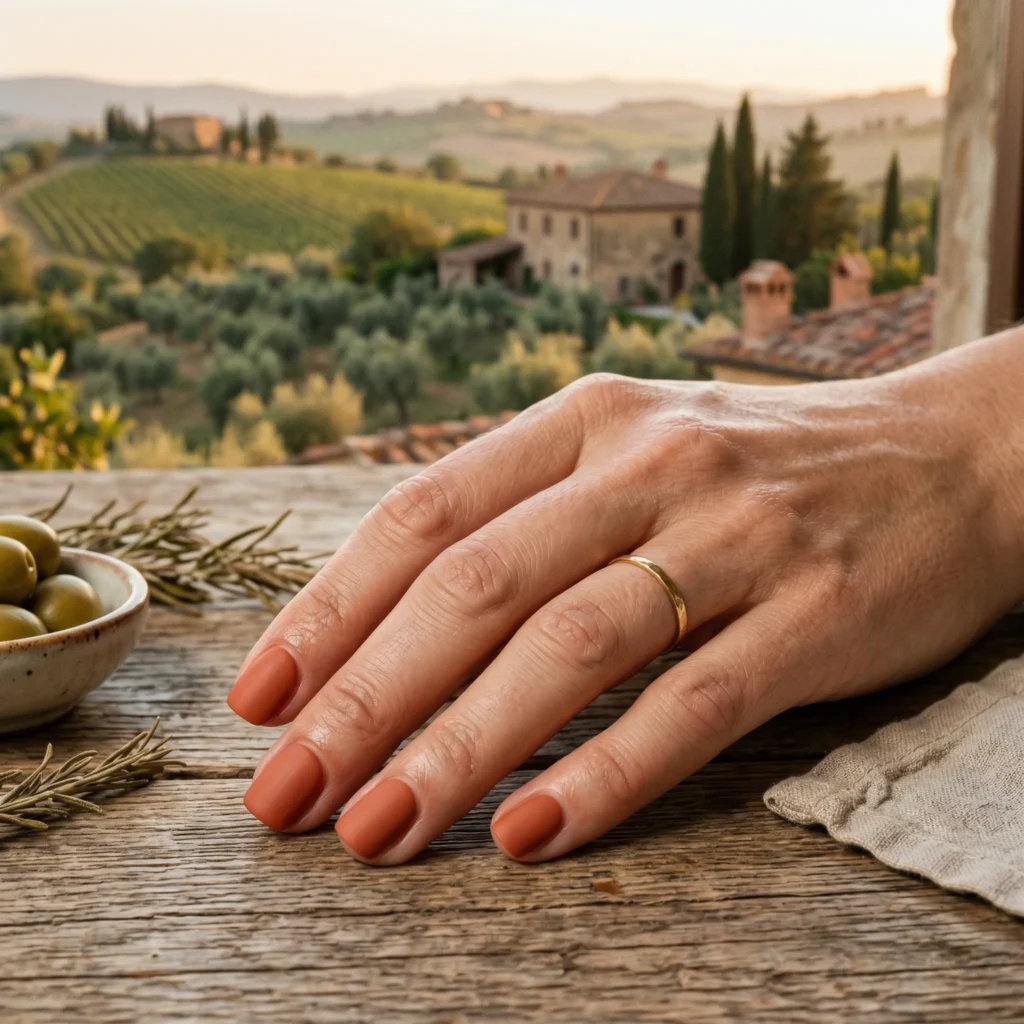
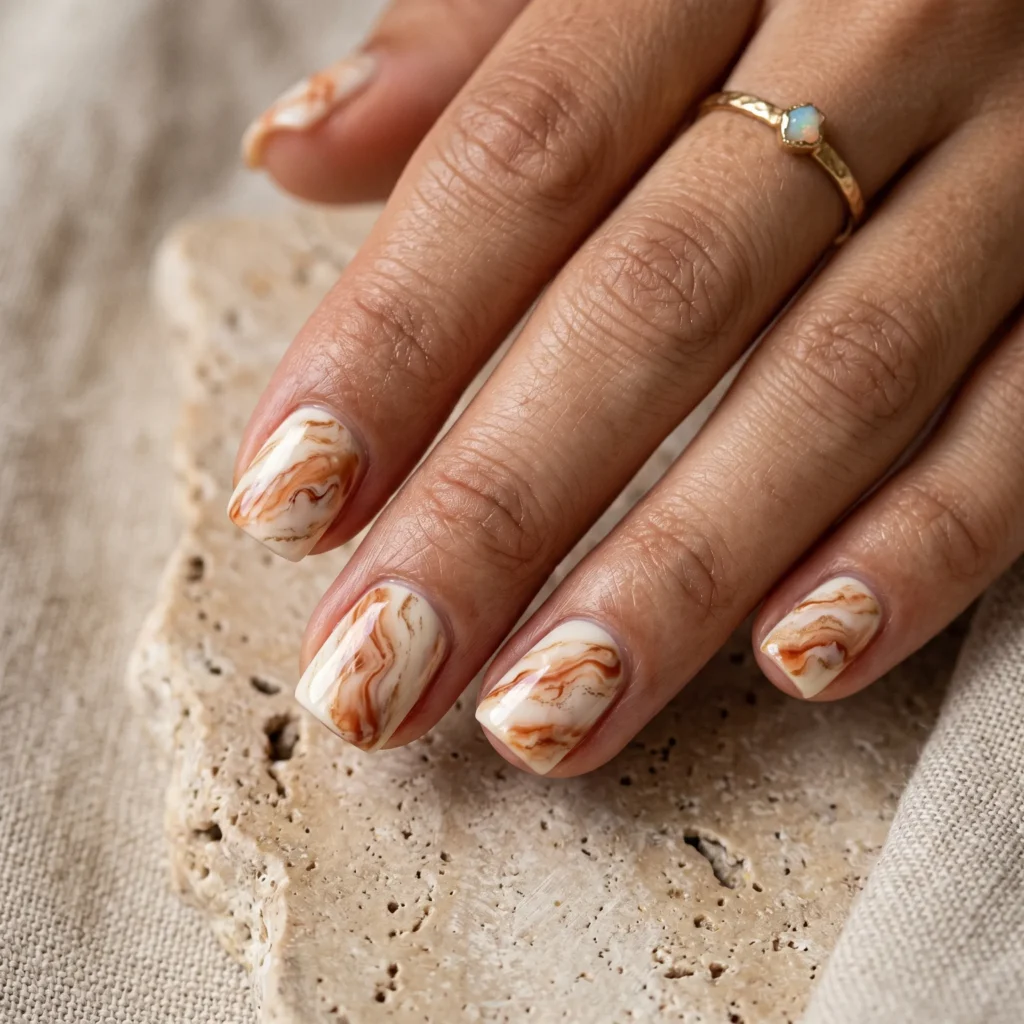
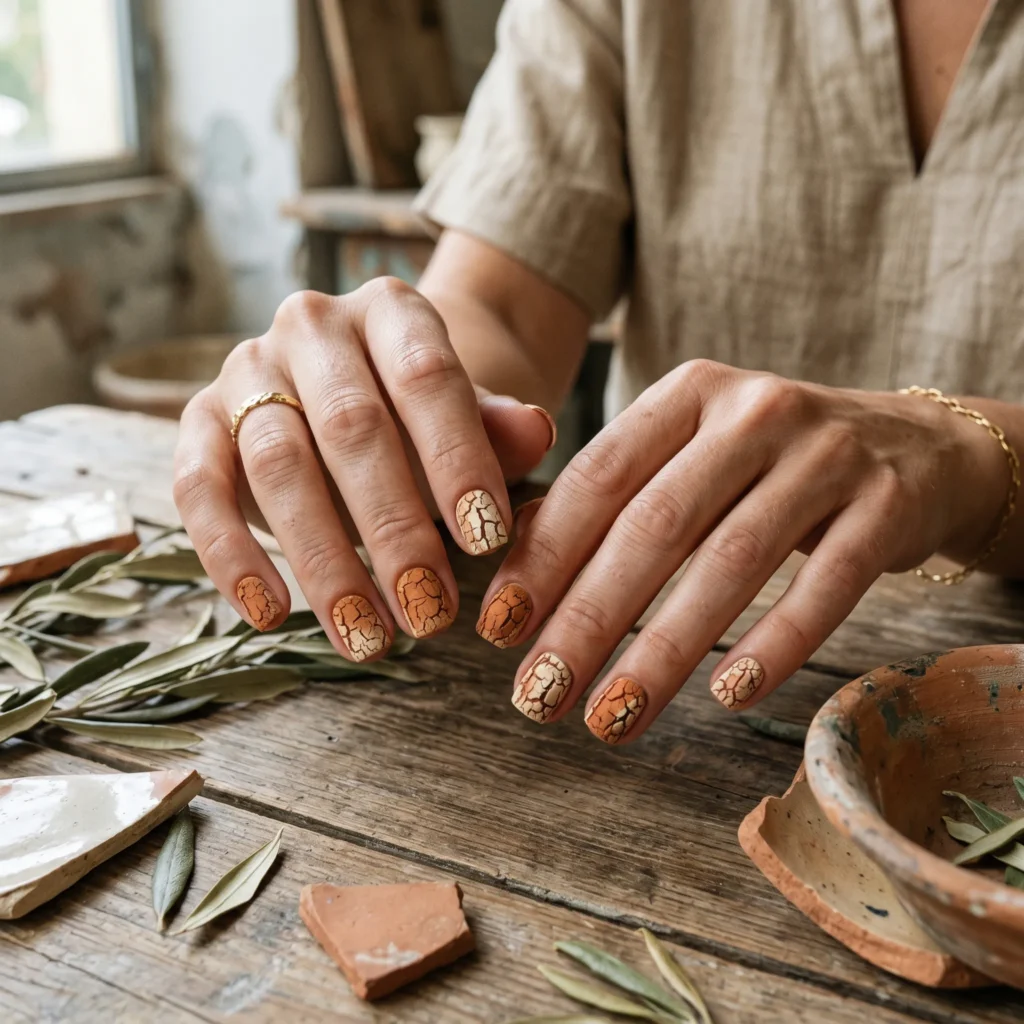
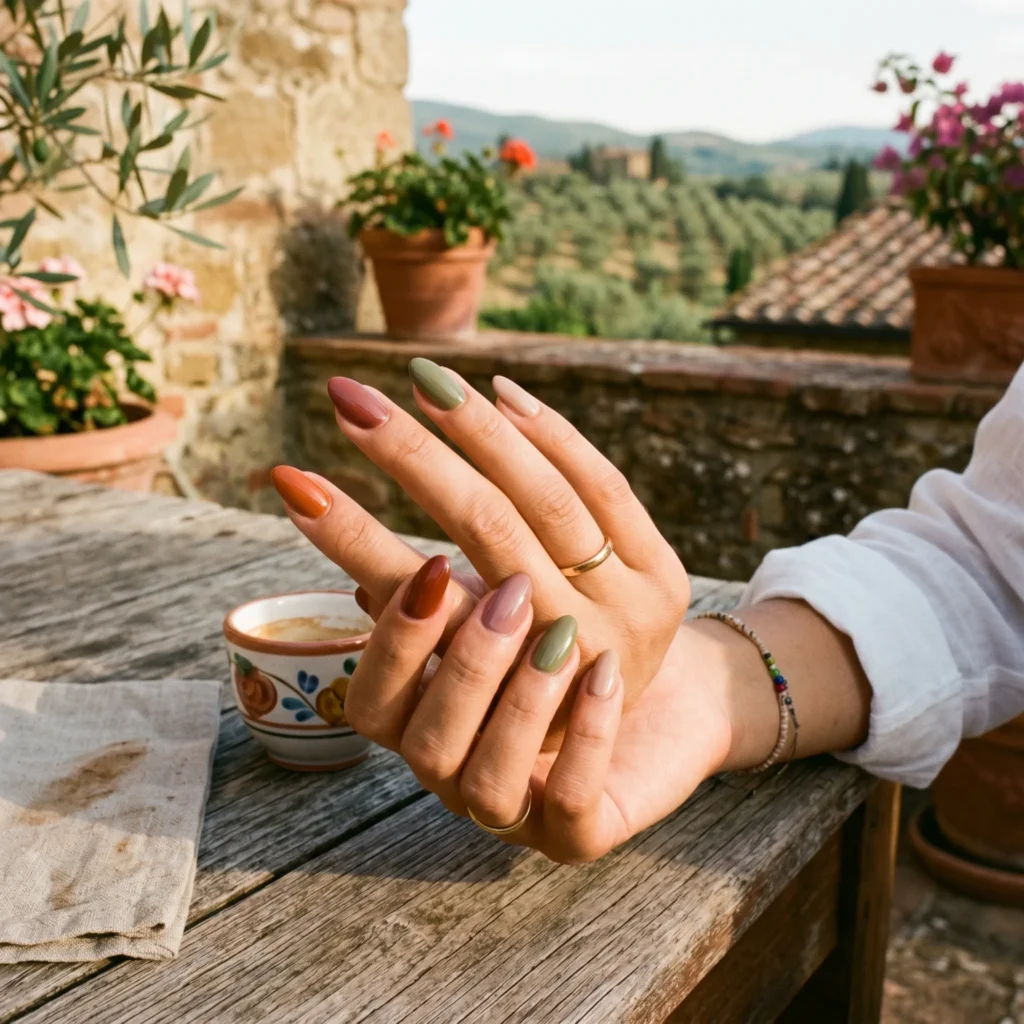
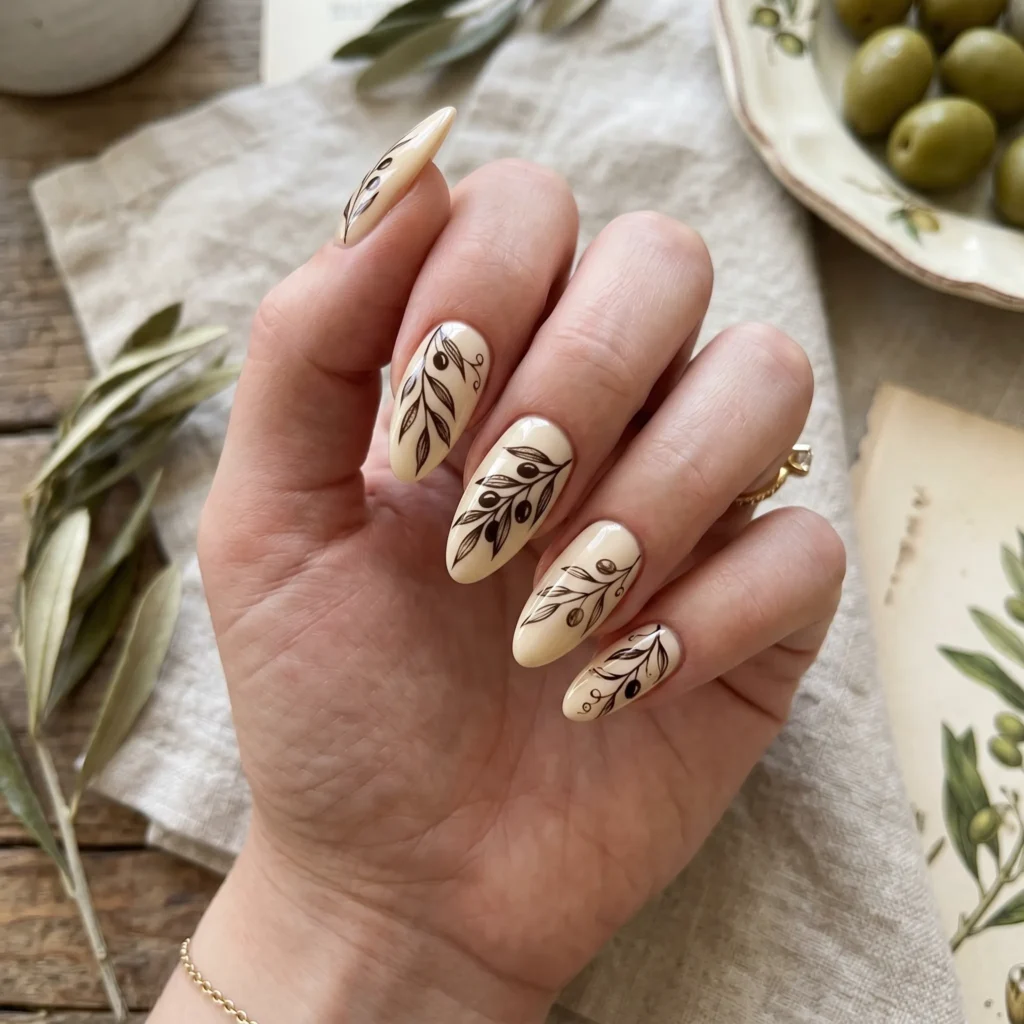
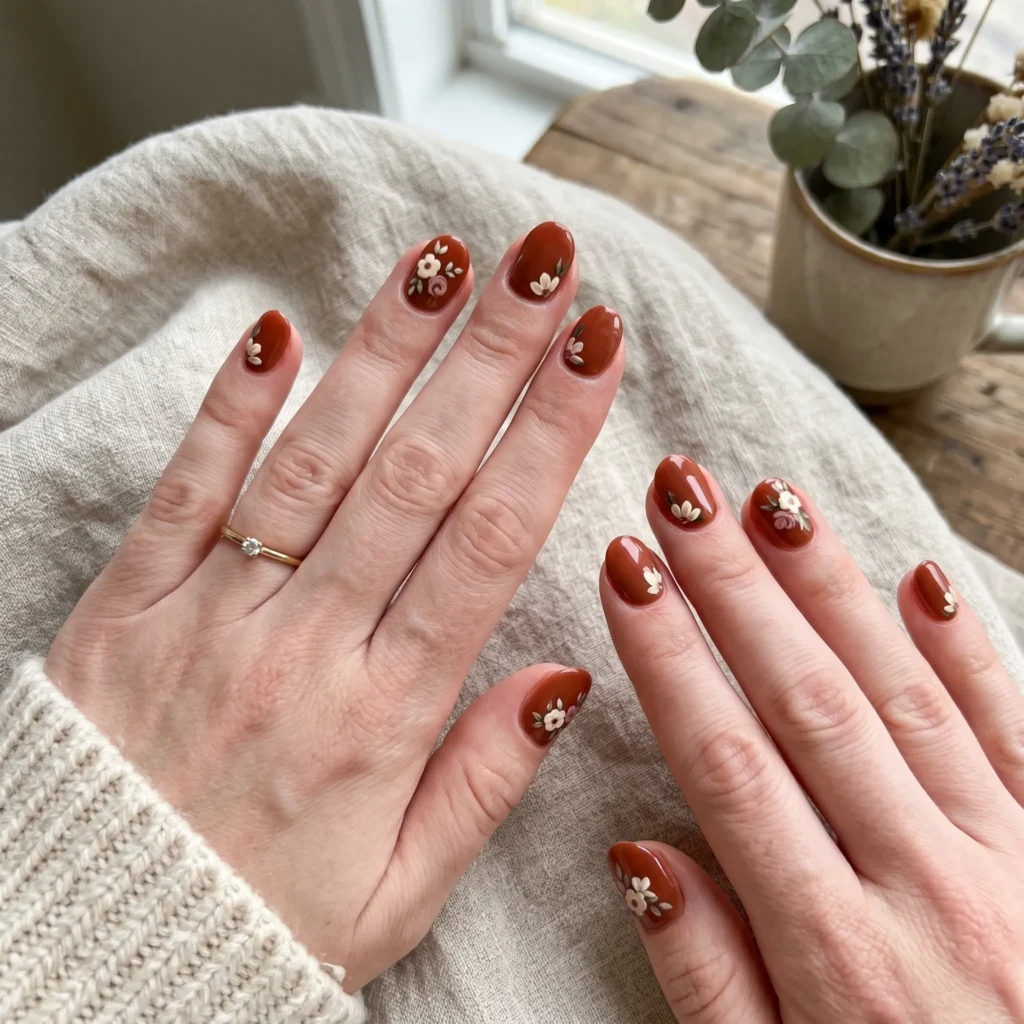
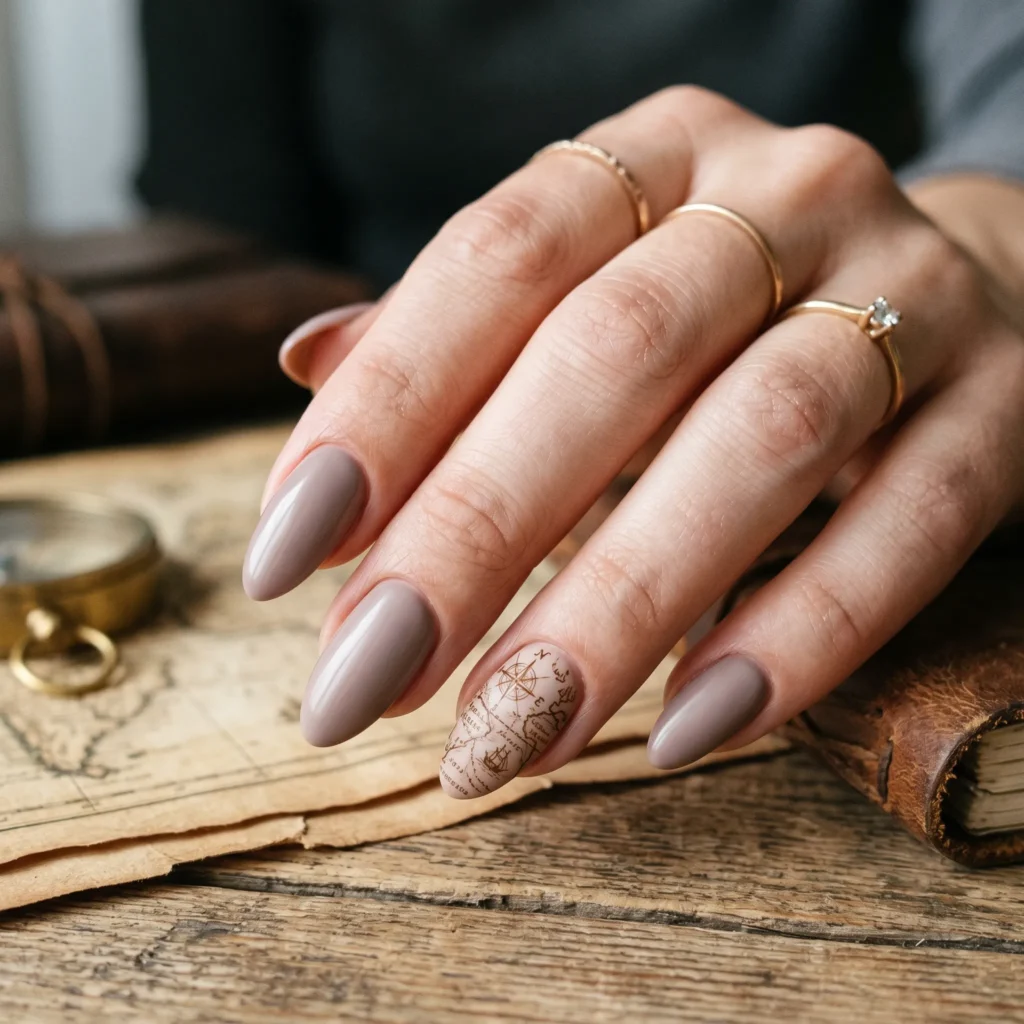
Tuscan nails are a nail aesthetic rooted in the color palette and textures of the Italian countryside — specifically the Tuscany region, known for its terracotta rooftops, sun-dried stone walls, rolling olive groves, and dusty golden light. Translate that to nails, and you get warm beiges, burnt russets, muted terracotta, smoky olive, and dried-rose pinks. Nothing icy. Nothing neon. Every shade looks like it belongs in a farmhouse kitchen or a leather-bound journal.
The 2000s connection is real. In the early-to-mid 2000s, earthy nail colors were everywhere — think NARS “Honolulu Honey,” OPI’s warm nudes, and the deep clay tones that dominated every spa menu. That era had an obsession with warm, skin-close neutrals that the Y2K revival is now reclaiming. Tuscan nails sit at the intersection of that 2000s sensibility and the current quiet luxury movement: understated, polished, and deeply intentional.
What separates a Tuscan nail look from a generic neutral mani is warmth. Cool-toned beiges and grey-nudes are not Tuscan. The palette pulls exclusively from the warm side of the wheel — amber undertones, red-brown earthy base notes, and dusty muted finishes rather than glossy or high-shine.
Why Tuscan Nails Are Trending in 2026
Three things collided to bring this trend to the surface in 2026.
First, the Y2K revival hit its second wave. The first wave (2021–2023) was all chrome, butterfly clips, and blue eyeshadow. The second wave is quieter — it’s pulling from the other side of early 2000s aesthetics: the earth tones, the Anthropologie-core, the warm boho that dominated mid-2000s beauty. Tuscan nails are peak second-wave Y2K.
Second, old money aesthetics and quiet luxury completely took over social media. The quiet luxury movement rewards restraint, warmth, and quality over noise. Tuscan nails are visually aligned with that — they read expensive without trying.
Third, TikTok’s “Italian girl summer” and “Mediterranean aesthetic” content cycles have been building for two years. When creators started pairing terracotta nails with gold jewelry, linen sets, and olive oil skin, the aesthetic locked in. Search “tuscan nail aesthetic 2026” on Pinterest and the boards are already thick with saves. Early adopters are already here. The mainstream moment is arriving now.
If you prefer something more colour-forward, aura nails 2026 sit on the opposite end of the spectrum — dreamy gradients instead of earthy warmth.
30 Tuscan Nail Designs for 2026
These are organized from most wearable to most editorial. Each image slot includes an alt text and a generation prompt for your AI image tool.
Terracotta Basics
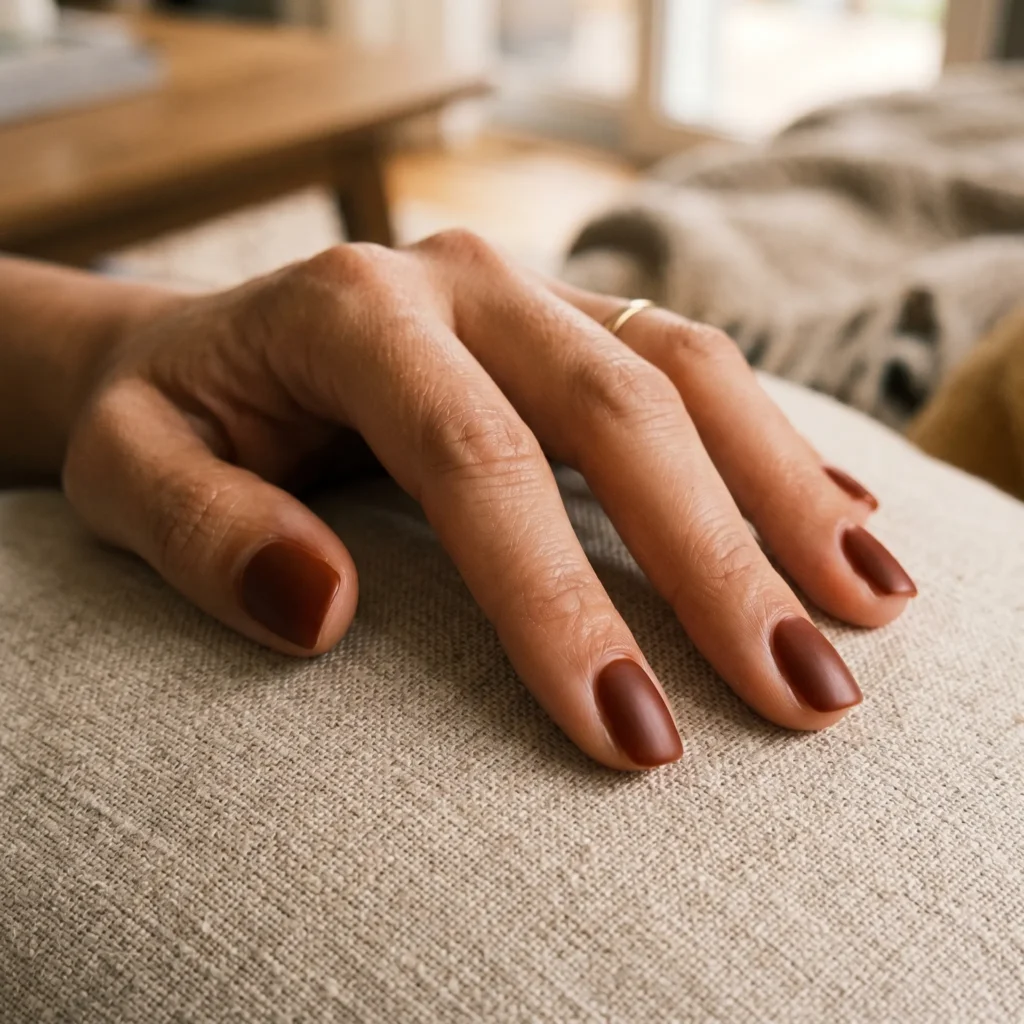
Earthy Minimalist
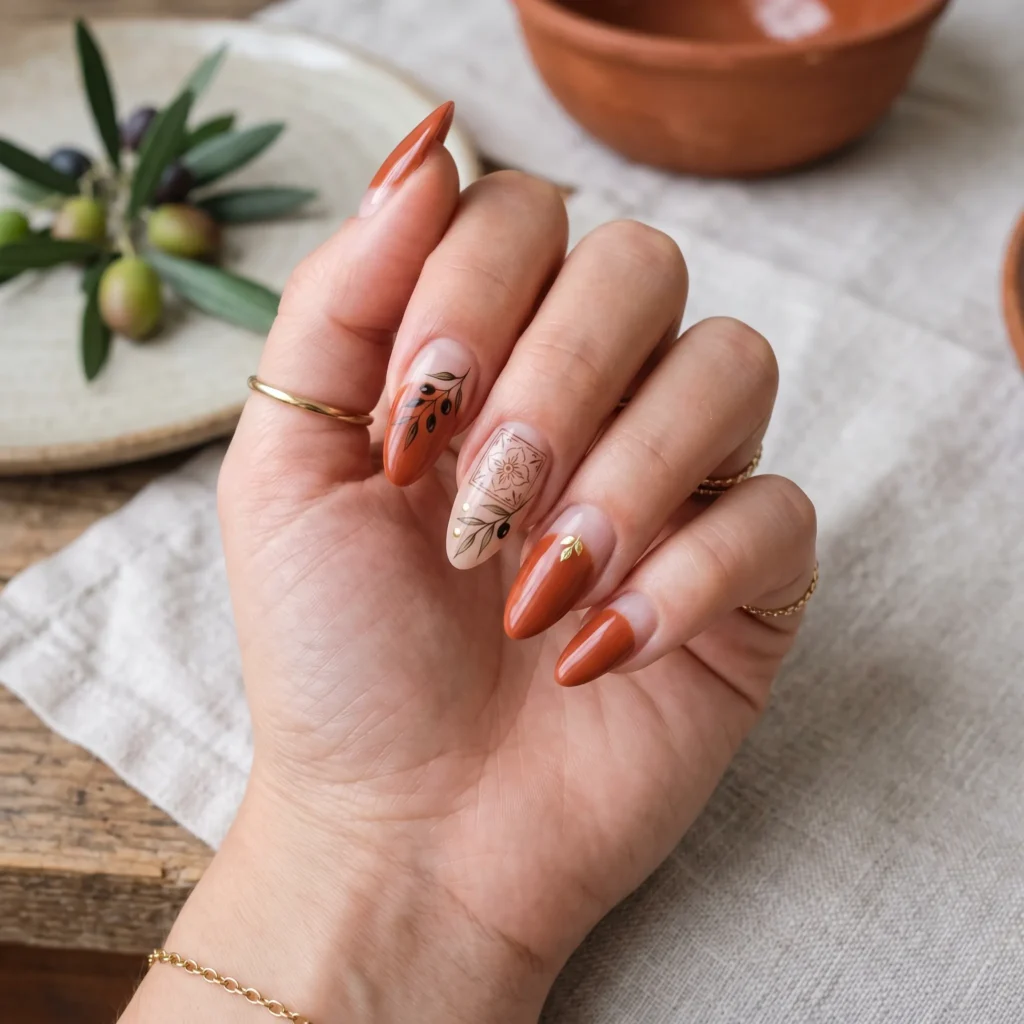
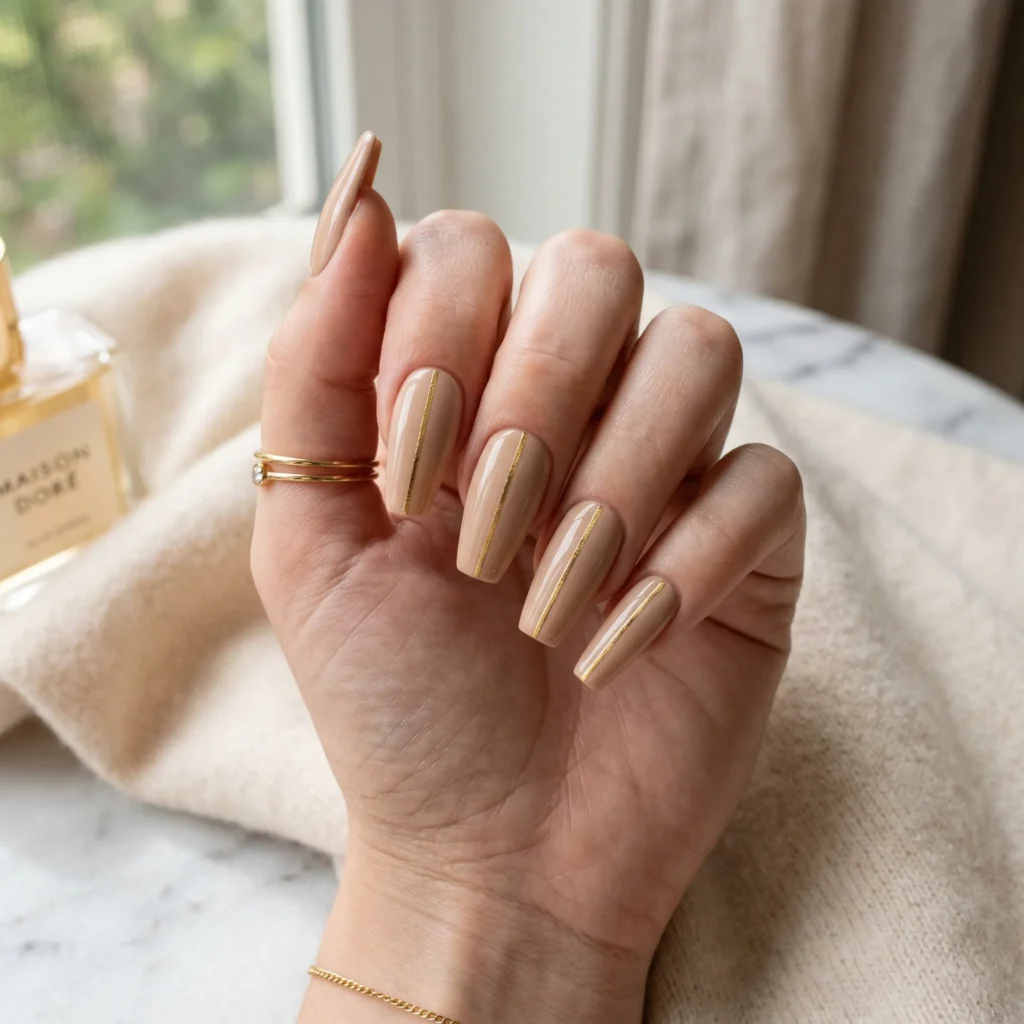
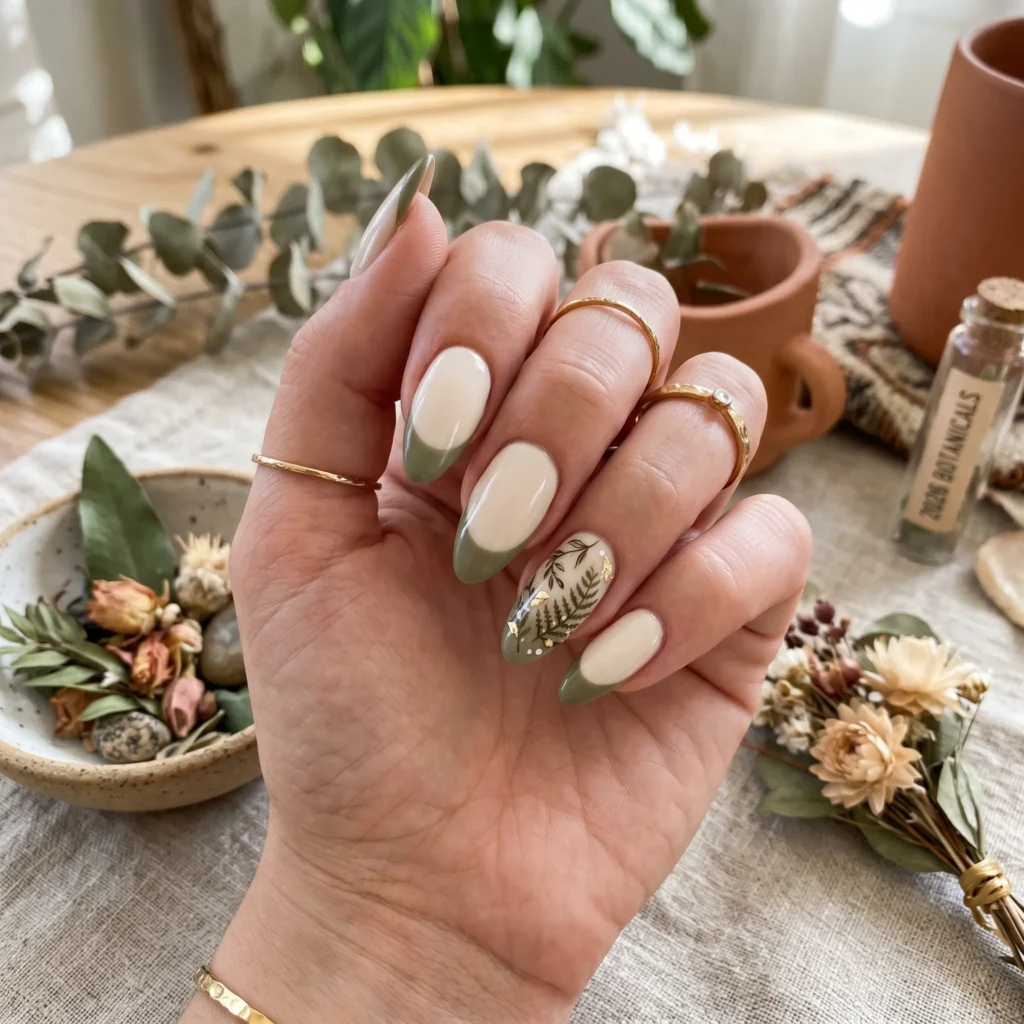
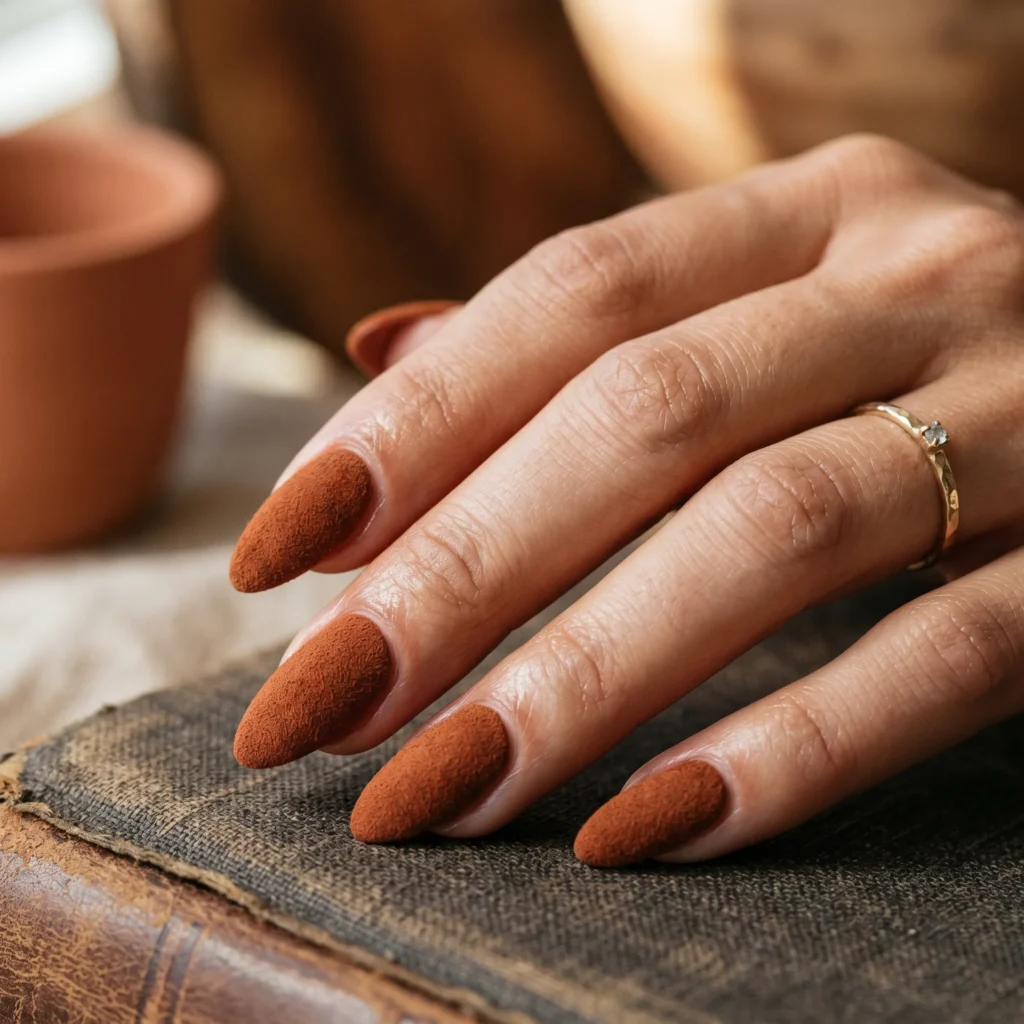
Textured and Finish-Forward
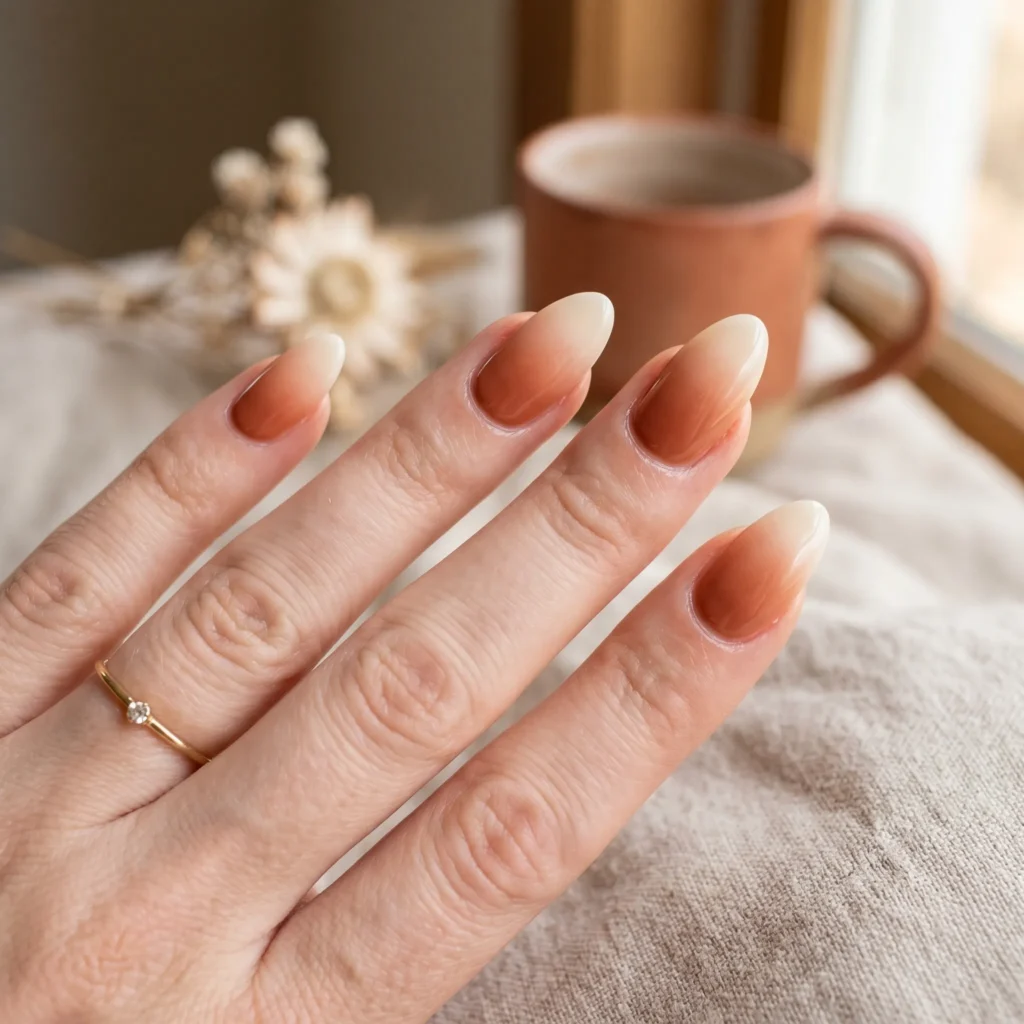
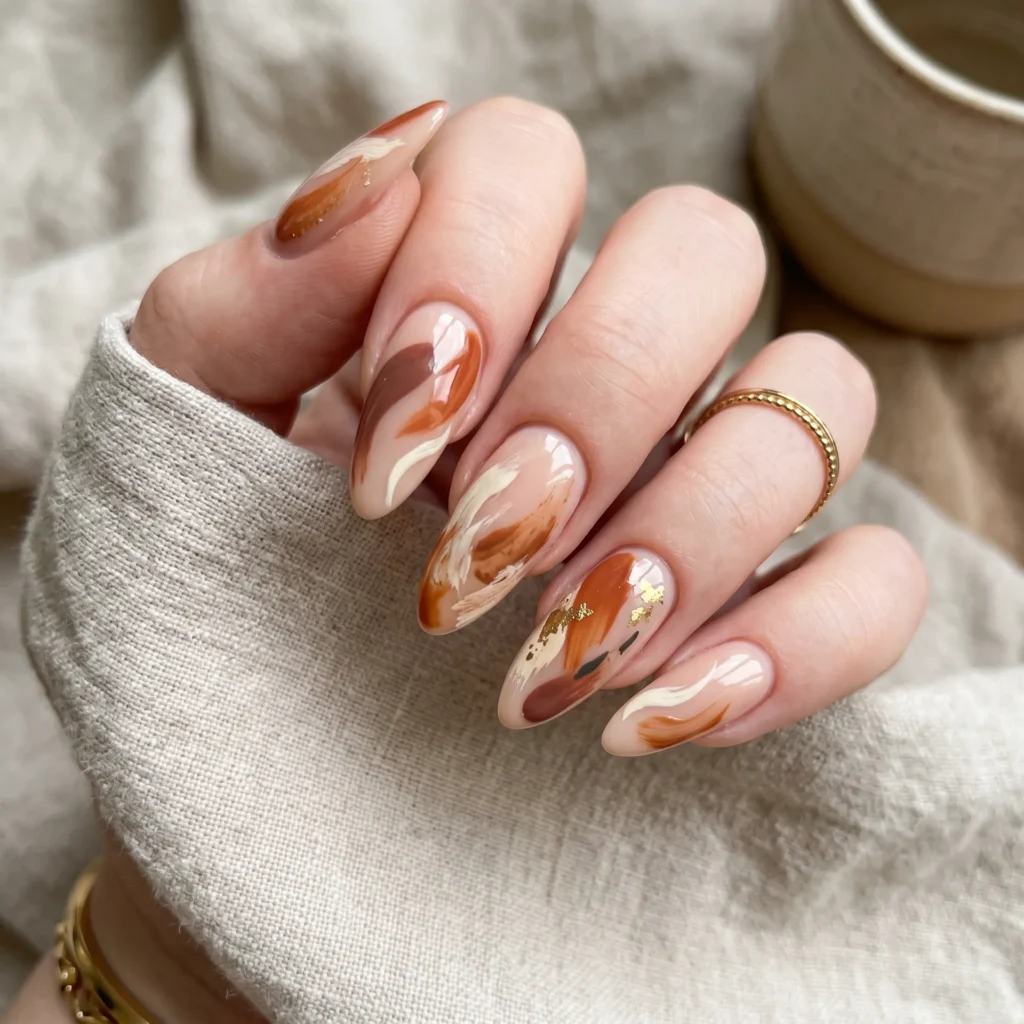
Multi-Tone and Ombre
Detail and Art Work
Bold and Statement Tuscan
Tuscan Nail Colors You Need to Know
The palette is everything with this trend. Here are the eight shades that define the Tuscan nail aesthetic in 2026, and what to look for when shopping:
Warm Terracotta
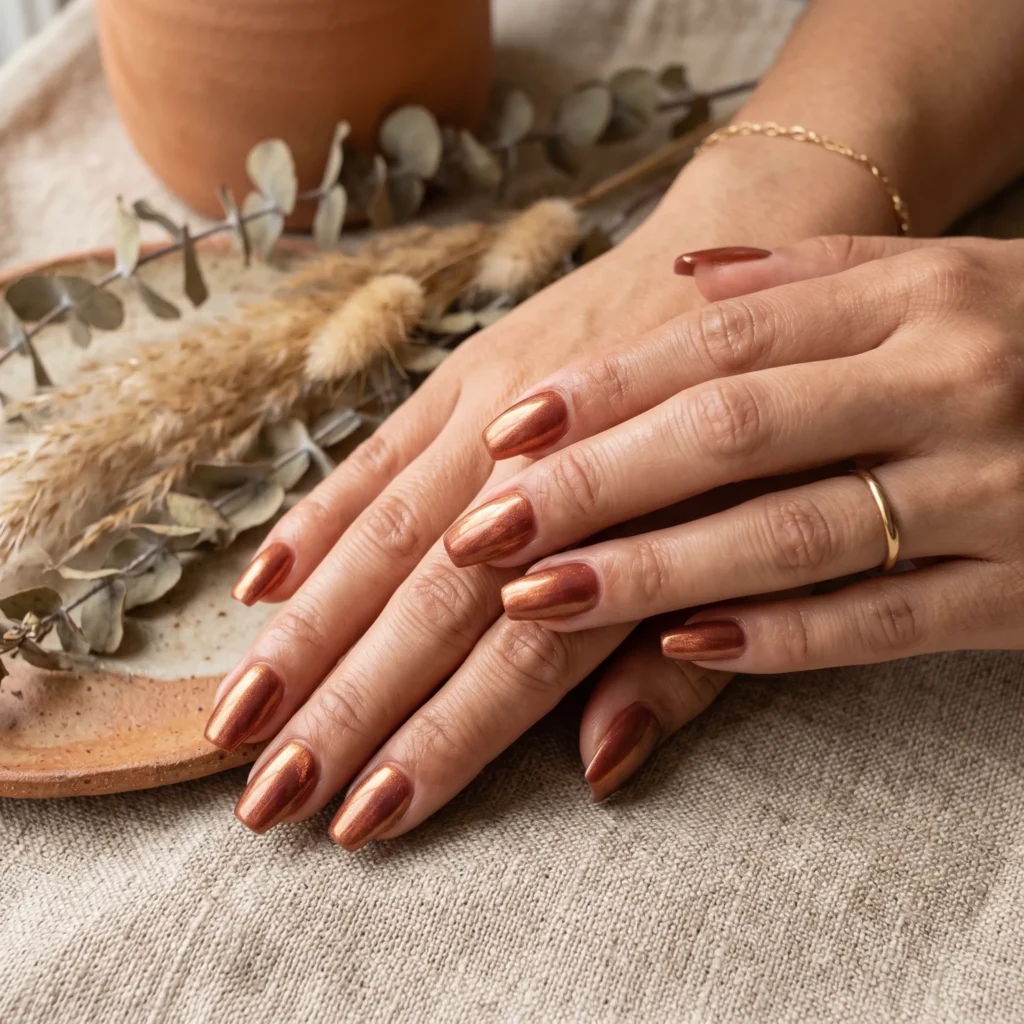
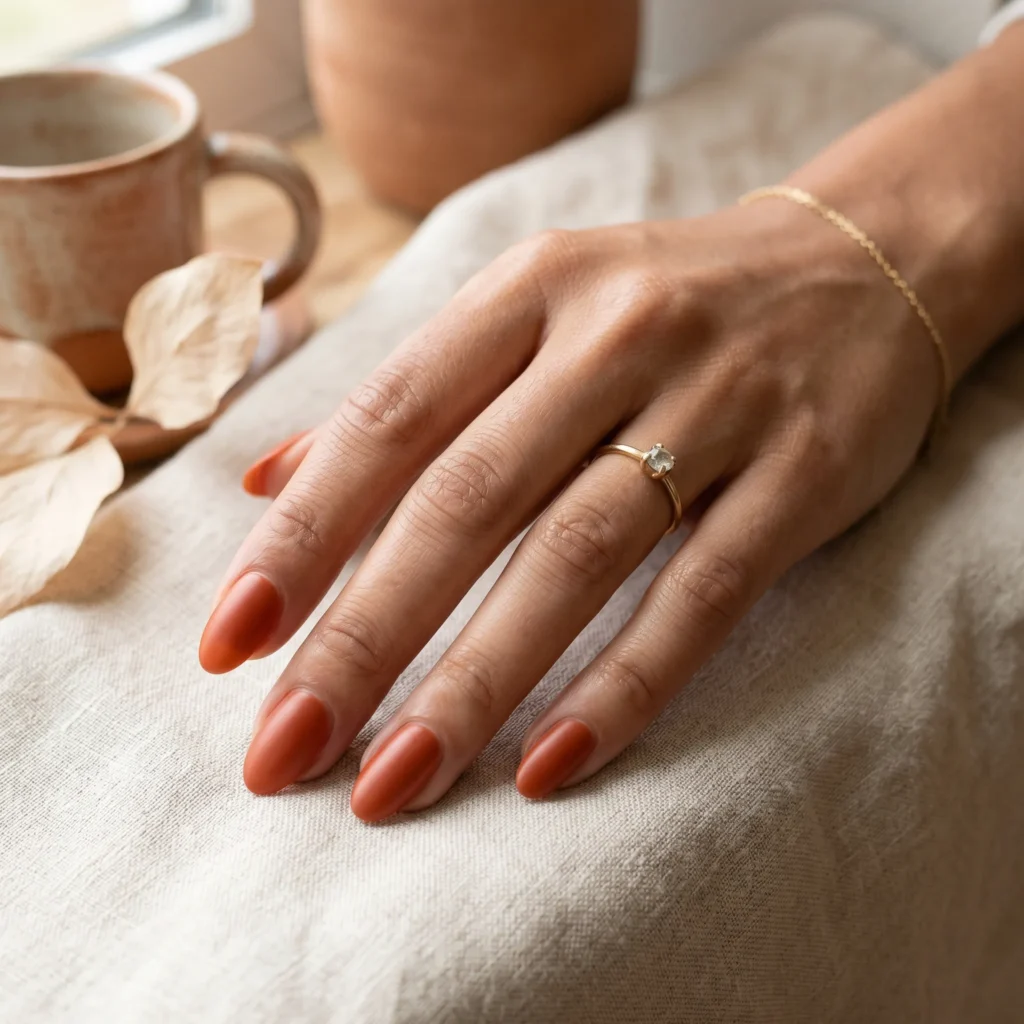
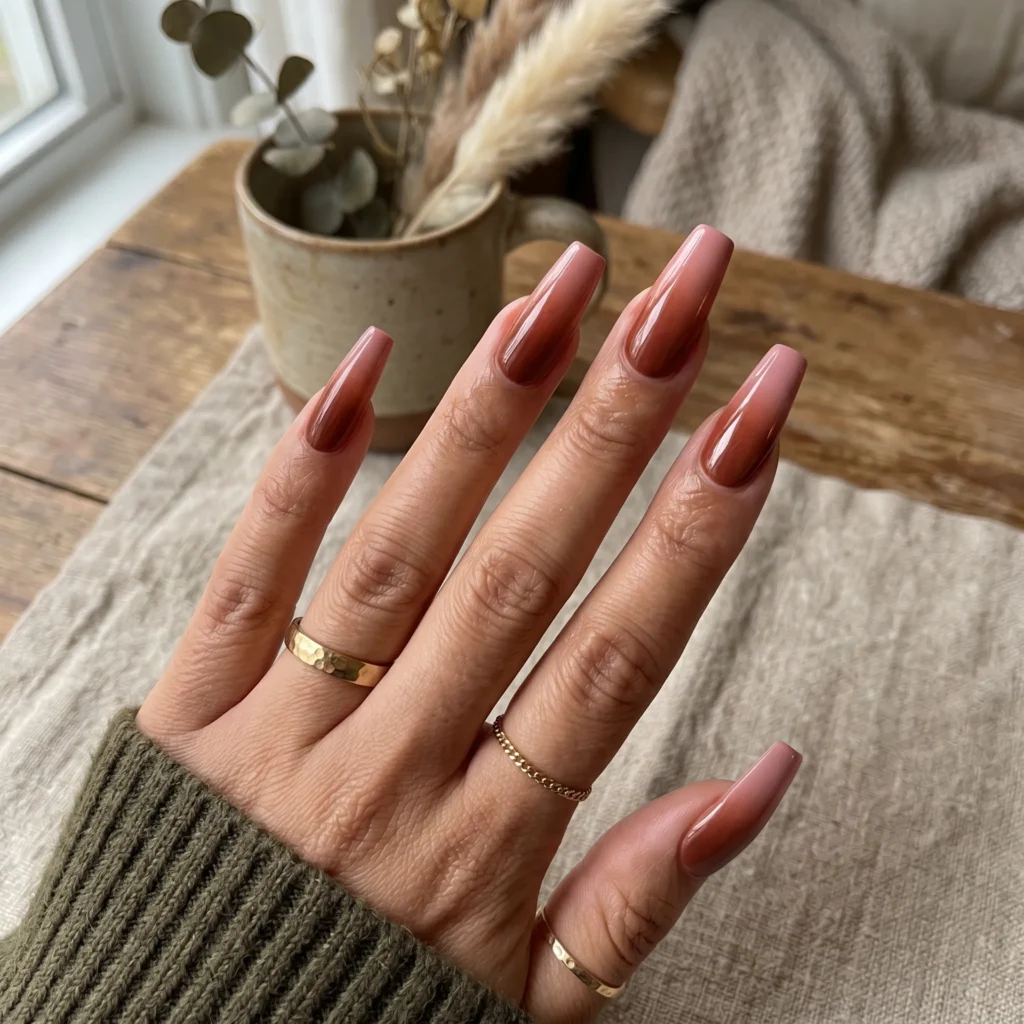
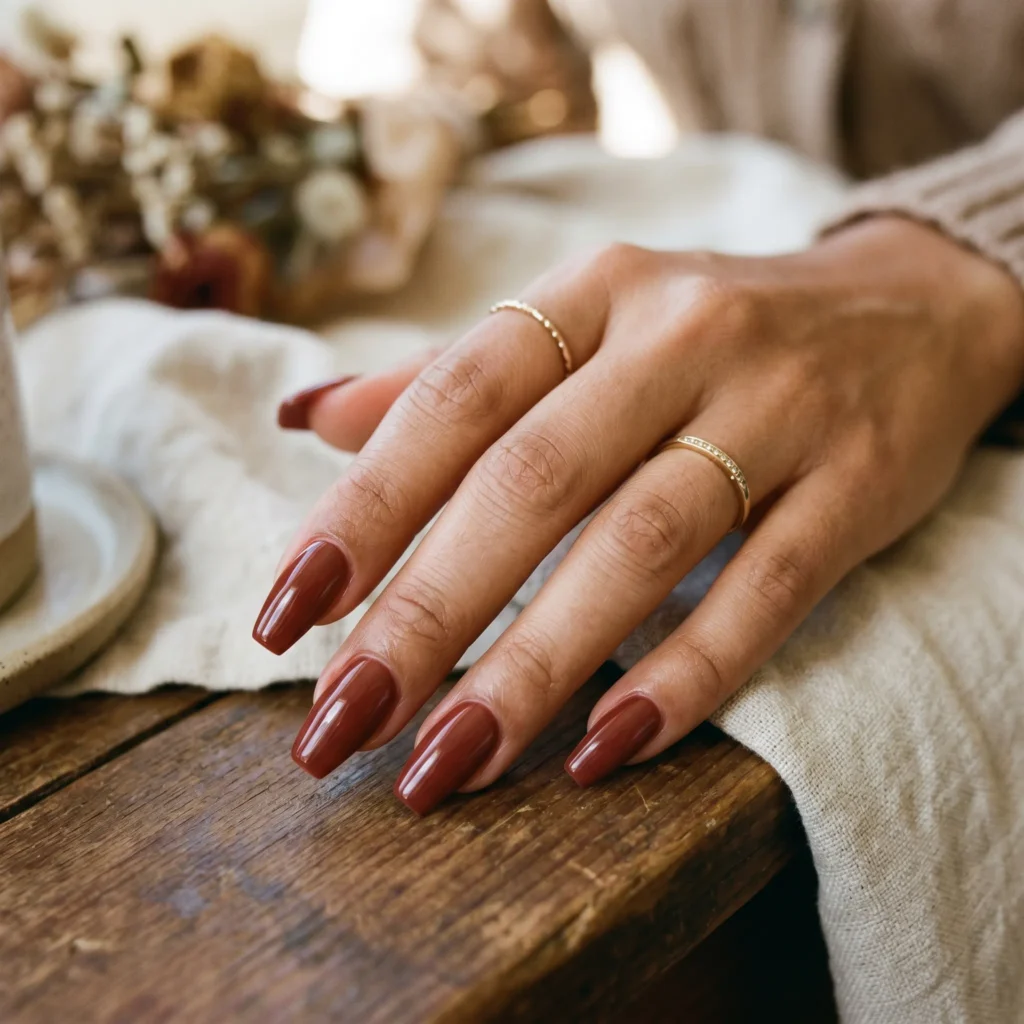
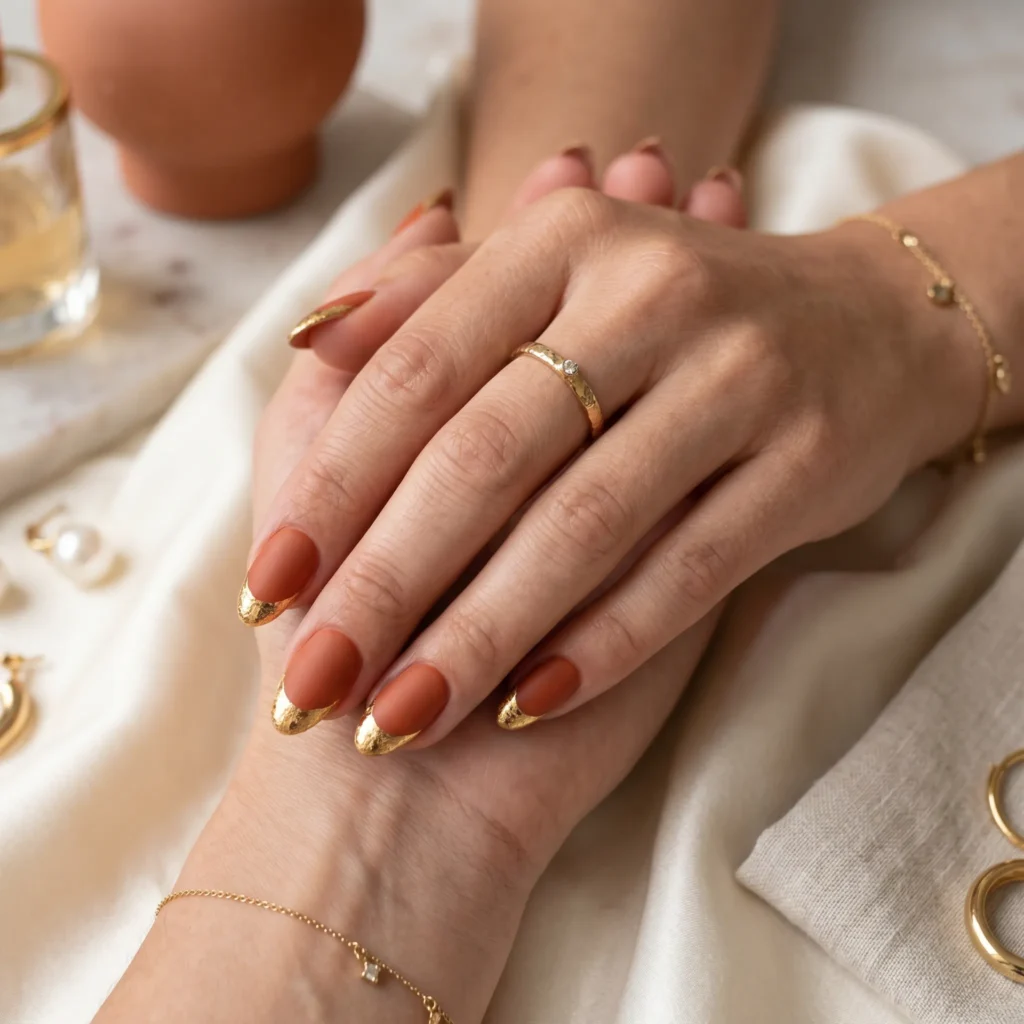
The anchor color of the trend. Think fired clay, not orange. You want a red-toned earthy brown with warm undertones. OPI’s “Rust & Relaxation” and Essie’s “Umber-ella” are good references.
Burnt Sienna
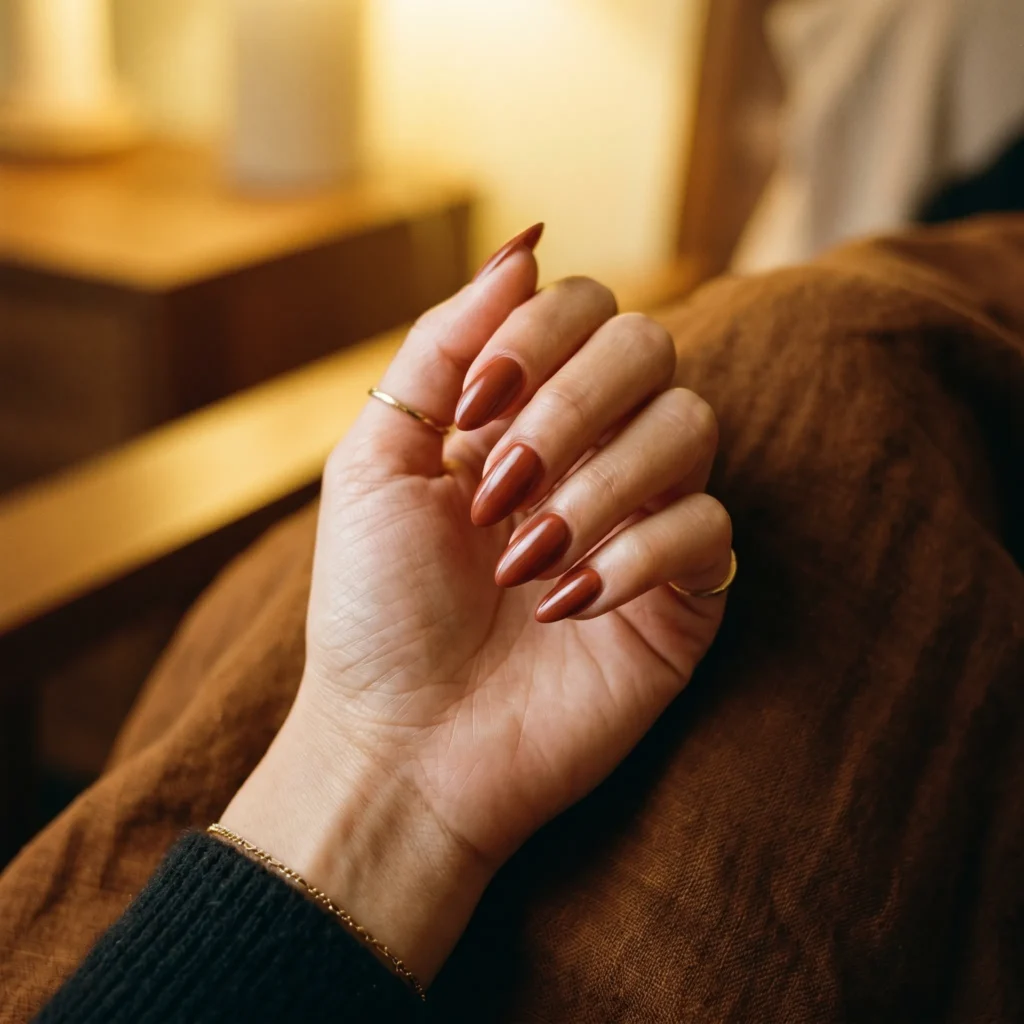
Deeper and more saturated than terracotta. Closer to a reddish-brown or copper-clay. Stunning on medium and deeper skin tones. Looks incredible in matte.
Dusty Olive
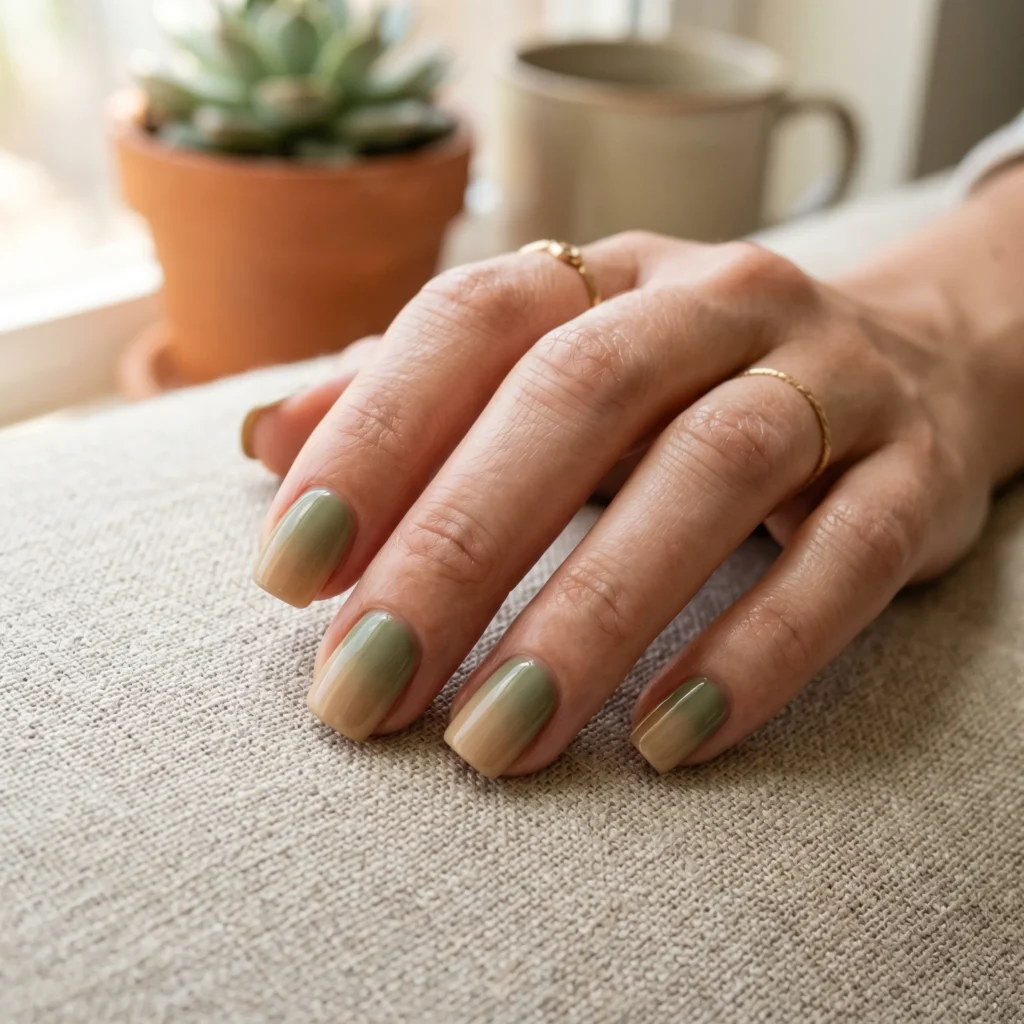
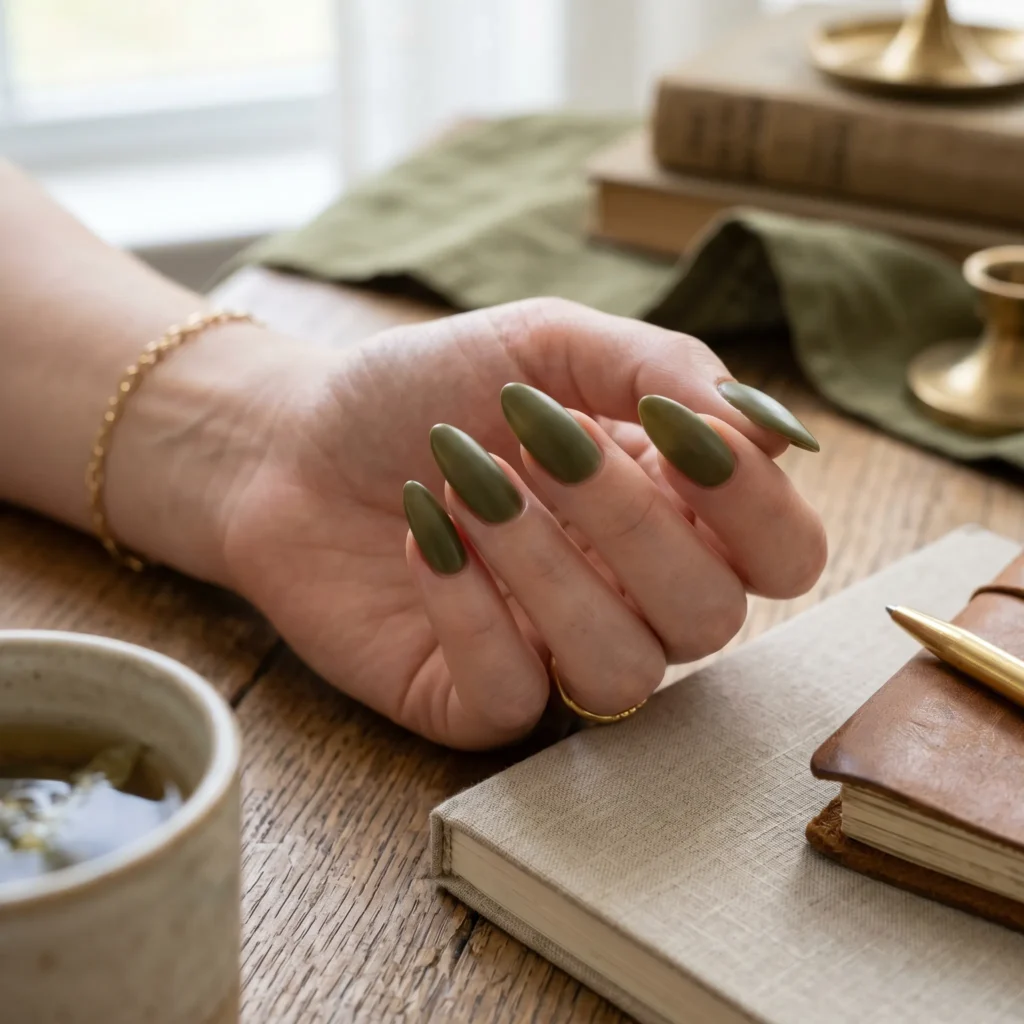
The cool-adjacent shade that still qualifies. A muted, grey-green olive with yellow-warm undertones. Not cool sage. Think aged Italian pottery glaze.
Sandy Beige
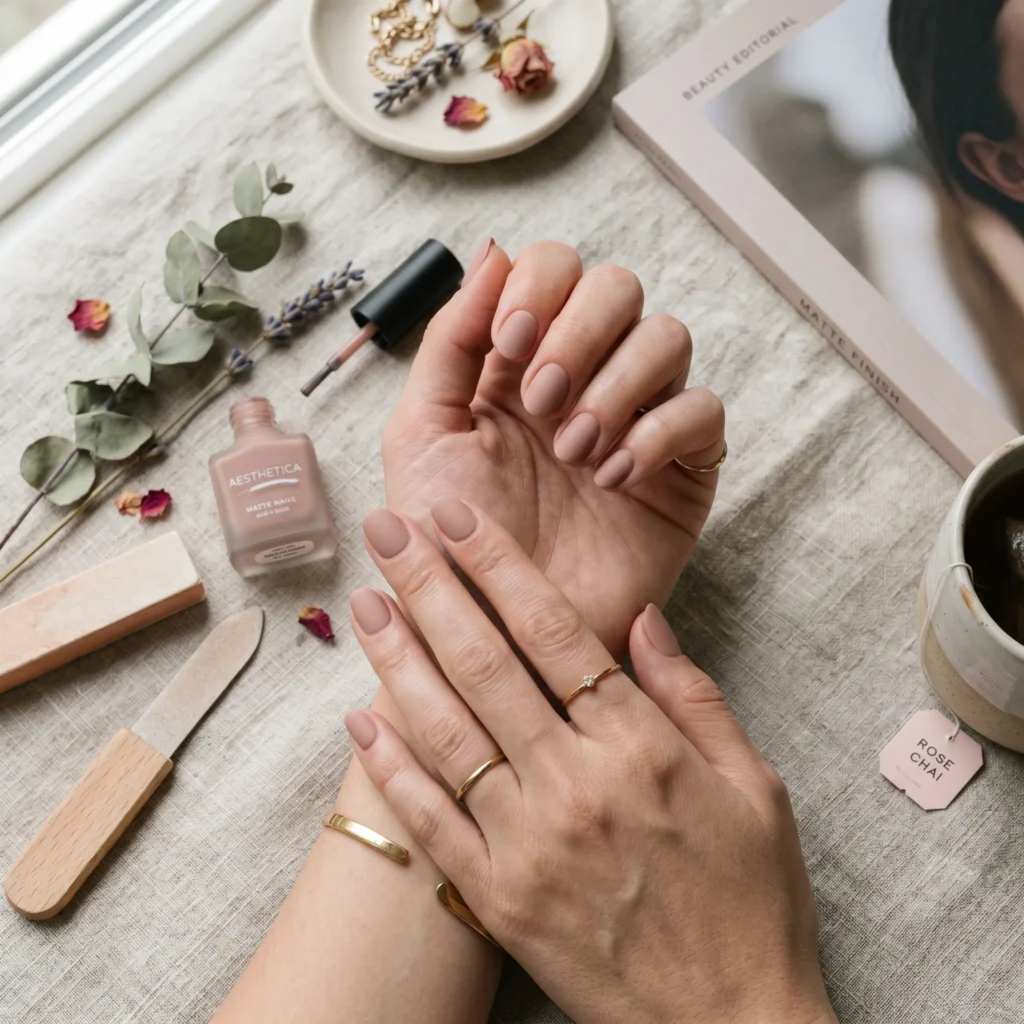
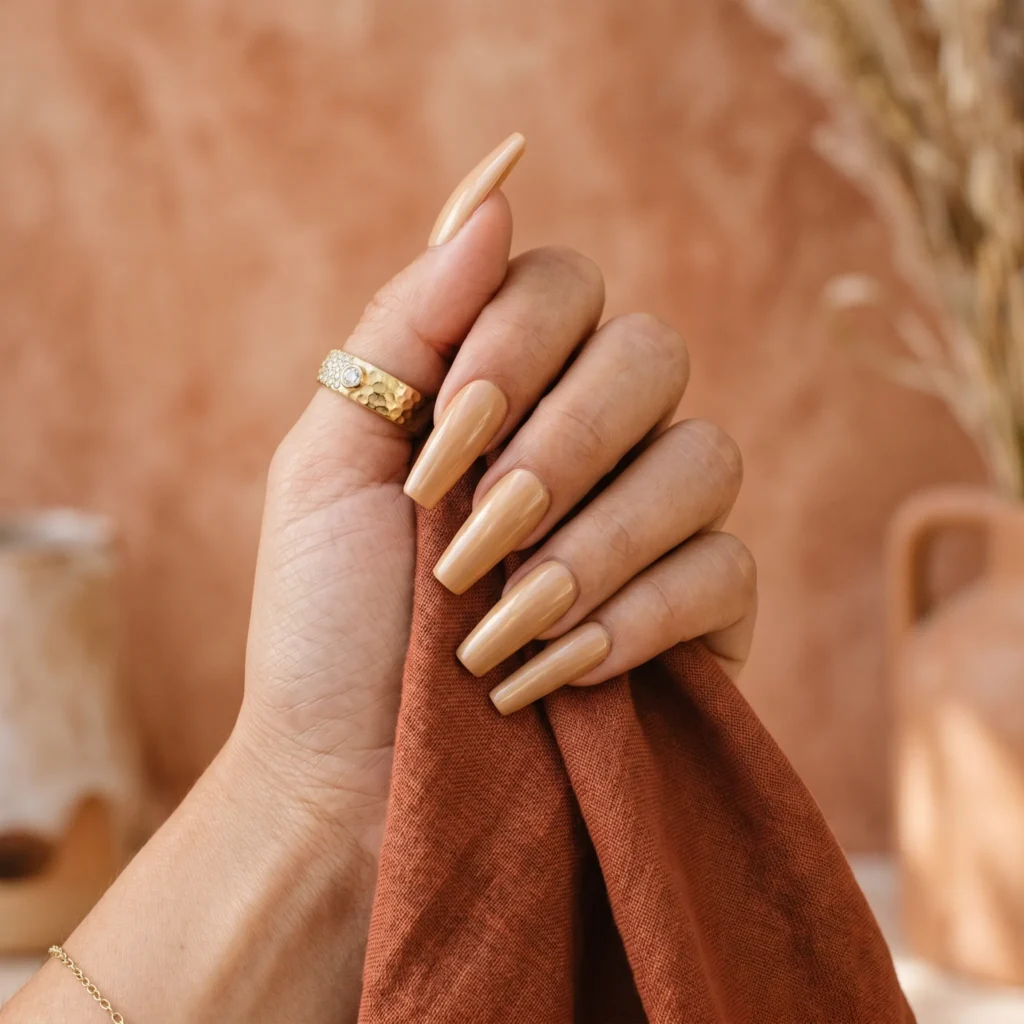
The most wearable entry point. A warm, golden-tinged beige that reads close to skin but with clear earth undertones. Universally flattering.
Russet Brown
A mid-depth warm brown with orange-red undertones. Bridges the gap between terracotta and chocolate brown. A standout for short nails.
Dried Rose
A muted dusty pink with brown-beige undertones. This is NOT a cool mauve. It’s the color of dried petals or aged rose fabric. Quiet and beautiful.
Warm Espresso
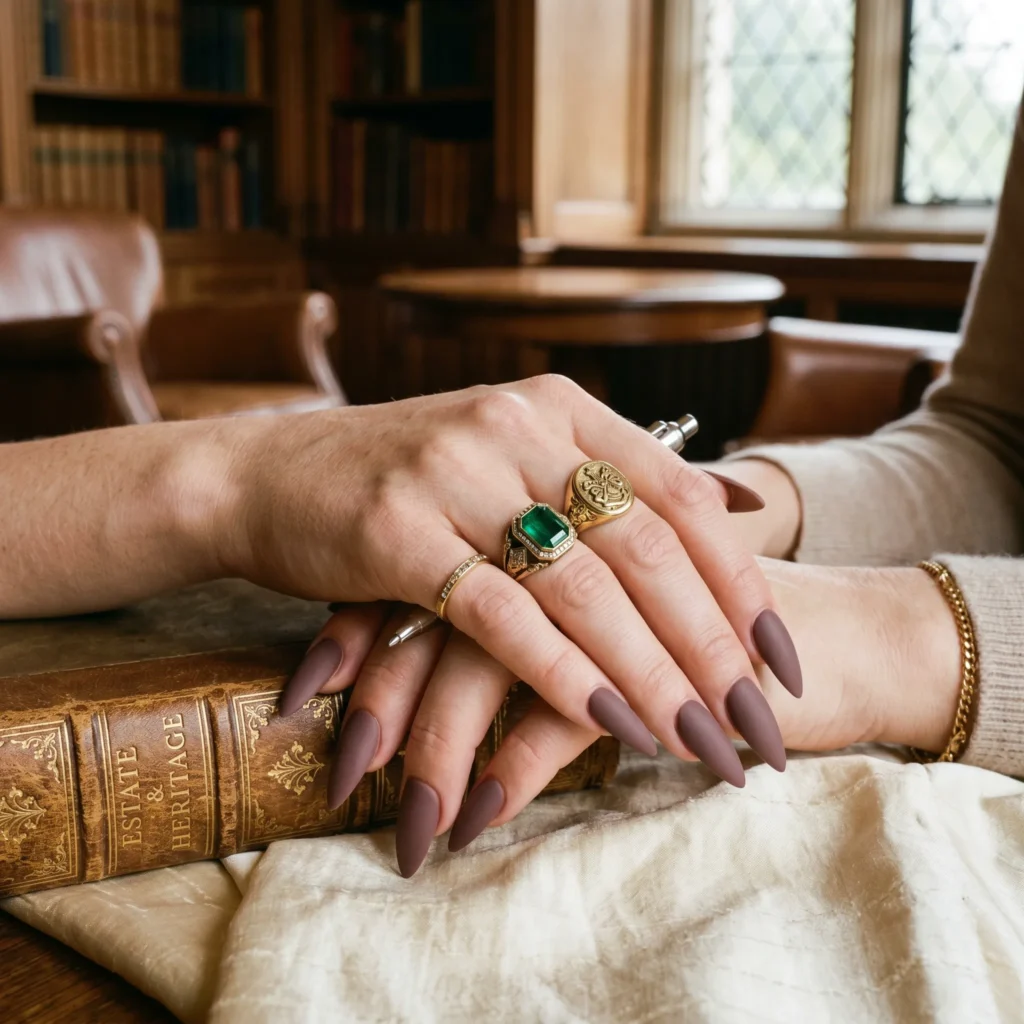
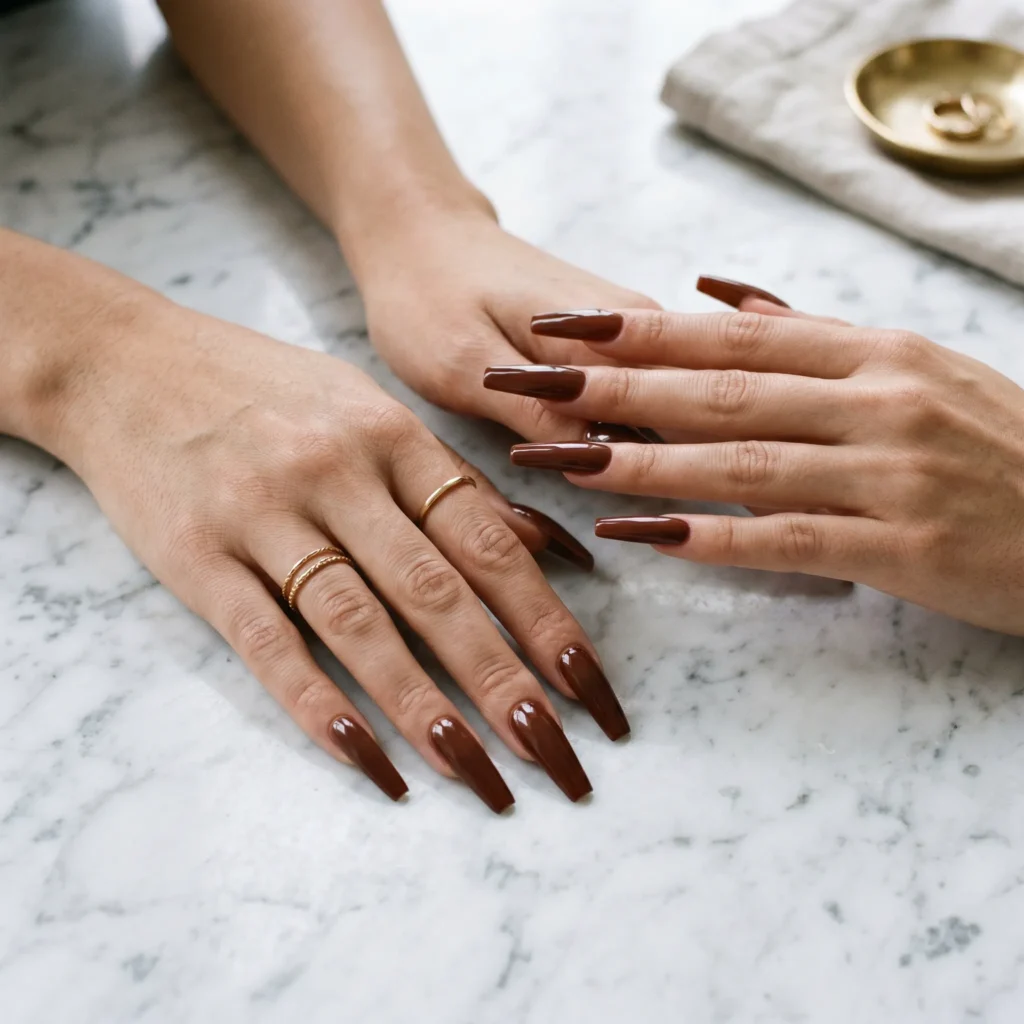
Deep, rich, dark — but with red-clay warmth rather than cool grey. Dramatic for longer shapes and anyone who wants a bolder Tuscan nail moment.
Dusty Gold
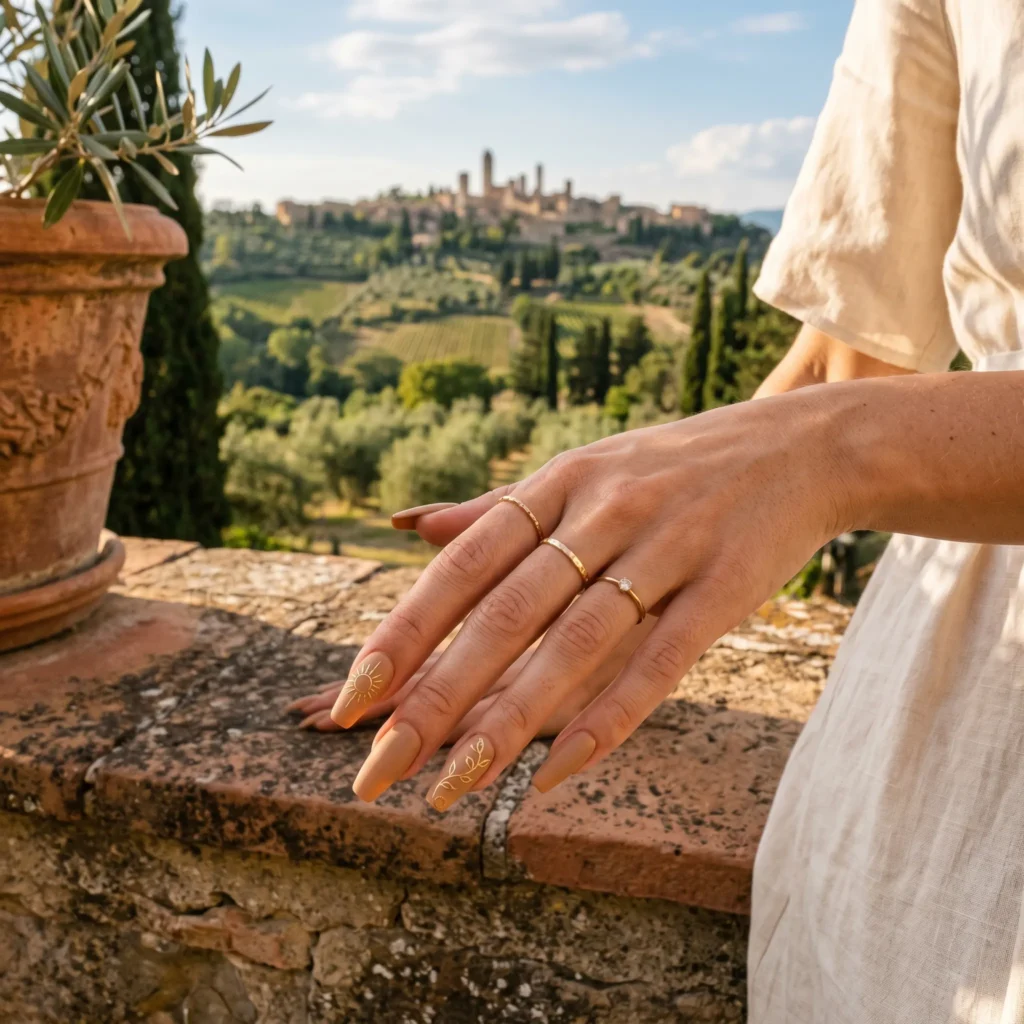
Not yellow, not bright. A matte or satin dusty champagne-gold that works as an accent or full-nail color. Brings the Tuscan light to the look.
How to Achieve Tuscan Nails at Home
Build Your Palette First
Before technique, you need the right colors. The most common mistake is picking shades that are too cool or too bright. Hold swatches next to warm light (not harsh white light) before buying — if it shifts grey or pink-cool, it’s not Tuscan.
For more nail aesthetics and trend guides, explore NailMoodboard.com.
Recommended polishes:
- OPI: “Rust & Relaxation,” “Barefoot in Barcelona,” “Chocolate Moose”
- Essie: “Umber-ella,” “Sandbar,” “Mink Muffs”
- Sally Hansen: “Adobe Rose,” “Warm Caramel”
- Zoya: “Rue,” “Sasha,” “Toffee”
Finish Matters
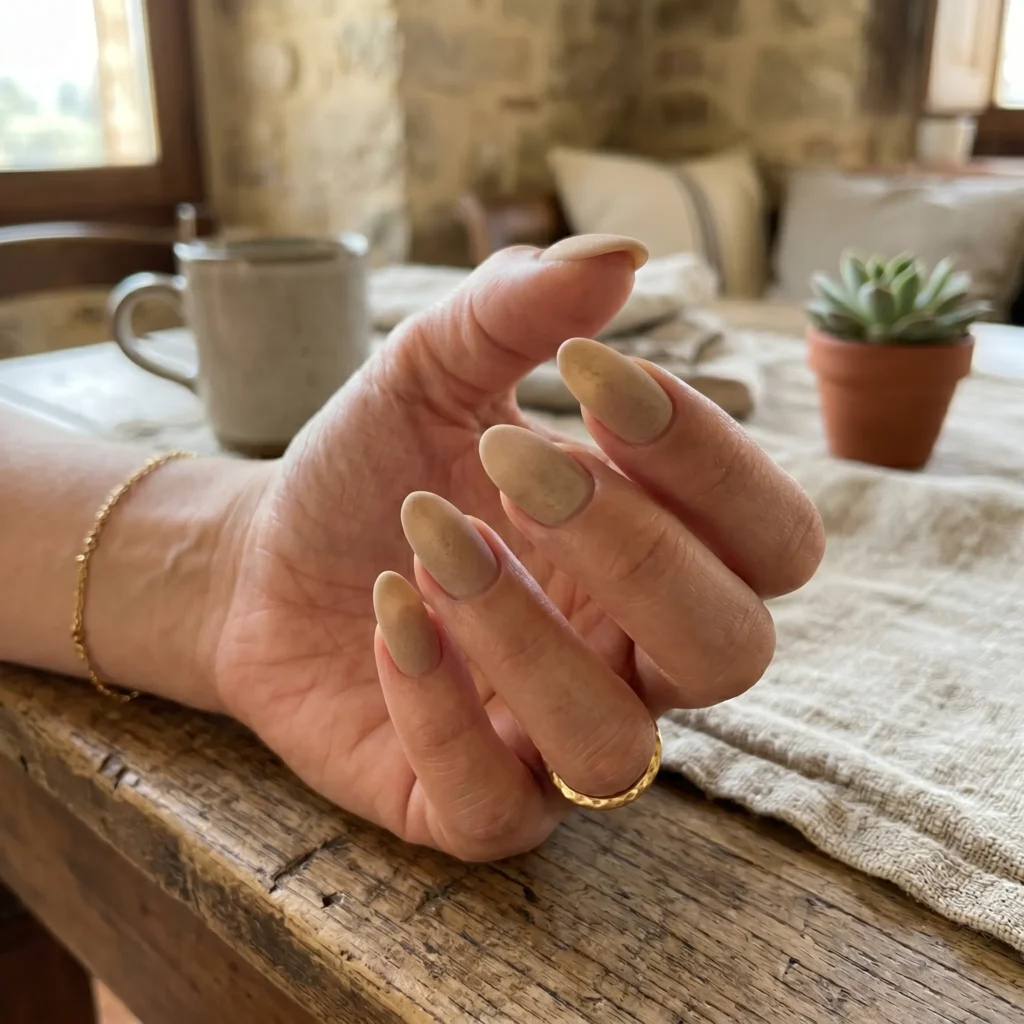
Tuscan nails lean matte or satin. Full high-gloss finish can work but reads more modern than nostalgic. If you want that authentic 2000s-meets-Italian-countryside feel, finish with a matte topcoat. It changes the entire mood.
For a softer high-shine alternative, see how glazed donut nails summer 2026 use the same warmth with a pearl finish.
Technique for a Clean Look
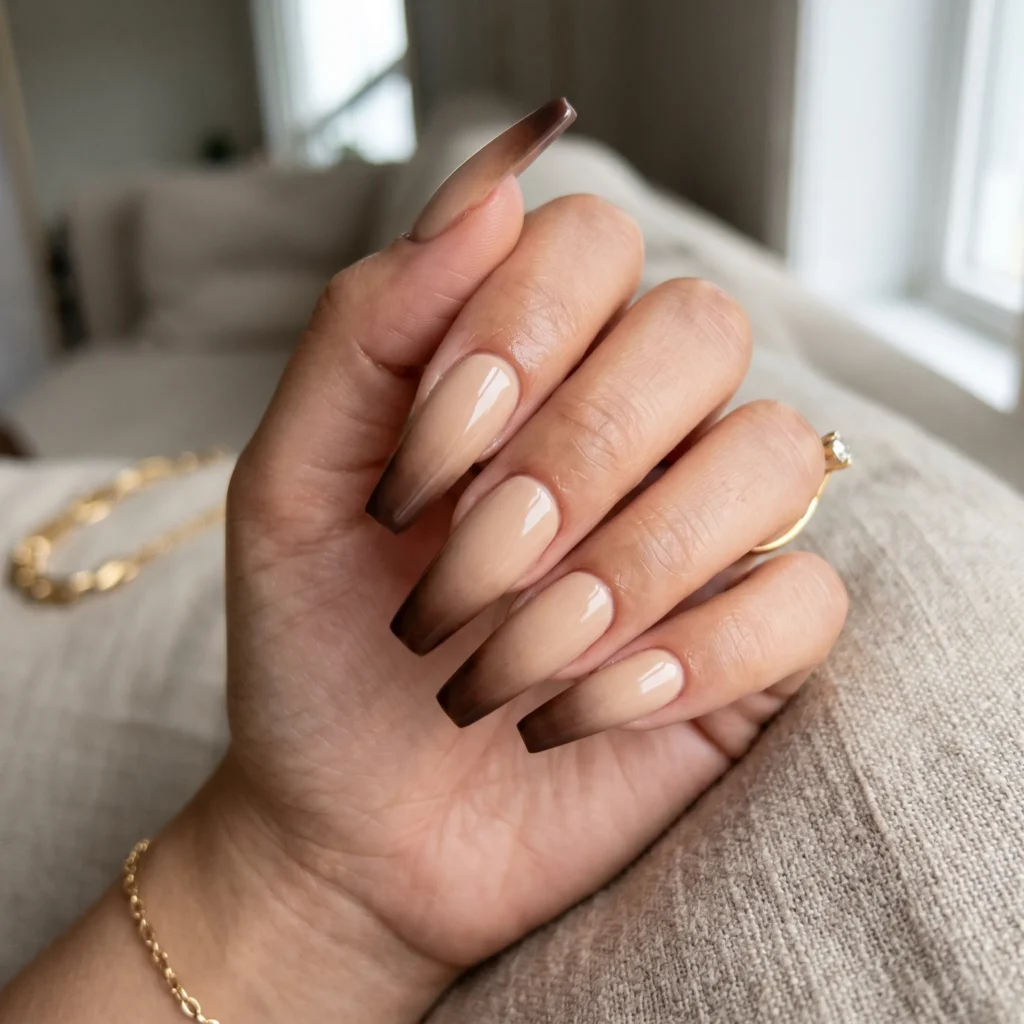
Apply a warm nude base coat first — this adds depth to the earthy shades above. Apply two thin coats of your chosen color. If doing an ombre, use a dry sponge dabbing method with two complementary shades from the palette. Seal with a matte or satin topcoat.
Longevity Tip
Earthy shades can show tip wear faster because the contrast with bare nail isn’t as forgiving as dark colors. Use a thin layer of topcoat every second day on tips only to extend wear time.
Tuscan Nails for Every Nail Shape
Short and Squoval
The most wearable combination for this trend. Short nails in terracotta or russet read clean, practical, and quietly stylish. The earthy shades ground a short shape without making it look stubby.
Almond
The ideal shape for the full Tuscan aesthetic. Almond nails with burnt sienna or dusty olive have an inherently Italian elegance — they’re feminine without being fussy. Any length works, but medium almond is the sweet spot.
Coffin
Gives the trend more editorial weight. Long coffin in warm espresso or a matte clay tone shifts the look from understated to statement. Works beautifully with fine-line botanical nail art.
Stiletto
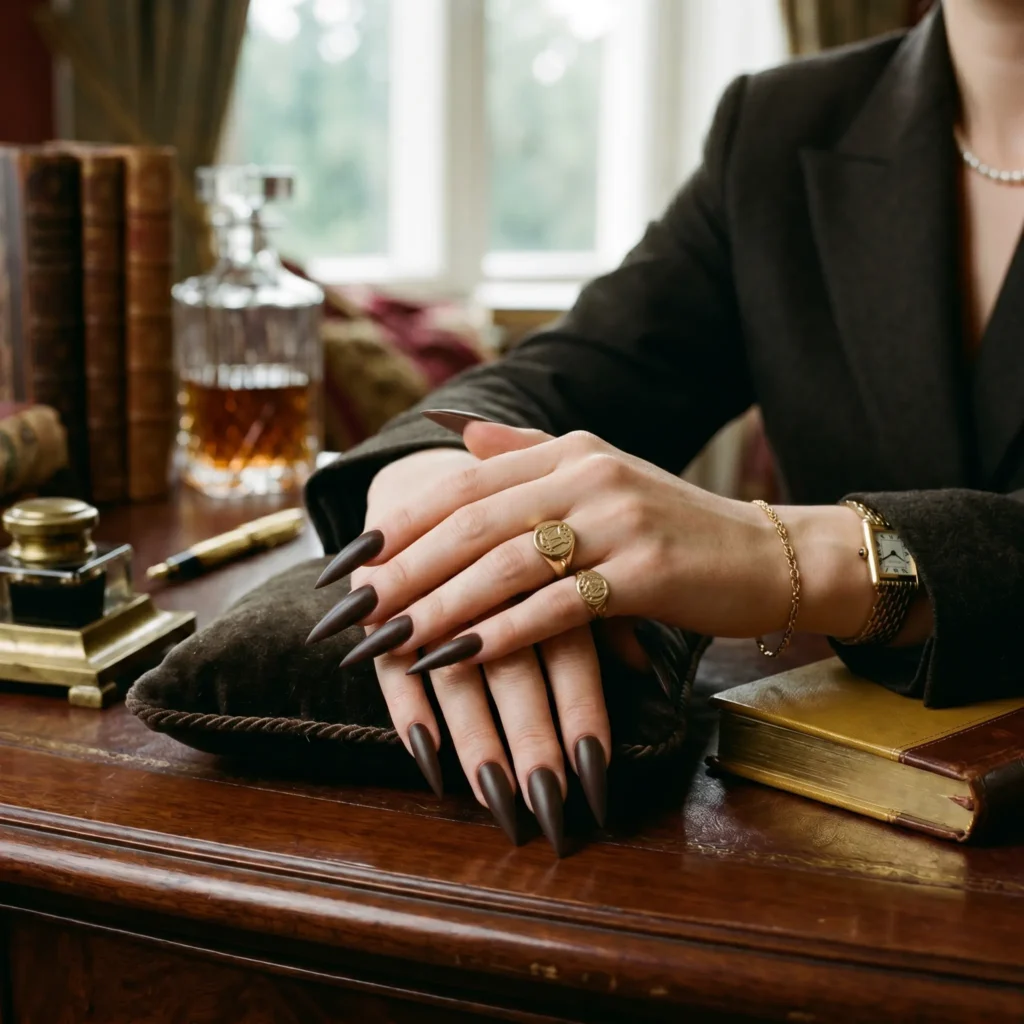
The boldest pairing. Reserve this for the darkest shades in the palette — deep wine-russet, espresso, or dark clay. Stiletto in a sandy beige reads too passive; stiletto in terracotta reads powerful.
Also worth exploring: simple funky nail designs using earthy shades if you want to push the palette into more creative territory without leaving the Tuscan aesthetic behind.
Which Finish to Choose and When
Matte works best for terracotta, russet, and burnt sienna — it makes earthy shades look intentional rather than flat. Satin is the safer all-rounder: enough sheen to look polished, none of the harshness of full gloss. Reserve high-gloss for sandy beige and dusty gold only — those lighter shades can handle shine without losing their warmth. A good rule: the deeper the shade, the more a matte finish serves it.
If you love high-shine finishes, explore our full guide on chrome mirror nails spring 2026 for a completely different direction.
Tuscan Nails vs Regular Neutrals: What’s the Difference
If you’ve ever grabbed what felt like a neutral nail color and it looked off on you — too grey, too pink, too cold — that’s the exact problem tuscan nails solve.
Regular neutrals span the entire color temperature spectrum. Many bestselling nudes lean cool: pink-based, grey-based, or lavender-adjacent. They photograph well under artificial light but can look washed out in warm or natural settings.
Tuscan nails are neutrals with a strict rule: warmth only. Every shade in the palette has amber, red, yellow, or brown undertones. Nothing shifts grey or pink-cool under any lighting. That’s what gives tuscan nail designs their consistency — they look good in sunlight, candlelight, and camera flash equally.
The practical test: hold the bottle near your inner wrist in natural light. If the color warms your skin, it’s Tuscan. If it greys it out or pulls pink, put it back.
If you want something louder, see our picks for bold spring nails 2026 — same season, completely different energy.
How to Ask Your Nail Tech for Tuscan Nails
The clearest way: “I want earthy, warm-toned nails — think terracotta, burnt sienna, dusty olive. No cool tones, nothing grey or pink-based. Matte or satin finish if possible.”
Bring two or three saved images from this post. Color communication with nail techs works best when you show, not describe. If you’re choosing from their polish wall, ask specifically for warm-toned neutrals and cross off anything that looks grey, purple-based, or cool pink under the salon lighting.
If you want nail art, keep it minimal and line-based — thin botanical sketches, a single gold detail, or an earthy ombre. That restraint is what keeps it Tuscan rather than just earthy.
Final Thoughts
Tuscan nails 2000s are not a micro-trend that’ll burn out in six weeks. They’re tapping into a durable appetite for warmth, quiet confidence, and nostalgic beauty — all things that aren’t going anywhere in 2026. Whether you go full terracotta or ease in with a sandy beige, the palette is forgiving, wearable, and genuinely beautiful across skin tones and nail shapes.
Save your favorites from the 30 designs above to your Pinterest boards — these are exactly the kinds of reference images you’ll want when you’re sitting in the nail chair. And if you’re building out your full 2026 nail rotation, explore more inspiration across NailMoodboard.com to find your next obsession.
Tuscan Nail Aesthetic — Details and Design Elements
The Tuscan nail aesthetic that defined early 2000s nail culture and returned strongly in 2026 is built from specific visual elements that, when combined, create the unmistakable quality of that era’s approach to nail beauty. Understanding these elements helps you recreate the Tuscan 2000s nail look authentically rather than approximating it.
The French tip is central to Tuscan 2000s nails — but specifically the thick, stark white French tip characteristic of the era rather than the thin, natural-looking French associated with 2020s quiet luxury. Tuscan nails in the 2000s aesthetic use a French tip that begins noticeably below the nail free edge, with a thick white band that was often painted beyond the natural tip line for a dramatic length extension effect. Recreating this specific French tip detail is the fastest way to achieve the Tuscan 2000s nail look.
The warm neutral base is the second defining element — a deep, warm beige or tan that referenced sun-kissed skin and the warmth of Tuscan summer landscapes. The Tuscan 2000s nail base is noticeably warmer and deeper than contemporary quiet luxury nudes, which tend toward cooler, pinker beiges. This warmer base is what gives Tuscan nails their distinctive Y2K quality; too cool a base reads as 2020s rather than 2000s.
Length and shape matter in Tuscan 2000s nails — the aesthetic is tied to medium-long length with a square or slightly tapered square tip. Short Tuscan nail attempts feel historically inaccurate because the length was integral to the Tuscan 2000s nail identity. If you can’t grow or extend to medium-long length, the Tuscan nail aesthetic loses a significant portion of its period-specific quality.
Tuscan 2000s Nails Updated for 2026
The 2026 interpretation of Tuscan nails doesn’t reproduce the Y2K original wholesale — it filters it through contemporary nail sensibilities. The warm nude base remains but is slightly more refined; the French tip remains but is executed with more precision than the era’s originals; the length is present but the shape trends toward oval rather than strict square. These small adjustments make 2026 Tuscan nails feel like a considered aesthetic reference rather than pure nostalgia — which is exactly the quality that makes the trend compelling for a contemporary audience.
Tuscan 2000s Nails FAQ
Are Tuscan nails the same as glazed donut nails?
No — they share a warm, neutral, shiny quality but are distinct aesthetics. Glazed donut nails use a milky, chrome-shine finish across a sheer or translucent base. Tuscan 2000s nails use a deeper warm nude base with a stark white French tip and a glass-glossy but opaque finish. Both read as sophisticated and polished; they reference different eras and different visual languages.
What nail length suits Tuscan 2000s nails best?
Medium to long — the Tuscan 2000s nail aesthetic is historically associated with length. A medium-length square or soft-square nail is the minimum for the look to read correctly. Short Tuscan nails can work with the color palette but don’t fully capture the period-specific quality that defines the trend’s appeal.
Is the Tuscan nail trend sustainable beyond 2026?
The Y2K revival cycle has been running since approximately 2021 and shows no sign of exhausting itself. Tuscan nails benefit from genuine aesthetic quality — the warm neutral and stark French combination is genuinely flattering and wearable — rather than relying purely on nostalgia. That wearability suggests Tuscan nails will persist in nail culture beyond a single trend cycle, evolving in their execution while remaining recognizable as a distinct nail aesthetic.
Compare Before You Choose
See the Closest Alternatives
Compare nearby shapes, colors and finishes before picking a final reference.
Recommended Next
Tropicoqueta Nails 2026: The Karol G-Inspired Bow-and-Tropical Trend
Read the guide →