Tortoiseshell nails borrow their pattern straight from the classic accessory material — warm amber, honey, and deep brown tones blended into an irregular, marbled swirl (the same pattern gel and regular polish can both achieve), sometimes with a few flecks of black or gold worked in. It’s one of the most recognizable fall nail trends because the pattern itself signals “autumn” before you even look at the base color, and it photographs beautifully on almost any nail length. Amber tortoiseshell also pairs well with orange and brown nails in a fall set.
Below are 12 tortoiseshell nail designs organized into four sub-styles — classic amber tortoiseshell, dark tortoiseshell, chrome tortoiseshell, and accent-nail tortoiseshell — so you can find a version that matches your effort level and your everyday wardrobe. For more autumn color inspiration, see our fall nail color trends guide, and if you want a related textured pattern, check out our plaid nails post.
What Makes a Manicure “Tortoiseshell”?
The defining feature is an irregular marbled or blotchy pattern in warm browns, ambers, and honey tones — never a clean stripe or dot, always an organic, uneven blend, similar to how the real shell material looks. Most versions use three to four polish shades layered wet-on-wet or dabbed on with a sponge, and the pattern is usually denser toward the cuticle and lighter toward the tip, echoing how the natural material is shaded.
Classic Amber Tortoiseshell
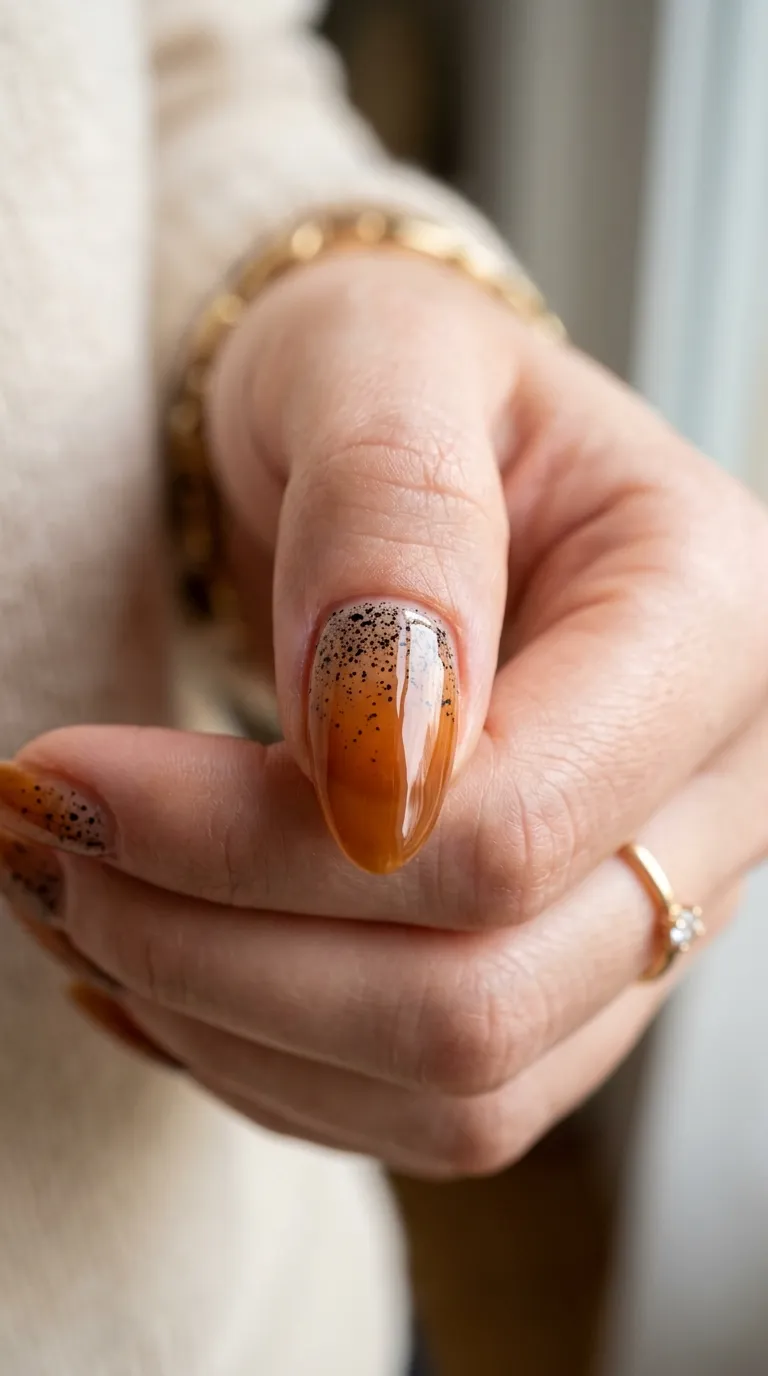
The foundational version: a warm honey-gold base with irregular patches of chestnut brown and a few black accents dabbed in for depth. This is the most wearable, most search-friendly take on the trend and works for both a full set and a single accent nail.
It reads as sophisticated rather than costume-like, which is why it shows up so often in office-appropriate fall manicure roundups — the colors are all within a cohesive warm palette, so even a busy pattern doesn’t look chaotic.
Honey-gold base with chestnut brown marbling
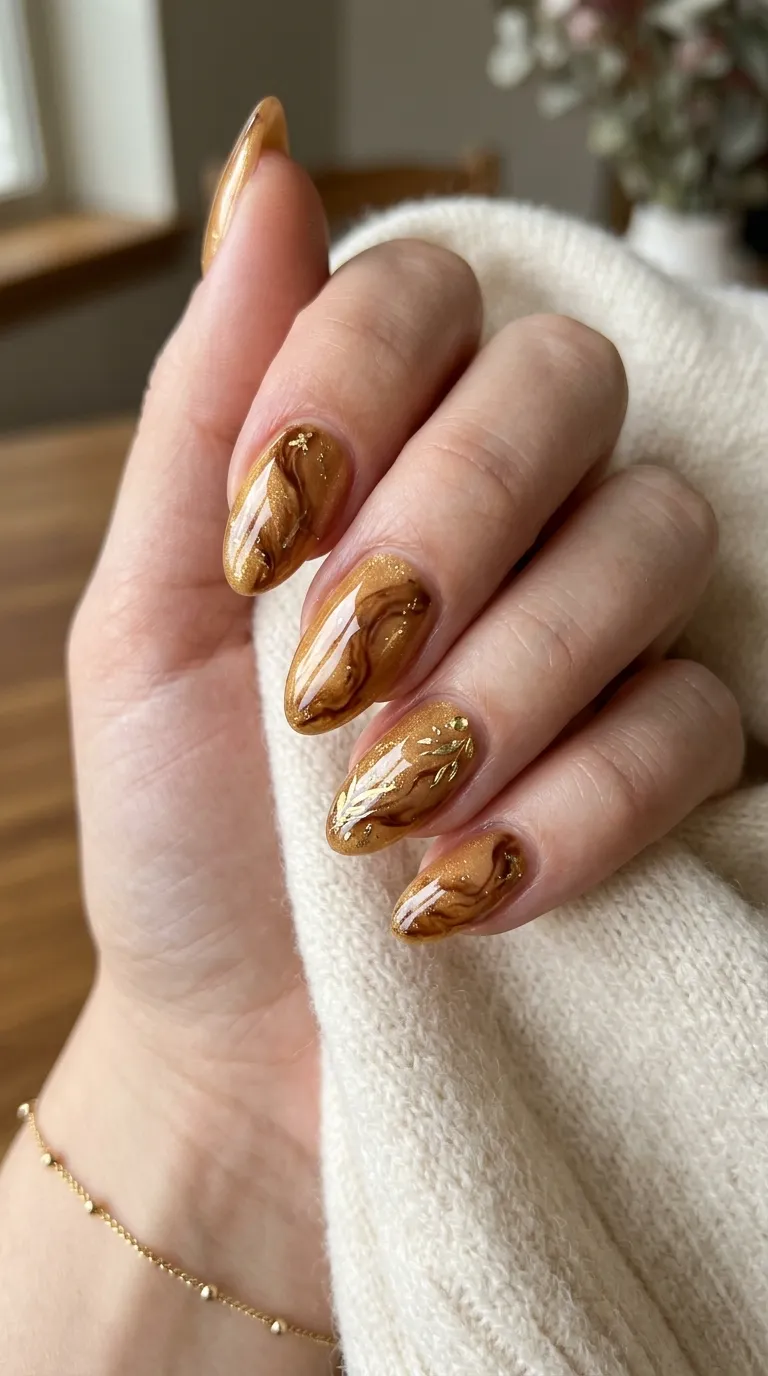
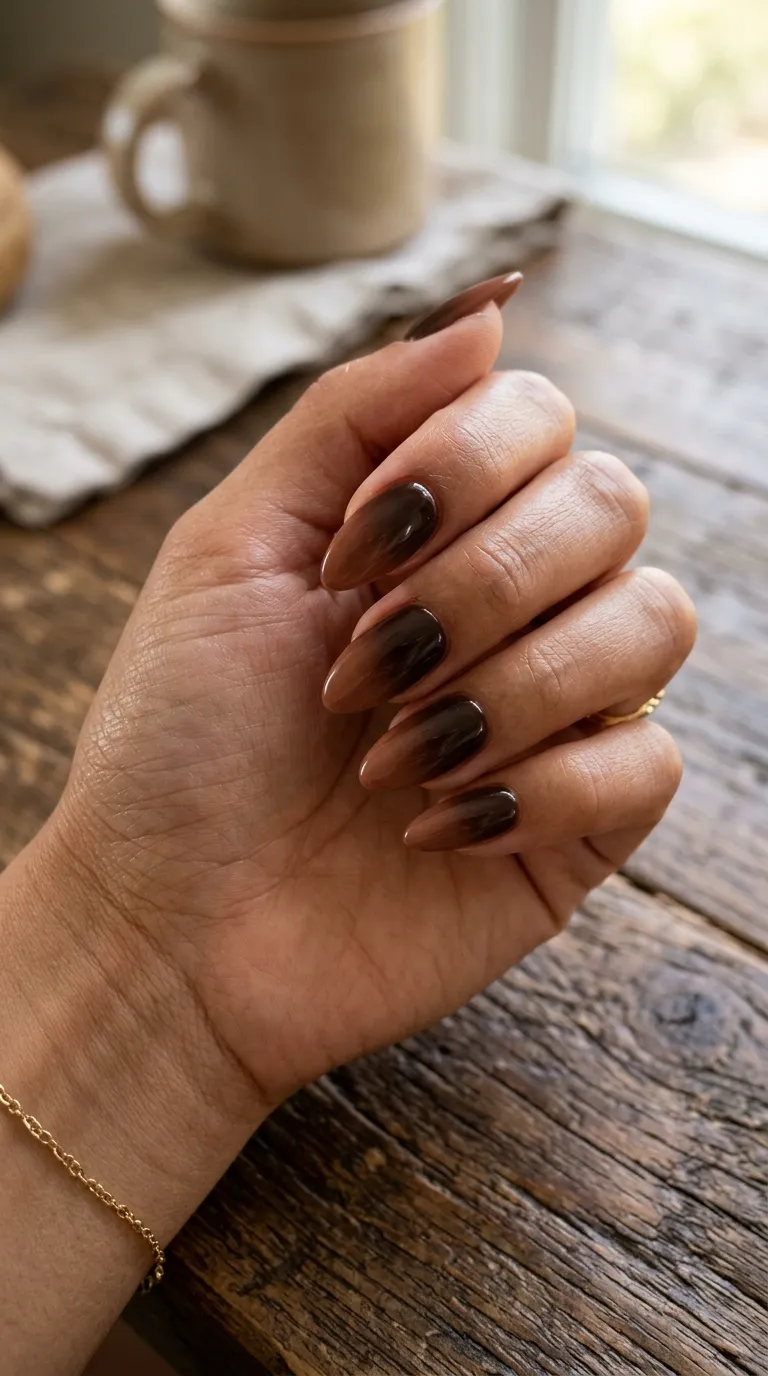
Caramel-to-brown ombre with a marbled overlay
Amber base with fine black speckling near the cuticle
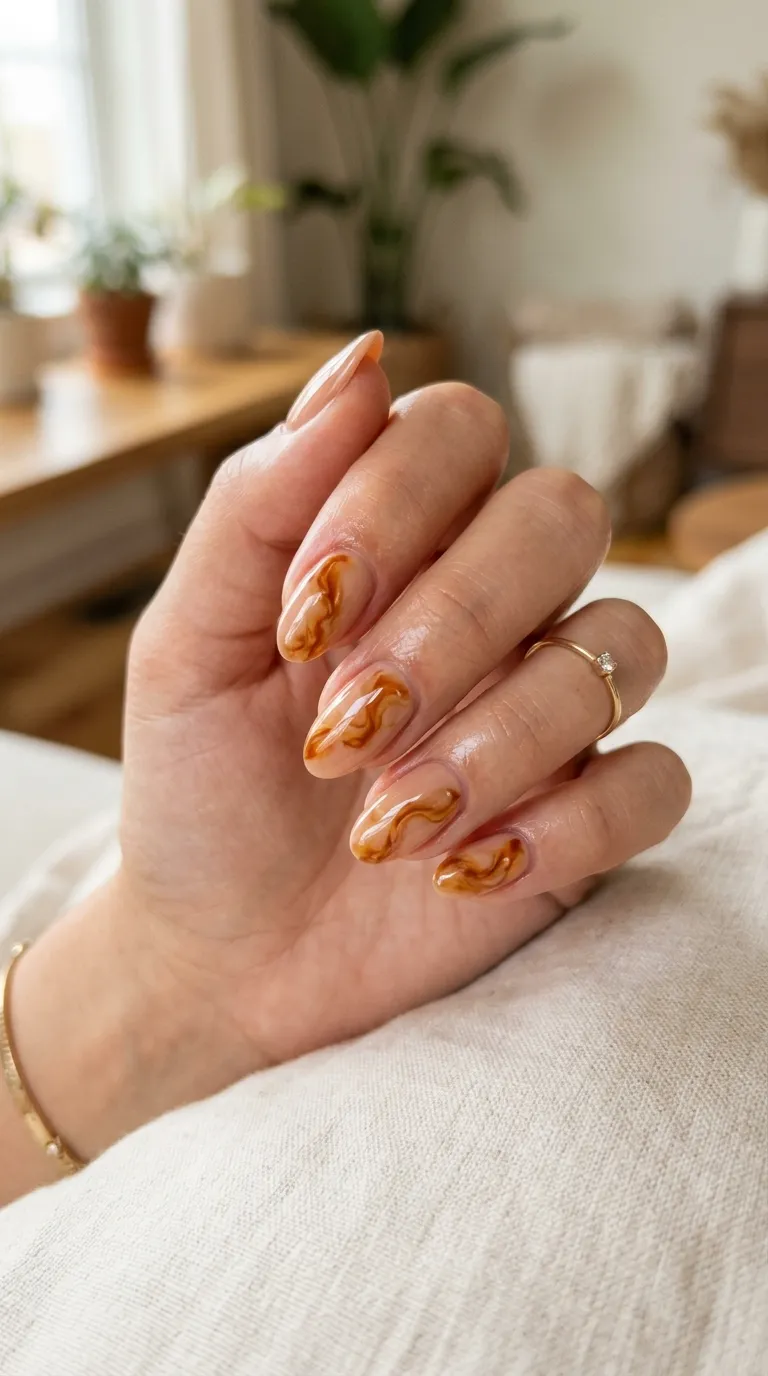
Warm nude base with three-tone amber marbling
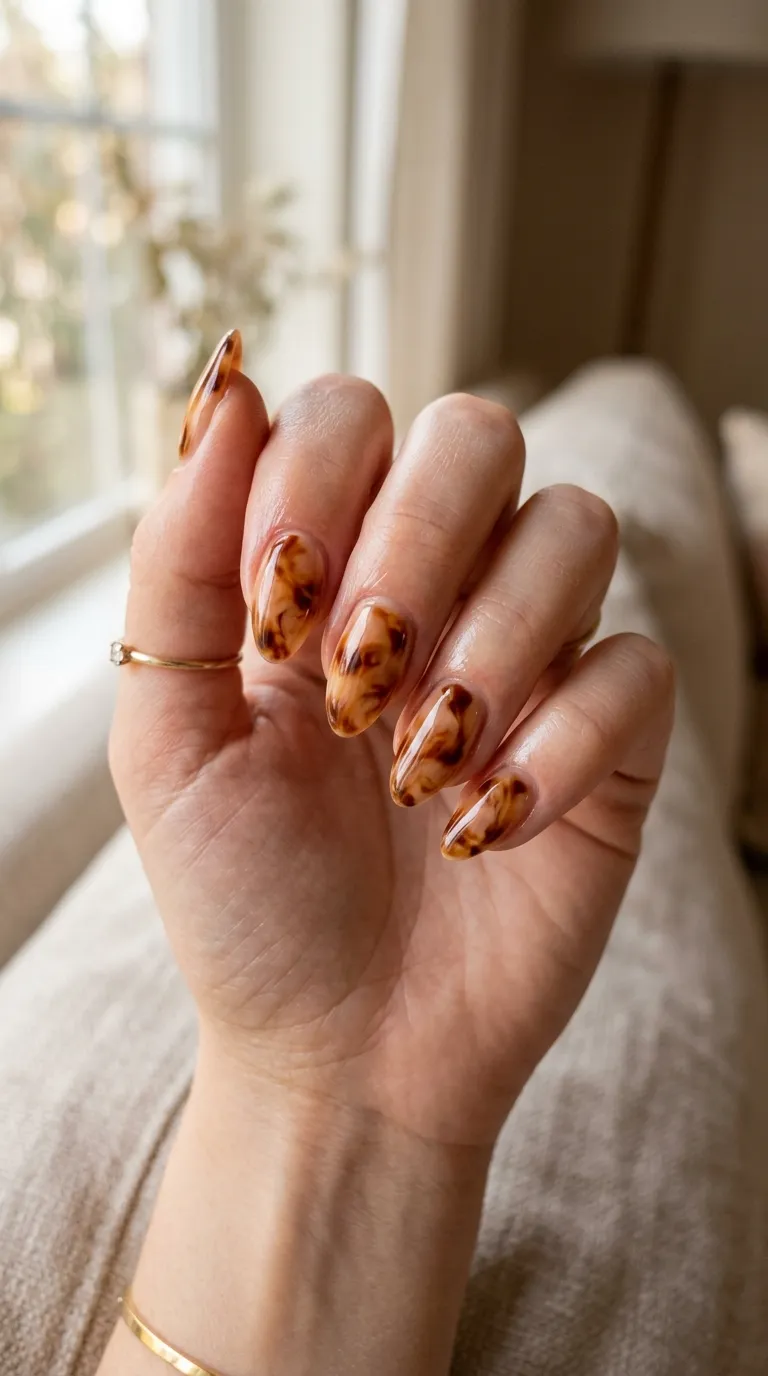
Dark Tortoiseshell Nails
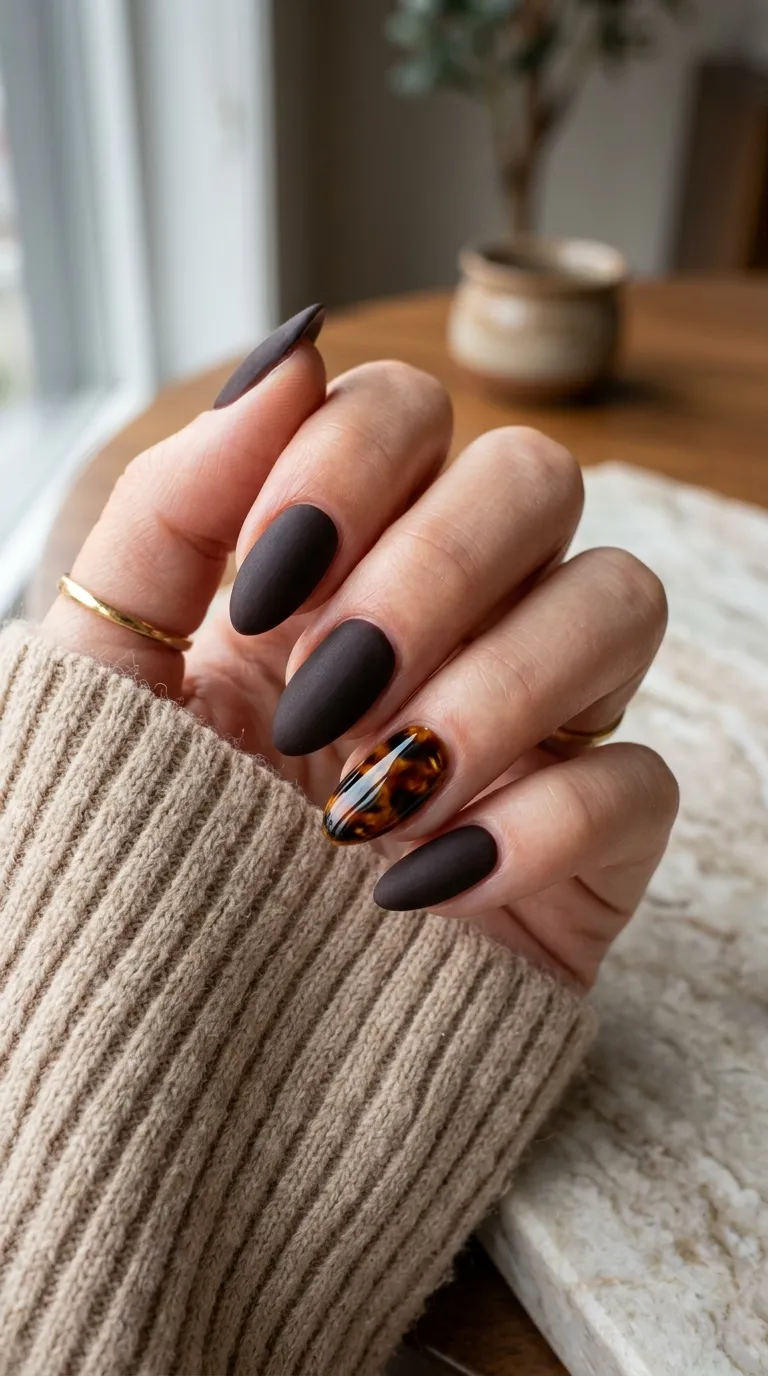
A moodier variation that swaps the honey-gold base for a deep espresso or near-black brown, with the amber and caramel tones appearing only as marbled highlights rather than the dominant color. This version pairs especially well with matte finishes and reads more “editorial” than the classic version.
Dark tortoiseshell is a strong choice for anyone who wants the pattern without the manicure skewing too warm or bright — it’s the closest thing to a neutral, all-black-wardrobe-friendly version of the trend.
Espresso-brown base with sparse amber marbling
Matte black-brown with a single glossy tortoiseshell accent nail
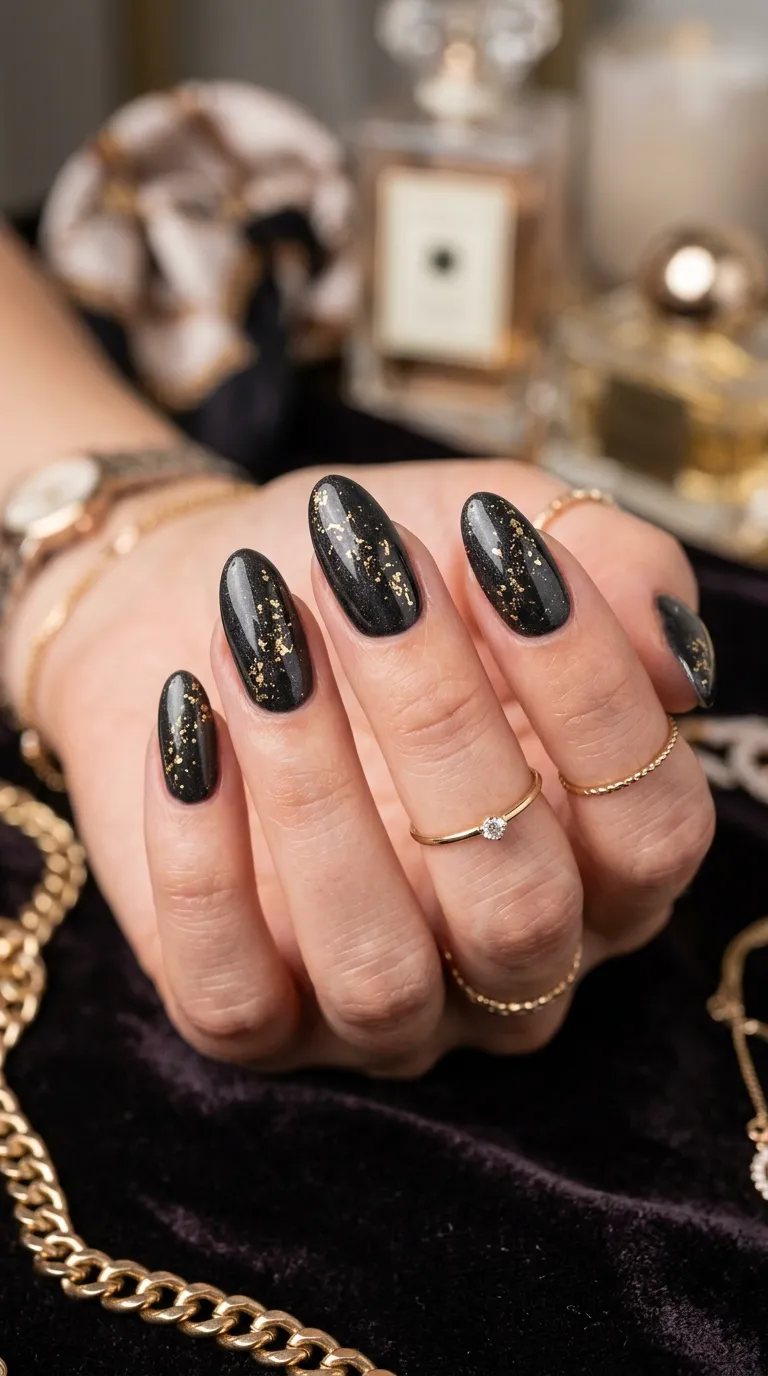
Near-black base with fine gold-leaf flecks
Chrome Tortoiseshell Nails
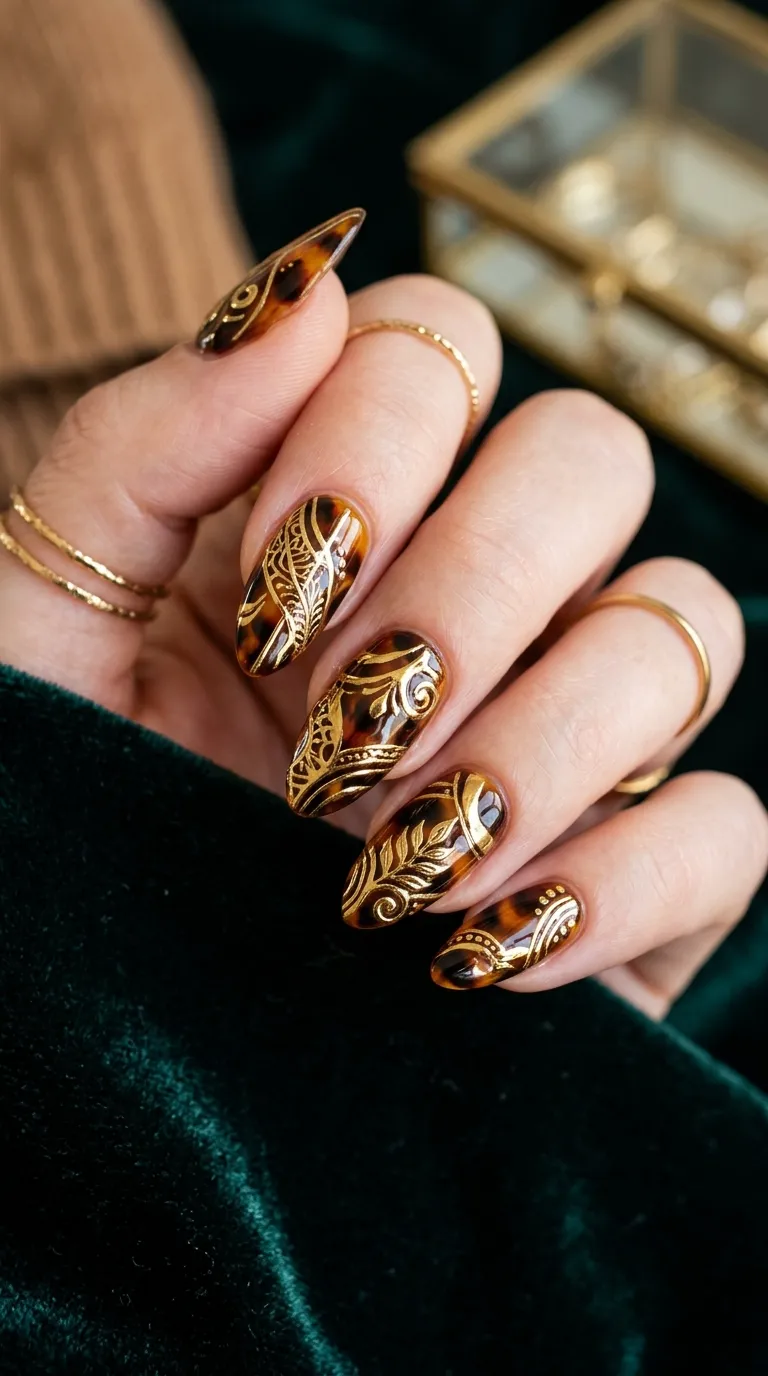
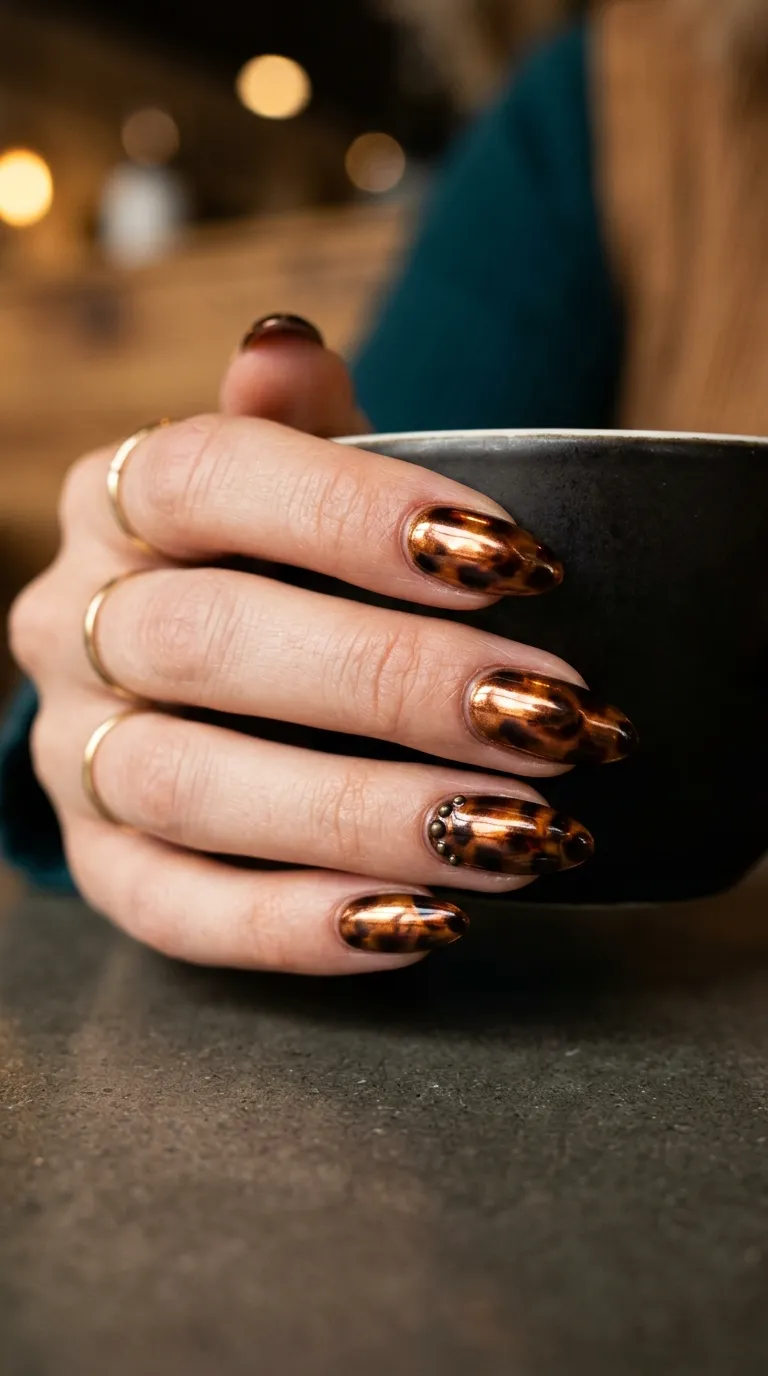
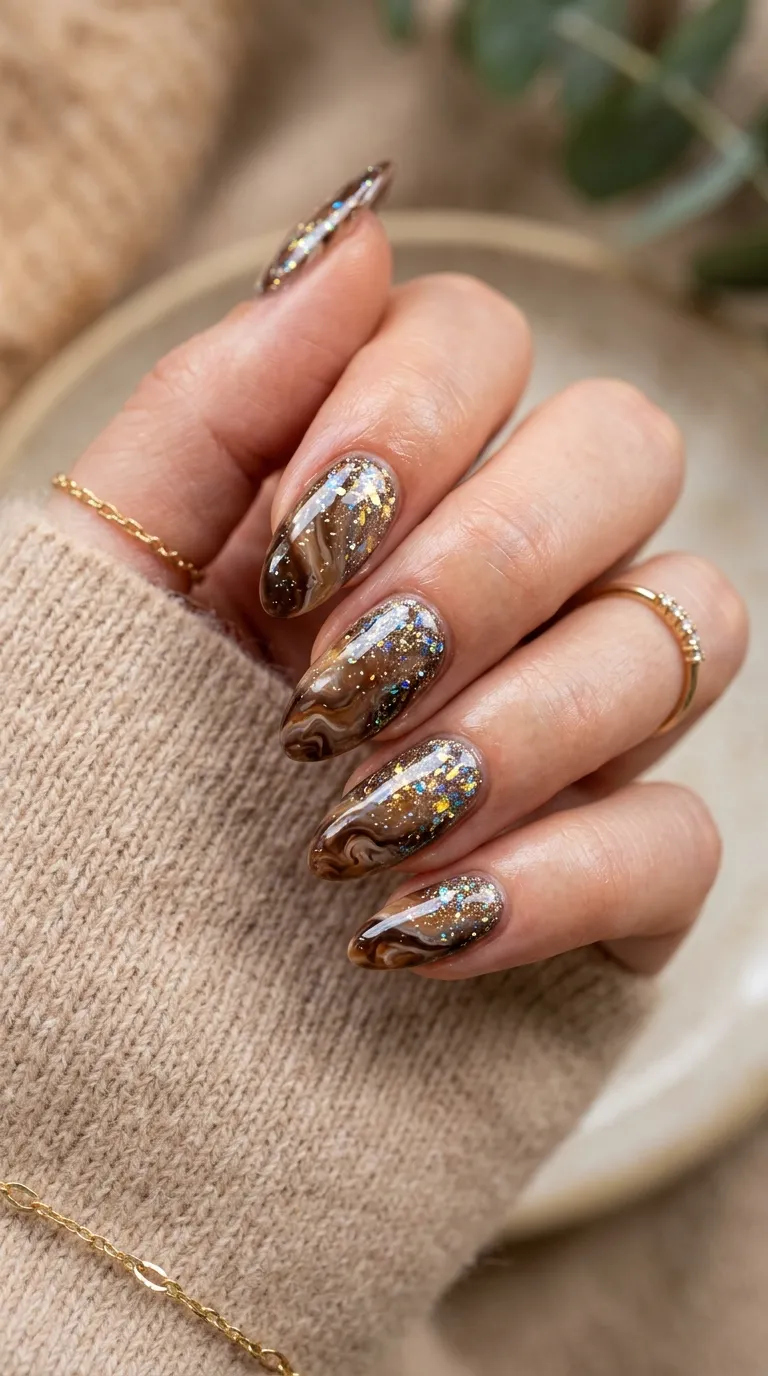
A more editorial, salon-leaning take that adds a metallic chrome top layer over the marbled base, giving the pattern a glass-like, reflective finish. This sub-style takes more skill or salon time than the classic looks but is the most Pinterest-save-worthy version of the trend.
Gold-chrome overlay on a classic amber tortoiseshell base
Bronze chrome finish over dark tortoiseshell
Glass-fleck top coat over a marbled brown base
Accent-Nail Tortoiseshell Looks
For anyone who wants the trend without committing to a full patterned set, tortoiseshell works especially well as a single accent nail against a solid warm-neutral base — usually the ring finger. This is the fastest at-home option and the easiest to keep office-appropriate.
Nude base with one marbled amber accent nail
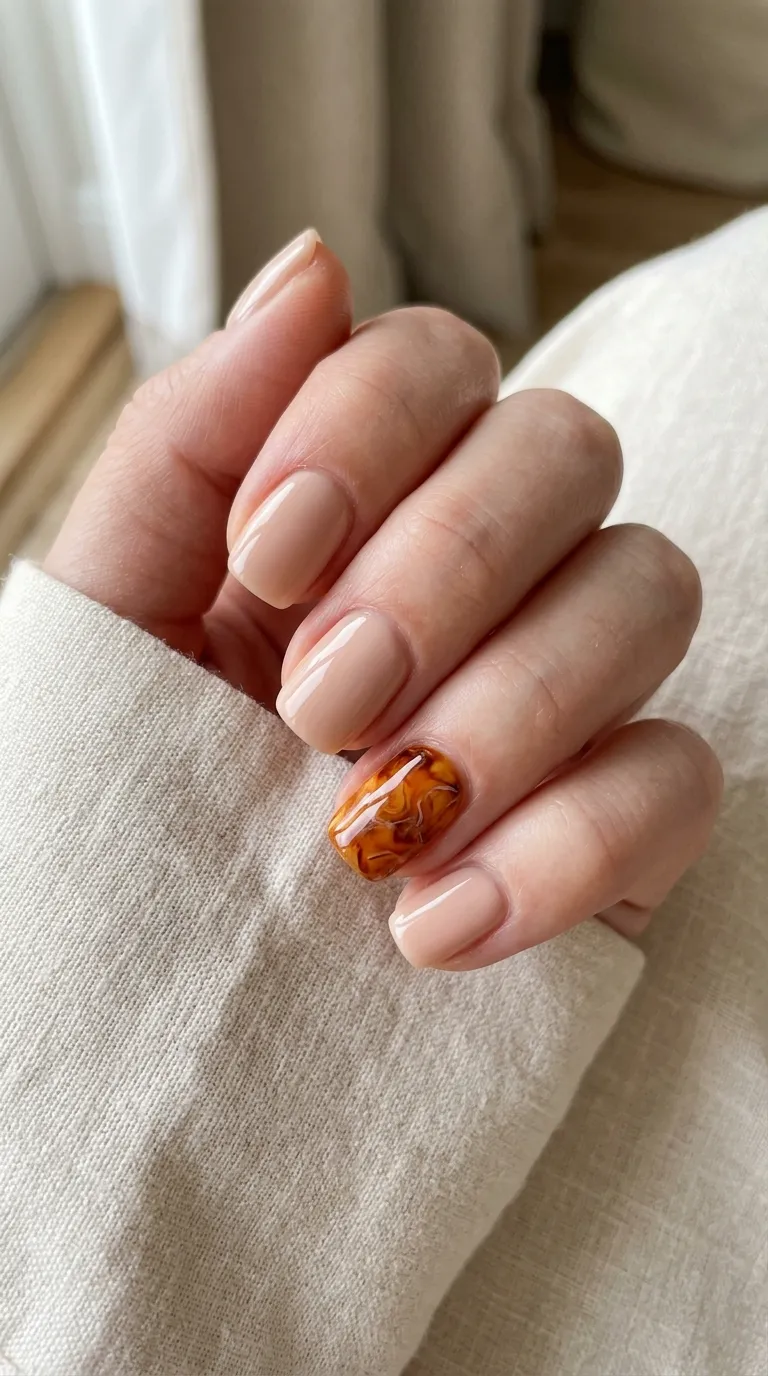
Camel base with two tortoiseshell accent nails

Pairing Tortoiseshell Nails With Fall Outfits
Because the palette stays within warm browns and ambers, tortoiseshell nails pair naturally with the same tones that dominate fall wardrobes — camel coats, rust-colored knits, and cognac leather all sit well alongside this manicure without clashing. Gold jewelry is a more natural match than silver, since the marbled pattern already reads warm; if you wear mostly silver accessories, the dark tortoiseshell sub-style is the easier pairing since it leans cooler and more neutral overall.
For anyone building a capsule “fall aesthetic” across nails, makeup, and outfit, tortoiseshell also works as a subtle bridge between a plaid or houndstooth outfit print and a plain sweater — the nails echo the printed pattern in miniature without needing to match it exactly, which keeps the overall look coordinated rather than overly matched.
How to Choose a Tortoiseshell Style
For everyday office wear, the accent-nail or classic amber versions keep things wearable. For a date night or event, chrome tortoiseshell gives the most photo-ready finish. If your wardrobe leans all-black or minimalist, dark tortoiseshell is the better match than the honey-gold classic version. Doing it yourself at home: a sponge-dabbed classic amber look is the easiest technique to learn, since the pattern is meant to look irregular rather than precise.
Tortoiseshell Nails by Occasion
For a work environment, stick to the classic amber or accent-nail versions in a short-to-medium length — the warm, cohesive palette reads as polished rather than trendy, so it won’t clash with a professional wardrobe. For a fall wedding as a guest, chrome tortoiseshell on almond or oval nails photographs beautifully under both natural and indoor lighting, and it pairs well with gold jewelry without competing with the bride’s palette.
For a first date or dinner out, dark tortoiseshell with a glossy top coat gives a moodier, more intentional look than a plain solid color, while still being easy to maintain through the meal. For a casual weekend or errands, a single tortoiseshell accent nail against a nude or camel base is the lowest-maintenance way to wear the trend without a long salon appointment.
Tortoiseshell Nails Aftercare and Longevity
Because tortoiseshell designs are built from several thin layers of polish, a good top coat is what keeps the pattern from chipping or fading unevenly. Apply it in two thin coats rather than one thick one, and reapply a fresh top coat every 3-4 days if you’re using regular polish to extend the wear. For a gel version, the pattern typically holds for two to three weeks before regrowth becomes noticeable at the cuticle.
When it’s time to remove a tortoiseshell manicure, soak-off is gentler on the nail plate than scraping, especially with darker pigmented polishes that can otherwise leave a temporary stain. Always apply a base coat before your next manicure regardless of how you remove this one, since the amber and brown pigments used in this trend are among the more likely shades to transfer color onto bare nails.
If you like warm marbled browns, our mocha mousse nails give you the same palette as a solid color, and dark academia nails pair tortoiseshell accents with oxblood and forest green.
Frequently Asked Questions
What colors do I need for tortoiseshell nails?
Most tortoiseshell looks use three to four polishes: a honey or amber base, a chestnut or caramel mid-tone, a deep brown or black for the darkest marbled patches, and sometimes a touch of gold shimmer. You don’t need all four for every version — the dark and accent-nail sub-styles above use fewer colors.
How do you actually paint the marbled pattern?
The most common at-home method is dabbing small amounts of each color onto the nail with a makeup sponge or the flat side of a dotting tool while the base coat is still slightly tacky, then blending the edges lightly with a clean brush. The goal is irregular, overlapping patches — resist the urge to smooth it into an even gradient.
Is tortoiseshell only a fall trend?
It peaks in searches during fall because the warm palette matches the season, but the pattern itself isn’t tied to a holiday, so a subtle accent-nail or dark version holds up through winter as well.
What nail shape suits tortoiseshell best?
Almond and oval shapes show the marbled pattern well because the curved edge lets the pattern flow naturally, but short square and round shapes work fine too, especially for the accent-nail version where only one or two nails carry the pattern.
How long does a tortoiseshell manicure take at home?
A single accent nail adds about 10 minutes to a regular manicure. A full patterned set takes roughly 40-50 minutes since each nail’s pattern needs to be built up in layers and given time to dry between colors.
Does tortoiseshell work on short nails?
Yes. Short square or round nails can carry the pattern just as well as longer shapes — the marbling is scaled down slightly, but the irregular blend of amber and brown still reads clearly at any length, which is part of why the trend works well as a low-maintenance, everyday option.
If you’re new to the trend, save a few reference photos before your salon visit or at-home attempt — the marbled pattern is easiest to communicate visually, and most nail techs can match a photo far more precisely than a verbal description of “amber and brown swirls.”
Whichever sub-style you pick, tortoiseshell is forgiving of small imperfections in the blend — the pattern is supposed to look organic and uneven, so it’s a good trend to practice fine-line and marbling technique on without the pressure of a perfectly symmetrical result.
Final Thoughts
Tortoiseshell nails give you one of the few fall patterns that works as both a full statement set and a single subtle accent nail, which is why it keeps resurfacing every autumn. Start with the classic amber or accent-nail version if you’re doing this at home for the first time, and save the chrome and dark sub-styles for when you want a more editorial finish.
Compare Before You Choose
See the Closest Alternatives
Compare nearby shapes, colors and finishes before picking a final reference.
Recommended Next