Plaid nails have gone from a single viral celebrity manicure to one of 2026’s biggest nail art stories, and they’re not slowing down. Built on the same preppy, dark-academia energy driving argyle sweaters and tartan skirts back into fashion, this pattern manicure trend has range — from moody tartan in jewel tones to soft pastel plaid that reads as fresh and spring-ready. Here’s what plaid nails actually are, how they differ from argyle and tartan, the best variations to try, and how to get the pattern right without it looking like a mess on a tiny nail canvas.
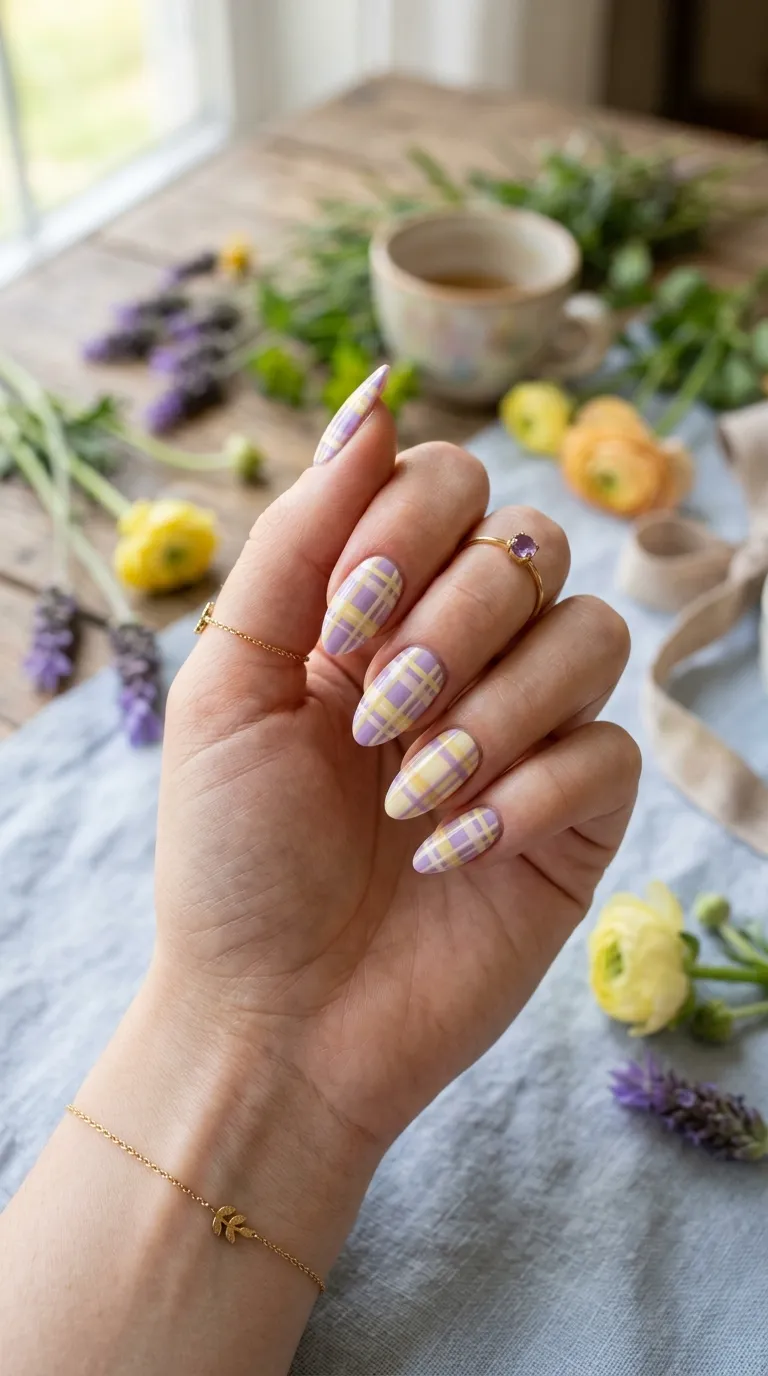
What Are Plaid Nails?
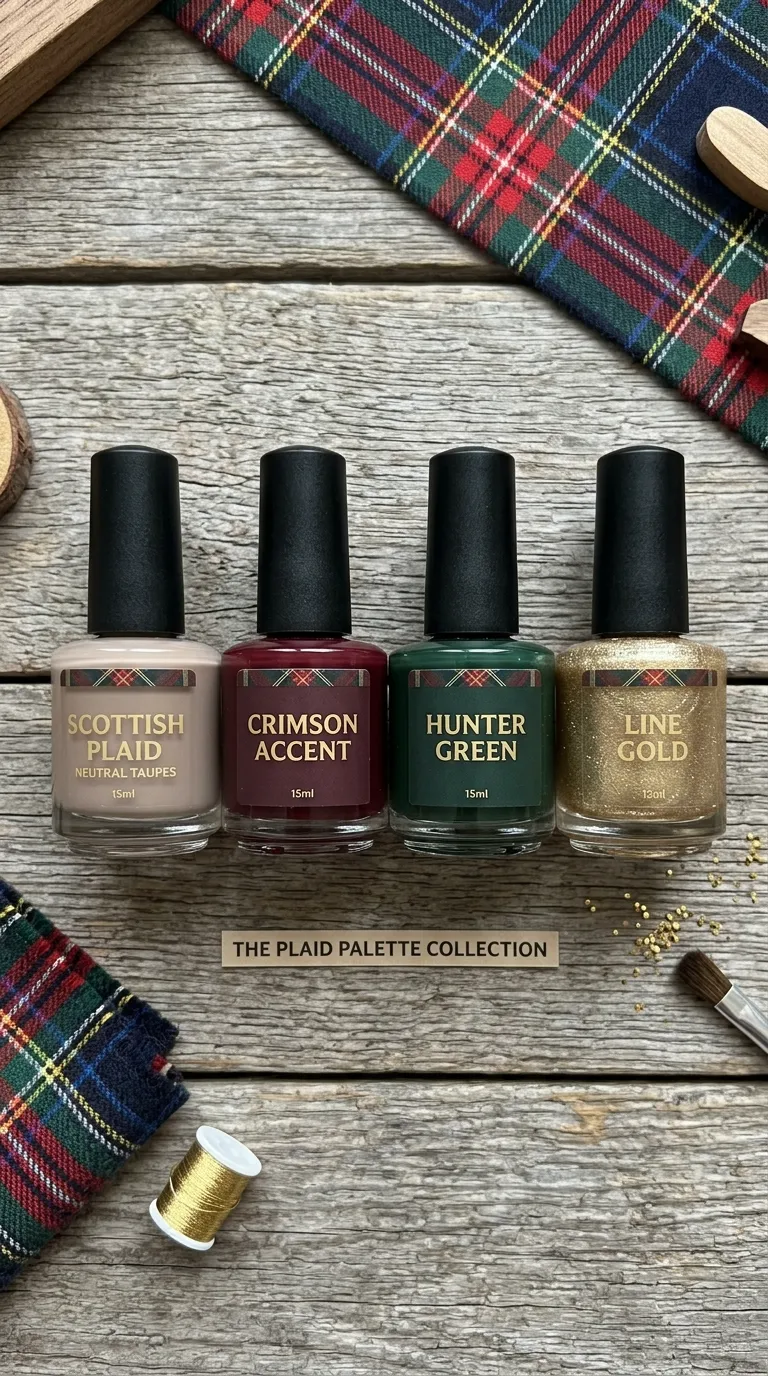
Plaid nails use a criss-cross pattern of intersecting lines in two or three colors over a base shade, mimicking the look of tartan or checked fabric. The pattern usually includes a neutral anchor color (cream, ivory, soft grey, or a sheer jelly base), two accent colors, and one thin contrasting line running through the grid. That four-color structure is what keeps the pattern legible on something as small as a nail — more than four colors and the design tends to blur into noise rather than read as a clean check.
The trend caught fire after a celebrity nail artist created a jelly-finish plaid set for Kylie Jenner in late 2025, using polish mixed with top coat to give the checked pattern a sheer, glowing quality rather than a flat, opaque look. Reinterpretations followed almost immediately, from British-punk tartan to soft pastel argyle French tips.
Plaid vs. Argyle vs. Tartan: What’s the Difference?
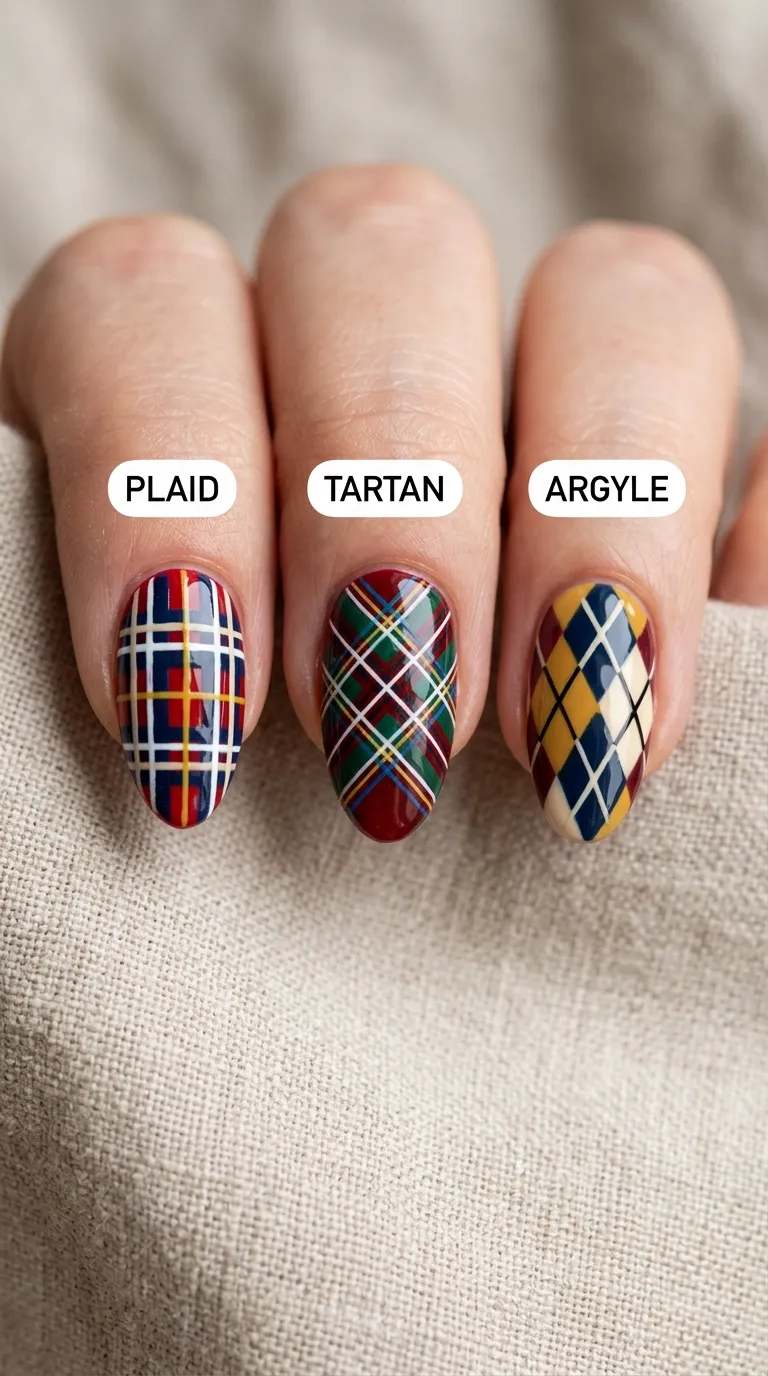
These three terms get used interchangeably, but they’re genuinely different patterns, and mixing them up is the most common reason people end up with the wrong result at the salon.
| Pattern | Structure | Best Known For |
|---|---|---|
| Plaid | Intersecting horizontal and vertical lines forming a grid | Flannel shirts, casual checked fabric |
| Tartan | A specific, structured plaid with defined repeating bands of color | Scottish clan patterns, kilts |
| Argyle | Overlapping diamond shapes with a thin line through the center of each | Preppy knitwear, golf sweaters |
On a nail, this distinction matters: a diamond grid reads as argyle even in plaid-adjacent colors, while true plaid and tartan both use a crossed-line grid rather than diamonds. If you show your nail tech a diamond-pattern reference photo and ask for “plaid,” you’ll likely get a different result than you expected.
Why Plaid Nails Are Trending in 2026
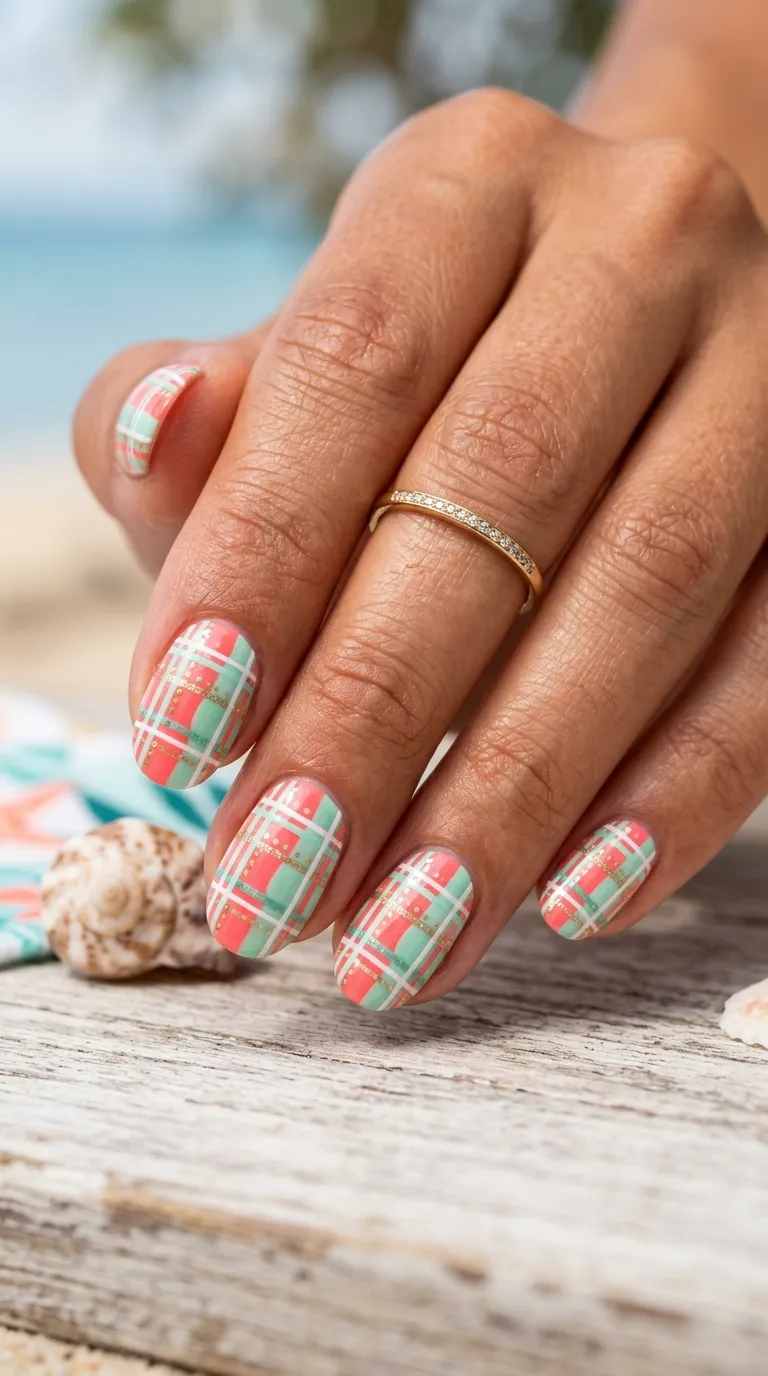
Pattern nail art tends to follow fashion, and heritage prints — argyle, tartan, windowpane check — were already everywhere in clothing thanks to Ralph Lauren’s dominant runway presence and the wider “old money preppy” and dark academia aesthetics before they ever showed up on a nail. Celebrity manicurists have predicted the trend has staying power precisely because of that fashion-cycle timing, rather than being a one-off viral moment.
Texture is also playing a role. Nail artists have pointed to runway houses like Chanel and Margiela pushing tweed, woven fabric, and check patterns into their collections, which has translated directly into a broader appetite for textile-inspired nail looks — plaid included — alongside checkered nail art more generally.
Best Plaid Nail Variations to Try
Jelly Plaid
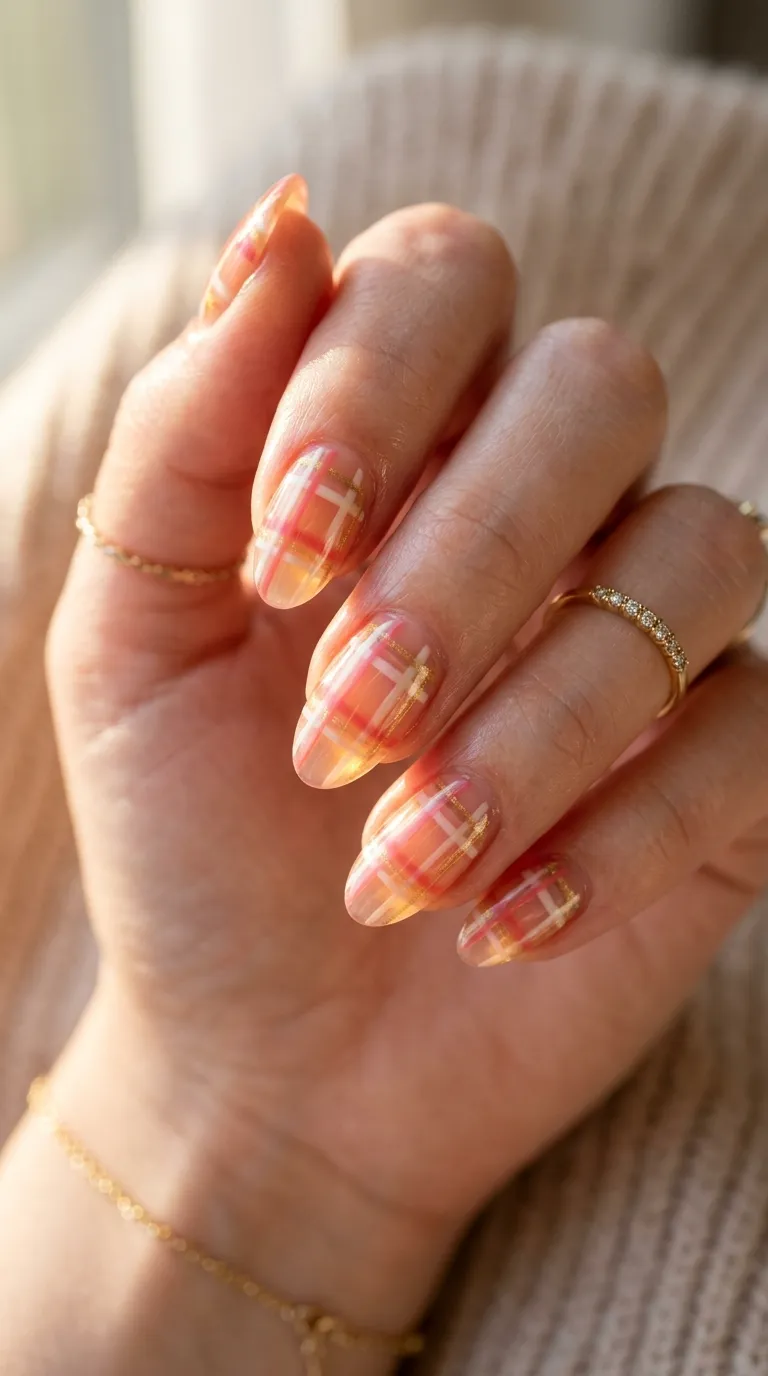
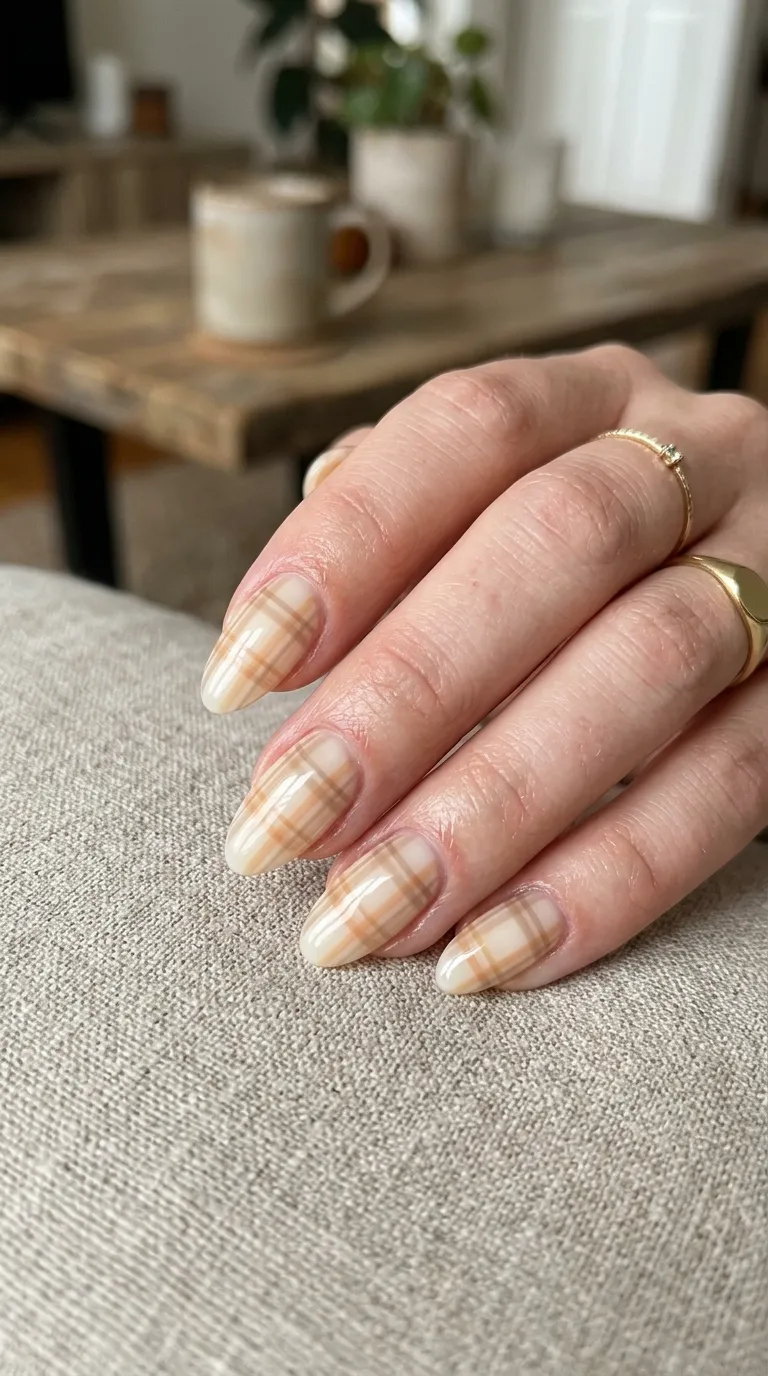
Polish mixed with gel top coat to create a sheer, translucent finish over the checked pattern, so the grid looks like it’s glowing from beneath the surface rather than sitting flat on top. This is the version that started the whole trend and pairs naturally with the wider jelly nails aesthetic.
Classic Tartan
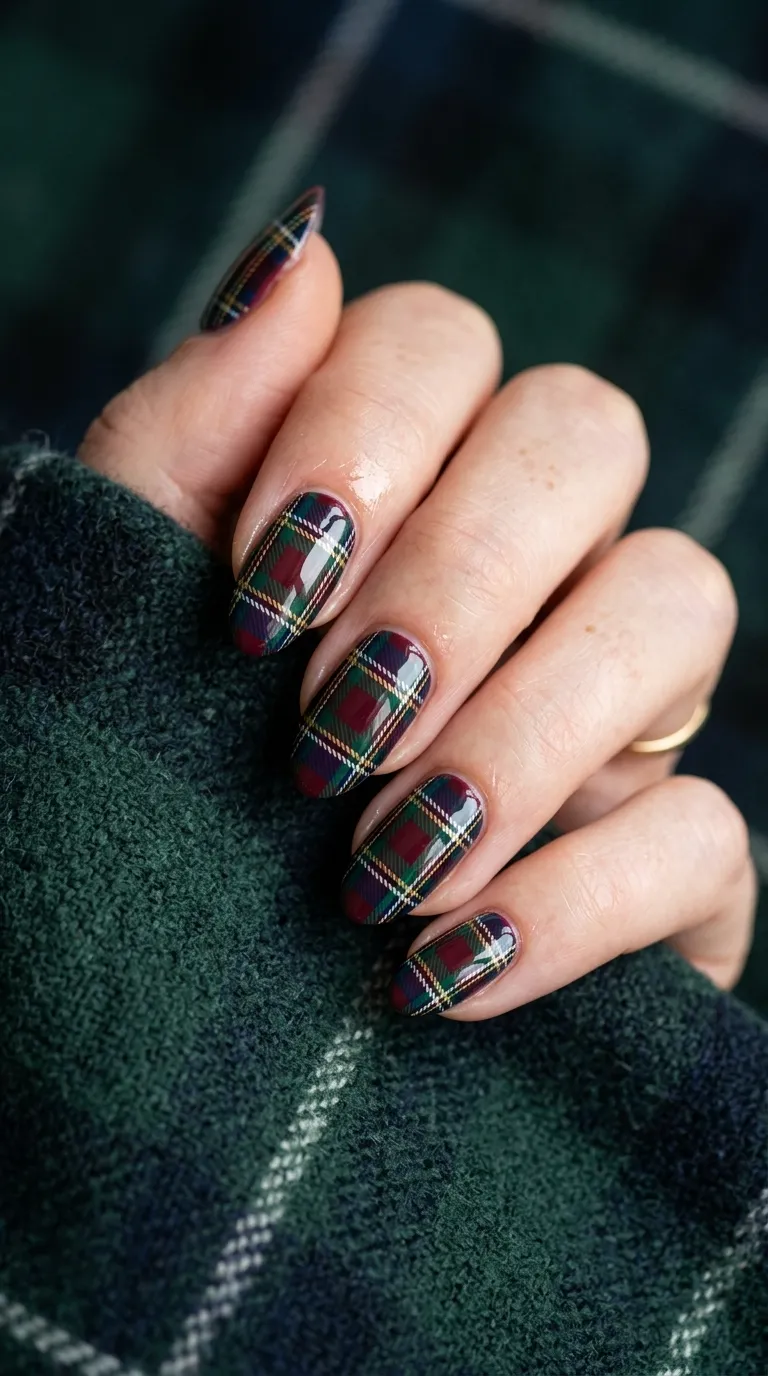
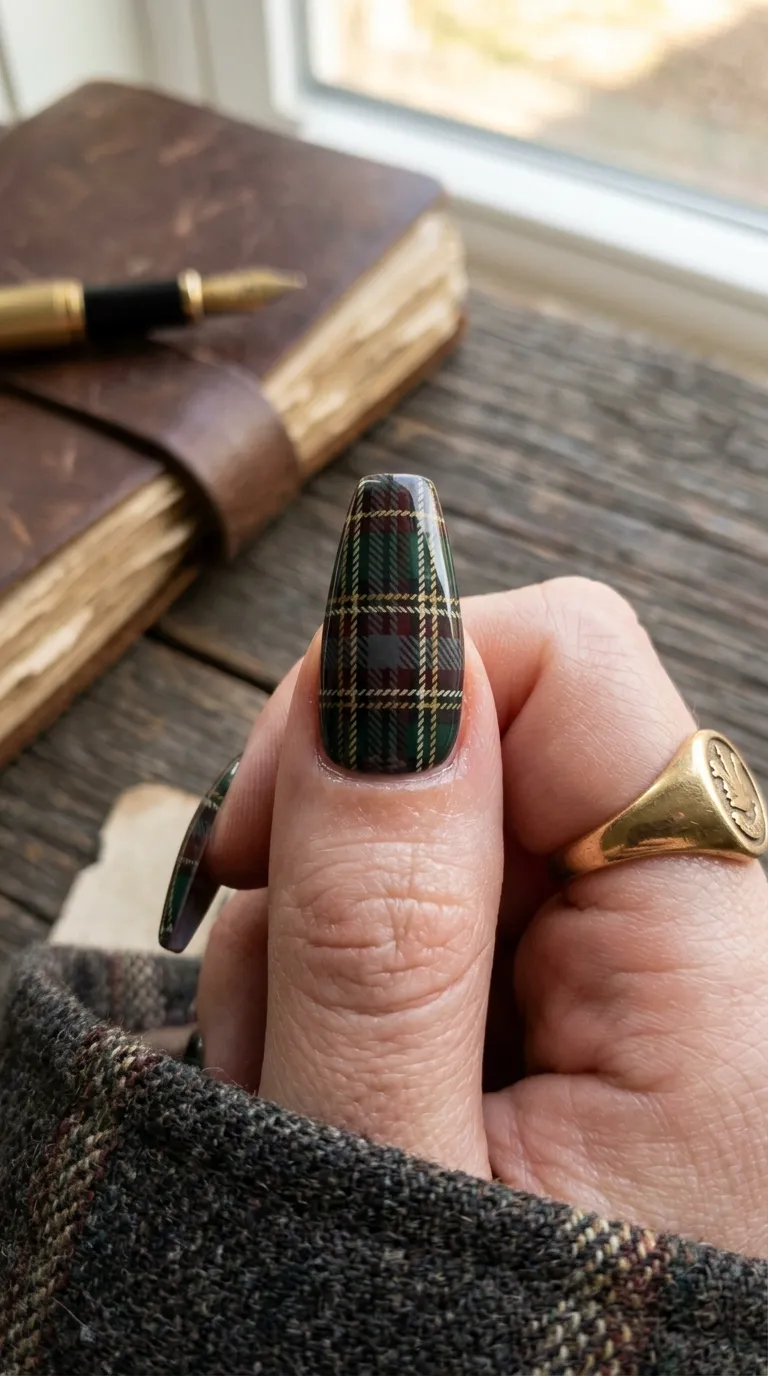
Deep jewel tones — burgundy, forest green, navy — in a structured, opaque grid. This reads as the most dark-academia, collegiate version of the trend and works well as a full set rather than an accent.
Pastel Argyle French Tips
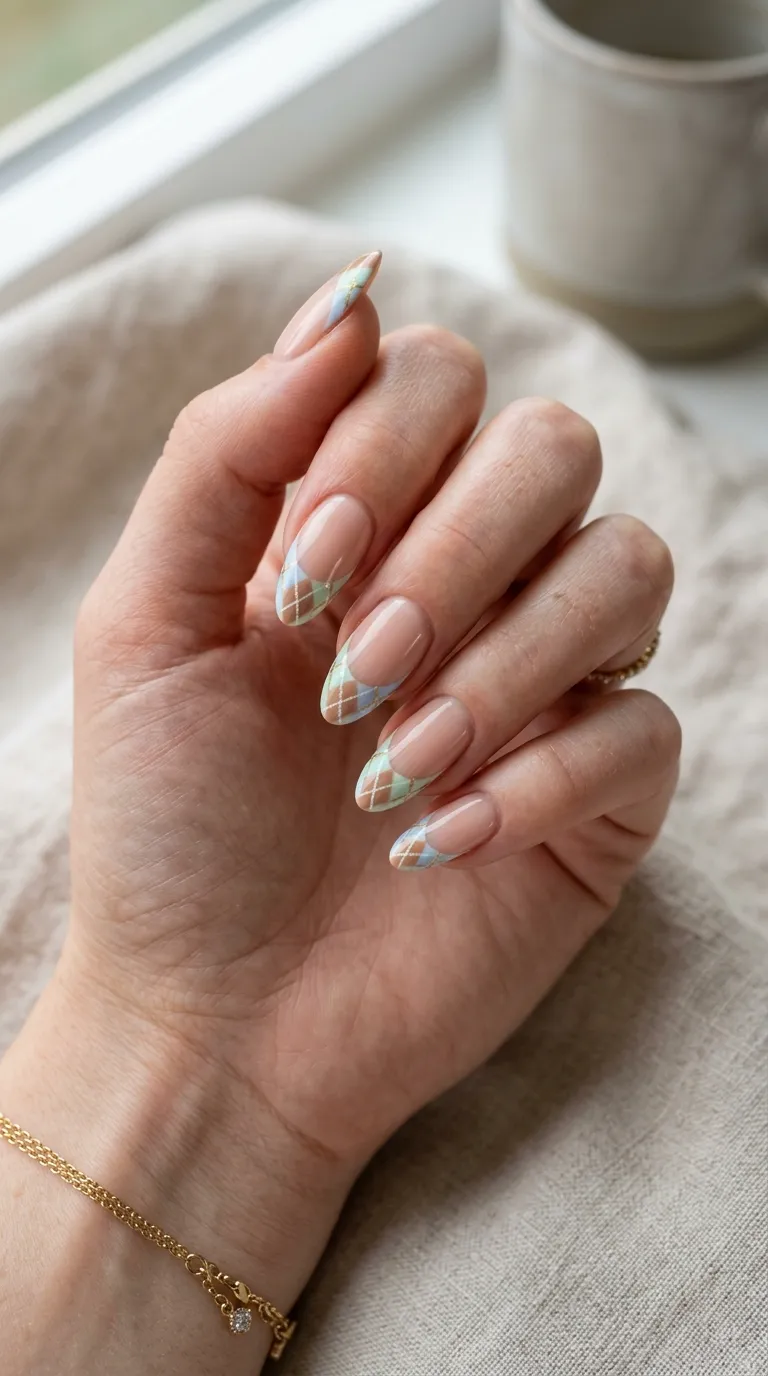
Diamond-grid argyle detail confined to the tip, over a soft nude or pastel base, in baby blues, light greens, and soft browns. It’s a subtler way to wear the pattern and pairs beautifully with other French tip nail variations this year.
Tartan Stripes and Cat Eye
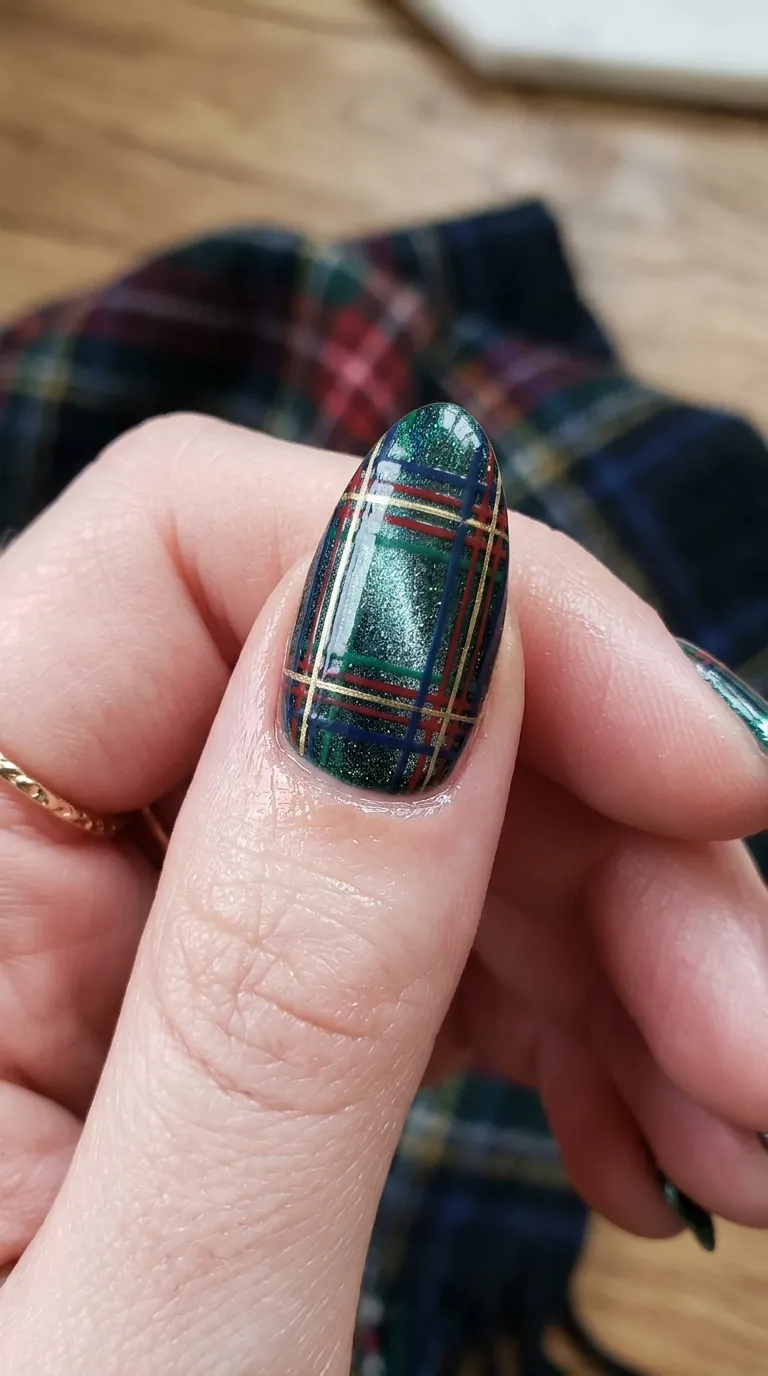
A shimmering cat eye or magnetic polish base with contrasting striped lines layered over it to form a zoomed-in tartan effect. The shifting, reflective base gives an otherwise classic pattern a distinctly modern finish.
Bold Punk Tartan

A black base with a bold, high-contrast tartan grid layered on top — a distinctly punk-rock, noughties take on a collegiate print, best worn as a full statement set rather than an accent nail.
Choosing a Color Palette by Season
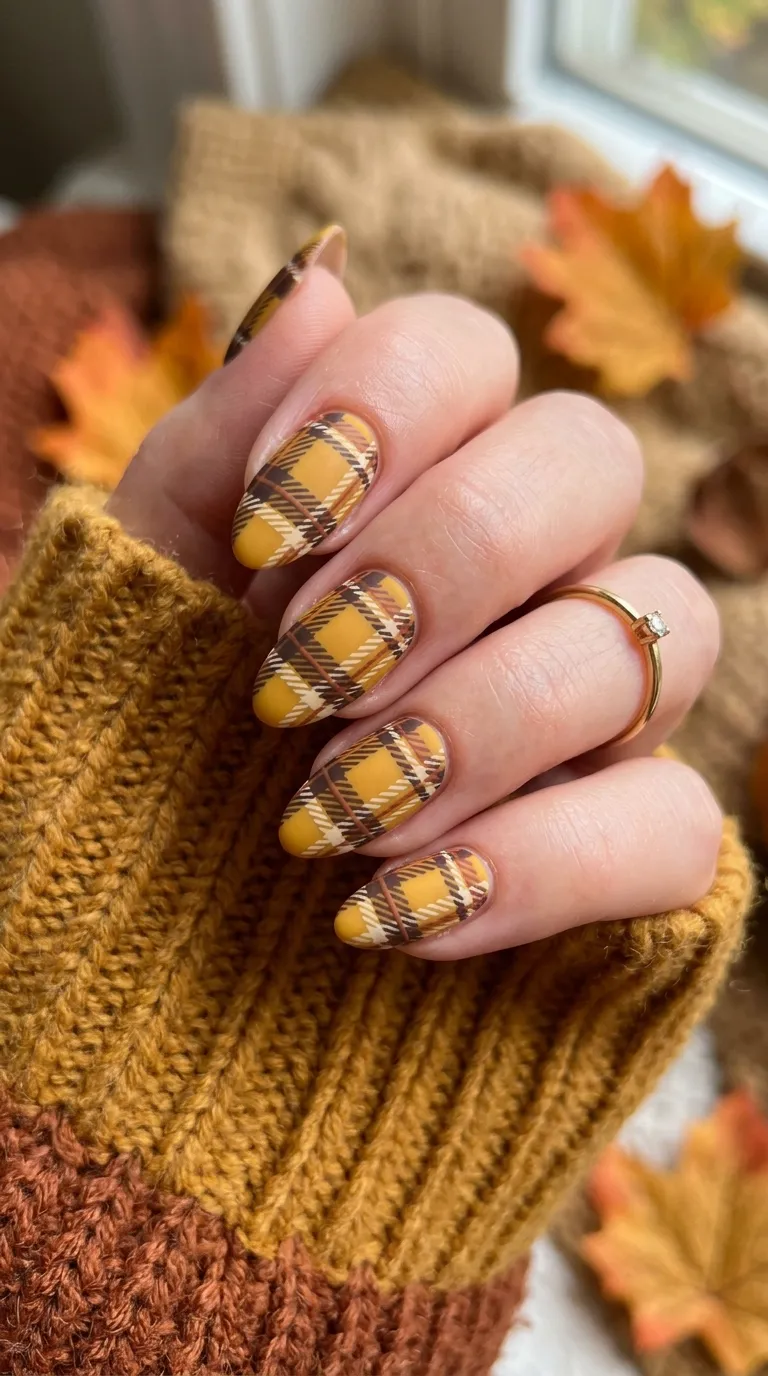
The same grid structure reads completely differently depending on the palette, which is a big part of why this pattern has lasted well beyond a single season.
- Fall and winter: burgundy, forest green, chocolate brown, mustard, and burnt orange for a cozy, flannel-inspired palette
- Spring: lavender and soft yellow, or baby blue and sage green, with a barely-there cream line for a fresh, seasonal feel
- Summer: coral and mint for an unexpected, energetic combination that still reads as intentional
- Dark academia: deep brown, burgundy, and muted gold for a moody, collegiate palette
Whatever the season, the same rule applies: one neutral anchor, two accent colors, one thin contrasting line. Sticking to four colors total keeps the pattern legible rather than muddy.
Full Set vs. Accent Nails
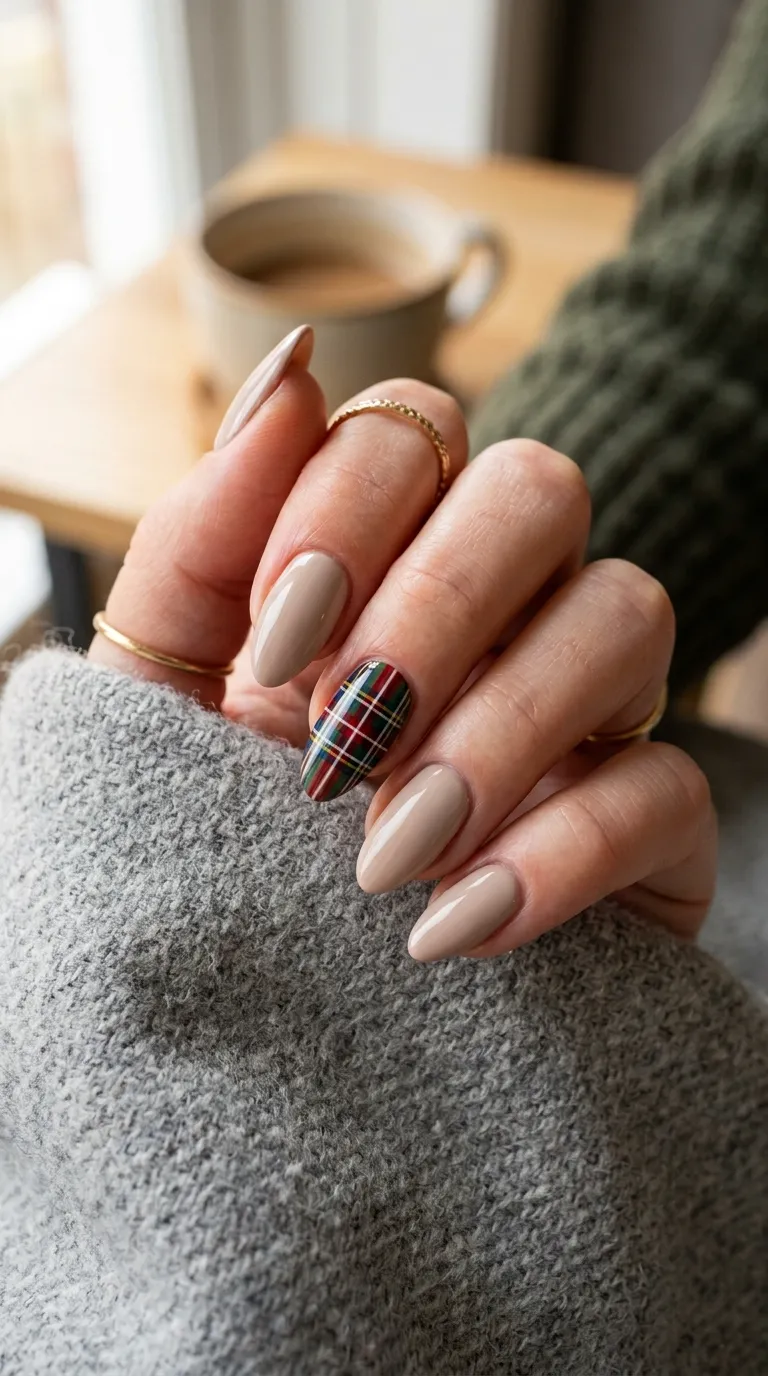
A full set of plaid nails makes a genuine statement and suits people who want their manicure to be the focal point. For a more subtle approach, paint most nails in a solid seasonal shade — burnt orange, beige, or a soft neutral from your nail color rotation — and add the pattern to just one or two accent nails. This scaled-down version is easier to keep looking intentional rather than busy, and it’s a good entry point if you’ve never tried pattern nail art before.
How to Do Plaid Nails at Home
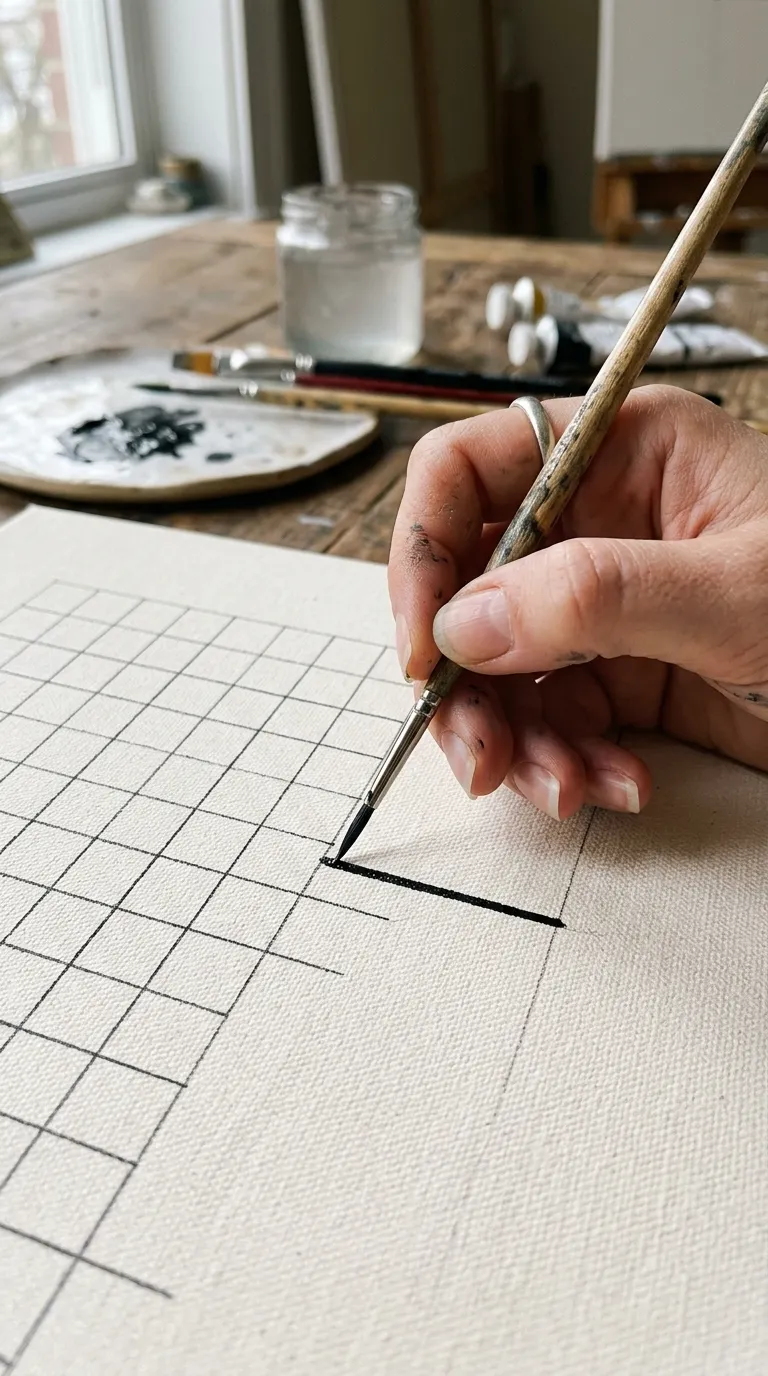
Start with your neutral base color and let it cure fully. Use a thin striping brush or nail art brush to add your first set of parallel lines in one accent color, spaced evenly across the nail. Add the second accent color as perpendicular lines to form the grid, then finish with one thin contrasting line running through the intersections. Working slowly and cleaning up mistakes with a small brush dipped in acetone makes a much bigger difference than trying to paint perfect lines in one pass. Sealing the finished design with a strong top coat — or a top coat mixed with color for the jelly effect — is what gives the pattern its lasting shine.
Best Nail Shapes for Plaid Nails
- Short square or almond: keeps the grid pattern clean and easy to read at a small scale
- Squoval: a safe, versatile shape for both full-set and accent-nail plaid
- Medium coffin: gives more detailed tartan or argyle patterns extra surface area
- Sculptural almond: pairs well with the more fashion-forward, textured direction nail art is heading in this year
How to Ask Your Nail Tech for This Look

Bring a reference photo and be specific about which pattern you actually want — plaid, tartan, or argyle — since the three are easy to confuse and lead to different results. Mention your preferred finish (jelly, matte, or classic glossy opaque) and whether you want a full set or just accent nails, and name your season or palette if you have one in mind.
Caring for Plaid Nails
Fine linework is the first thing to show wear, so a strong, glossy gel top coat matters more here than on a plain solid manicure. Dermatologists note that gel manicures can be tough on nails with frequent, repeated use, so it’s worth following dermatologist-backed gel manicure care tips, including sunscreen on your hands before appointments and occasional polish-free breaks. Keeping cuticles hydrated between sets also helps preserve overall nail health so your next detailed set has a strong, healthy base to work with.
Mistakes to Avoid
The most common misstep is using too many colors — once you’re past four (one neutral, two accents, one line), the grid starts to look muddy rather than crisp. The second is confusing argyle’s diamond grid with a true plaid or tartan crossed-line pattern, which leads to miscommunication with your nail tech. The third is skipping a strong top coat on detailed linework, which is exactly where these designs show wear first.
What’s Next for the Trend
Recent trend coverage shows the pattern spawning creative reinterpretations across nearly every aesthetic, from British-punk tartan to soft pastel argyle, which suggests plaid nails have more room to evolve rather than fading after one season. Broader nail trend analysis points to the same heritage-print momentum — argyle, tartan, windowpane check — continuing well into the rest of 2026 as fashion’s preppy and dark academia influences keep feeding new nail interpretations.
Who This Trend Suits Best
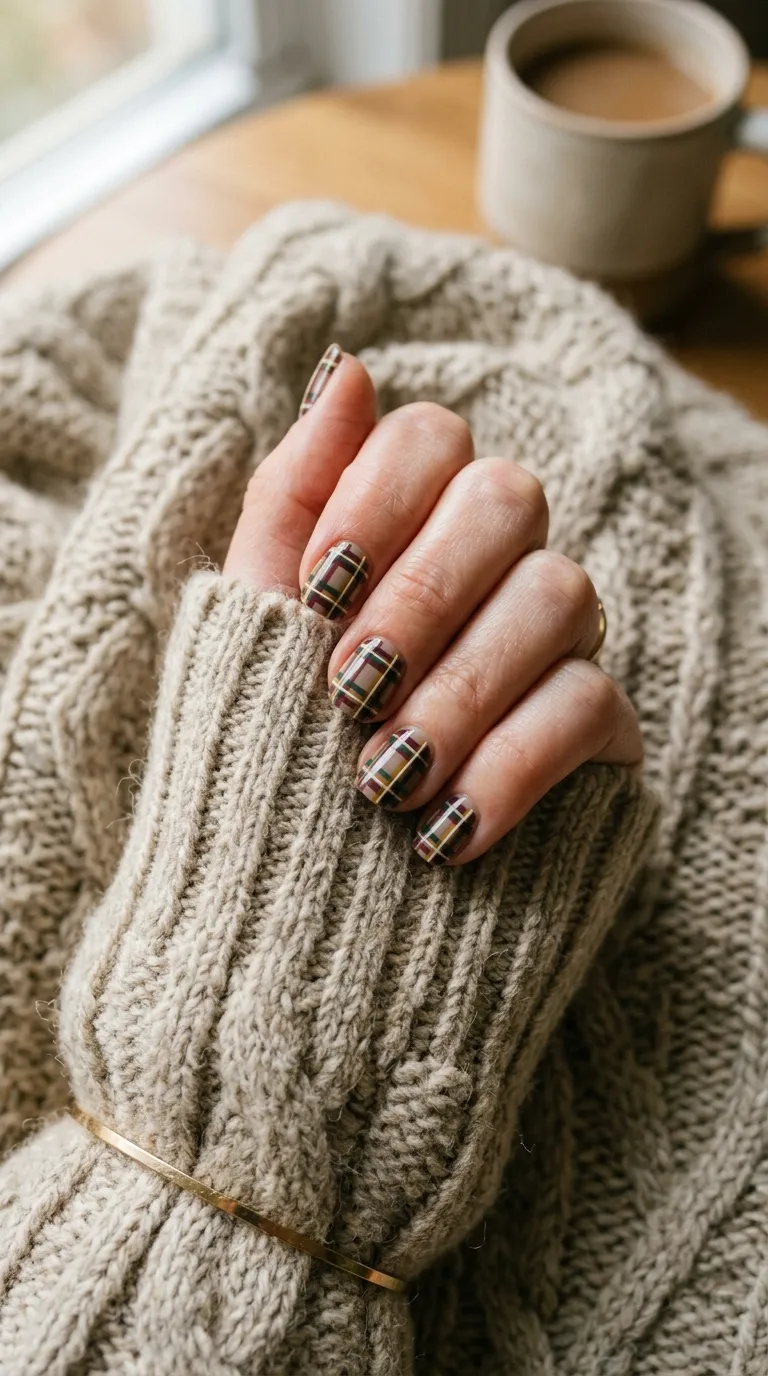
Plaid nails are a strong pick for anyone who already leans into preppy, dark academia, or heritage-print style in their wardrobe, since the manicure extends a look they’re already wearing elsewhere. It’s also a good option for anyone who wants to try pattern nail art for the first time, since the accent-nail version offers a low-commitment way to test the look. It’s a less natural fit for anyone who strongly prefers solid, single-color nails, since even a subtle version still reads as a deliberate style statement.
Where This Trend Came From
Plaid nails didn’t build slowly the way most nail art trends do — they arrived with unusual clarity, tracing back to a single viral moment. Ralph Lauren’s dominance across recent runway seasons, paired with the dark academia, poetcore, and “old money preppy” waves taking over social feeds, meant heritage prints like argyle, tartan, and windowpane check were already everywhere in clothing before they ever made it onto a nail. When a celebrity nail artist created a jelly-finish plaid set that went viral in late 2025, the pattern crossed over from fashion reference to mainstream nail request almost overnight.
That fashion-first timing is a big part of why nail artists predicted plaid nails would stick around rather than fade as a one-off moment. Pattern nail art has always followed what’s happening in clothing, and heritage prints showed no signs of slowing down going into 2026.
Pairing Plaid Nails With Other Nail Trends

Plaid nails sit comfortably alongside several other trends this year rather than existing in isolation. The jelly finish version connects directly to the wider milky nails movement, where sheer, glowing bases are replacing flat opaque color. Pastel argyle French tips borrow from the season’s broader pastel nail ideas, while fall tartan palettes in burgundy and chocolate brown overlap with this year’s brown nail color stories and the wider fall nails conversation.
That overlap is one of the reasons this pattern has proven more durable than most single-season nail art trends — it isn’t tied to one specific color story, so it can be reinterpreted through whatever palette or finish happens to be trending at the same time.
Products That Make the Pattern Easier
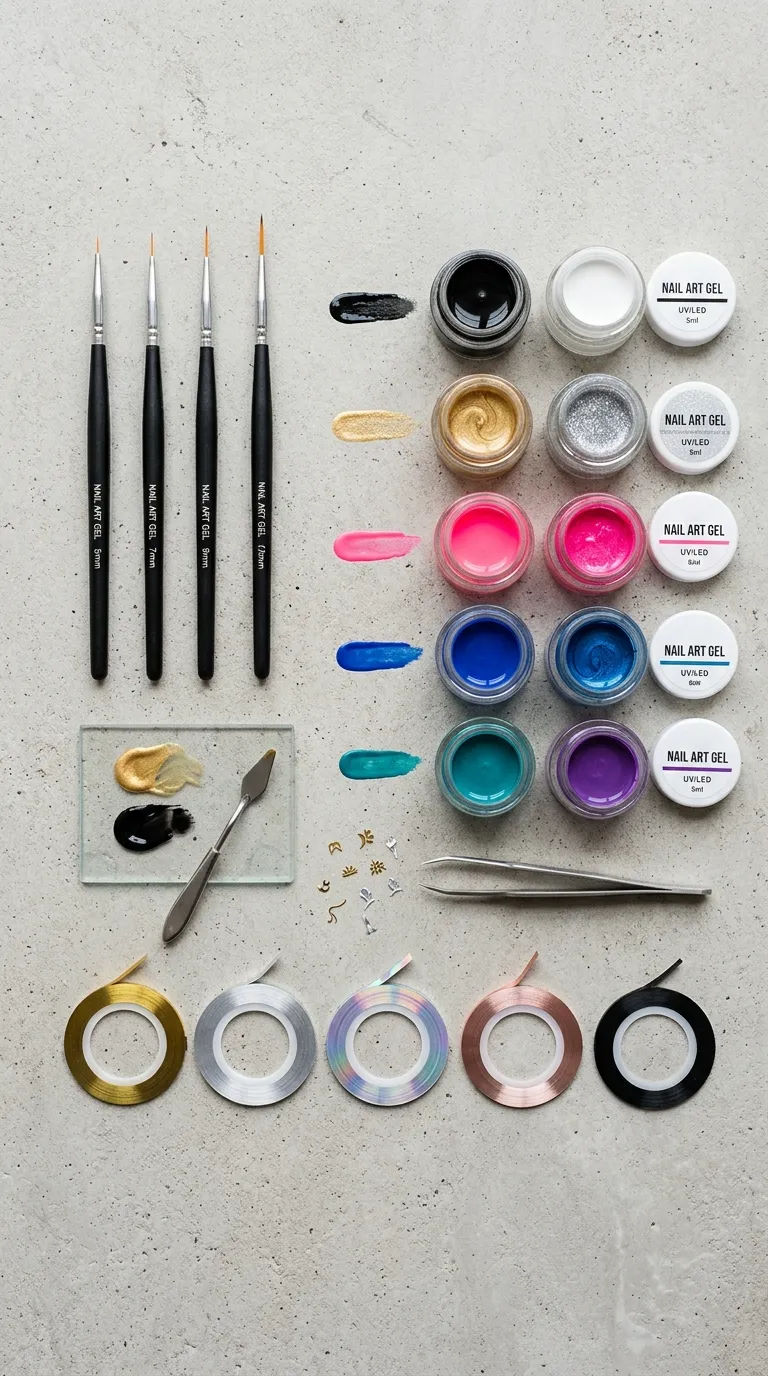
A thin, high-quality nail-art brush is the single most useful tool for this trend — cheap brushes tend to fray and drag paint rather than laying down a clean line. Striping tape is a solid shortcut for the straight-line grid if freehand painting feels too risky, since it can be laid down, painted over, and peeled away for perfectly crisp edges. For the jelly finish specifically, mixing your top coat directly with a small amount of colored polish before application, rather than layering them separately, gives a more even, glowing translucency across the whole design.
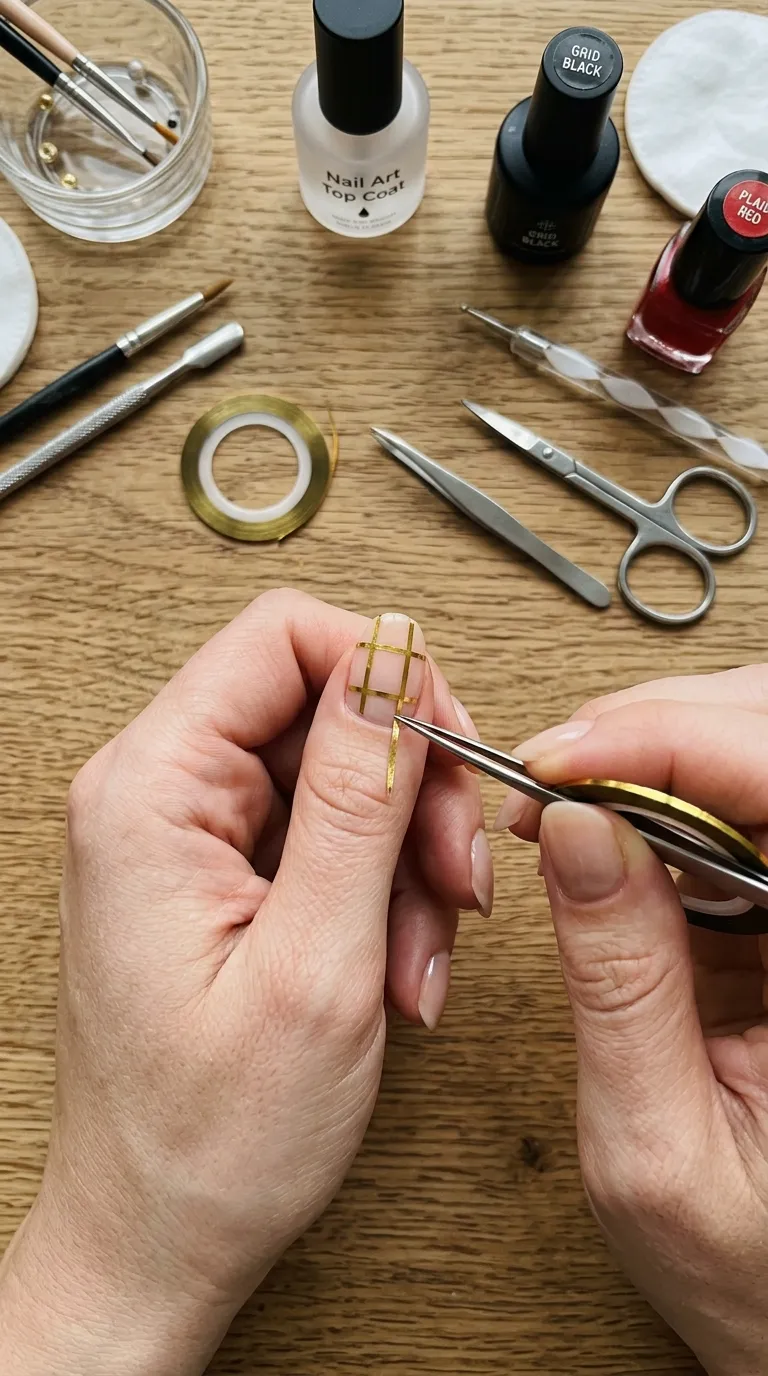
Whichever technique you use, plan for extra drying time between each color layer. Because plaid nails rely on clean intersecting lines, painting the second direction before the first has fully set is the most common reason home attempts smudge.
Building Confidence With Pattern Nail Art
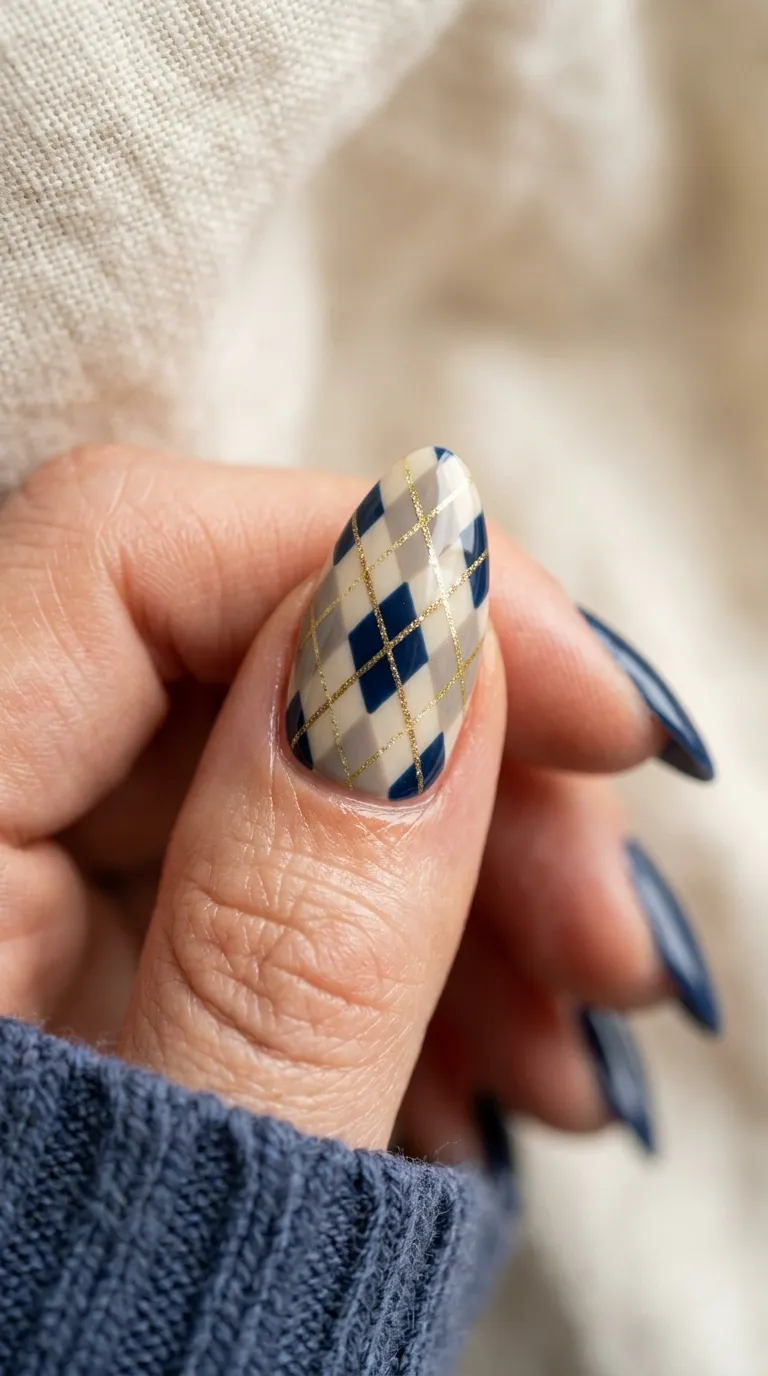
If pattern nail art feels intimidating, plaid nails are actually one of the more forgiving places to start, precisely because the grid structure is so systematic. Unlike freehand florals or abstract designs, a plaid grid is built from straight, repeatable lines, which makes small imperfections far less noticeable than they’d be in a more organic pattern. Starting with just one accent nail, in a simple two-color palette over a neutral base, is a low-risk way to get comfortable with a striping brush before attempting a full set.
Once the basic grid feels manageable, adding the third accent color and the thin contrasting line is a small step up rather than a big leap, which is part of why so many people who try plaid nails once end up requesting it again in a new palette the following season.
Frequently Asked Questions About Plaid Nails
What’s the difference between plaid and argyle nails?
Plaid uses intersecting horizontal and vertical lines forming a grid, while argyle uses overlapping diamond shapes with a thin line through the center of each.
How many colors should a plaid nail design use?
Four total works best: one neutral anchor, two accent colors, and one thin contrasting line. More than that tends to make the pattern lose legibility on a small nail.
Can I do plaid nails myself at home?
Yes, with a thin nail-art brush and some patience — start with parallel lines in one direction, then add the perpendicular lines and a single contrasting line through the intersections.
What is jelly plaid?
It’s a version of the trend where polish is mixed with top coat to create a sheer, translucent finish over the checked pattern, giving it a glowing rather than flat, opaque look.
Is this trend only for fall and winter?
No. Pastel palettes in lavender, baby blue, and soft yellow, or coral and mint for summer, keep the pattern relevant year-round rather than tying it to cooler months only.
What nail shape works best with this pattern?
Short square and almond shapes keep the grid easy to read, though medium coffin nails give more detailed tartan patterns extra room to show off the design.
Final Thoughts
Plaid nails have outlasted the usual viral-manicure lifespan because the format is genuinely flexible — the same grid structure works in deep tartan jewel tones, pastel spring palettes, or a punk-inspired black base, and it scales from a full statement set down to a single accent nail. Bring a clear reference photo, keep the palette to four colors, and know the difference between plaid, tartan, and argyle before you sit down in the chair, and you’ll get exactly the pattern you’re picturing.
Compare Before You Choose
See the Closest Alternatives
Compare nearby shapes, colors and finishes before picking a final reference.
Recommended Next