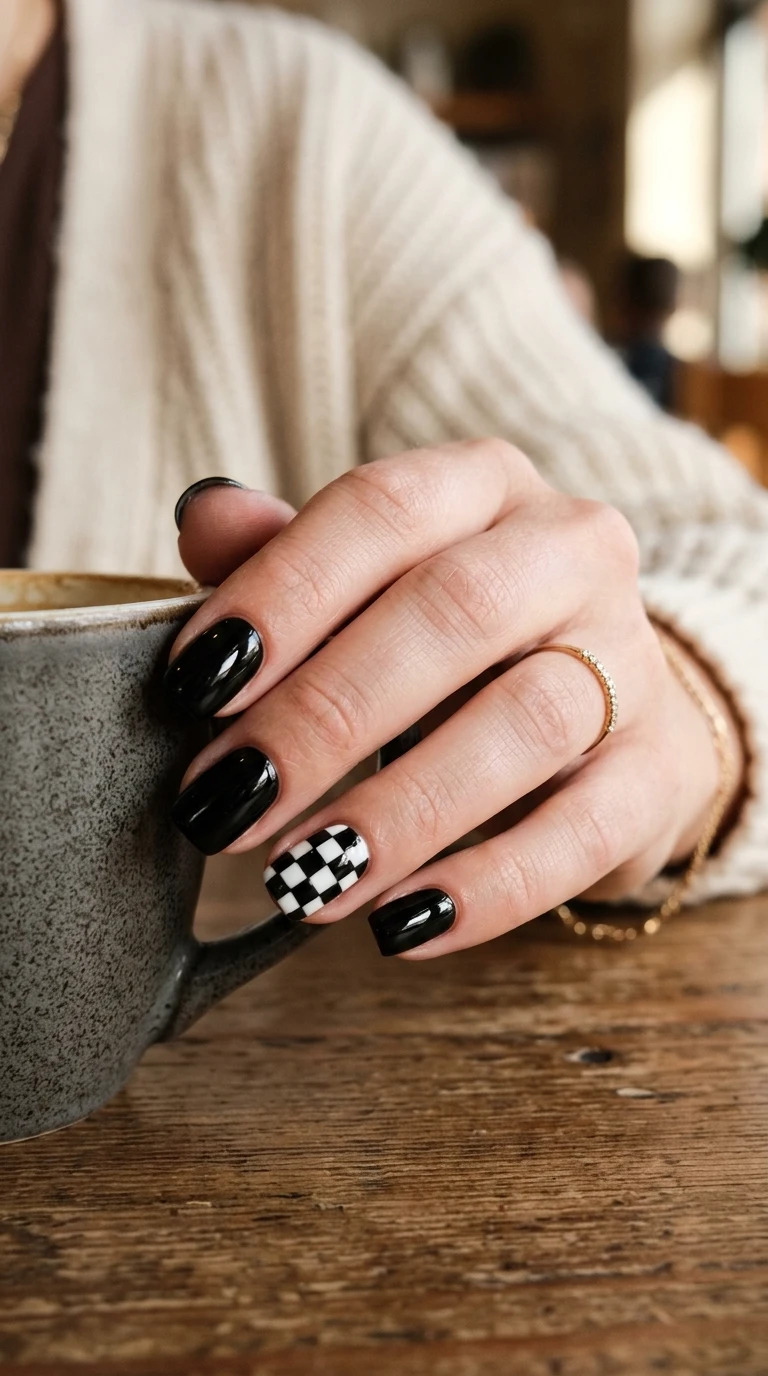
Checkered nails are back in a real way for 2026, riding the same wave that brought gingham dresses, vichy check tablecloths, and Y2K plaid back into fashion feeds. Unlike a lot of geometric nail art that reads as fussy or hard to maintain, checkered patterns have a strange advantage: the grid itself hides small imperfections in a way a freehand floral or a marble swirl never does. A slightly wobbly line still looks like a checkerboard. A slightly wobbly flower petal looks like a mistake — which makes checkered nails a rare case where a beginner-friendly technique and a genuinely striking finished look overlap.
That forgiveness is a big part of why the trend has spread so fast across TikTok and Pinterest this year — it photographs as “intentional and detailed” while actually being one of the more beginner-friendly nail art styles to attempt at home. Below are five of the strongest checkered directions for 2026, plus everything you need to know about getting the look to hold up past day three.
What Makes Checkered Nails Different From Other Geometric Trends
Most geometric nail art asks you to freehand irregular shapes — triangles, abstract line work, asymmetric blocks. Checkered nails work off a fixed grid, which means the pattern is genuinely repeatable once you’ve mapped out the spacing. That structure is what separates it from, say, an abstract swirl: you’re not improvising each nail from scratch, you’re repeating the same handful of squares at a consistent scale.
It also scales up or down in intensity more easily than most patterns. A single checkered accent nail reads as a quiet nod to the trend. A full ten-nail checkerboard reads as a statement. Because the underlying technique doesn’t change — you’re always working with straight lines and alternating fill — you can dial the commitment level up or down without learning a second skill.
5 Checkered Nail Looks to Try in 2026
1. Pastel Grid Checkerboard
The softest entry point into the trend swaps the classic black-and-white checkerboard for two pastel tones — think lilac and butter yellow, or sage and blush. Because the contrast between the two colors is lower than a true black-and-white check, small inconsistencies in square size are much less noticeable, which makes this the easiest version to do on yourself. It also reads as spring- and summer-appropriate in a way the high-contrast original doesn’t, so it pairs naturally with lighter nail lengths and rounder shapes.
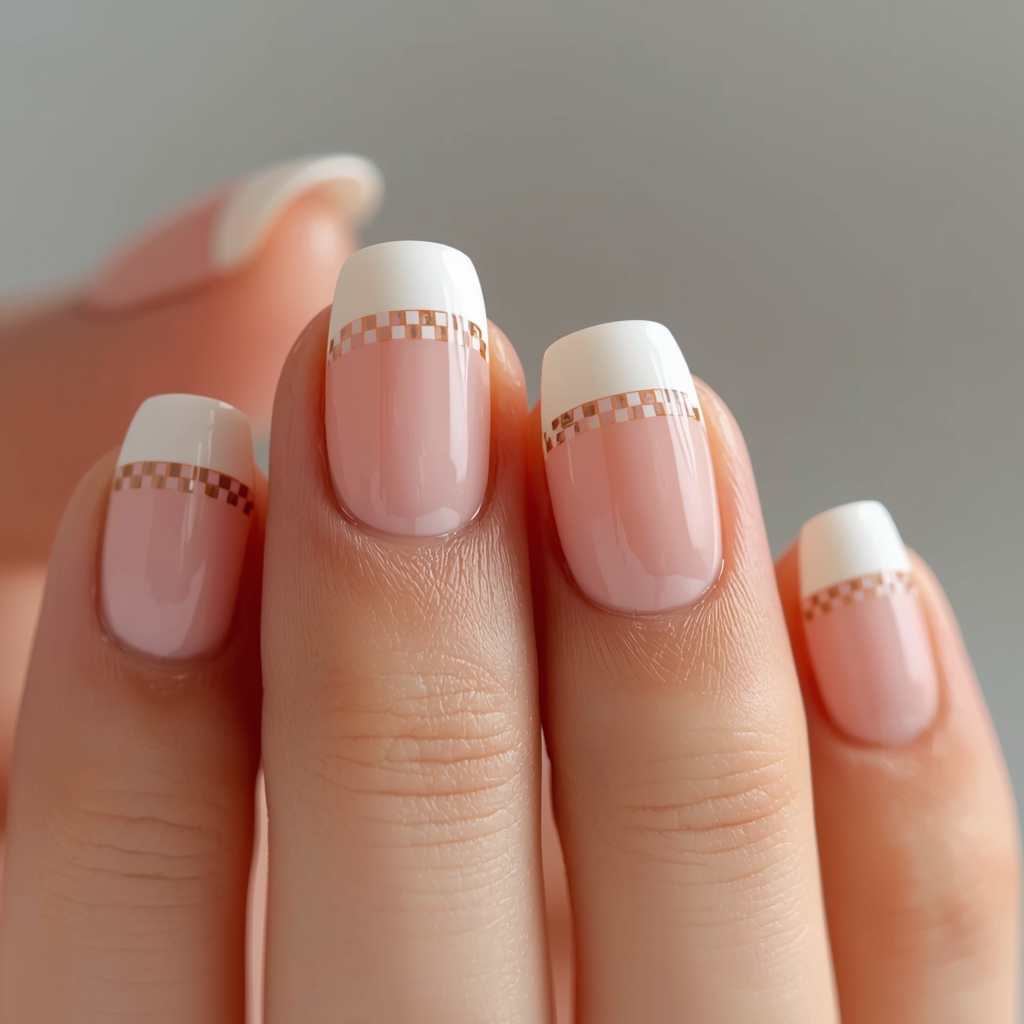
2. French Tip Checks
Rather than covering the whole nail, this version confines the checkerboard to the tip, over a sheer or nude base — essentially a checkered take on a French manicure. It’s the most office-appropriate of the five looks here, since the majority of the nail stays neutral and the pattern reads as a detail rather than the main event. If you already like the structure of a classic French tip, our French tip nails guide has more variations on tip-only nail art worth pairing this with.
3. Floral Checkerboard
This variation breaks up the grid with a single hand-painted flower or a small floral decal over two or three of the checkered squares, usually on an accent nail. It’s a good option if a full checkerboard across all ten nails feels like too much pattern — the florals soften the geometry and give the eye somewhere to rest. Milky white and sage green checks with a tiny daisy accent is one of the more popular color combinations for this look going into 2026.
4. Ombre Checkerboard
Here the checkered squares fade from a saturated color at the cuticle to a much lighter tint — or to fully transparent — toward the tip. It’s more technically demanding than the other looks on this list because you’re managing both the grid lines and a gradient at the same time, so it’s better suited to gel or a salon visit than a first at-home attempt. The payoff is a checkerboard that reads as considerably more polished and less DIY than the flat two-tone version.
5. Bold Neon Checkerboard
The maximalist end of the trend: neon orange and hot pink, or electric green and cobalt, in a full high-contrast grid across every nail. This is the version most likely to show up at festivals and summer events specifically because it photographs so well in direct sunlight — the same quality that makes bold color pop in festival nail looks generally. It’s also the least forgiving version technically, since uneven square sizes are much more visible against high contrast, so budget extra time or go to a salon if precision matters to you.
How to Recreate Checkered Nails at Home
Start with a solid base color and let it cure completely — this matters more for checkered patterns than almost any other nail art style, because you’ll be laying thin striping tape directly on top, and tape on tacky polish will lift and drag color with it when removed.
- Apply your base color in two thin coats and cure or dry fully.
- Lay thin striping tape (1–2mm) in one direction across the nail, spaced evenly.
- Lay a second set of strips perpendicular to the first, creating a grid.
- Fill in alternating squares with your second color using a small detail brush or a nail art dotting tool for cleaner edges.
- Remove the tape carefully before it fully cures, pulling at a low angle rather than straight up.
- Seal everything with a high-shine or matte top coat depending on the finish you want.
The single biggest technique mistake people make with checkered nails is spacing the grid unevenly — since the pattern relies on repetition, an inconsistent square size is much more noticeable than it would be in a freehand design. Measuring your first few strips against a reference (even just eyeballing against the nail’s width divided into equal sections) makes a real difference.
Best Nail Shapes for Checkered Designs
Square and squoval shapes give the checkerboard the most surface area to work with and keep the grid lines straighter, since there’s less curvature at the tip distorting the pattern. Almond and oval shapes still work but expect some warping of the grid near the tip, where the nail narrows — this actually looks intentional on the pastel and floral versions, less so on the high-contrast neon version where straight lines are part of the appeal. Shorter lengths generally read cleaner than long extensions, simply because there’s less room for spacing to drift over the course of the nail.
Making Checkered Nails Last Longer
Checkered nail art lives or dies on the top coat. Because the pattern is built from thin, layered lines rather than one solid color, any lifting or chipping is far more visible than it would be on a plain manicure — a single chipped square breaks the whole grid’s symmetry in a way a chip on a solid color doesn’t. A gel top coat, cured properly and reapplied every few days, is the single most effective thing you can do to extend wear.
Beyond the top coat: avoid picking at the edges (a common habit with textured or lined nail art), wear gloves for dishes and cleaning products, and apply cuticle oil daily to keep the surrounding skin from drying out and lifting the polish at the edges. Done on gel, a checkered manicure can reasonably last two to three weeks. Done on regular polish, expect closer to five to seven days before the fine lines start to show wear.
Checkered Nails by Occasion
The pastel grid and French tip check versions are the most versatile day-to-day options — subtle enough for work or school, detailed enough to still read as intentional nail art. The floral checkerboard leans slightly more toward casual weekend or brunch settings. The ombre and bold neon versions are better suited to events where you want your hands to be a focal point: concerts, festivals, parties, or vacation photos, where the extra visual intensity reads as festive rather than distracting.
Where the Checkered Nails Trend Comes From
Checkerboard patterns have circulated through fashion in waves for decades — skate and punk culture in the late 1990s and early 2000s, Vans-brand checkerboard slip-ons, and gingham picnic-blanket prints have all taken turns being “the” check. What’s different about the 2026 version is that it arrived through nail art specifically rather than being translated over from clothing. Nail artists started experimenting with striping tape grids as a technical challenge, and the resulting look caught on independently of whatever checkered patterns happened to be doing in fashion that season.
That’s part of why it’s held on longer than a typical micro-trend: it’s not tied to a single celebrity, show, or runway season the way some nail trends are. It’s a technique-driven trend, which tends to have more staying power because there’s always a new color combination or shape to apply it to, rather than a single defined look that eventually feels dated once the moment it was tied to has passed.
Checkered Nails Color Palette Guide
Color choice does more work in a checkered design than in almost any other nail art style, since the pattern itself stays constant — a grid is a grid — and the color pairing is what actually differentiates one look from another. A few combinations worth knowing:
- Classic black and white — the highest-contrast, most recognizable version, best suited to shorter nails where precision is easier to maintain.
- Sage and cream — a muted, quiet-luxury-adjacent take that reads as sophisticated rather than playful.
- Cherry red and white — a retro, diner-inspired combination that leans into the trend’s Y2K roots.
- Lilac and butter yellow — the pastel grid pairing, softest and most beginner-friendly.
- Cobalt and neon orange — maximum contrast for the bold neon version, best for short-term wear at events rather than everyday use.
As a general rule, the closer the two colors sit on the color wheel, the more forgiving the pattern is to execute and the more everyday-appropriate it reads. The further apart they sit — black and neon orange, for instance — the more visually loud and occasion-specific the result becomes.
Pairing Checkered Nails With Your Outfit
Because checkered nails are already a pattern, the easiest way to style them is to keep the rest of the outfit relatively simple — a solid-color top or dress lets the nails act as the statement detail rather than competing with another busy print. That said, gingham or plaid clothing paired with checkered nails in a coordinating but not identical color scheme reads as intentional rather than matchy, especially with the pastel or sage-and-cream palettes.
Jewelry-wise, simple gold or silver pieces work better than anything heavily patterned itself — the goal is one strong pattern moment (the nails), not two competing for attention.
Nail Health Considerations
Because checkered nail art typically involves multiple thin layers — base color, striping tape, a second fill color, and a top coat — total product buildup on the nail is higher than with a single-color manicure. This isn’t harmful on its own, but it does mean removal should be done properly rather than picked off, since peeling multiple layered coats at once is more likely to take a layer of the natural nail plate with it than peeling a single coat would be.
If you’re doing checkered nails on gel or on top of an existing acrylic or dip set, the same removal guidance applies as it would for any other gel or enhancement system — soak off with acetone rather than filing or peeling, and give nails a short rest with cuticle oil before the next set.
DIY vs. Salon for Checkered Nails
The pastel grid and French tip checks are realistic first attempts at home, especially with striping tape doing most of the precision work for you. The floral and ombre versions benefit from a salon visit if you want genuinely clean results, since both require layering multiple techniques (grid lines plus hand-painted detail, or grid lines plus a gradient) that are harder to control without practice. If you’re set on the bold neon version but don’t trust your own hand for a full ten-nail checkerboard, ask your nail tech for a single accent nail in the pattern instead of committing to the full set — you get the visual impact with a fraction of the technical risk.
A Simple Checkered Nail Shopping List
You don’t need a large nail art kit to try this trend — the core technique relies on a handful of inexpensive tools rather than specialty products. A basic shopping list looks like this:
- A base color and a contrasting fill color in your chosen polish type (regular, gel, or dip-compatible).
- Thin striping tape, ideally in more than one width (1mm and 2mm cover most nail sizes).
- A small detail or nail art brush for filling in squares cleanly.
- A reliable top coat — matte or high-shine depending on the finish you want.
- Cuticle oil for daily aftercare, especially important given the multiple layers involved.
Striping tape is the one tool on this list that’s genuinely specific to geometric nail art rather than general-purpose — it’s inexpensive and widely available at beauty supply stores and online, and a single roll will last through dozens of manicures since you only need a few centimeters per nail.
Mistakes to Avoid
- Skipping the cure/dry time on the base coat before applying tape — this is the most common cause of smudged, uneven lines.
- Using striping tape wider than 2mm on short nails, which leaves too few squares to actually read as a checkerboard.
- Pulling tape straight up instead of at a low angle, which drags wet polish and blurs the grid edges.
- Skipping a dedicated top coat — checkered patterns show wear faster than solid color and need the extra protection.
Frequently Asked Questions About Checkered Nails
Do checkered nails work on short nails?
Yes — in fact, shorter nails often look cleaner, since there’s less surface area for the grid spacing to drift. Stick to a smaller checkerboard (three or four squares per nail) rather than trying to fit a large, detailed grid onto a short nail bed.
What’s the easiest checkered nail look to do myself?
The pastel grid checkerboard is the most forgiving, since the lower contrast between the two colors hides minor inconsistencies in square size. Striping tape does most of the precision work, so this is a reasonable first nail art project even if you haven’t tried geometric designs before.
How long do checkered nails typically last?
On gel with a properly cured top coat, expect two to three weeks before chipping becomes noticeable. On regular polish, plan for five to seven days, since the fine detail lines show wear faster than a solid color would.
Can I combine checkered nails with another trend, like chrome or French tips?
Yes — the French tip check look is essentially that combination already, and a chrome top coat over a black-and-white checkerboard is a popular way to add shine without covering up the pattern underneath.
Further Reading & Resources
For checkered nail supplies and technique inspiration, these resources are worth bookmarking. Byrdie’s checkered nail guide covers the trend’s evolution with product picks from professional nail artists. For nail tape tools and chrome powders used in checkered nail designs, Ulta Beauty stocks the widest range of nail art supplies with same-day pickup. The r/RedditLaqueristas community is one of the most active nail art communities online with detailed technique tutorials, product comparisons, and checkered nail art examples from real users at every skill level. For professional nail education on geometric nail art techniques, Nails Magazine publishes industry-standard tutorials and trend reports that are used by working nail technicians.
Checkered patterns are one of several core techniques worth knowing — see our full guide to nail art techniques for 2026 to compare geometric looks against chrome, ombré, and marble finishes.
Compare Before You Choose
See the Closest Alternatives
Compare nearby shapes, colors and finishes before picking a final reference.
Recommended Next
Prom Nails 2026: 15 Stunning Ideas That Will Steal the Spotlight
Read the guide →
Press-On Nails 2026: The Ultimate Guide to Every Trend, Style & Occasion
Read the guide →