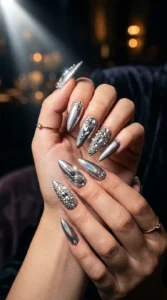
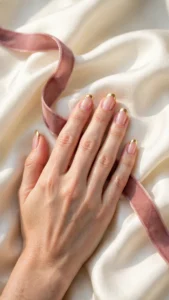
Duck nails are back — and if you have seen the wide, flared tips all over social media, you have probably wondered whether the shape is for you. The shape is one of the boldest nail shapes around: narrow at the cuticle, fanning out to a wide, flat tip. They are not subtle, and that is exactly the point. This guide explains what duck nails are, how they differ from other shapes, what to ask for at the salon, and shows 25 duck nail designs across five styles, from classic Y2K clear tips to glitter, pastels and bold dark shades, all photographed in the same clean, bright, true-to-colour style.
Whether you want a full statement set or a softer first try at the shape, the designs below cover every version of the shape worth knowing — plus honest notes on comfort, durability and removal, so you can decide with open eyes.
What Are Duck Nails?
Duck nails get their name from their silhouette: like a duck’s foot, the nail is narrower at the base and fans out to a wide, flat tip. The shape is built with acrylic, which is sculpted or tipped outward to create the flare, then filed into a straight, squared edge. The result is a nail that is wider at the end than at the beginning — the opposite of tapered shapes like coffin or almond.
The shape first became popular in the early 2000s, when long, sculpted acrylics ruled salon culture, and it has returned with the wider Y2K revival. According to the American Academy of Dermatology’s nail care guidance, gentle handling and avoiding harsh stress on the nail are key to keeping nails healthy — advice that matters doubly for a wide, extended shape like this one, which catches on things more easily than a natural nail.
Duck Nails vs Other Shapes
The easiest way to understand the shape is to compare them with the shapes you already know. Coffin nails taper inward to a narrow flat tip, while duck nails flare outward to a wide one — mirror images of each other. Almond nails taper to a soft point and elongate the finger, while square nails keep the same width from base to tip. The flared shape is the only common shape that gets wider toward the end, which is why they read as so deliberately bold. If you like coffin nails but want something rarer and more retro, the flared look is the natural next try — and if you prefer subtle shapes, this one is probably not for you.
How to Ask for Duck Nails at the Salon
Ask for a flared acrylic shape, narrow at the cuticle and wide at the tip, and show a photo — the flare’s width is a matter of taste, and a picture avoids misunderstandings. Expect the set to take longer than a standard acrylic appointment, because sculpting the flare and filing it even takes patience. Be honest about your lifestyle: if you type all day or work with your hands, start at a medium length. The shape can be beautiful at any length, but a shorter flare is far easier to live with, and you can always go longer at your next fill.
On durability, treat the set like any acrylic set: they last two to three weeks, and the wide tip means you should avoid prying, picking or using your nails as tools. Gloves for cleaning and a little extra care around pockets and zips will keep the flare intact until your fill.
Classic Y2K Duck
The looks that started it all: clear tips, soft pinks and glossy neutrals on the full flared shape. If you are new to the shape, start here — these designs show the silhouette at its purest.
1. Classic Clear Duck Tips

The original Y2K look: a clear acrylic base that flares out to a wide, flat tip. The see-through base keeps the set light and modern, while the squared-off flare is unmistakably duck. This is the design that made the shape famous, and it suits long lengths best, where the flare has room to show.
Tip: ask your tech to keep the sidewalls straight from the cuticle out, so the flare reads as a clean fan rather than a curve.
2. Baby Pink Duck
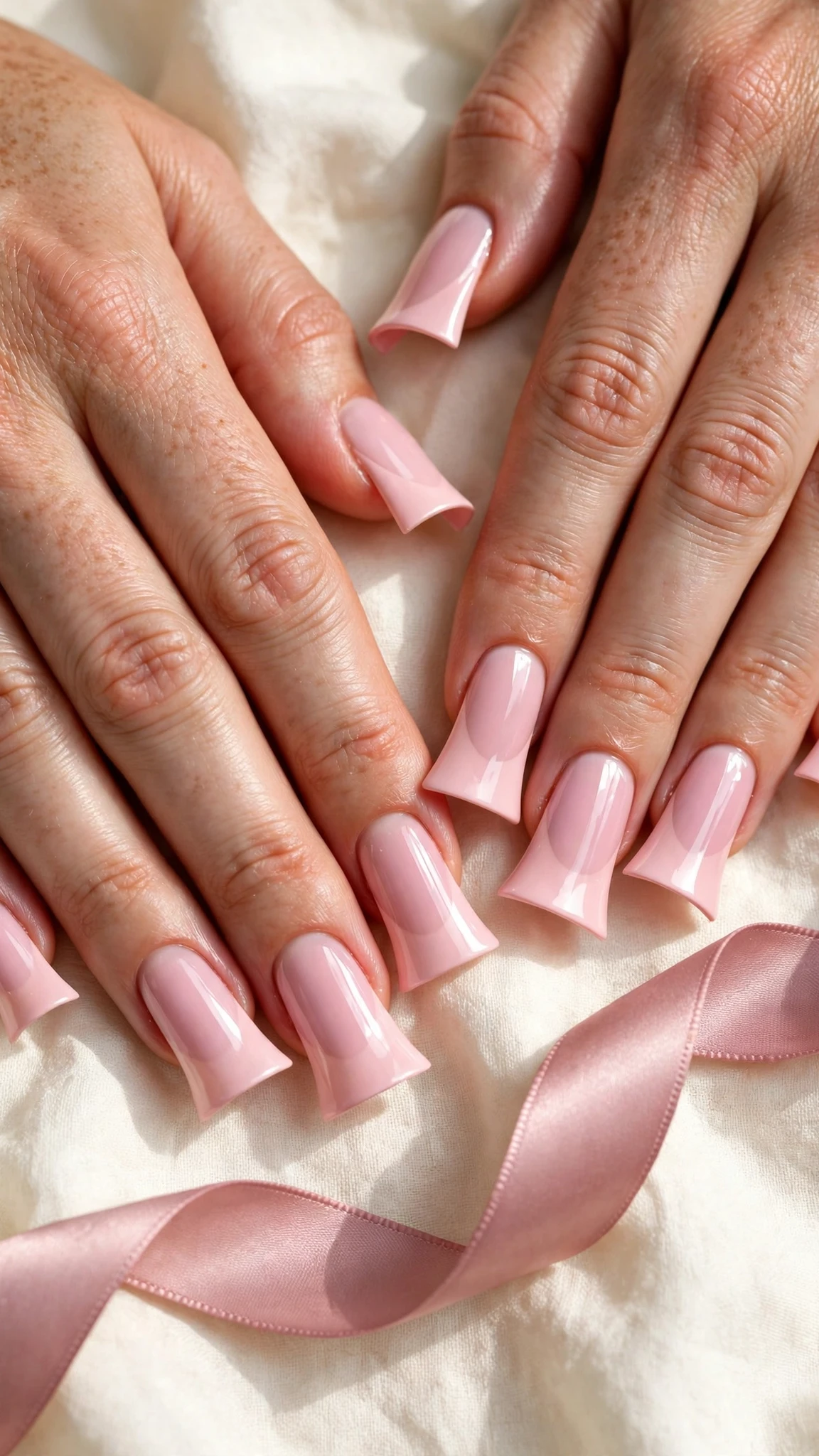
A soft baby pink wash over the full flared shape softens the drama of the duck silhouette without hiding it. The pastel shade makes the wide tip feel sweet rather than bold, which is why this is one of the most requested duck nail colours for first-timers.
Tip: a milky pink base evens out the nail bed and makes regrowth less obvious between fills.
3. Nude Gloss Duck

A skin-toned nude gloss turns the shape into an everyday-leaning set: the shape still flares, but the colour stays quiet. Choose a nude one shade deeper than your skin for definition, or a shade that matches it closely for a barely-there finish.
Tip: high-shine top coat is essential here — nude shades show dullness faster than dark colours.
4. White Tip Duck
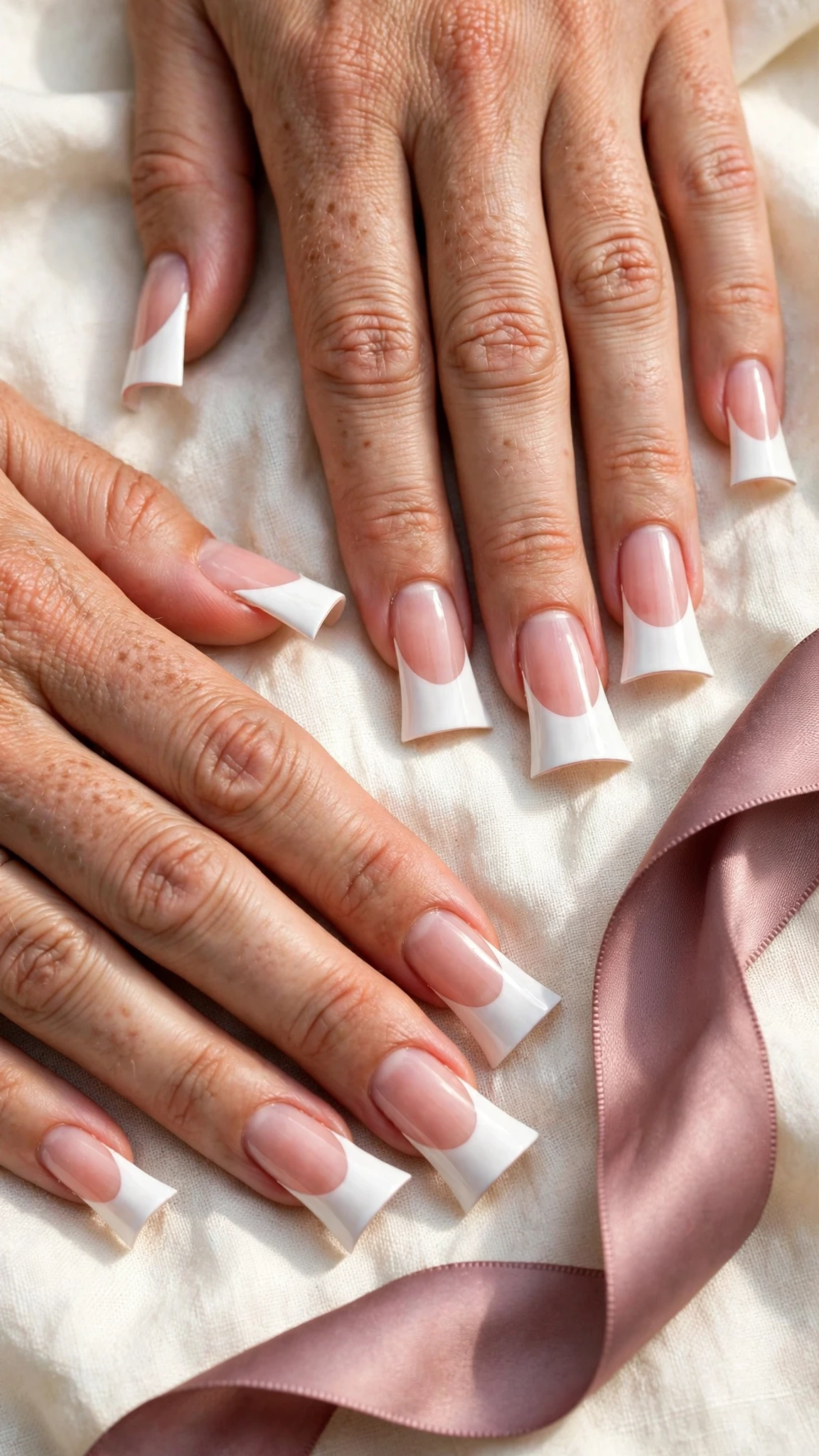
White tips on a natural pink base give the shape a crisp, salon-clean finish. The white edge draws the eye straight to the flare, so this design shows off the shape more than almost any other — a good pick if you want the silhouette to be the star.
Tip: keep the white edge thin and even; a thick white band can make wide tips look heavy.
5. Black Gloss Duck
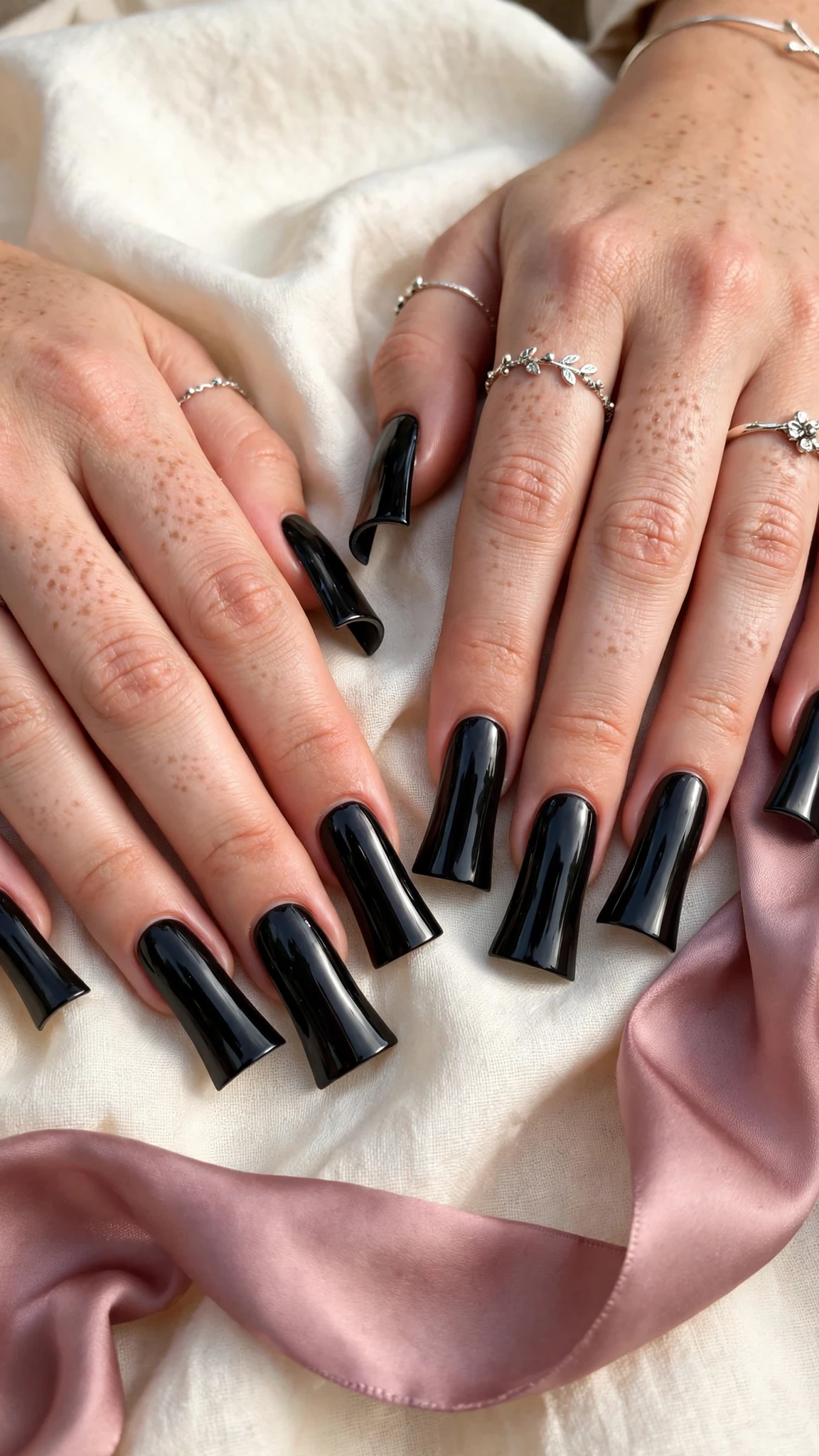
Glossy black over the flared shape is pure drama: the dark colour sharpens every edge of the fan and the shine keeps it from looking flat. This is the boldest of the classic duck nail colours and pairs naturally with silver jewellery.
Tip: black shows chips fastest, so seal the free edge carefully with top coat.
French and Ombre Duck
French tips and fades rebuilt for a wide tip. The flare changes how a French reads: bolder, wider and more graphic than the classic version.
6. Classic White French Duck

The French manicure, rebuilt on a duck base: a natural pink bed with a white tip that follows the wide flare. Because the tip is wider than on a classic French, the white reads bolder — a fun twist on a timeless look that still suits weddings and formal events.
Tip: ask for the smile line to follow the flare’s curve, not a straight line, for a balanced result.
7. Pink and White Ombre Duck

A baby-boomer fade works beautifully on the flared shape: soft pink melts into white toward the wide tip, and the gradient softens the hard edge of the flare. The blend also hides regrowth well, which makes this a lower-maintenance duck nail option.
Tip: the fade should be smoothest right where the nail starts to widen, so the colour and the shape change together.
8. Reverse French Duck

Reverse French flips the classic: colour sits at the cuticle while the tip stays natural. On a flared base the effect is striking, because the coloured crescent at the base contrasts with the wide, pale tip — a clever way to wear a bold colour without covering the whole nail.
Tip: a deep shade at the cuticle makes nails look longer, which balances the width of the flare.
9. V-Tip French Duck

A sharp white V painted into the wide tip gives the set a graphic, almost architectural finish. The point of the V draws the eye inward, which visually narrows the flare just enough to keep the set feeling intentional rather than oversized.
Tip: the V should be centred on each nail — a slightly off-centre V is very noticeable on a wide tip.
10. Glitter Fade Ombre Duck
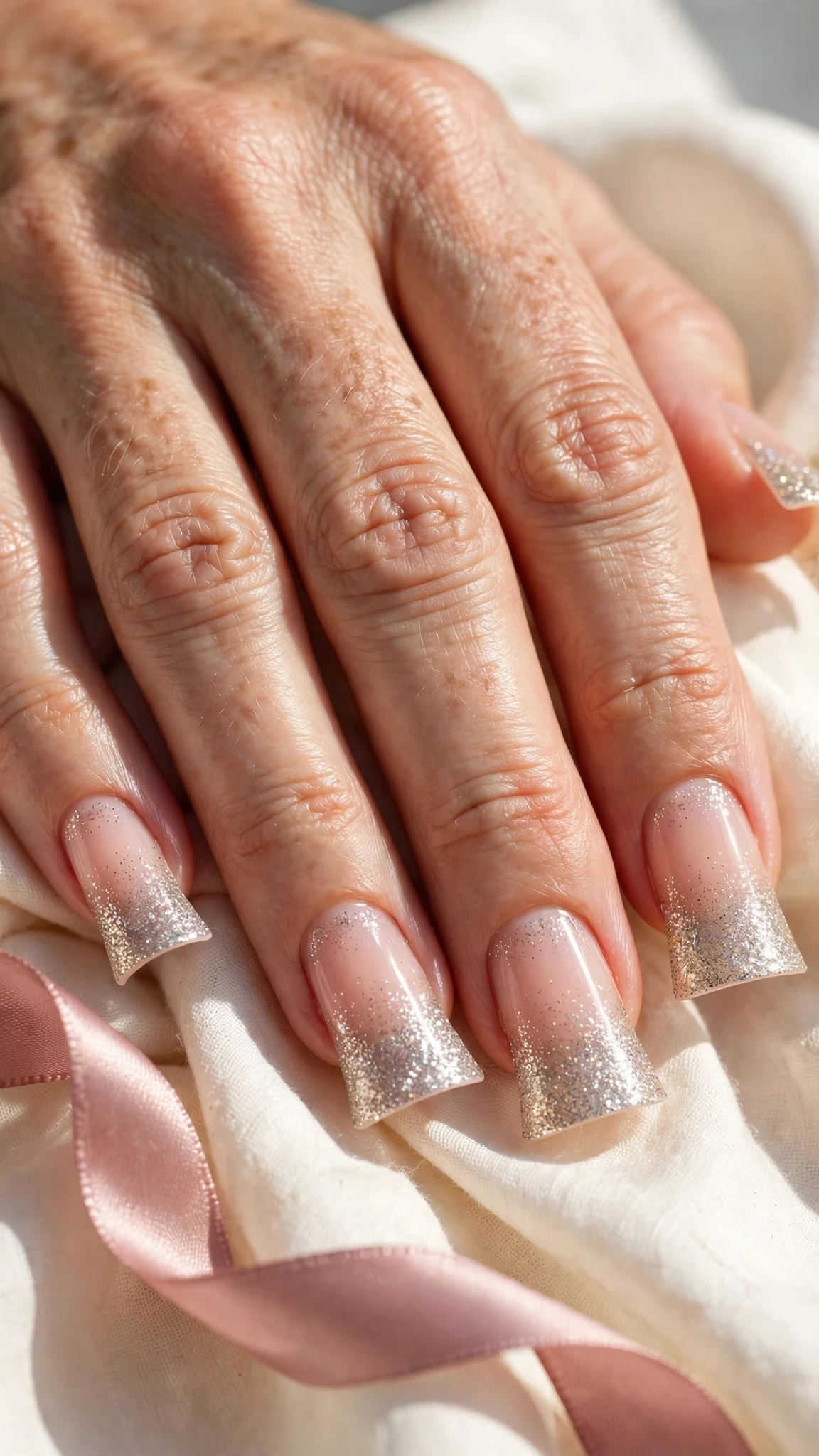
Fine glitter fades in from the tip and dissolves toward the cuticle, so the widest part of the duck nail catches the most light. The sparkle makes the flare look deliberate and glamorous rather than simply wide, and the fade keeps the overall effect wearable.
Tip: seal glitter with two thin top coats so the surface stays smooth to the touch.
Glitter and Bling Duck
Sparkle loves surface area, and the flared shape has more of it than any other shape. Glitter, chrome, holo and crystals all shine harder on a wide tip.
11. Full Glitter Gold Duck

Every nail coated in fine gold glitter turns the shape into a full party set. The flare gives the glitter more surface to catch light than a narrow shape would, so the effect is genuinely show-stopping — best saved for nights out, holidays and celebrations.
Tip: glitter over a matching gold base coat gives fuller coverage with fewer coats.
12. Rhinestone Accent Duck

Keep most nails in a solid shade and place rhinestones along the cuticle or tip of one or two accent nails. The wide duck tip gives you more room to place stones in a pattern, and the contrast between plain nails and bling keeps the set from feeling overdone.
Tip: use a thick top coat or gem gel to anchor stones so they survive everyday wear.
13. Chrome Silver Duck
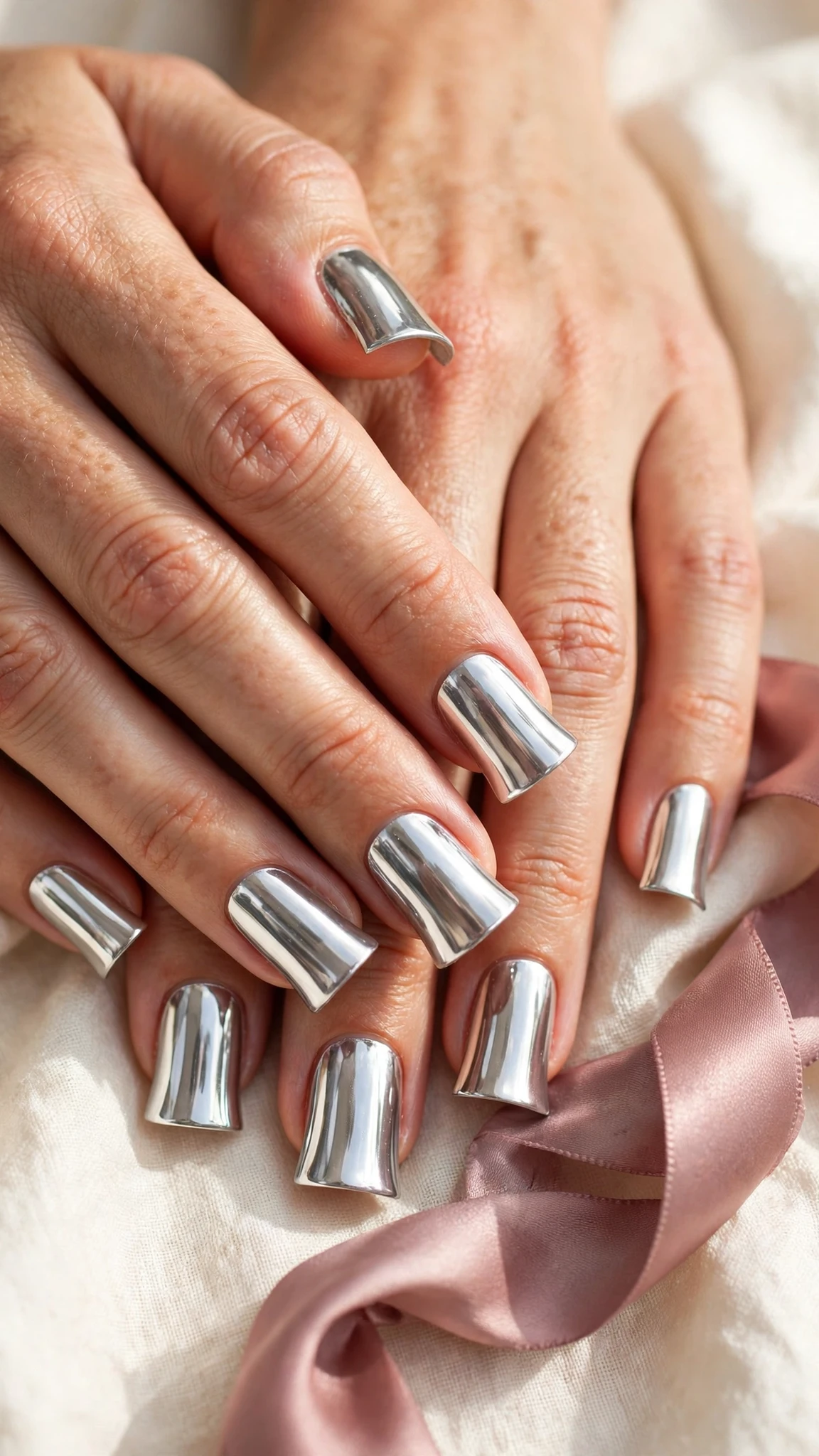
Mirror chrome over the flared shape looks futuristic: the flat, wide tip reflects light in one smooth sheet. Silver chrome is the easiest chrome to wear with the flared shape because it suits every skin tone and every outfit, from denim to evening wear.
Tip: chrome needs a perfectly smooth base — any ridge in the acrylic will show through the mirror finish.
14. Holographic Duck
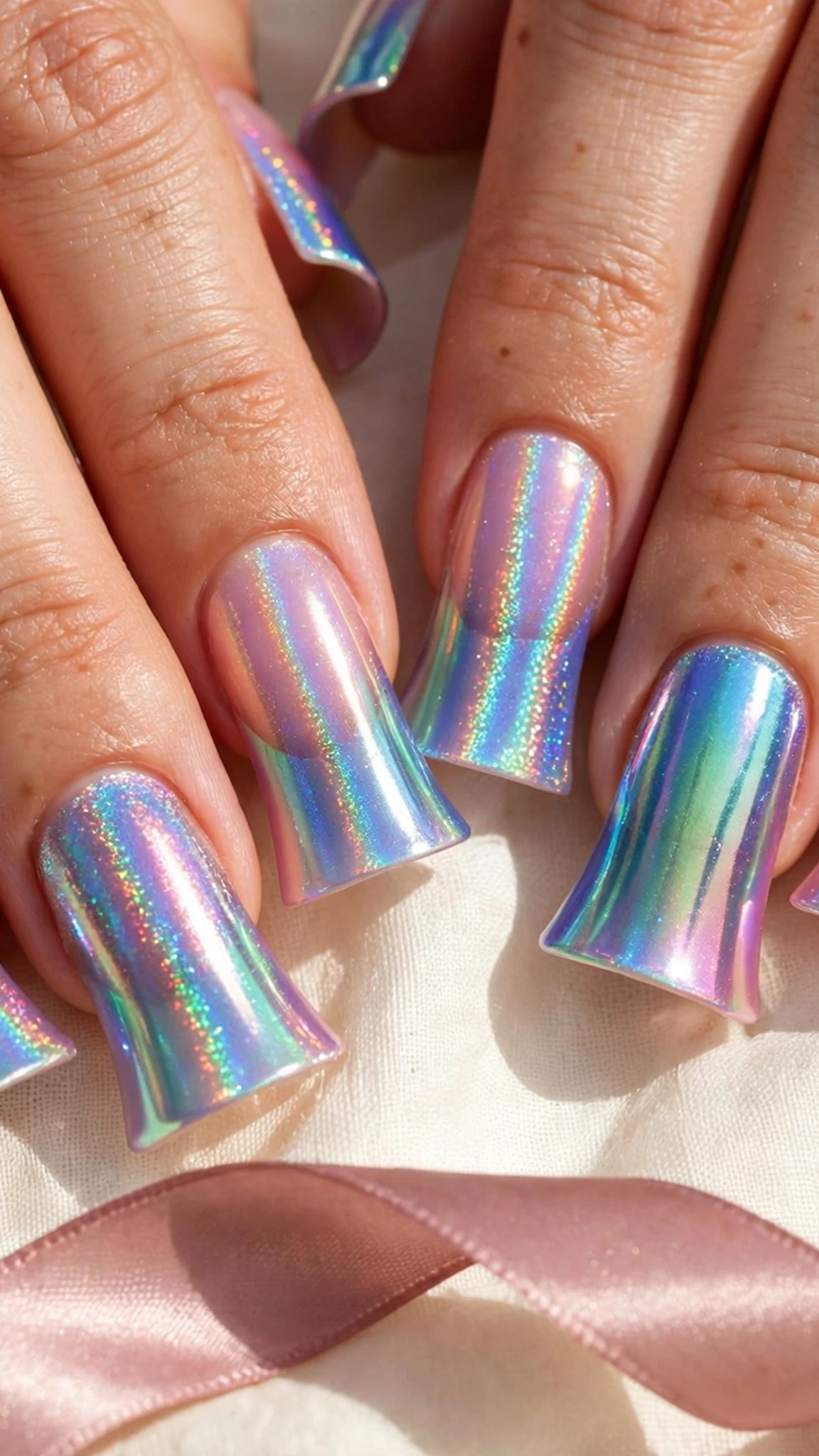
Holographic polish shifts through pink, blue and green as the light moves, and the broad duck tip gives that shift plenty of room to play. This is a great pick if you love the duck shape but want the colour, not the silhouette, to do the talking.
Tip: holo looks best over a dark base, which deepens the rainbow shift.
15. Crystal French Duck

Tiny crystals set along the smile line turn a French duck set into occasion wear. The wide tip means the crystal line can be longer and more detailed than on a narrow nail, so this design reads as genuinely jewelled rather than simply decorated.
Tip: keep crystals to the smile line only — covering the whole tip makes the set heavy and fragile.
Pastel and Cute Duck
Soft colours tame the drama of the flare without hiding it. These are the most wearable sets in the guide — sweet, fresh and easy to pair.
16. Baby Blue Duck
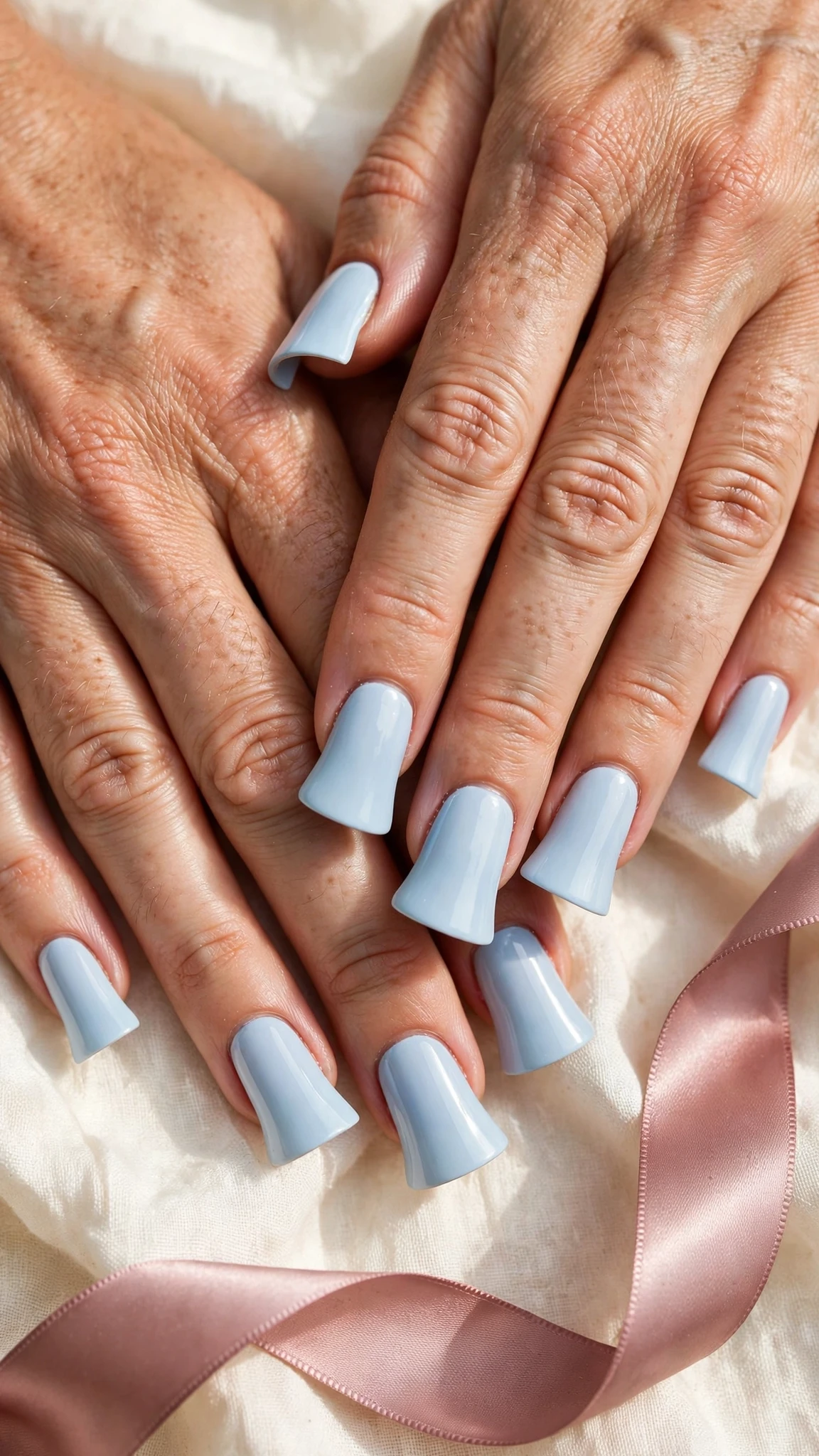
Soft baby blue over the flared shape is fresh, clean and unmistakably cute. Pastel blue flatters most skin tones and pairs beautifully with white and denim, which makes it one of the easiest duck nail colours to wear day to day.
Tip: two thin coats beat one thick coat for pastels — thick pastel coats streak.
17. Lavender Duck

Lavender softens the bold duck silhouette into something dreamy and romantic. The cool purple tone works year-round but shines in spring, and it pairs naturally with silver rings and soft knitwear.
Tip: a lavender with a grey undertone suits more skin tones than a bright lilac.
18. Mint Duck
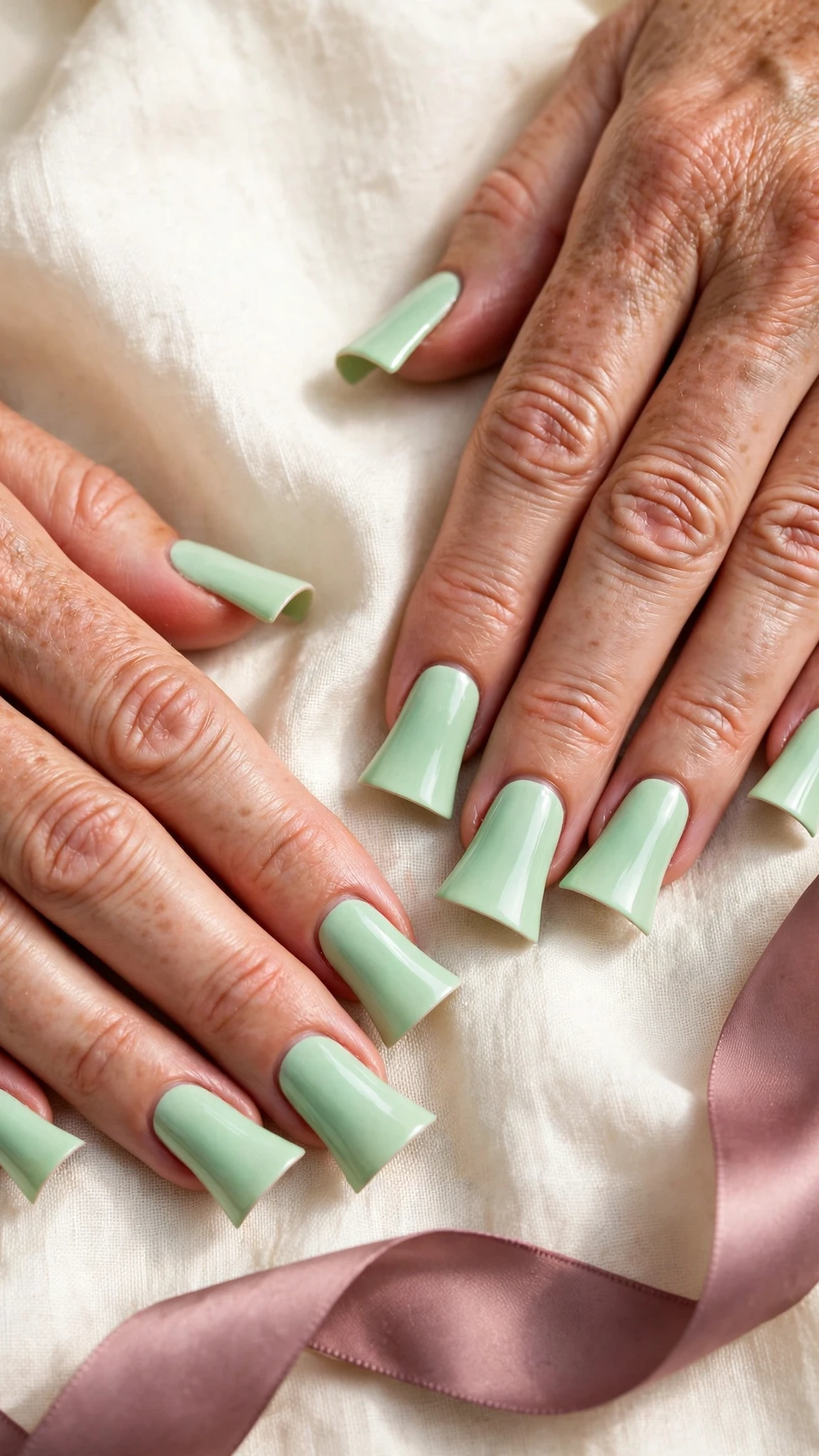
Mint green is the freshest of the pastel duck nail colours: light, clean and a little playful. On the wide duck tip the colour reads almost like a sorbet shade, which makes this set a favourite for spring and summer holidays.
Tip: mint shows stains from denim and dark fabrics, so wipe nails gently after dressing.
19. Peach Duck
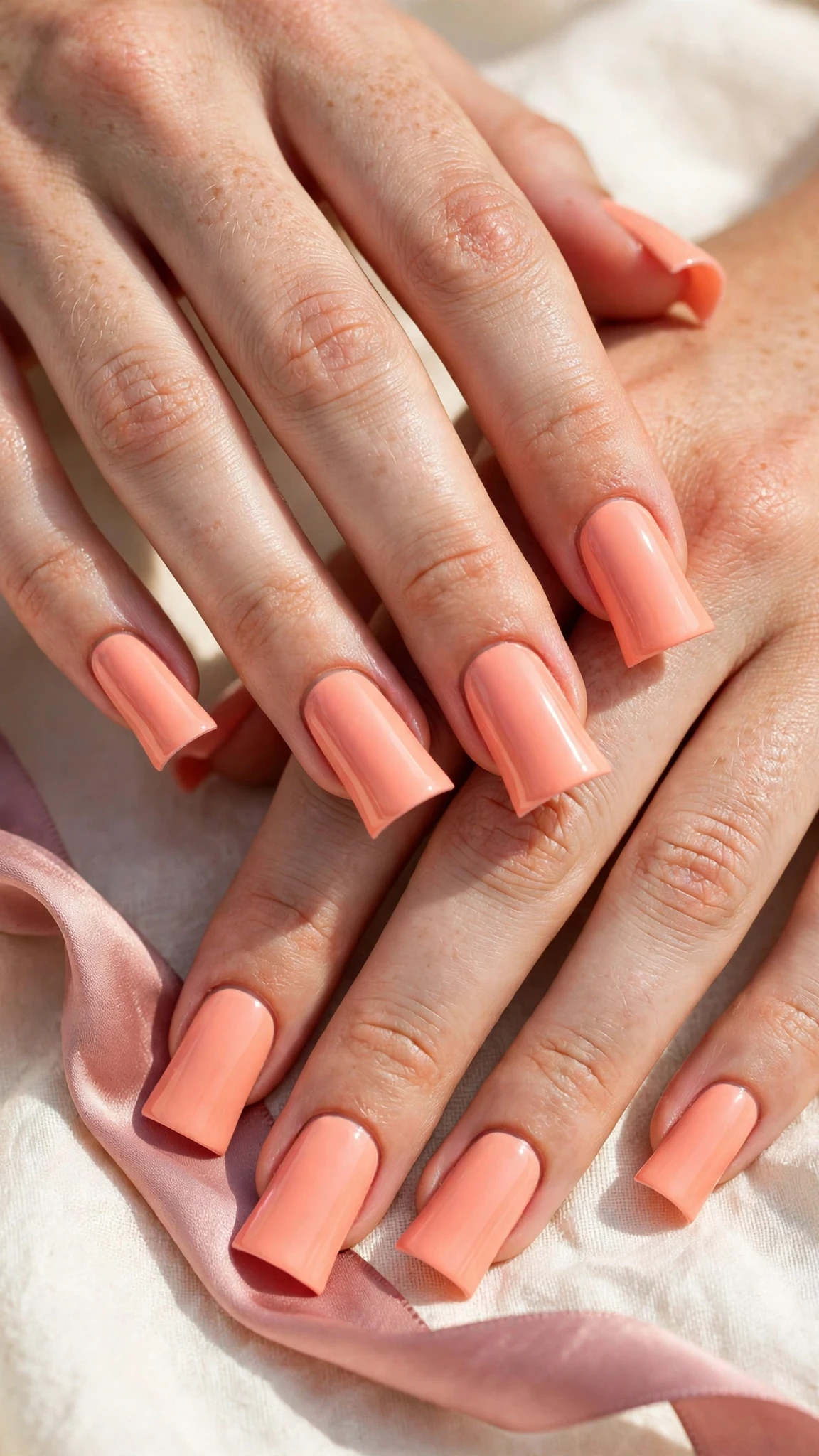
Warm peach gives the shape a sun-kissed, summery feel while keeping the shape’s drama intact. The coral undertone flatters warm skin tones especially well and looks beautiful against a tan.
Tip: peach shades fade faster in sunlight, so reapply top coat mid-week to keep the colour true.
20. Cotton Candy Swirl Duck
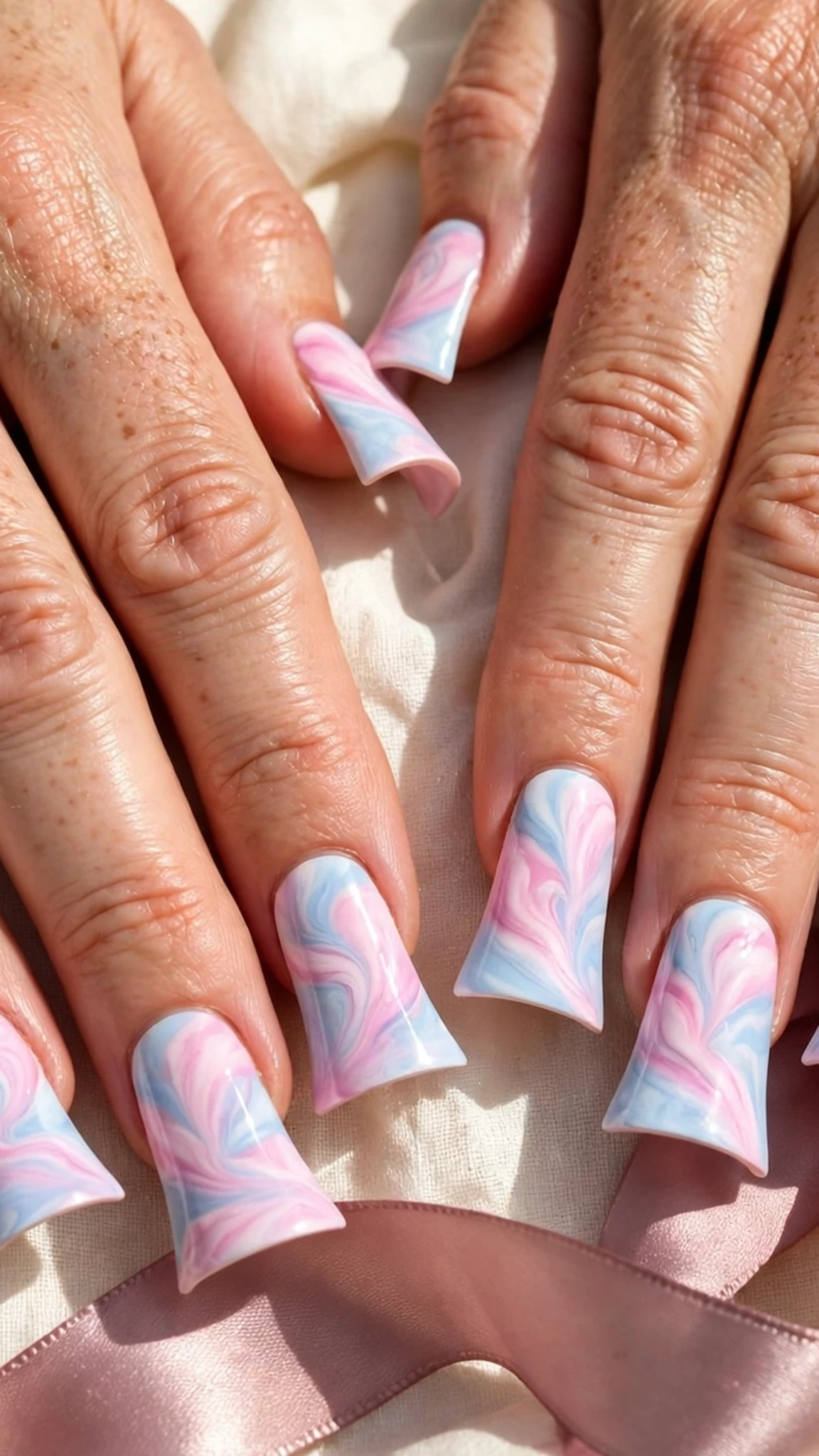
Pink and baby blue swirled together over the flared tip look exactly like spun sugar. The marble effect breaks up the width of the duck nail beautifully, so the set feels artistic rather than simply wide — a perfect pick for anyone who loves cute, eye-catching nails.
Tip: ask for the swirl to be hand-painted, not stamped, for the softest cotton-candy blend.
Bold and Dark Duck
Dark shades and loud colours turn the duck silhouette up to full volume. Choose these when you want your nails to be the statement, not the accessory.
21. Cherry Red Duck
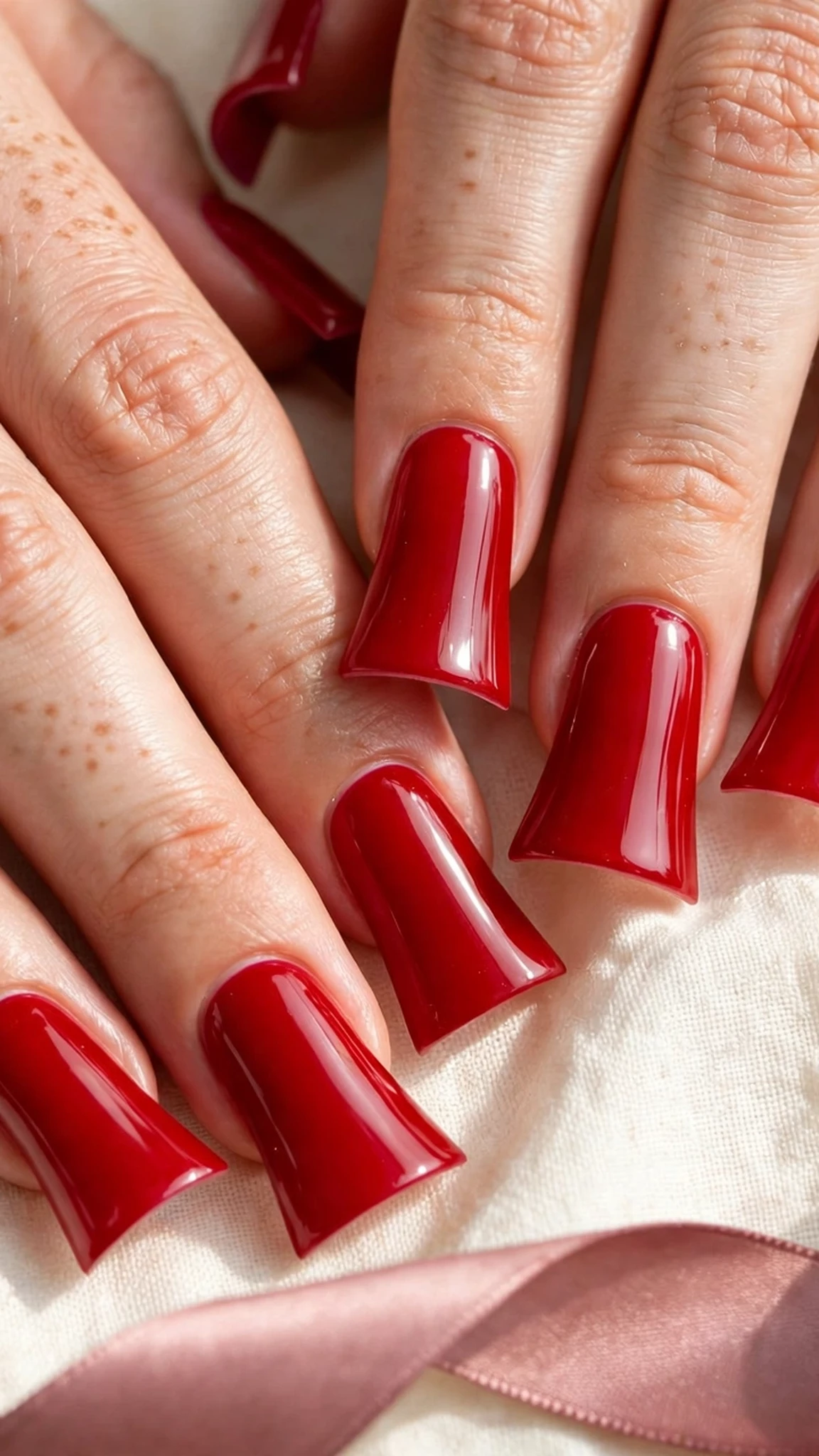
Cherry red is the classic power colour, and on a duck base it becomes even bolder: the wide tip shows off more red than any narrow shape. This is the duck nail design to choose when you want your manicure to be the first thing people notice.
Tip: red stains the nail plate if worn without a base coat — never skip it.
22. Deep Burgundy Duck

Deep burgundy brings the duck shape into grown-up territory: dark, glossy and elegant, with the flare adding just enough edge. This shade works beautifully in autumn and winter and pairs with gold jewellery for evening wear.
Tip: burgundy reads almost black indoors, so check the shade in daylight before committing.
23. Matte Black Duck
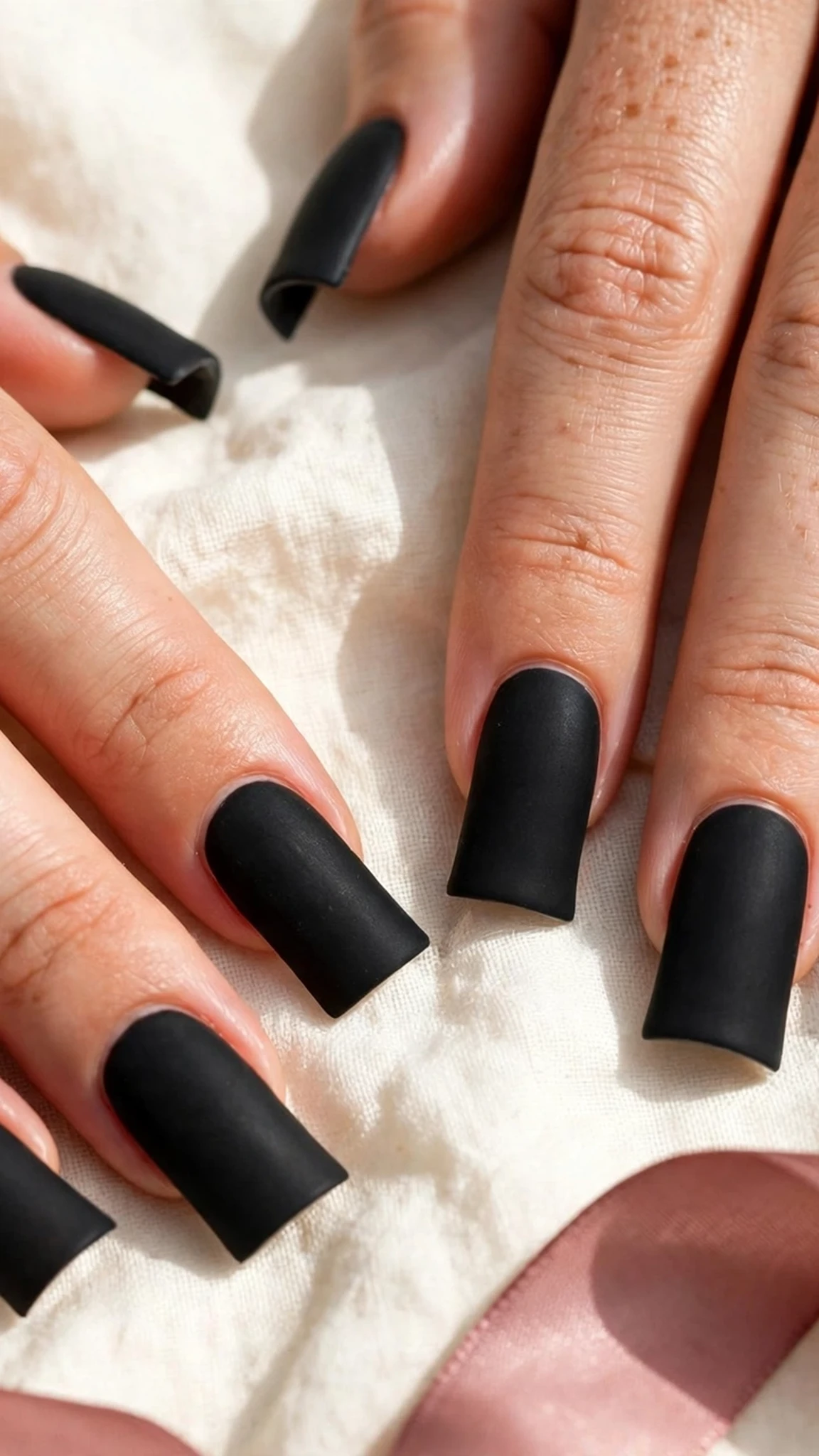
Matte black removes the shine and leaves only the shape: the wide, flat tip becomes a bold silhouette. The velvety finish feels modern and a little edgy, and it photographs beautifully against light backgrounds.
Tip: matte top coat scuffs faster than gloss, so carry a matte refresher for touch-ups.
24. Neon Green Duck
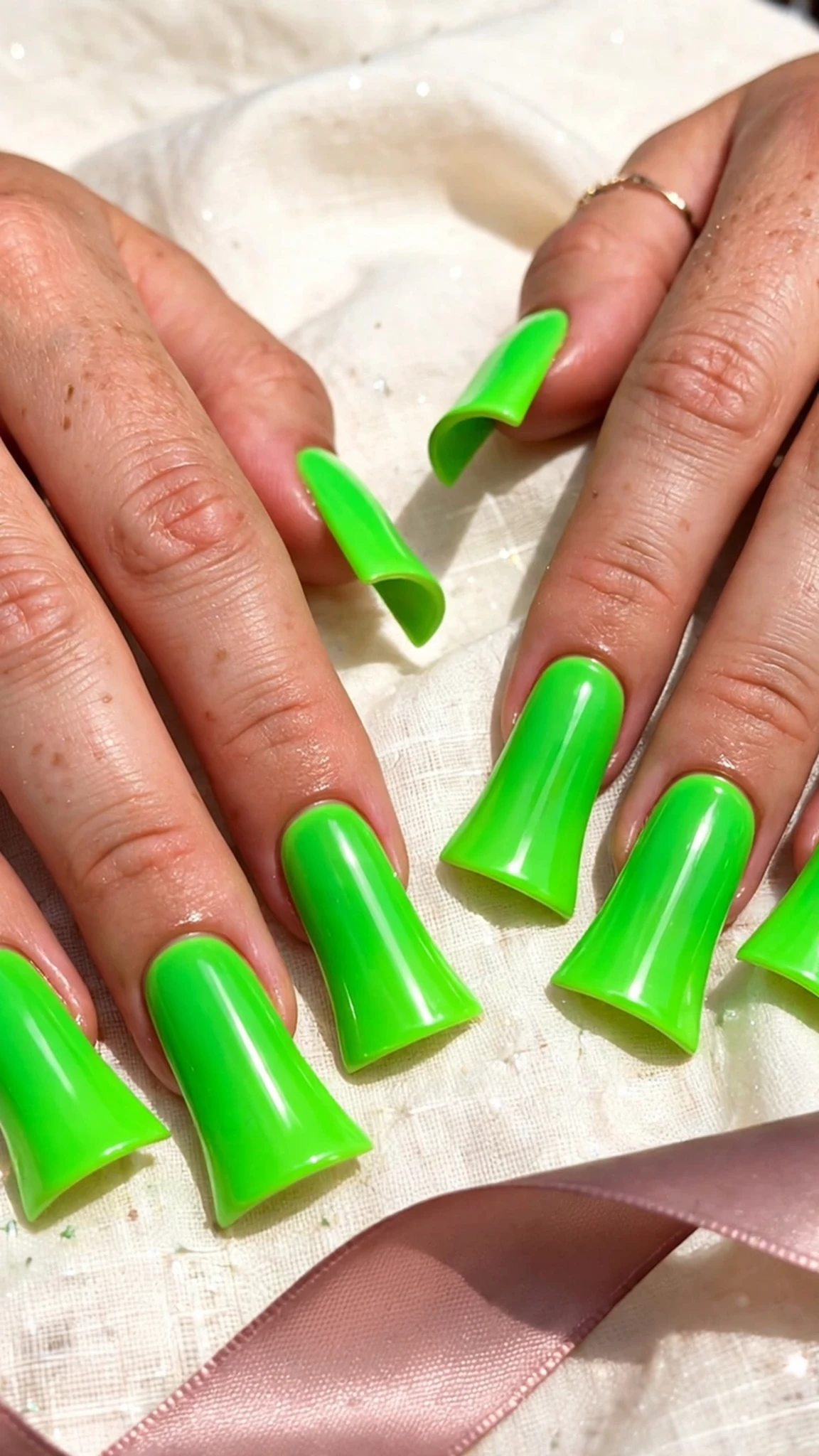
Electric neon green is the loudest duck nail colour in this guide — and the flare makes it louder still. This is a festival and party pick, not an office pick, and it looks best on medium to long lengths where the neon has room to glow.
Tip: neon polishes are sheer by nature, so a white base coat underneath makes the colour pop.
25. Leopard Print Duck

Leopard spots scattered over a nude duck base turn the flared shape into a fashion statement. The wide tip gives the print room to breathe, so the rosettes can be larger and more detailed than on a narrow nail — a bold mix of two strong trends.
Tip: keep the base nude and the spots in two tones only, so the print stays readable.
When Duck Nails Are (and Are Not) the Right Choice
Duck nails suit some lifestyles better than others, and an honest look at the trade-offs will save you a disappointing appointment. They are a wonderful choice for special occasions, creative jobs, content creation and anyone who treats their manicure as a fashion accessory: the shape photographs beautifully, holds decoration well and guarantees compliments. They are also a good pick if you love long acrylics but find coffin or stiletto shapes too common — the flare is genuinely distinctive, and in most salons you will be the only client wearing it.
They are a harder choice for hands-on work. If you type for eight hours a day, handle small parts, play an instrument or care for small children, the wide tip will get in your way at first, and very long lengths may simply be impractical. That does not rule the shape out: a shorter flare keeps most of the look with far less interference, and many wearers keep a medium-length set for everyday life and save the dramatic lengths for holidays. The same logic applies to sports and gym work, where gloves and grip matter — a shorter set survives both far better.
Budget matters too. A sculpted flared set usually costs more than a standard acrylic set because of the extra time and product involved, and fills need a technician who is comfortable maintaining the flare’s symmetry. Before committing, ask your salon whether they regularly create flared shapes; a technician who rarely does them may produce an uneven fan. If your usual salon hesitates, it is worth travelling to one that lists sculpted or Y2K shapes among its services.
Finally, think about your nail health. Duck nails are an acrylic extension shape, so they need the same respect as any extension: never peel them off, keep the natural nail underneath oiled and rested between sets if it feels thin, and take a break if you notice persistent soreness or lifting. Worn well, with fills on schedule and gentle removal, duck nails are no harder on your natural nails than any other long acrylic shape.
How to Care for Duck Nails
Care for the shape the way you would any acrylic set, with a little extra attention to the wide tip. Keep cuticles oiled daily with a nourishing cuticle oil every evening so the acrylic stays flexible at the base, and reapply top coat every few days to protect the finish — especially on matte or glitter designs, which show wear first. Avoid soaking your hands for long periods, since water weakens the bond at the cuticle, and book fills every two to three weeks before lifting starts. General manicure aftercare follows the same principles. If a corner of the flare chips, have it repaired promptly rather than picking at it: a small chip is a quick salon fix, but a picked-at edge can crack further. If you swim regularly, note that chlorine and long soaks can dull top coat faster than usual, so an extra layer of top coat after swimming helps the finish last until your next appointment.
Final Thoughts
Duck nails are not for everyone, and that is their charm. They are a statement shape with a real history, a distinctive silhouette and endless room for colour and decoration — from quiet nudes to full glitter. Start with a classic or pastel design at a medium length, see how the flare fits your life, and go bolder from there. And if the shape wins you over, the rest of our shape guides — including coffin, almond and oval — are waiting when you are ready to compare.
Frequently Asked Questions
What are duck nails?
Duck nails are acrylic nails shaped to flare outward: narrow at the cuticle and wide and flat at the tip, like a duck’s foot. The shape became popular in the Y2K era and has returned as a bold, retro statement shape. Because the flare is built with acrylic, the shape is almost always created as extensions rather than on natural nails alone.
Are duck nails comfortable for everyday wear?
They take some getting used to. The wide tip changes how your fingers feel when typing, opening cans or reaching into pockets, and most wearers adjust within a few days. Shorter duck nails are far more practical than very long ones, so if you are trying the shape for the first time, start at a medium length and see how it fits your daily routine before going longer.
How long do duck nails last?
With proper application, duck nails last two to three weeks before a fill is needed, the same as other acrylic shapes. The wide tip can catch on things more easily than a narrow shape, so avoid using your nails as tools and wear gloves for cleaning. Lifting at the cuticle is the usual sign that a fill is due.
Can you get duck nails on short natural nails?
Duck nails are normally built as extensions, so your natural nail length matters less than with other shapes — the acrylic creates the flare. That said, a very short natural nail gives the technician less to anchor to, so most salons recommend at least a little natural length, or a medium extension, for a secure and comfortable result.
What is the difference between duck nails and coffin nails?
Both are long acrylic shapes, but they flare in opposite directions. Coffin nails taper inward from the cuticle to a narrow, flat tip, while duck nails flare outward to a tip that is wider than the base. Coffin nails elongate the finger; the flared shape makes a bold, fan-shaped statement. If you like drama, both deliver it — just in mirror image.
How do you remove duck nails safely?
Never pull or pry them off. File the shiny top layer to break the seal, then soak in acetone with cotton and foil until the acrylic softens and can be pushed away gently with a wooden stick. Because these extensions are usually thick acrylic, removal takes patience — rushing it is what damages the natural nail underneath. If you are unsure, a salon soak-off is the safest option.
Compare Before You Choose
See the Closest Alternatives
Compare nearby shapes, colors and finishes before picking a final reference.
Recommended Next