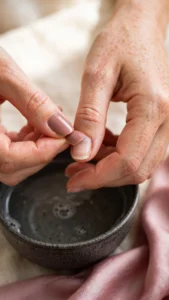
Some colours shout. Lavender whispers — and somehow gets noticed more. Lavender nails sit in that rare sweet spot between a neutral and a statement: soft enough to wear with everything in your wardrobe, interesting enough that people ask about them. It is also one of the few purple shades that works in every season, which is why lavender nail designs keep climbing while louder colours come and go.
This guide collects 30 lavender nails designs in five families — soft and milky pastels, lavender French tips, florals and nail art, chrome and shimmer finishes, and the deep matte shades that carry lavender into evening. Each design notes the finish, the shape it flatters most and a quick tip, and the shade guide below helps you find the exact lavender your skin tone has been waiting for.
One shade note before the designs, because it causes real confusion at the polish wall. Lavender is a soft, true purple with a grey softness underneath. Periwinkle is its blue-leaning cousin — pretty, but a different colour family on the nail. If the shade you are picturing has more blue than purple in it, our guide to periwinkle nails covers that side of the family; for the full spectrum beyond lavender, browse our purple nail designs as well. This post stays purely lavender, from the palest milk shade to deep royal purple-lavender.
Finding Your Lavender: A Shade Guide
Lavender is not one colour — it is a range that runs from almost-white pastel to deep, moody purple, and the right stop on that range depends mostly on your skin’s undertone. Use this guide before the designs: once you know your family, picking a number below gets much easier. If you are torn between two stops, remember that lavender nails are forgiving — neighbouring shades blend beautifully in ombre and French designs.
Pale lavender is the whisper shade: a lavender with so much white in it that it reads as a tinted neutral. It is the kindest shade for fair and cool-toned skin, where it brightens without washing out, and it is the most office-safe way to wear the colour. On medium and deep skin it reads brighter and more pastel — a deliberate, playful contrast.
True lavender is the classic mid-soft purple most people picture — balanced, neither blue nor pink. It is the universal stop: it flatters cool, warm and neutral undertones, suits every nail length, and is the safest first lavender to buy if you are building a collection from zero.
Deep lavender is the saturated, jewel end of the family, closer to violet. On deep skin it is luminous — the contrast makes the purple glow rather than disappear — and on fair skin it becomes a proper evening statement. Choose it for chrome, cat eye and the designs you want photographed.
Lavender-grey (sometimes called greige lavender) mixes the purple with grey until it behaves like a neutral. It suits warm-neutral and olive skin especially well, pairs with everything from denim to tailoring, and is the shade minimalists reach for when white and nude feel too plain.
Soft & Milky Lavender Nails
The softest corner of the family, and the most wearable. Milky and pale lavender nails trade saturation for glow — they make hands look polished and rested, photograph beautifully in daylight, and grow out gracefully because the colour near the cuticle is so light. Start here if you are lavender-curious; these six are almost impossible to get wrong.
1. Classic Milky Lavender

The reference design for this whole family. A creamy, opaque pale lavender with a high-gloss top coat gives almond nails a clean, expensive softness — no art, no shimmer, just perfect colour. It suits every skin tone because the milkiness keeps it gentle, and it is the most-requested bridal pastel in the lavender family. Tip: apply three thin coats rather than two thick ones; milky pastels streak when rushed.
2. Pale Lavender Cream

One step lighter: a near-white lavender cream that reads as a tinted neutral on short square nails. This is the shade for minimalists who find plain white too stark — the purple undertone keeps it warm and deliberate. It is especially pretty on fair and cool skin, and it makes a clean base for minimalist outfits. Tip: a ridge-filling base coat keeps near-white shades from showing every nail line.
3. Lavender Milk Swirl

A sheer milky base marbled with soft ribbons of white and true lavender, like steamed milk folding through a latte. The swirls soften the oval shape and hide minor imperfections in the nail plate, which makes the design forgiving for beginners. No two nails come out identical, and that is the charm. Tip: drag the swirl with a fine liner brush while the top layer is still wet, then cure.
4. Soft Lavender Ombre
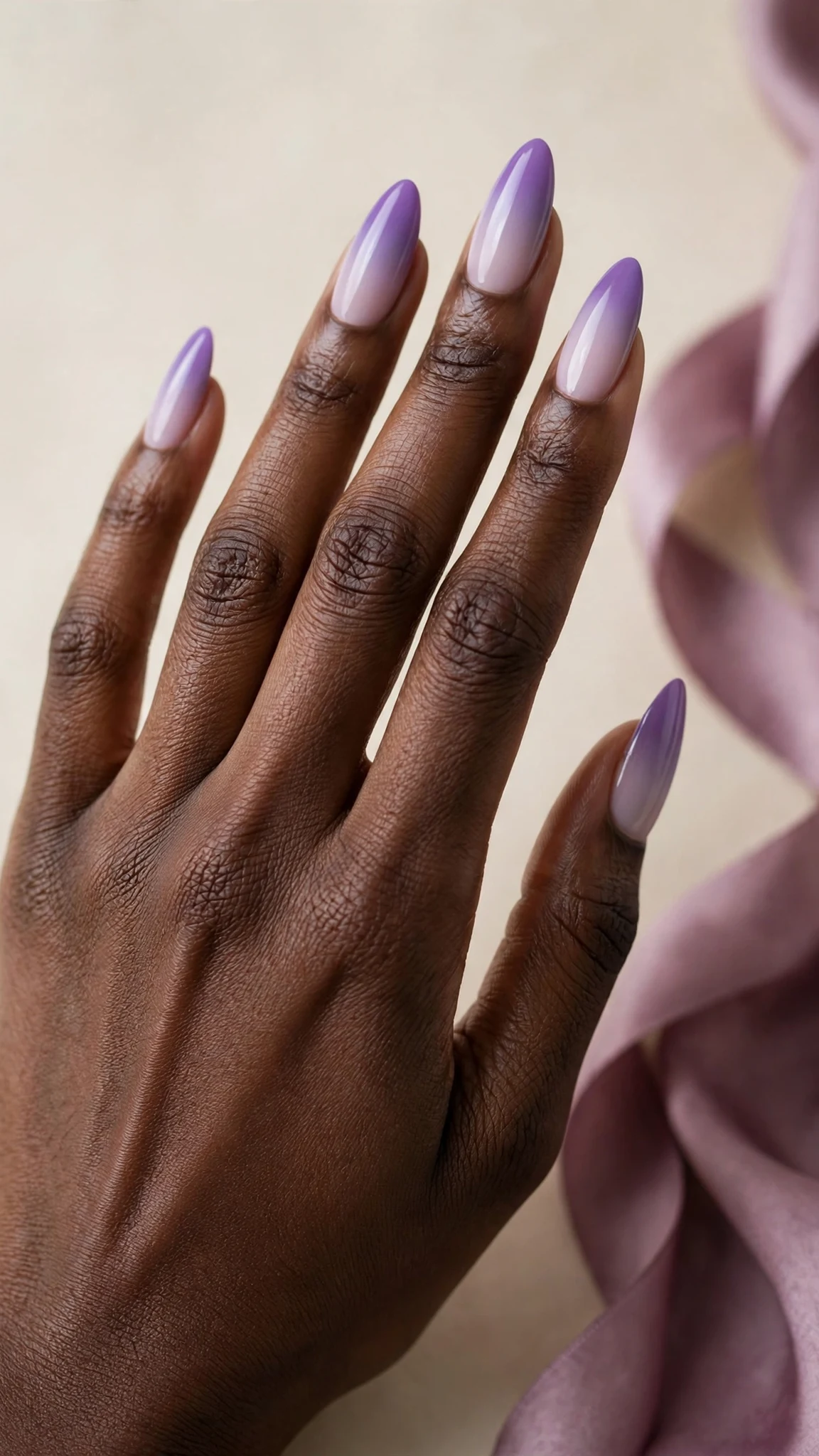
A gradient that melts from pale lavender at the cuticle into rich true lavender at the free edge. On long almond nails the fade elongates the fingers, and because both ends are lavender, the design stays tonal and calm rather than dramatic. Ombre lavender nails are a smart first step if solid deep colour feels like too much commitment. Tip: blend the two shades on a makeup sponge for the smoothest fade.
5. Sheer Lavender Jelly

The translucent option: a glassy, see-through lavender that tints the nail like coloured glass. Jelly finishes are forgiving on uneven nails, grow out invisibly and give squoval shapes a fresh, juicy look that suits warm and olive skin beautifully. It is the lowest-maintenance design in this group. Tip: jelly shades deepen with each coat, so check the colour after two coats before adding a third.
6. Lavender Soap Glaze

The glazed finish that made sheer polish famous, translated into lavender: a watery pale base lit by a fine pearly shimmer that catches light like soap bubbles. Short oval nails keep it delicate. It is the five-minute manicure that looks like an hour — ideal between fuller sets. Tip: apply the shimmer glaze as a single floating coat; brushing back and forth makes it patchy.
Lavender French & Tip Designs
French tips are where lavender stops being a pastel and starts being a design. Swapping the classic white tip for lavender keeps the manicure’s clean architecture but adds the colour story — and lavender nails of this style suit every length, from a micro line on short squares to a deep V on coffins. Six ways to wear the swap, from barely-there to bold.
7. Classic Lavender French

The icon, recoloured. A milky nude base with true lavender tips in place of white keeps everything people love about a French manicure while making it unmistakably modern. Almond shapes soften the colour line, and the combination suits every age and dress code. Of all lavender nails French styles, this is the one that never dates. Tip: paint the lavender tip in two passes — a thin guide line first, then fill.
8. Lavender Micro French

For the truly understated: a natural nude base and a lavender line so thin it reads as a shadow along the tip. On short square nails it looks like a secret — invisible across a desk, delightful up close. It is the easiest way to wear lavender nails in strict workplaces, and it grows out almost invisibly. Tip: use a striping brush and rest your pinky on the table for a steady line.
9. Lavender Baby Boomer

The seamless French fade: nude at the cuticle dissolving into lavender at the tips with no line at all. Baby boomer lavender nails are the bridal party favourite of this group — romantic, photograph-friendly and kind to every skin tone. The long coffin shape gives the gradient room to breathe. Tip: fade in two directions with a sponge, then seal with a glossy top coat to blur the join.
10. Double Lavender French

Two tip lines instead of one: a pale lavender arc with a deep lavender stripe beneath it, floating on a sheer base. The double line adds architecture to almond nails and lets you wear the whole lavender range in a single set. It looks intricate but is only one extra pass of the brush. Tip: keep both lines on the top third of the nail so the design stays airy.
11. Lavender V-Tip French

The chevron edit. Lavender tips painted into a sharp V flood the long coffin shape with geometry, drawing the eye down the centre of the nail and making fingers look longer. Over a milky white base the contrast is crisp and fashion-forward — the boldest French in this guide. Tip: mark the centre point of each tip with a dot first, then draw the two diagonal lines into it.
12. Reverse Lavender French

The French, flipped: a full coat of true lavender with a small pale cream crescent left bare at the cuticle. The half-moon detail is vintage in origin, which gives these lavender nails a quiet retro charm, and the crescent hides regrowth better than any other design here. Medium oval nails carry the curve best. Tip: use a round sticker or hole-reinforcement ring as a stencil for perfect crescents.
Lavender Florals & Nail Art
Lavender began as a flower, and these six designs let it be one. Sprigs, daisies, aura glows and marble keep the colour soft while adding the detail that turns a polish into nail art. Most of these lavender nails designs use a milky or pale base so the artwork stays visible — choose your favourite motif, then let one or two accent nails carry it.
13. Lavender Sprig Art

A milky lavender base scattered with tiny hand-painted lavender sprigs — slim green stems with small purple buds — across two accent nails. It is the most literal love letter to the flower in this guide, and on almond nails it reads like pressed botanicals under glass. Keep the remaining nails plain milky so the art has room to breathe. Tip: paint the sprigs with the tip of a dotting tool rather than a brush for even buds.
14. Daisy and Lavender

True lavender gloss dotted with small white daisies and yellow centres — the happiest design in the guide. The white petals pop against the purple exactly the way daisies do in a lavender field, and short oval nails keep the look sweet rather than busy. A spring and summer favourite that also rescues plain lavender nails from feeling flat. Tip: five dots in a circle make a perfect daisy; add the yellow centre last.
15. Lavender Aura
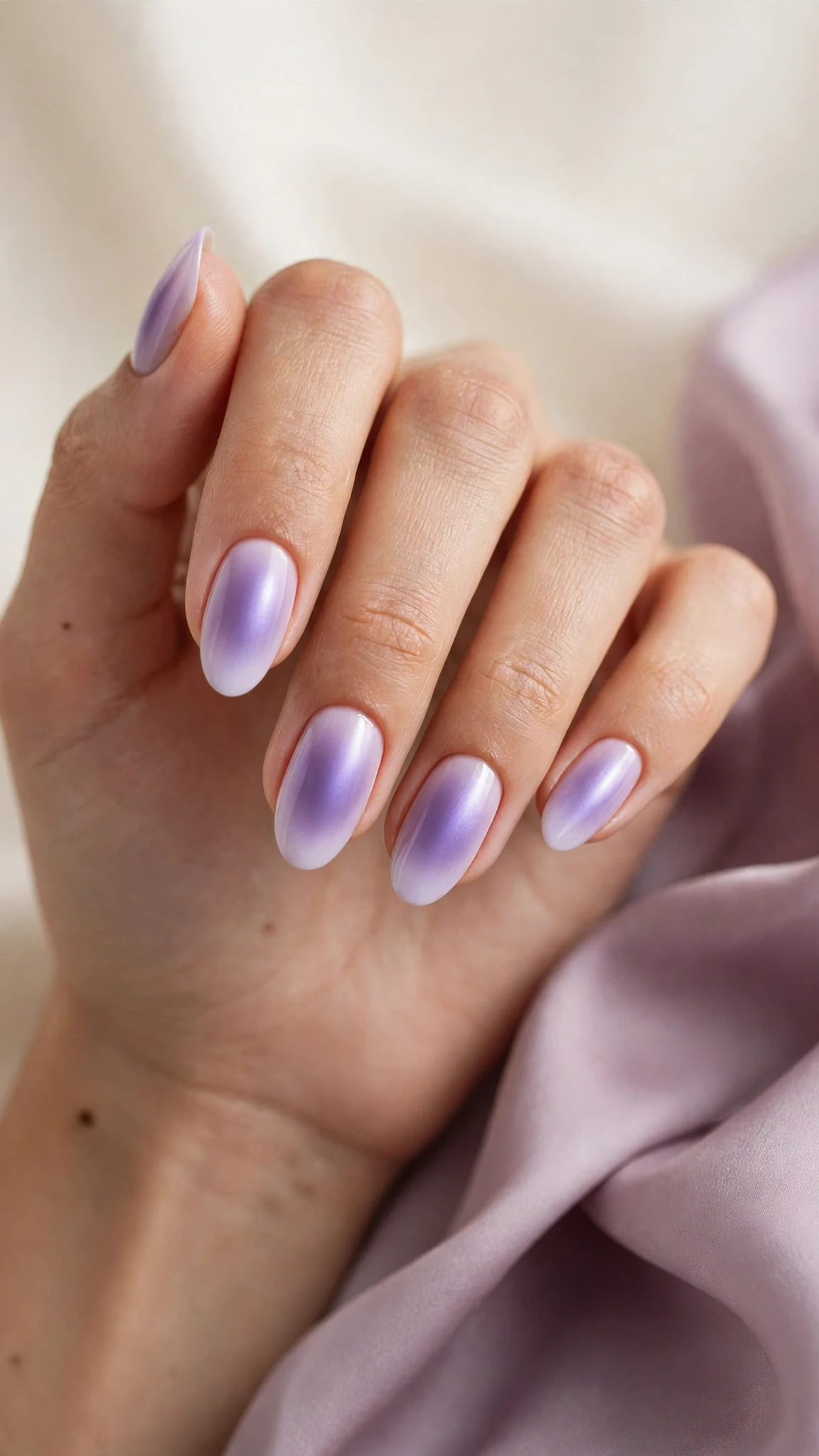
Aura nails concentrate colour in a soft-focus glow, and lavender is the shade the technique was born for: a deep lavender heart fading out to pale, hazy edges. The effect is dreamy and slightly mystical on almond nails, and because the edges are pale, chips and regrowth barely show. Tip: build the glow with a small sponge or an airbrush-style gel, layering the deepest colour only at the centre.
16. Lavender Marble
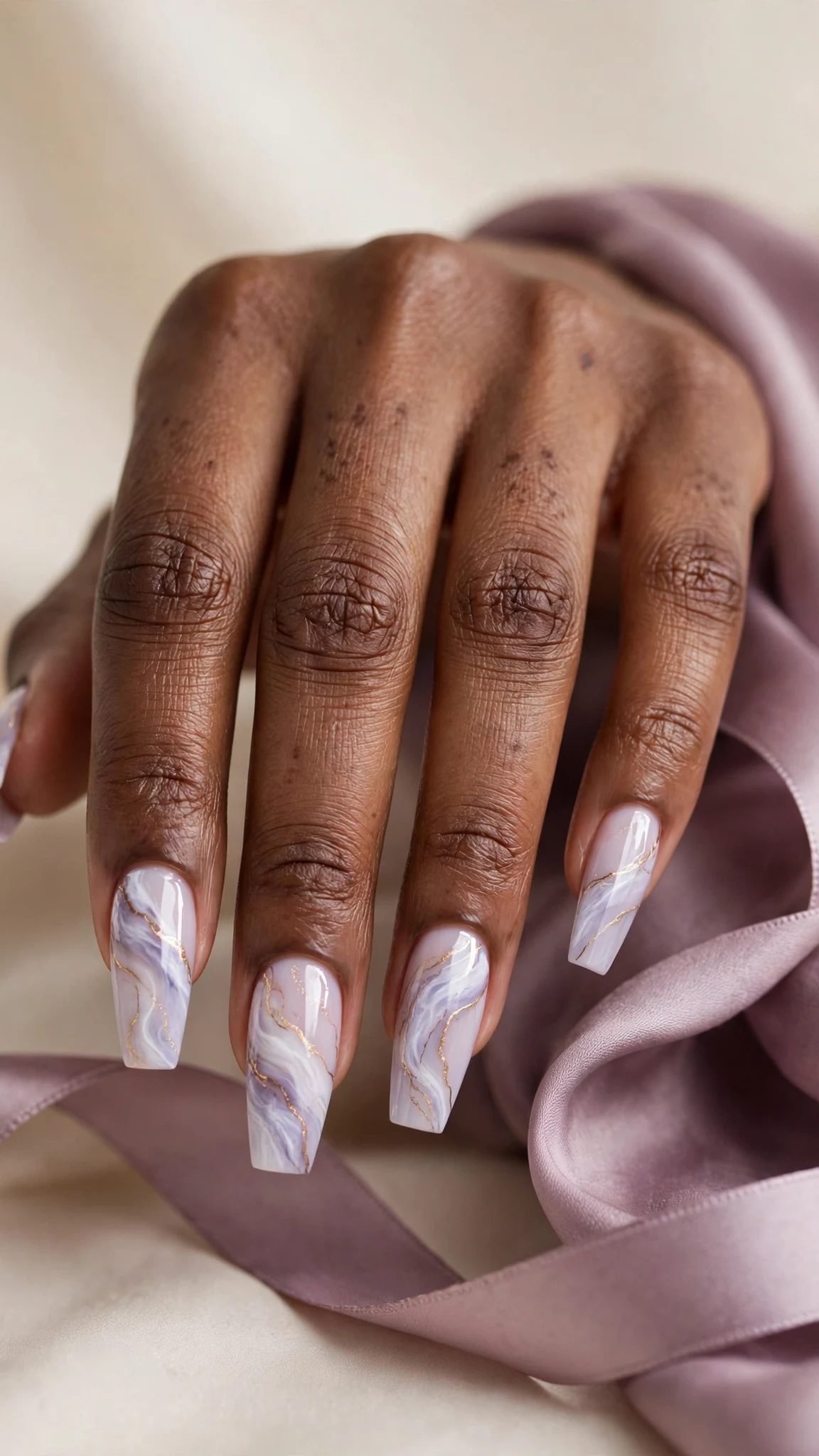
White marble veined with lavender and hair-thin lines of gold, poured over a pale lavender base. On long coffin nails the effect is pure luxury — like carrying a piece of polished stone at your fingertips. Marble is the most forgiving art in this group because the pattern is supposed to wander. Tip: use blooming gel for the veins; it spreads the lines into natural stone patterns on its own.
17. Lavender Polka Dots

A milky white base covered in lavender polka dots of mixed sizes — playful, graphic and almost impossible to mess up. Dots suit short square nails perfectly because the pattern scales to the nail, and the high contrast keeps it modern rather than childish. Try it when solid lavender nails feel too quiet but art feels too much. Tip: vary dot size randomly; uniform dots look printed, mixed dots look designed.
18. Lavender Bows and Pearls
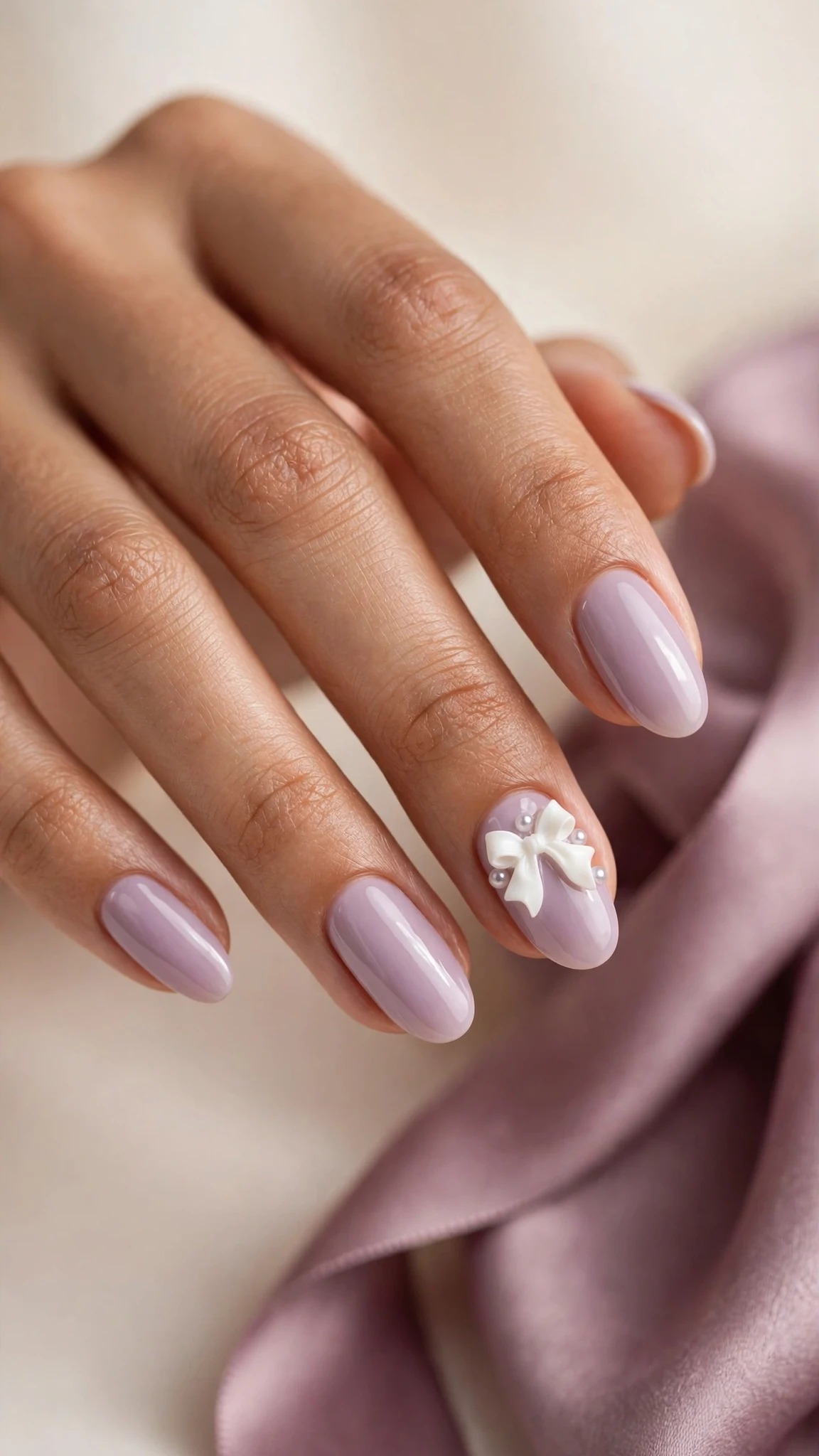
Soft lavender gloss finished with a tiny white bow and miniature pearls on the ring finger — the coquette end of the family. The 3D details sit on one nail only, which keeps the set elegant rather than costume-like, and almond nails give the bow its prettiest canvas. A favourite for parties, dates and photos. Tip: set bows and pearls into uncured gel or nail glue, then seal around — never over — the decorations.
Lavender Chrome & Shimmer Nails
Give lavender a finish with physics and it turns into jewellery. Chrome, cat eye, glitter and aurora pigments all bend light across the purple base, so lavender nails in this family shift as your hands move — they are the designs strangers notice across a room. These six run from a quiet pearl sheen to a full mirror chrome.
19. Lavender Chrome Mirror
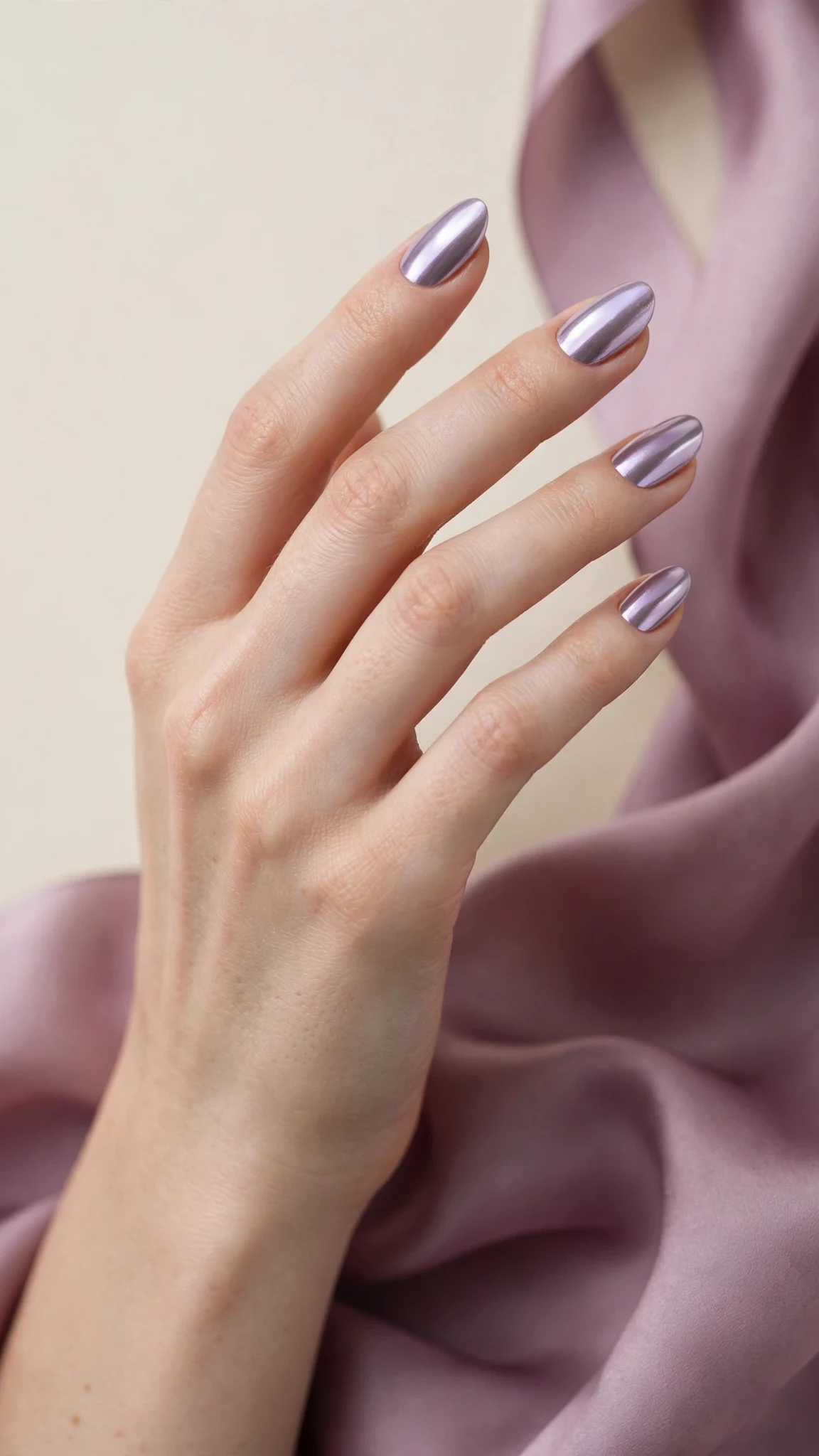
Full mirror chrome over a lavender base: the purple turns liquid-metal, reflecting light in a smooth sheet. Chrome is the finish that turned lavender nails into a search trend, and on almond nails it reads like jewellery you cannot take off. It is bold but surprisingly wearable, because the base colour stays soft. Tip: chrome powder goes over a no-wipe top coat; a sticky surface will grab unevenly and look cloudy.
20. Lavender Cat Eye
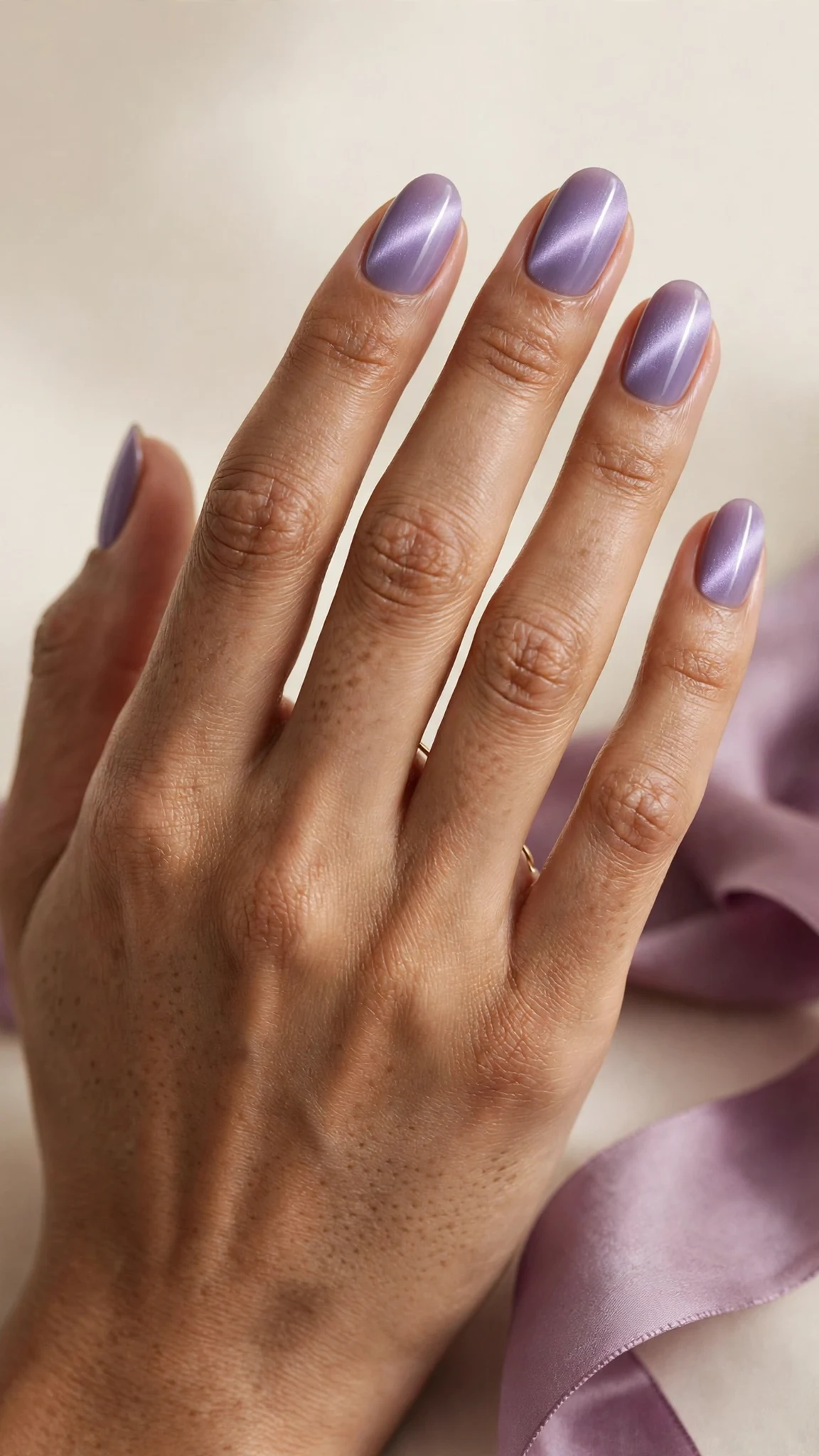
Magnetic cat eye gel gives lavender a band of velvet light that moves across the nail as your hand turns. The effect adds depth that flat lavender cannot reach, and medium oval nails show the stripe at its widest. If you love the drama of chrome but want it softer, cat eye is your middle path. Tip: hold the magnet steady for ten to fifteen seconds before curing so the stripe sets crisp.
21. Lavender Glitter Ombre

A true lavender base with silver-lavender glitter concentrated at the tips and fading down like frost. Glitter ombre is the party design that refuses to show wear — the sparkle hides tip scuffs for days, which makes these lavender nails the practical choice for holidays and events. Long coffin nails give the fade its full run. Tip: pat the glitter on with a sponge rather than brushing, for a fade with no hard line.
22. Aurora Lavender
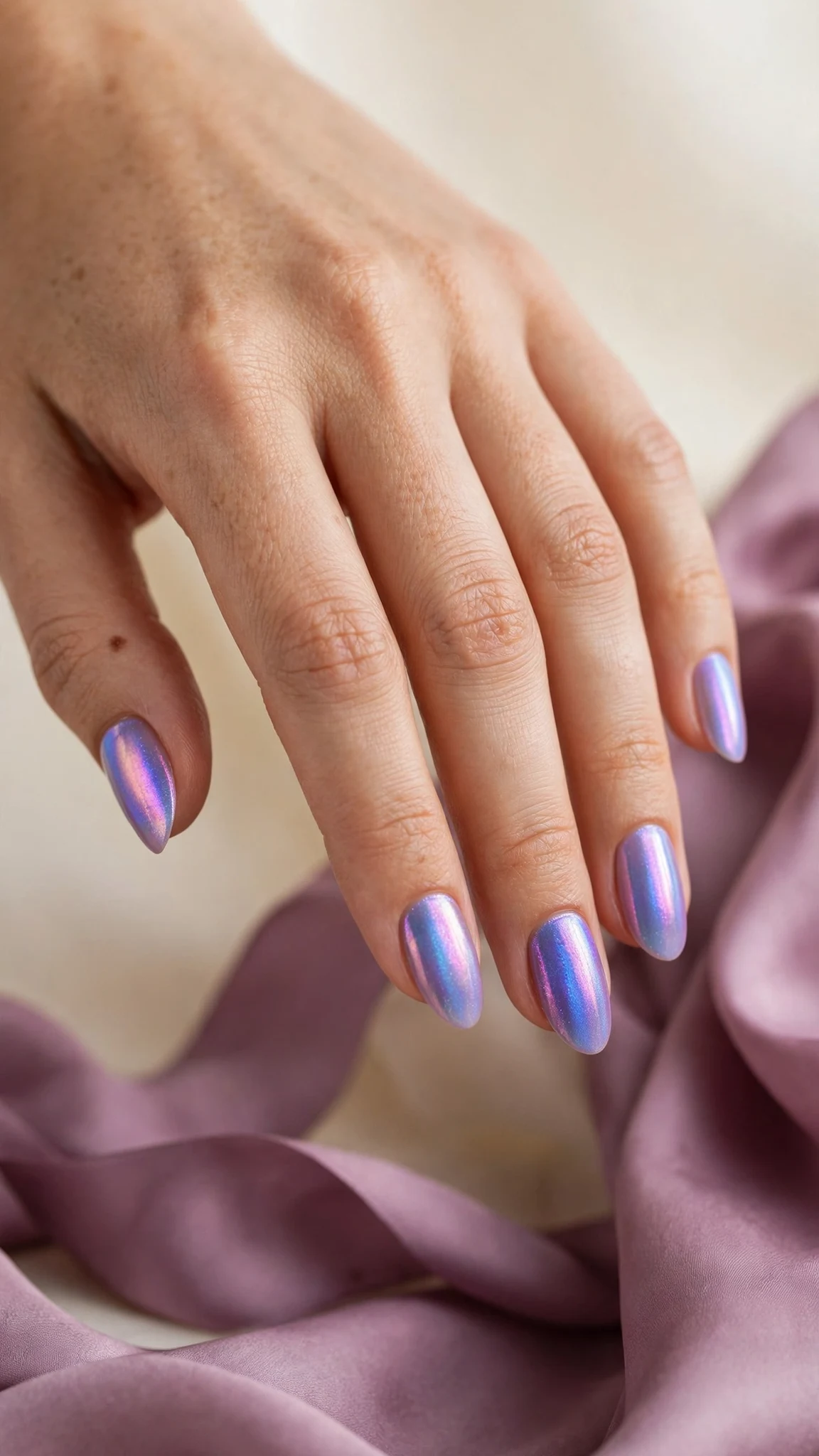
An iridescent aurora pigment over lavender shifts pink, blue and violet as the light changes — three colours wearing one manicure. The shift is subtle in shade and dramatic in sunlight, which makes aurora lavender nails the most photographed finish in this group. Almond shapes show the colour travel best. Tip: aurora pigment shows every bump, so start from a perfectly smooth, levelled base.
23. Lavender Pearl Shine

The quiet luxury option: a pearlescent champagne-lavender sheen that glows rather than sparkles. Pearl finishes forgive short nails and shorter lengths because the sheen is uniform, and the champagne warmth makes this the lavender that flatters warm and olive skin most. It pairs with gold jewellery beautifully. Tip: one coat of pearl pigment over pale lavender gives the glow; two coats turn it frosty.
24. Lavender Foil Flakes

True lavender gloss scattered with irregular gold foil flakes, like gilt leaf pressed into enamel. The flakes catch light in flashes as you move, and because placement is random the design is genuinely beginner-proof. Squoval nails keep the look neat. It is the easiest way to make lavender nails look expensive without any painting skill. Tip: press flakes into the tacky layer of the colour coat, then encapsulate with two top coats.
Deep & Matte Lavender Nails
The after-dark end of the family. Deep and matte lavender nails swap the shade’s usual sweetness for mood: saturated violet-purples, flat velvet mattes and the grey-leaning neutrals that behave like wardrobe staples. If pastels feel too young or too spring for your taste, this is your group — lavender, grown up.
25. Deep Lavender Gloss

The saturated end of the spectrum: a rich, jewel-deep lavender in full gloss that behaves like a jewel tone rather than a pastel. On long almond nails and deep skin it is luminous — the purple seems lit from inside. This is lavender’s answer to red: confident, polished and evening-ready. Tip: deep purples show streaks under bright light, so cure an extra beat and finish with a plumping top coat.
26. Matte Lavender Velvet

True lavender with every trace of shine removed becomes something else entirely: a flat, velvety purple that looks like suede. Matte lavender nails are the fashion insider’s pick — understated from a distance, unmistakable up close. Long coffin nails give the flat finish its drama. Know that matte shows oils, so it rewards careful hands. Tip: wipe matte top coat nails with a lint-free pad daily to keep the finish looking fresh, not dusty.
27. Lavender Grey

Half purple, half grey: the greige-lavender that behaves like a neutral and pairs with literally everything you own. On short square nails it reads modern and minimal — the office, the capsule wardrobe, the no-makeup makeup of lavender nails. Warm-neutral and olive skin wear it best, though cool skin can take the greyer blends. Tip: test greys in daylight before committing; lavender-grey shifts bluer indoors and purpler outside.
28. Smoky Lavender Ombre
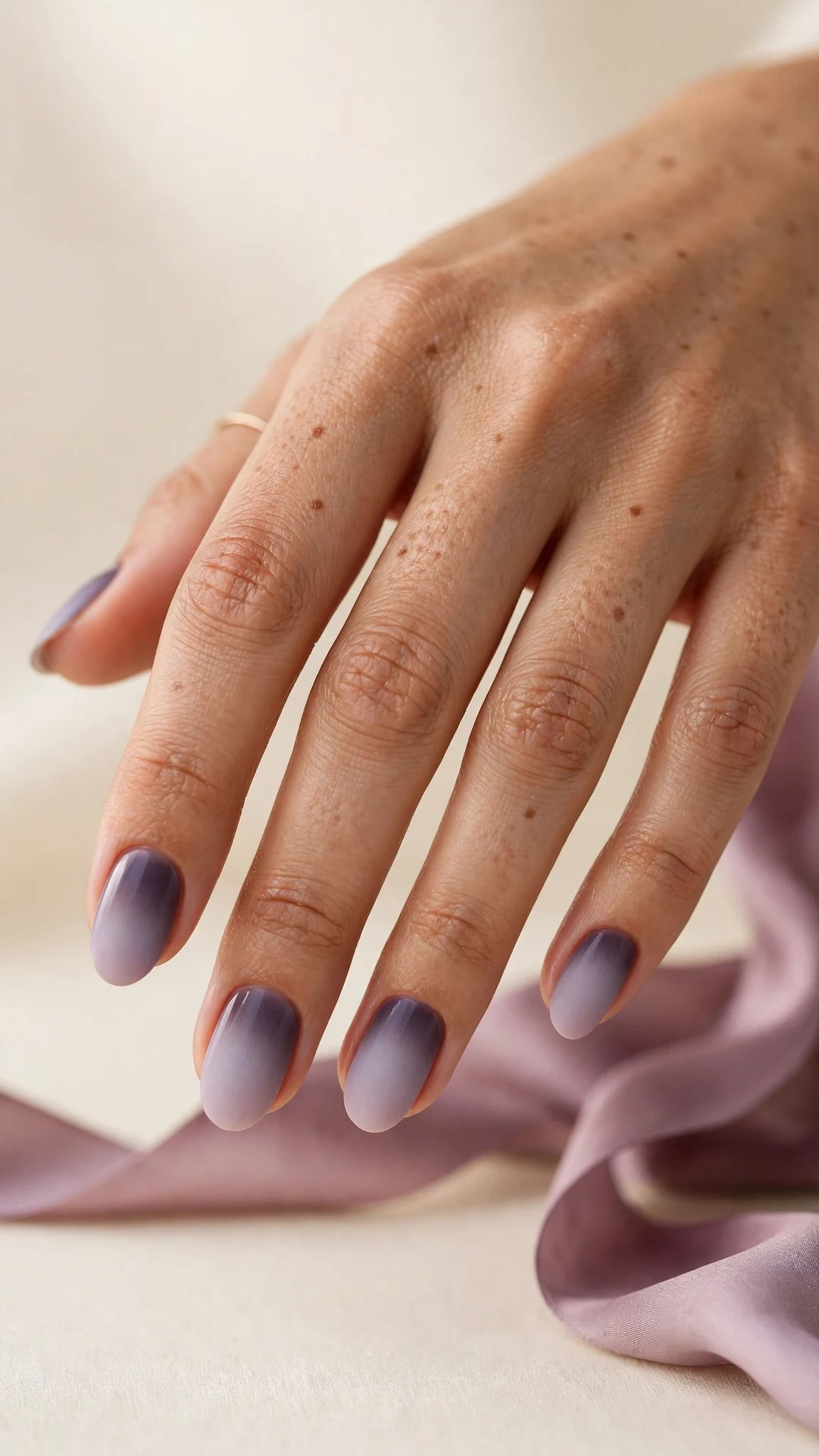
A matte gradient that smoulders: deep smoky lavender at the base dissolving into dusty pale lavender at the tips. The ombre hides the usual matte problem — flat colour over a long nail — by giving the eye a journey instead. Medium oval nails carry the fade gracefully. It is the moodiest design in this guide. Tip: blend the two mattes while both are wet, then apply the matte top coat only at the very end.
29. Lavender on Black

Glossy black nails with a single deep lavender chrome accent — the contrast makes both colours look richer. Black is the frame lavender rarely gets, and the single chrome nail keeps the set from going full gothic; it reads fashion, not costume. Medium almond nails balance the drama. Tip: keep the black to two thin coats so it cures fully and stays glossy, not rubbery.
30. Royal Lavender and Gold Lines
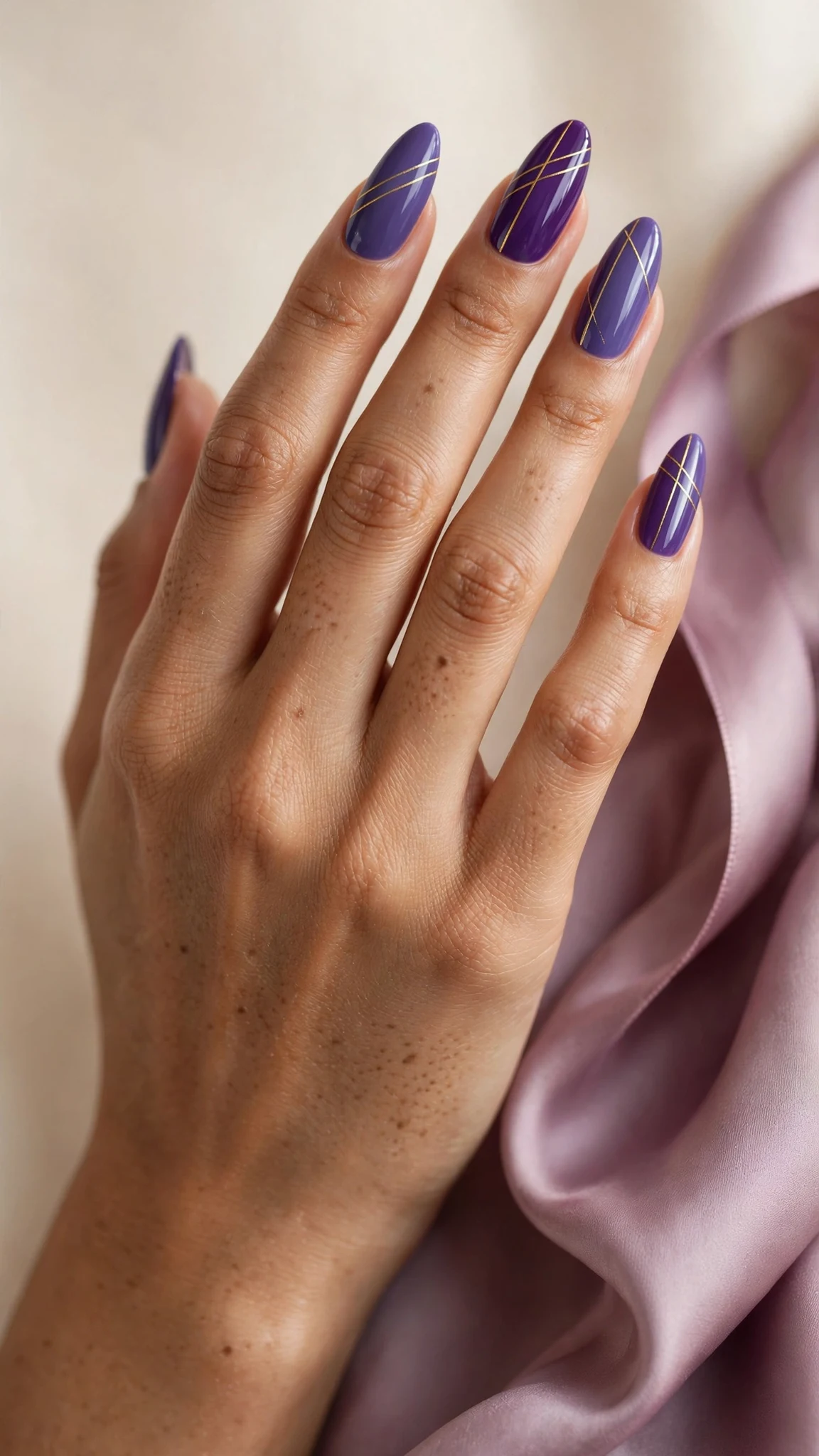
Deep royal lavender striped with fine hand-painted gold lines — the most regal design in this guide. Gold and purple have signalled luxury for centuries, and on long almond nails the fine lines look like jewellery etched onto the nail. Save it for the occasions that deserve it. Tip: paint the gold lines last, over the cured top coat, then add a final thin top layer only if your liner gel requires sealing.
How to Keep Lavender Nails Looking Fresh
Pastel and purple shades have one weakness: they fade and yellow faster than reds or nudes, mostly from UV light and household chemicals. According to the American Academy of Dermatology’s nail care guidance, keeping nails and cuticles moisturised and avoiding harsh contact are the foundations of a manicure that lasts — and that advice matters doubly for light colours, where every stain shows.
Three habits protect lavender in particular. Refresh your glossy top coat every three to four days to reseal the colour against sun and water. Wear gloves for cleaning and dishes, since detergents dull pastel finishes within a single wash. And store your lavender polishes upright in a drawer, not on a sunny shelf — the pigment starts fading in the bottle long before it reaches your nails. A quick note on choosing the polish itself: colour names are marketing, so open the bottle or check a swatch against daylight before buying. According to colour references on lavender as a colour, true lavender sits between violet and blue on the spectrum — if the swatch leans clearly blue, you are holding periwinkle, whatever the label says.
Final Thoughts
Lavender is the rare colour that can be a neutral, a pastel, a jewel and a mood depending only on the shade and finish you choose. Whether you landed on a milky pastel, a lavender French or the deep matte end of the family, the right lavender nails are the ones that make you keep looking at your hands. Start with your shade family from the guide above, pick the design that matches your week, and let the colour do the rest.
Frequently Asked Questions
Which lavender shade will suit my skin tone?
Start with undertone. Fair and cool-toned skin glows in pale and true lavender, which brighten without washing you out. Warm and olive skin wears lavender-grey and pearl-warmed lavenders best. Deep skin is lavender’s best canvas for contrast — deep and chrome lavenders look luminous rather than pale. If you are unsure, true lavender is the universal shade: it flatters almost everyone.
Are lavender nails only for spring?
Spring is lavender’s peak season, but the shade works all year if you choose the right depth and finish. Pale and milky lavenders belong to spring and summer. True lavender carries into early autumn with warmer outfits, and the deep, matte and chrome lavenders in this guide are made for winter evenings and party season. Think of lavender as a range, not a season.
What colours pair well with lavender nails?
Lavender is a friendly neighbour. It pairs cleanly with white, cream and soft grey for a minimal wardrobe, deepens beautifully against denim blue and sage green, and turns luxurious beside gold jewellery and warm metallics. For outfits, treat pale lavender like a neutral and deep lavender like a jewel tone — the same rules you would use for a purple handbag.
How do I stop lavender polish from fading or looking chalky?
Two things cause most fading: UV light and a tired top coat. Refresh a glossy top coat every three to four days to reseal the pigment, wear gloves for cleaning, and keep bottles stored away from sunlight. Chalkiness usually means the colour was applied over a dry, unbuffed nail or in coats that were too thick — a smooth base coat and thin layers fix it. A glossy finish also makes pale lavender look richer than a matte one.
What nail shape suits lavender nails best?
Almond and oval shapes are lavender’s natural partners — their soft curves match the colour’s softness, and they suit both the French designs and the shimmer finishes in this guide. Short square nails make pastel lavender look modern and crisp instead of sweet. Long coffin nails are the canvas for chrome, marble and the deep shades, where the extra length shows off the finish.
Can lavender nails work for the office or a wedding?
Yes — lavender is one of the few colours with options for both. For the office, choose pale lavender, lavender-grey or a micro French; they read as polished neutrals at meeting distance. For weddings, the milky lavenders, baby boomer fades and bow-and-pearl designs in this guide are made for it — soft enough for photographs, special enough to feel like an occasion manicure.
Compare Before You Choose
See the Closest Alternatives
Compare nearby shapes, colors and finishes before picking a final reference.
Recommended Next