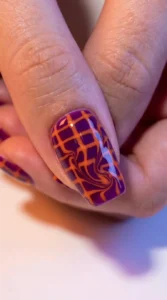
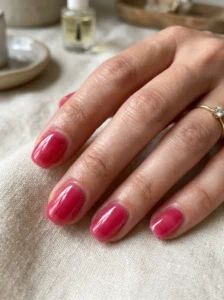
Bright, saturated color is one of the few nail trends that never fully goes away — it just alternates between two main forms. Rainbow nail designs lean into a full spectrum across the hand, while neon takes a narrower, higher-intensity approach with fewer but more electric shades. This guide covers both, since they’re often searched together but call for slightly different techniques.
Part 1: Rainbow Nail Designs
Planning a rainbow nail designs Set: Order Matters
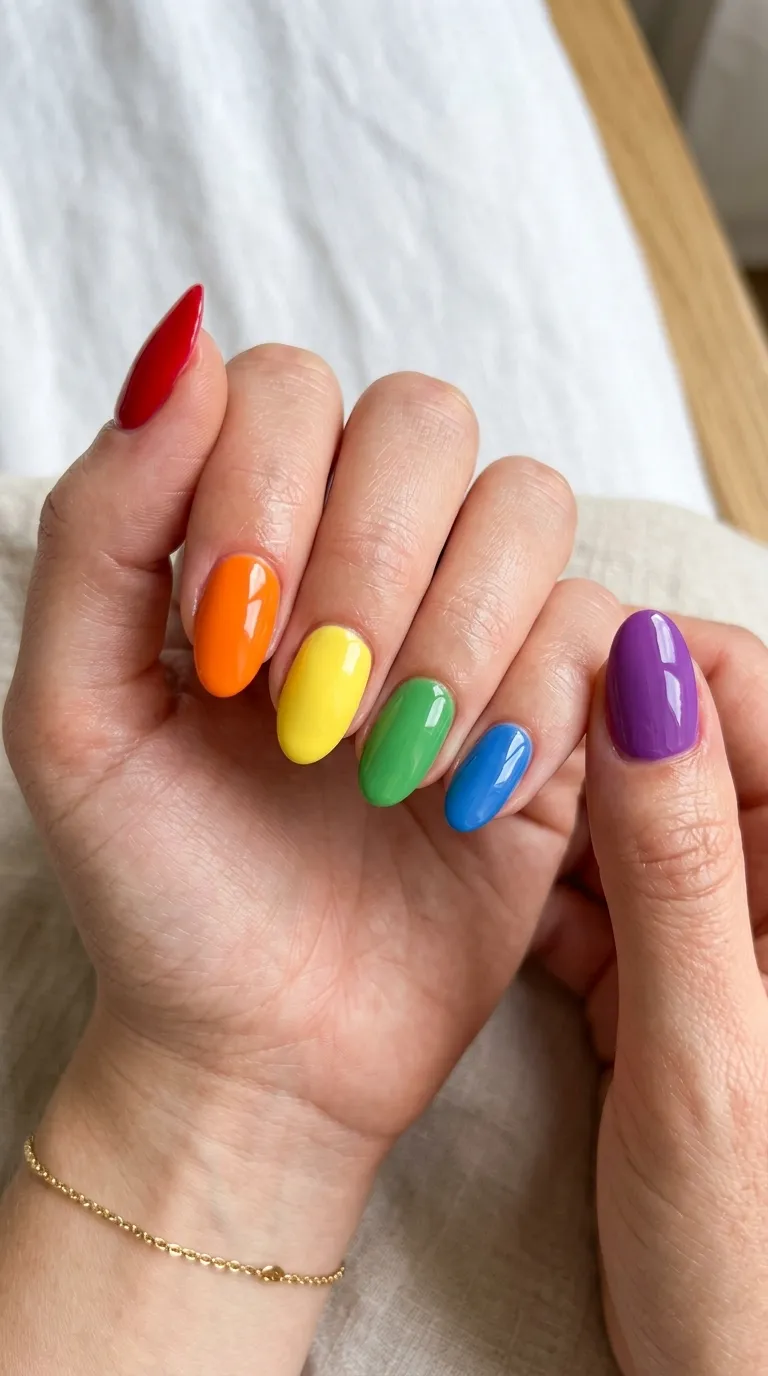
The most common approach to rainbow nail designs nail art is one solid color per nail, following spectrum order (red, orange, yellow, green, blue, purple) across the hand. This order isn’t just tradition — it reads as more intentional and put-together than randomizing colors, since the eye recognizes the sequence even at a glance. If you have ten nails and only six spectrum colors, repeating the sequence starting from the thumb again on the second hand keeps things balanced rather than doubling up unevenly.
rainbow nail designs Gradient vs. Block Color
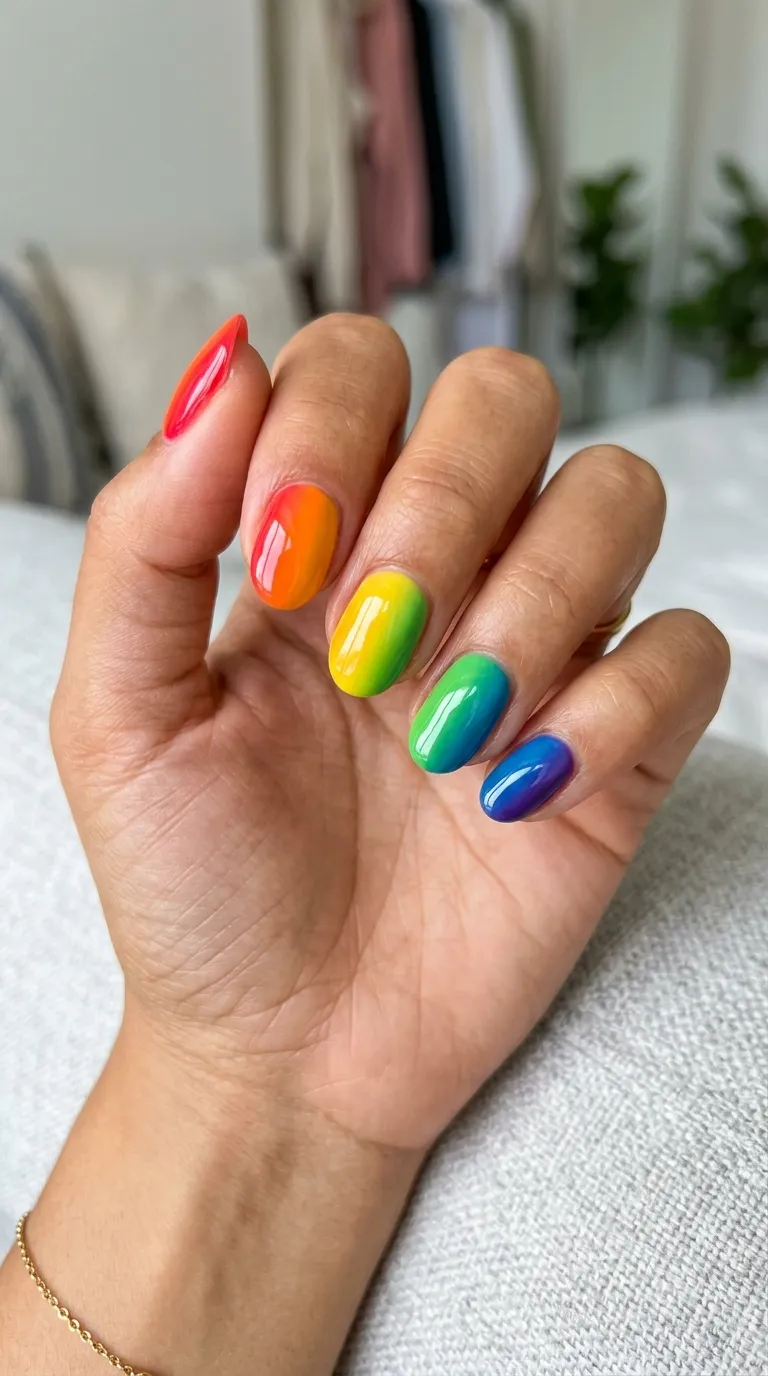
Beyond one-color-per-nail, rainbow nail designs can also be built as a gradient within a single nail — using the sponge technique from our how to do ombre nails guide with three or more colors instead of two. This version is more technically demanding since more colors need to blend cleanly, but it’s a striking option for an accent nail if a full ten-nail block-color rainbow feels like too much.
Pastel Rainbow vs. Bold Rainbow
Softer pastel versions of the rainbow — think dusty lilac, sage, and blush rather than pure spectrum shades — tend to read as more everyday-wearable, while fully saturated colors are the bolder, more statement-making version. Neither is more “correct”; pastel rainbow suits daytime and workplace settings better, while bold saturated rainbow is the stronger choice for events, festivals, or anywhere you want the manicure to be the focal point.

Part 2: Neon Nail Designs
What Makes a Color “Neon”
Neon polish differs from a bright standard shade in more than just intensity — it typically includes a fluorescent or UV-reactive pigment that makes it appear to glow slightly, especially under certain lighting. This is what separates true neon nail art from a merely bright pink or orange; a color that photographs “neon” in daylight but flat under indoor lighting usually isn’t a true neon formula.
Neon Works Best With Restraint
Unlike rainbow designs, which rely on variety, neon tends to work better with fewer colors at higher intensity — one or two neon shades across the full set, sometimes combined with a black or white base for contrast, reads as more deliberate than five different neon tones competing with each other. A single neon accent nail against an otherwise neutral or black set is one of the most wearable ways to use neon color without it overwhelming the whole hand.
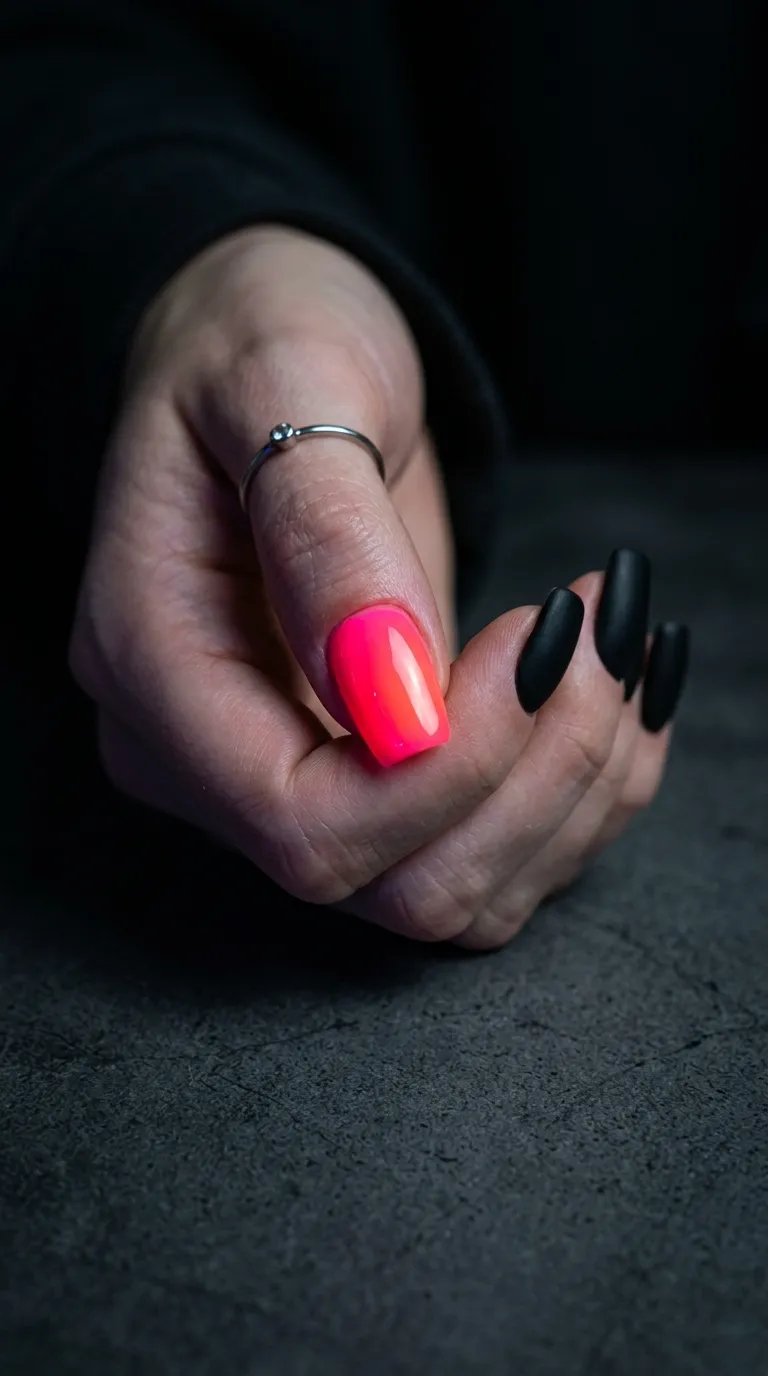
Getting Neon Opacity Right
Neon polish formulas are often more sheer than standard cream polish, meaning they can look patchy without proper prep. A white base coat underneath any neon color makes a significant difference — it gives the fluorescent pigment something opaque to sit on top of, resulting in a truer, more even color than applying neon directly over bare or naturally pink-toned nail.
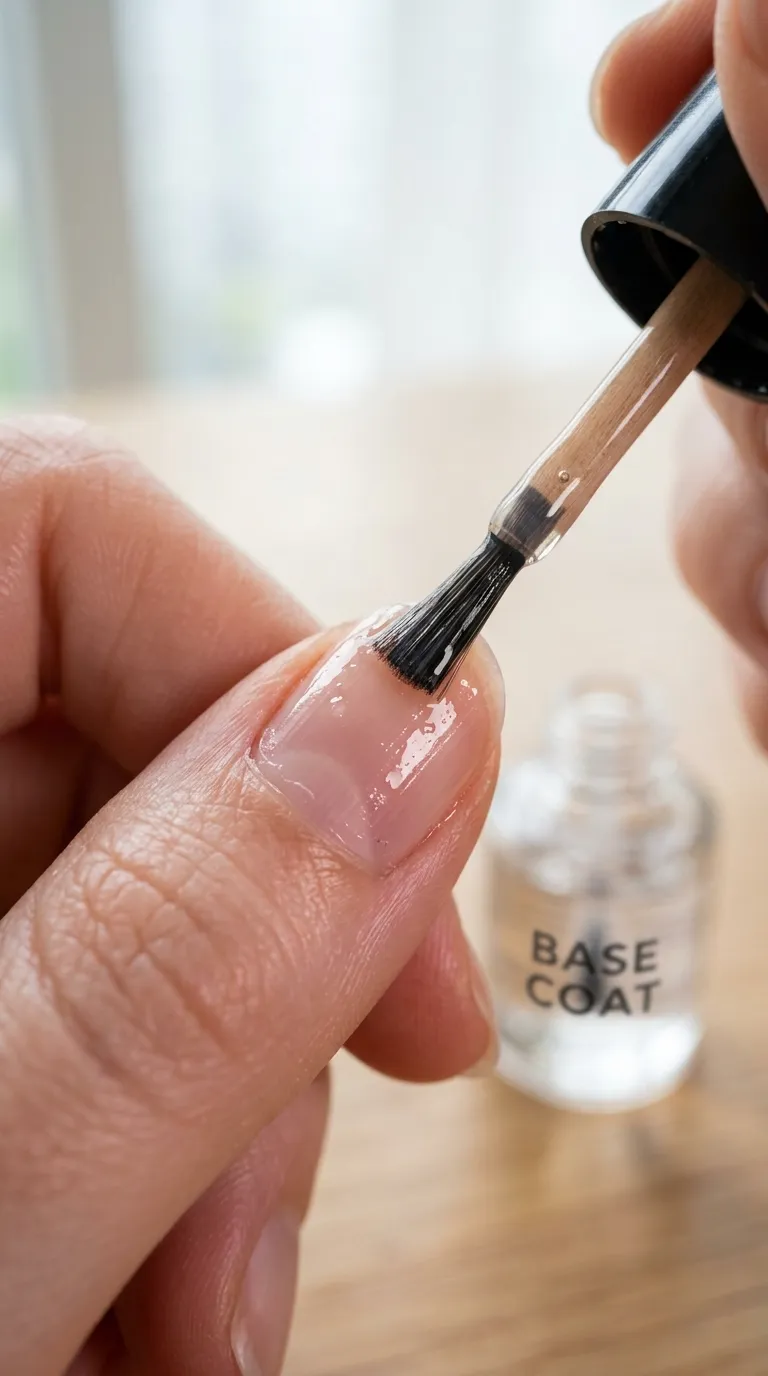
Combining Rainbow and Neon
These two styles do overlap well when done deliberately — a rainbow set using specifically neon-formula polishes for each spectrum color gives you the sequence of rainbow with the extra visual punch of neon’s glow effect. This combined approach tends to suit festival and summer settings particularly well, where maximum brightness and visibility are often the actual goal rather than a drawback.
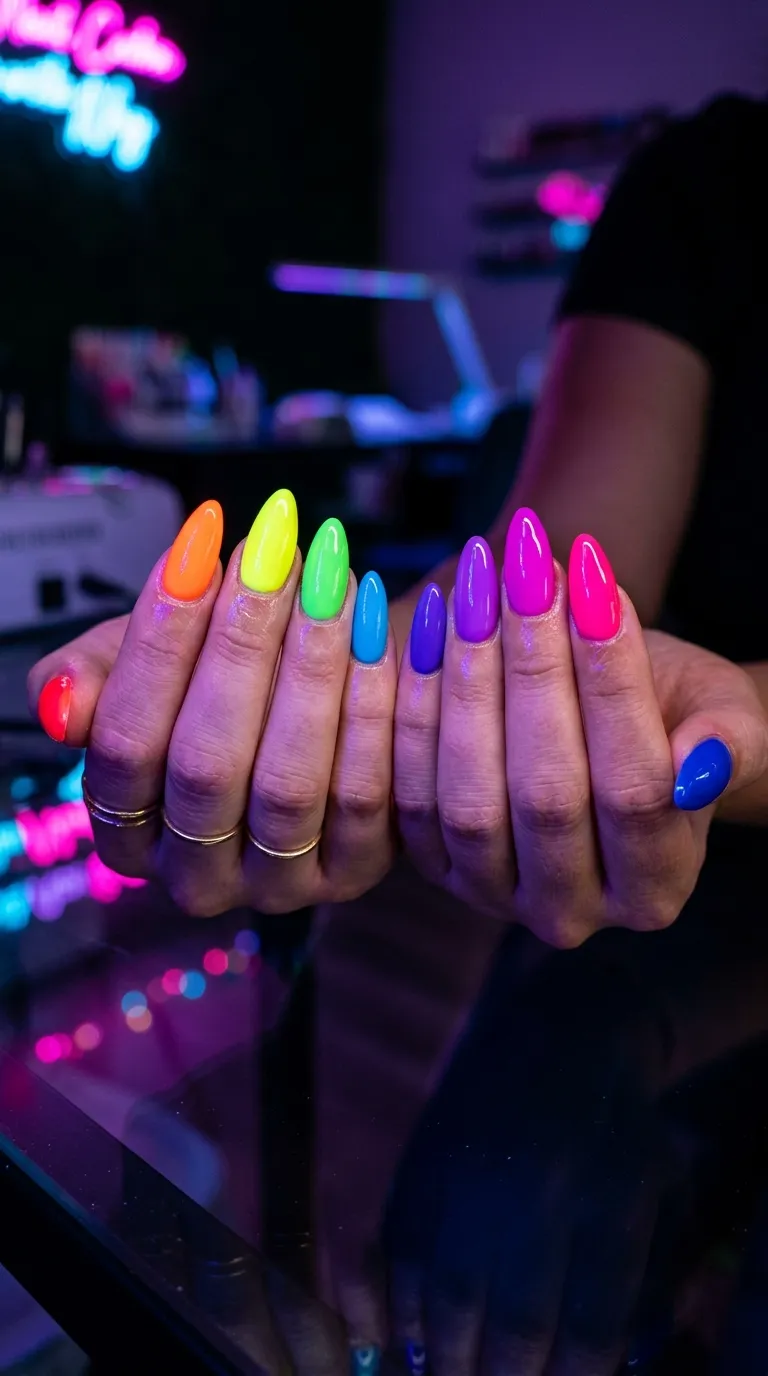
Shape and Finish Considerations
Both rainbow and neon designs tend to read best in a glossy finish rather than matte — the shine amplifies color saturation, which is part of the point with these bold palettes. Shape is more flexible than with the 90s or bling categories; rainbow and neon both work on short, medium, and long nails alike, since the color itself (not length-dependent detailing) is doing the visual work. If you’re working with a shorter length, see our best nail shapes for short nails guide for shape pairing.
Because bright, saturated pigments (especially reds and darker neons) can temporarily stain the natural nail more than paler shades, the American Academy of Dermatology recommends a ridge-filling or clear barrier base coat before applying any strongly pigmented polish, rainbow or neon included.
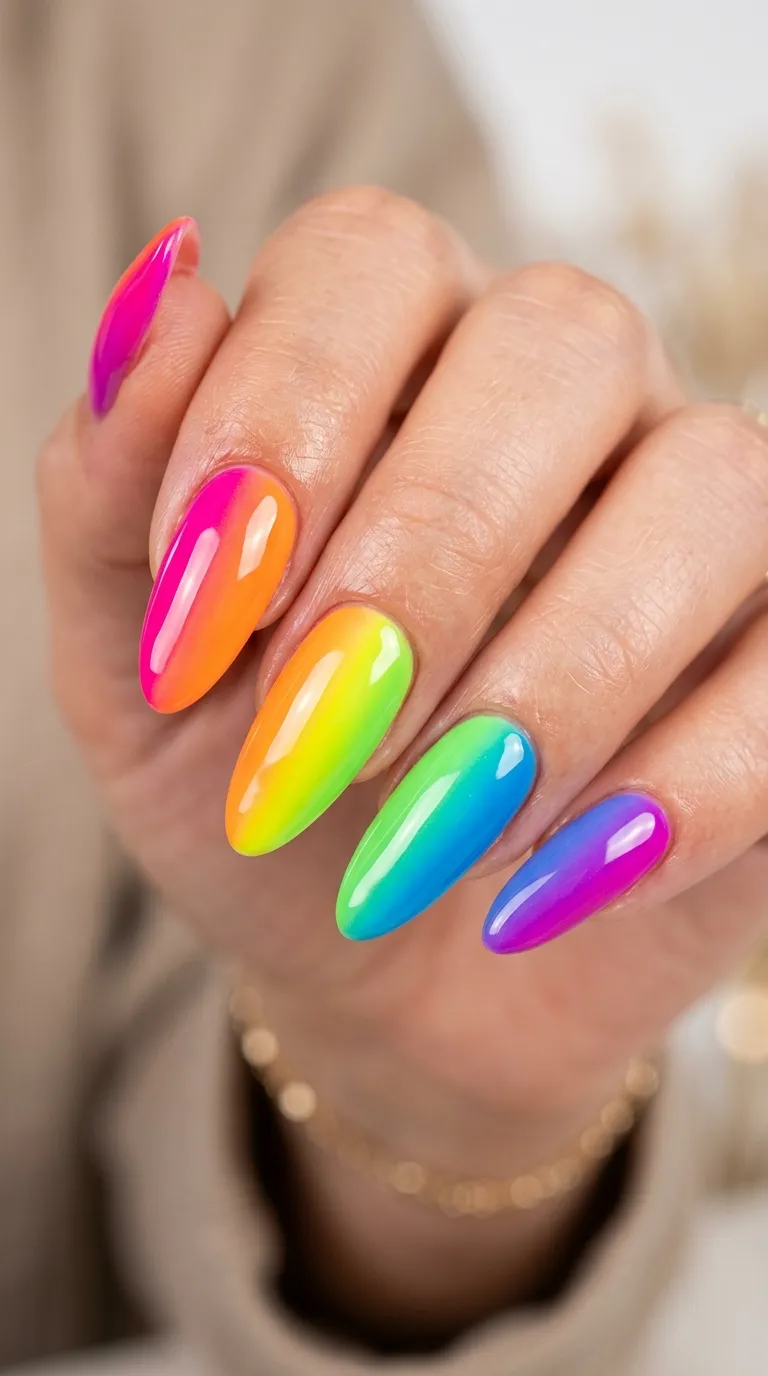
Choosing Between the Two for a First Try
If you’re deciding which of these two colorful nail designs directions to try first, it’s worth thinking about where you’ll actually wear the look. Rainbow nail designs, especially in a pastel version, tend to work across more everyday settings — they read as playful without being loud in most indoor or workplace environments. Neon, by contrast, is genuinely brighter and more attention-grabbing in person than it photographs, which makes it better suited to settings where standing out is the actual goal: outdoor events, festivals, or evenings out rather than a typical workday.
Longevity: What to Expect From Each Style
Neither rainbow nor neon polish wears differently from a standard manicure in terms of raw durability, but there’s one practical difference worth knowing. Neon formulas, because they’re often more sheer and applied in multiple thin coats to build opacity, can sometimes show tip wear slightly sooner than a fully opaque cream polish, simply because there’s less total pigment built up at the edge. A slightly thicker top coat, reapplied every few days, helps close that gap and keeps both rainbow and neon sets looking fresh for closer to the full two-week mark with gel, or the standard 5-7 days with regular polish.
Seasonal Timing for Both Trends
While neither rainbow nor neon is strictly tied to a season the way, say, a pumpkin-orange manicure is tied to fall, both do tend to peak at specific points in the year. Rainbow designs see the most search and styling interest around Pride month and summer generally, when brighter, more expressive color choices feel more in step with the season. Neon follows a similar pattern but leans even more heavily into summer and festival-season timing specifically, since the fluorescent effect is most visually rewarding in bright outdoor daylight and under UV or blacklight party lighting, both of which are more common in warmer months.
Product Notes: What to Look for When Buying
Not every “bright” polish on a shelf is a true neon formula, and not every multi-pack marketed as a “rainbow set” includes genuinely spectrum-accurate shades. When shopping specifically for rainbow nail designs, check the formula description for “neon” or “fluorescent” language rather than assuming a vividly colored bottle qualifies, and if buying a pre-selected rainbow set, lay the bottles out in the order you intend to apply them before starting — it’s much easier to catch a missing or duplicate shade before application than mid-manicure.
Frequently Asked Questions
What’s the difference between rainbow nails and neon nails?
Rainbow nail designs use a full spectrum of colors, typically one per nail, in spectrum order. Neon nail designs use fewer, more fluorescent-intensity shades, usually applied with more restraint (one or two colors, or a single accent nail) rather than a full multi-color sequence.
How do you make neon nail polish look more opaque?
Apply a white base coat before the neon color. Neon formulas are often semi-sheer, and a white base gives the pigment something opaque to sit on, producing truer, more even color. This is a great example of rainbow nail designs done well.
What order should rainbow nail colors go in?
Following the natural spectrum order — red, orange, yellow, green, blue, purple — from thumb to pinky reads as the most intentional and put-together, compared to randomly assigning colors. This is a great example of rainbow nail designs done well.
Do rainbow and neon nails work on short nails?
Yes — both styles rely on color rather than length-dependent detailing, so they translate well to short, medium, and long nails alike. This is a great example of rainbow nail designs done well.
What’s the easiest way to start with rainbow or neon nails?
A single accent nail is the lowest-commitment entry point for either style — one rainbow-gradient nail against an otherwise neutral set, or one neon nail against black, lets you test how the color reads on you before committing to a full ten-nail set.
Can I combine rainbow and neon in one set?
Yes, using neon-formula polish for each color in a rainbow sequence combines both effects — a full spectrum with the added brightness of fluorescent pigment. This combination is especially popular for summer and festival looks.
Does neon nail polish glow under blacklight?
Many neon formulas do have a visible reaction under blacklight or UV party lighting, though the effect varies by brand and pigment. If a true blacklight glow is the goal for a specific event, checking the product description for “UV-reactive” language is more reliable than assuming any bright polish will react the same way.
Removing Rainbow and Neon Polish Without Staining
Bright, heavily pigmented shades — reds, oranges, and true neons especially — are the most likely colors to leave a temporary yellow or orange stain on the natural nail if removed carelessly. Soak cotton pads in acetone, press them against each nail, and wrap in foil for 8-10 minutes rather than scrubbing the polish off dry, which spreads pigment into the nail plate instead of lifting it away cleanly. If staining does happen, it’s cosmetic and grows out with the nail rather than being permanent, but a base coat before your next rainbow or neon set will help prevent it from recurring.
Final Thoughts
Rainbow nail designs and neon nail art both reward a bit of planning — spectrum order for rainbow, restraint and a white base coat for neon — over grabbing whatever bright colors are on hand. Whichever direction you start with, the biggest lever for a polished result is opacity and finish, not the number of colors involved. For a gradient technique that works with either palette, see our how to do ombre nails guide.
Final Thoughts on Rainbow Nail Designs
Rainbow nail designs are one of the most versatile ways to wear color, whether you lean toward a soft pastel gradient or a full neon spectrum across all ten nails. The key with rainbow nail designs is balance: pick an order, a finish, and a shape that work together, and the result reads intentional rather than chaotic.
Allure and Marie Claire have both featured rainbow nail designs as a recurring seasonal trend, and WhoWhatWear recommends starting with a neutral base coat to keep bold colors from staining natural nails. For nail health while experimenting with rainbow nail designs, the American Academy of Dermatology advises giving nails breaks between multi-layer color applications.
Ready to try more color combinations? Check out our Bling Nail Designs guide for glitter accents that pair beautifully with rainbow nail designs, or browse our Ombre Nails article for a softer gradient take on the same color-blocking idea.
Compare Before You Choose
See the Closest Alternatives
Compare nearby shapes, colors and finishes before picking a final reference.
Recommended Next