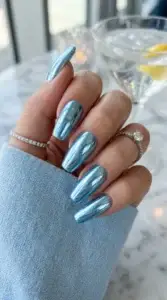
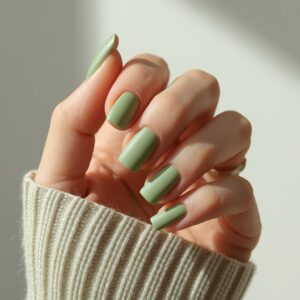
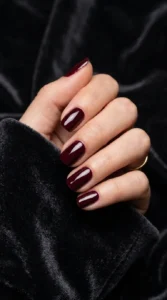
If you’ve ever filed your nails into a shape you saw on Pinterest and watched it look nothing like the photo, you’re not alone. The truth is, not every nail shape works on short nails — and the best nail shapes for short fingers aren’t always the trendiest ones. They’re the ones that actually match your nail bed, your finger width, and how you use your hands day to day.
This guide breaks down exactly which shapes flatter nails for short fingers, which ones to avoid, and how to figure out what’s right for your hands specifically — not just what’s popular this season. This is especially useful for nail shapes for short fingers.
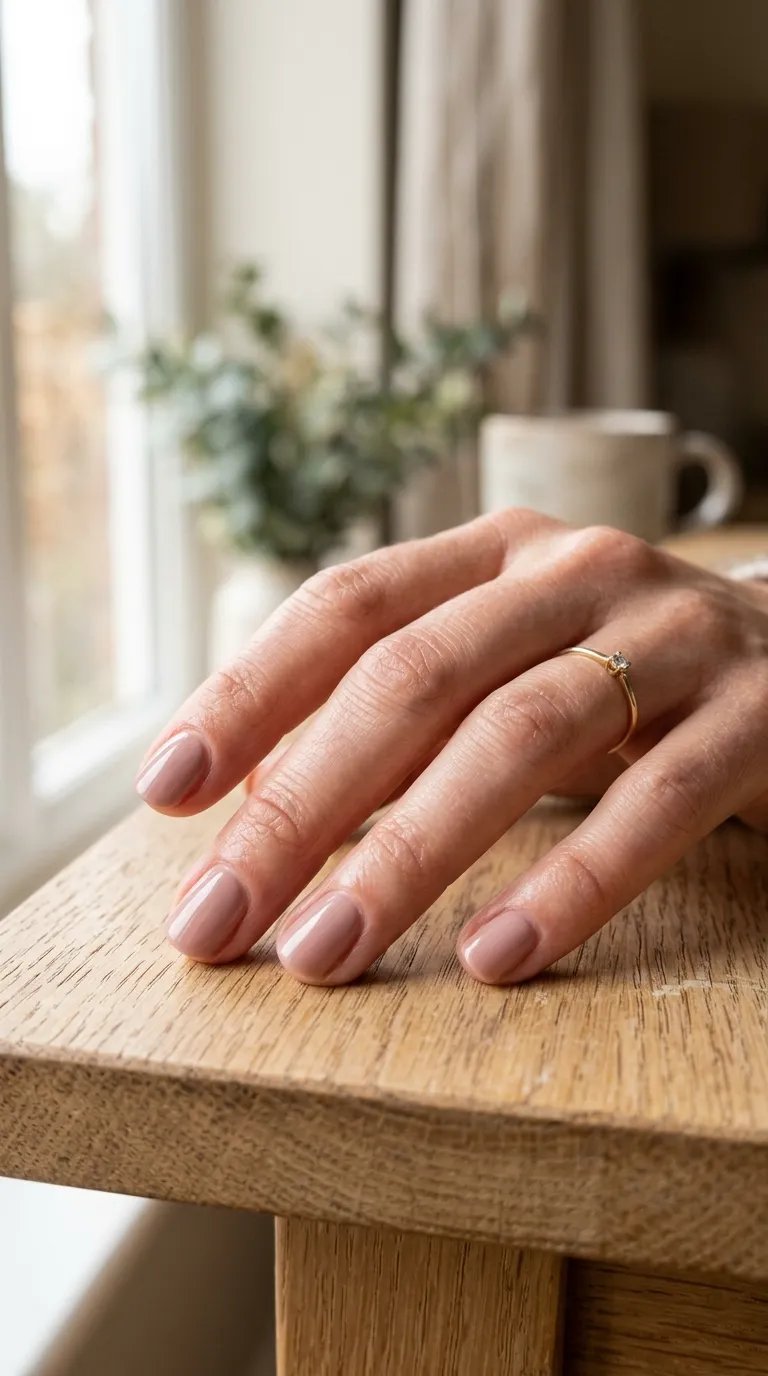
Why Nail Shape Matters More on Short Nails
On long nails, shape is mostly decorative — you’ve got length to work with, so even a shape that doesn’t suit your nail bed still reads as intentional. On short nails, shape does the heavy lifting. It’s the difference between nails that look polished and proportionate, and nails that look stubby or squared-off in a way that fights your finger shape. This is especially useful for nail shapes for short fingers.
Short nails also wear differently. They catch on things less, they’re more practical for typing, cooking, and everyday tasks, and they hold polish and gel longer because there’s less surface area to chip. Getting the shape right means you get all of that practicality without sacrificing the look. This is especially useful for nail shapes for short fingers.
Squoval: The Safest Bet for Most Short Nail Shapes
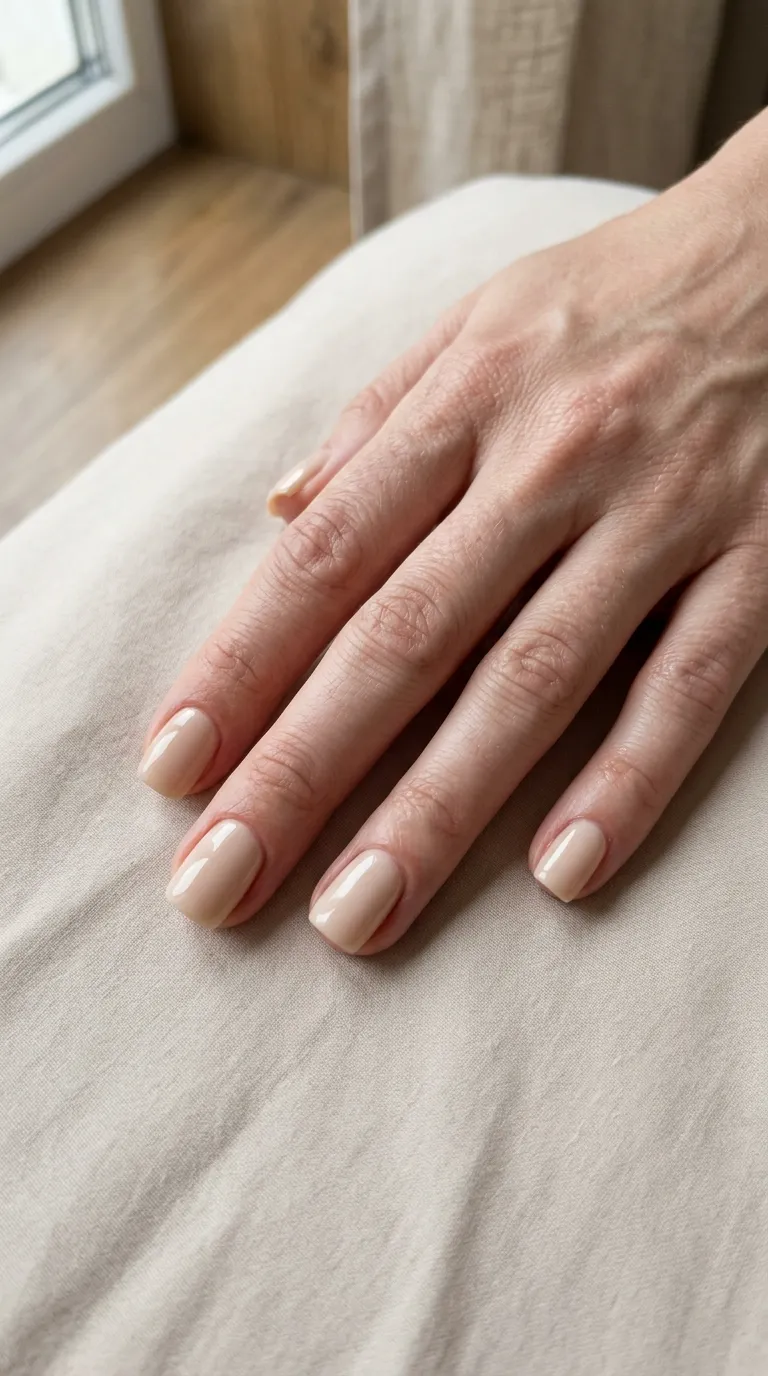
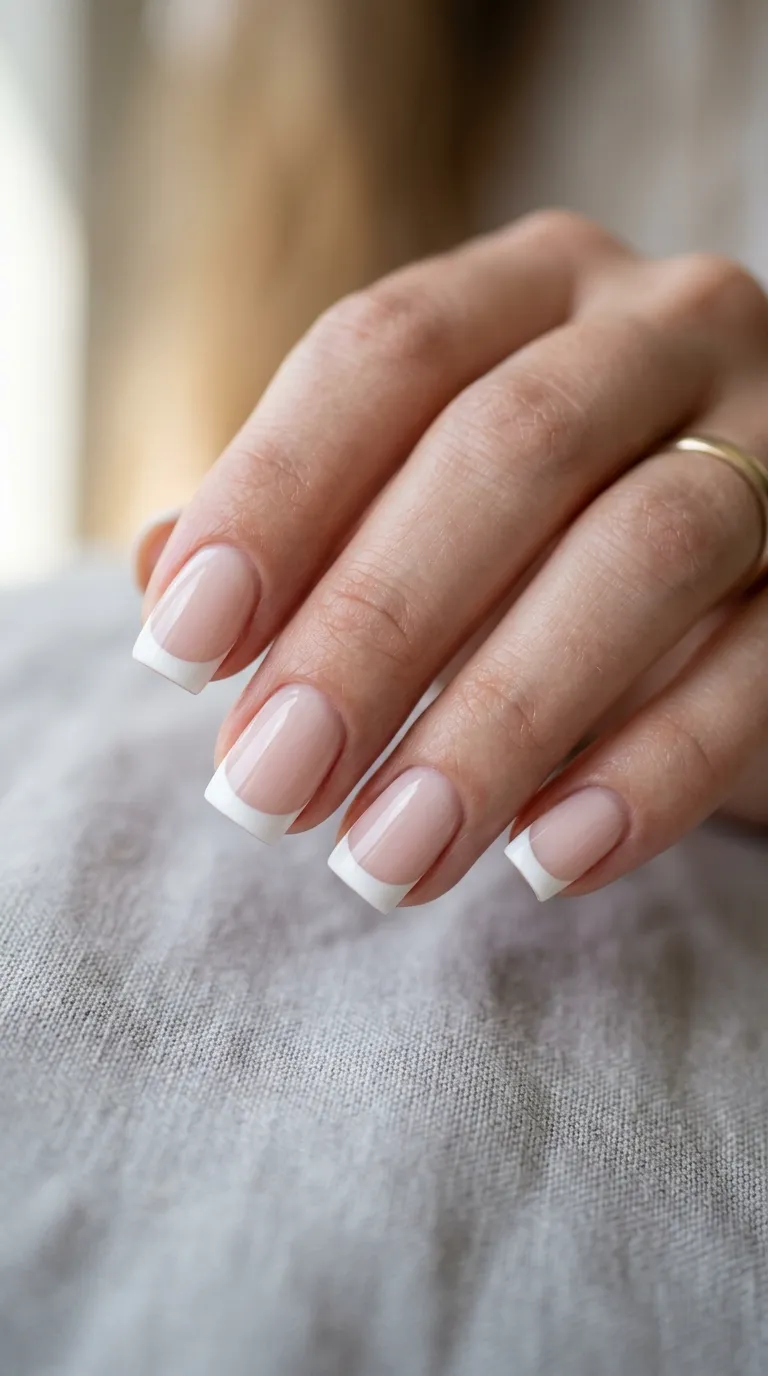
Squoval — a square nail with softened corners — is consistently the easiest of the nail shapes for short fingers to get right at home. The straight sides give short nails a bit of visual length, while the rounded corners keep the tip from looking harsh or boxy.
It works especially well if your nail bed is wide, because the straight sides visually narrow the nail. If you’ve struggled with square nails looking too blunt or too “office,” squoval softens that without losing the clean edge. This is especially useful for nail shapes for short fingers.
Round Nails: Best for Narrow Nail Beds
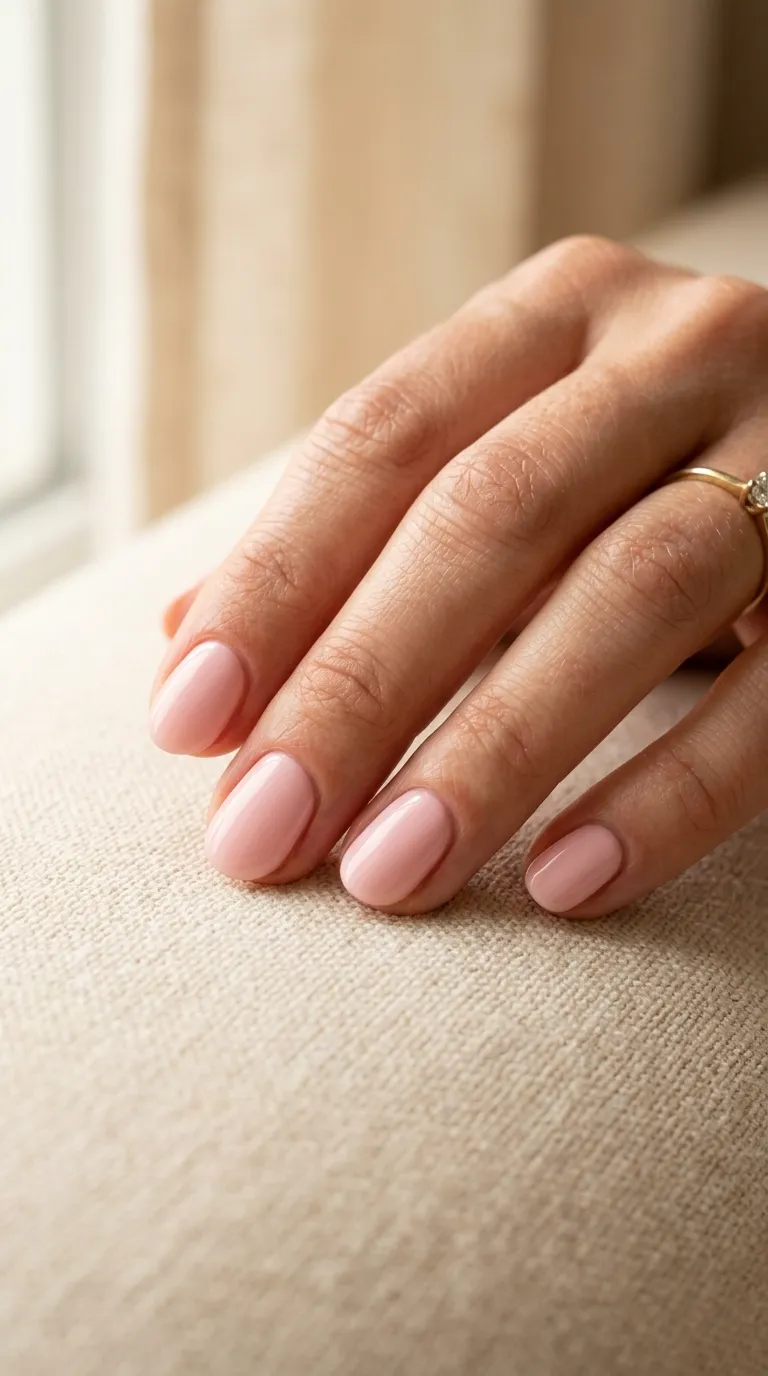
Round nails follow the natural curve of the fingertip, which makes them one of the most forgiving short fingernail shapes — they’re low-maintenance, grow out cleanly, and rarely snag. This shape is particularly good for narrow or slim nail beds, since the curve adds a bit of width perception rather than emphasizing narrowness the way a square edge can. This is especially useful for nail shapes for short fingers.
Round is also the shape most nail techs recommend if you’re prone to breakage, since there are no corners to catch and chip. This is especially useful for nail shapes for short fingers.
Oval: The Most Lengthening Short Nail Shape
If your priority is making short nails look longer without actually growing them out, oval is your answer. The tapered sides and rounded tip create an elongating effect that works on almost every nail bed shape, which is part of why “oval” comes up constantly when people search for the best nail shape for small nail beds.
The one caveat: oval needs slightly more nail length than round or squoval to look intentional rather than accidental. If your nails are extremely short (just past the fingertip), a soft oval rather than a dramatic one will look cleaner.
Short Square: Bold, But Only for the Right Nail Bed
Short square nails — flat tips with crisp corners — read modern and a little more editorial, but they’re the least forgiving of the shapes here. They tend to visually widen the nail, so they suit wide nail beds and shorter fingers well, but can make narrow nail beds look boxier than intended.
If you love the look of square nails but have a narrower nail bed, ask your nail tech for a “soft square” — the corners are filed down just slightly, keeping the structured look while avoiding the harshness of a true 90-degree corner.
How to Figure Out Your Nail Bed Type
Most guides tell you to pick a shape and move on, but the shape only works if it matches your actual nail bed. Here’s a quick way to check, using your short nail shapes chart mentally as you go:
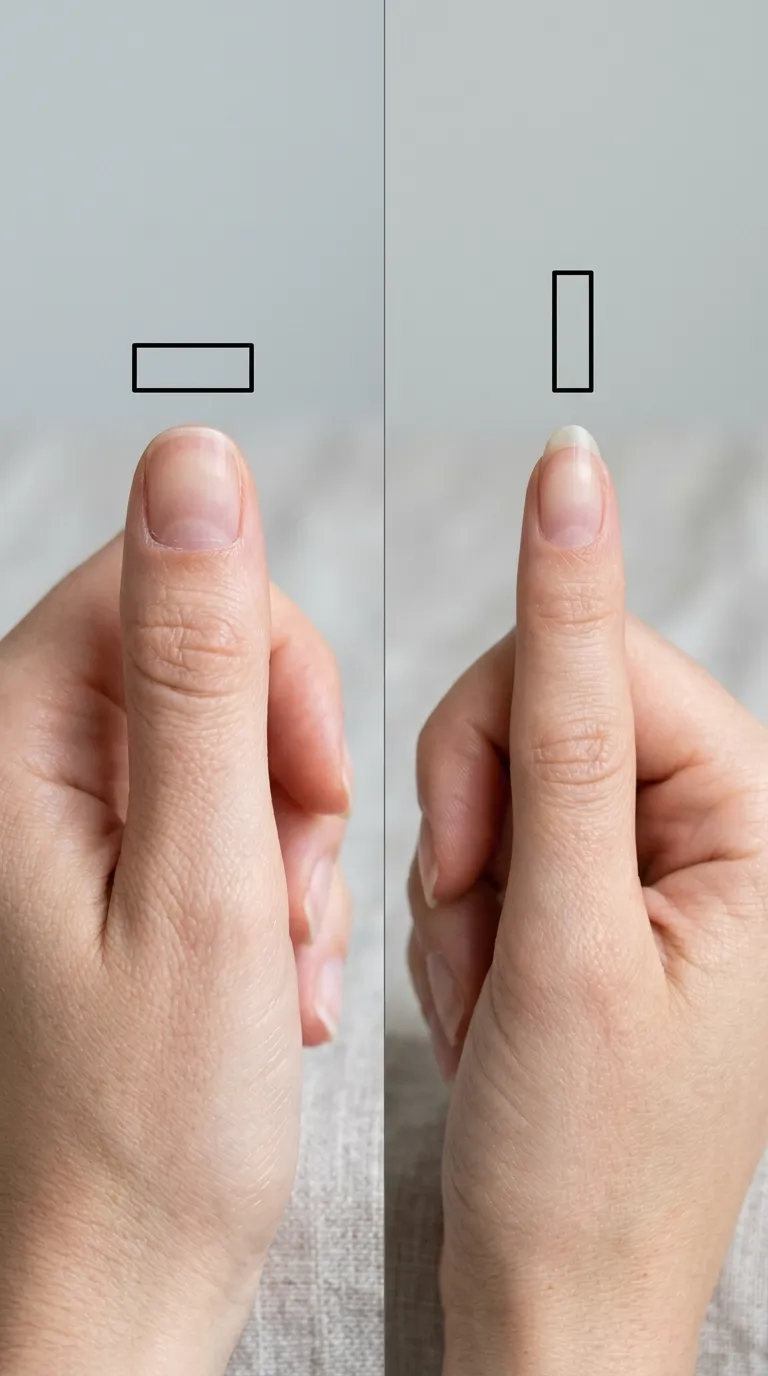
- Wide nail bed: the nail is noticeably wider than it is long, even at a healthy length. Squoval or oval will visually narrow it.
- Narrow nail bed: the nail looks long and slim relative to its width. Round or oval will add width perception; avoid sharp square corners.
- Short fingers, average nail bed: oval or soft square will elongate the finger overall, not just the nail.
- Flat or wide fingertip: squoval balances the fingertip shape better than a fully rounded or fully squared shape.
In my own experience filing my own nails at home for years before I ever paid for a set, the biggest mistake isn’t picking the “wrong” shape — it’s filing all ten nails to the same angle without checking that each finger’s nail bed is actually identical. They rarely are. Your thumb and pinky, in particular, often need a slightly softer curve than your index and middle fingers to look balanced.
Filing Tips to Get a Clean Shape at Home
When it comes to nail shapes for short fingers, technique matters as much as the shape itself:
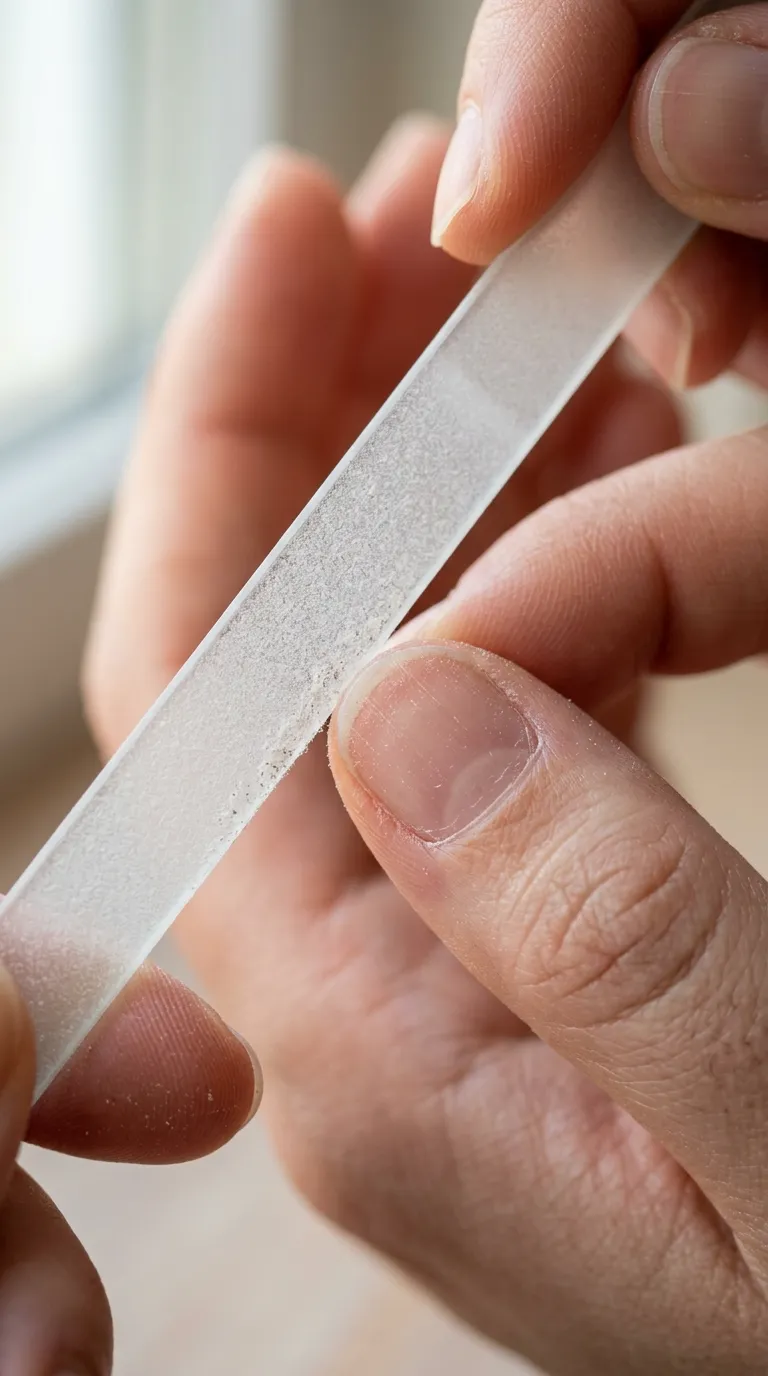
- File in one direction only — back-and-forth sawing weakens the nail edge and causes peeling.
- Use a glass or fine-grit file (180+) on natural nails; coarse files are only for gel or acrylic.
- Shape all ten nails to roughly the same length before refining the curve, so you’re comparing apples to apples.
- Check the shape from above (looking down at your nail) and from the side — a shape can look right from one angle and off from the other.
Pairing Shape With Color and Design
Once you’ve settled on one of the nail shapes for short fingers covered here, color and finish can reinforce or undercut it. Squoval and short square shapes tend to look sharpest in solid, saturated colors or clean French tips — the straight lines echo the shape. Round and oval nails have more freedom to carry softer looks like almond-adjacent designs or gradient finishes, since the natural curve already softens the overall look.
If you’re building a short-nail wardrobe for the season, our winter nail art guide and short stiletto nails guide both work from a similar short-length starting point, just with different shape philosophies — worth a look if you want to compare a rounder, everyday shape against something bolder.
According to the American Academy of Dermatology, keeping nails at a moderate length and filing in one direction are two of the simplest ways to prevent splitting and breakage regardless of the shape you choose — which matters more on short nails, since there’s less length to “grow out” a shaping mistake.
Shapes to Approach Carefully on Very Short Nails
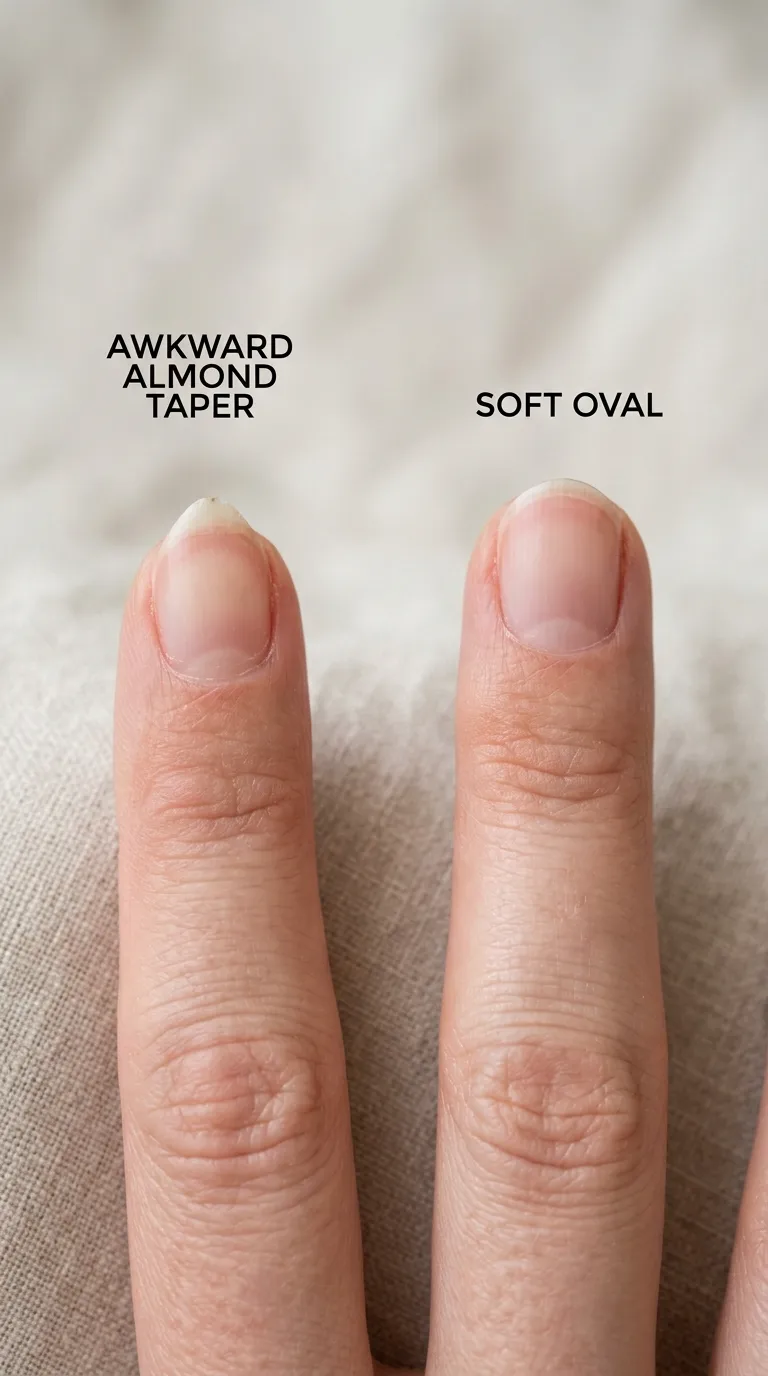
Among nail shapes for short fingers, two are genuinely harder to pull off well: almond and coffin. Both rely on tapering that needs a certain amount of length to read correctly — attempted on nails shorter than about a quarter-inch past the fingertip, they tend to collapse into a rounded or square shape anyway, just with extra filing effort for no visual payoff. If you love the almond look, it’s worth growing out slightly first, or exploring a soft oval as the closest short-nail equivalent.
Frequently Asked Questions
What is the best nail shape for short, wide nail beds?
For nail shapes for short fingers with a wide bed, squoval or oval both work well — the straight or tapered sides visually narrow a wide nail bed, while a fully rounded or square shape tends to emphasize the width instead.
Which short nail shape lasts the longest without chipping?
Among nail shapes for short fingers, round nails typically hold up best day-to-day since there are no corners to catch on fabric, keyboards, or bags — square and squoval corners are the first point of chipping and breakage.
Can I get almond nails if my nails are very short?
With nail shapes for short fingers, you can, but the tapering effect needs some length to read clearly. On very short nails, almond often ends up looking like a slightly softened oval — which isn’t a bad outcome, just worth knowing going in.
What’s the difference between squoval and short square?
Between these two popular nail shapes for short fingers, squoval has softened, rounded corners while short square keeps a crisp 90-degree corner. Squoval is more forgiving on most nail beds, while short square gives a bolder, more structured look best suited to wider nail beds.
How do I know my nail bed shape?
To pick the right nail shapes for short fingers, look at your nail with polish removed, from directly above: if it’s noticeably wider than it is long, you have a wide nail bed; if it looks long and slim even at a short length, it’s narrow. Compare your thumb and pinky separately — they’re often shaped differently from your other fingers.
What Nail Pros and Editors Say About Short Nail Shapes
The advice above matches what most working nail techs recommend, but it’s worth cross-checking against beauty editors who see hundreds of manicures a season. Byrdie has repeatedly pointed to squoval as the shape most salons default to for short-nail clients precisely because it’s the hardest to get visibly wrong, which lines up with why it’s the safest starting point if you’re unsure of your own nail bed shape. Allure‘s nail coverage has also noted that round and oval shapes tend to photograph better on shorter lengths than square shapes do, since the softer curve catches light more evenly across the nail plate — something worth keeping in mind if you’re shaping nails for photos or an event rather than everyday wear.
One thing that doesn’t get discussed enough: shape preference genuinely varies by hand size, not just nail bed width. WhoWhatWear has covered how a shape that reads as elegant on a longer, narrower hand can look disproportionate on a smaller hand, and vice versa — which is part of why copying a shape straight from a photo without accounting for your own hand size is one of the more common at-home filing mistakes.
Maintaining Your Shape Between Salon Visits
Short nail shapes need more frequent light touch-ups than long ones, simply because there’s less length for a growing-out edge to hide in. A quick weekly pass with a fine-grit file — just enough to knock down any unevenness at the tip, not a full reshape — keeps squoval, round, and oval shapes looking crisp between salon visits or full at-home sessions. Skipping this step is usually why a shape that looked great on day one starts looking slightly “off” by week two: it’s rarely the original shaping that was wrong, it’s just normal growth blurring the edge.
If you switch shapes often, keep a small note of which shape suited which nail bed type best for you personally. Nail bed proportions don’t change, so a shape that worked well for your hands six months ago will almost always still be the right starting point today, even if you’ve been experimenting with other looks in between.
Final Thoughts
The best nails for short fingers aren’t one-size-fits-all — they’re the shapes that work with your actual nail bed rather than against it. Start with squoval if you’re unsure, adjust based on how your fingers and nail beds actually look, and don’t be afraid to mix slightly different curves across your ten nails if that’s what looks balanced. For more short-length inspiration once you’ve settled on a shape, browse our short stiletto nails and almond shaped nails guides.
Final Advice on Nail Shapes for Short Fingers
Choosing the right nail shapes for short fingers comes down to elongating the finger visually rather than fighting its natural proportions. Almond and oval shapes remain the most flattering nail shapes for short fingers because they narrow toward the tip and draw the eye upward.
Allure and Byrdie both recommend keeping length moderate when choosing nail shapes for short fingers, since overly long extensions can look disproportionate. The American Academy of Dermatology also notes that shorter, well-shaped nails are generally healthier for the nail bed. For polish pairing ideas, Refinery29 has a great roundup of shades that complement these nail shapes for short fingers.
Once you’ve settled on the best nail shapes for short fingers, add some personality with our Bling Nail Designs guide, or keep it fresh and colorful with our Rainbow Nail Designs article.
Compare Before You Choose
See the Closest Alternatives
Compare nearby shapes, colors and finishes before picking a final reference.
Recommended Next