Tropicoqueta nails are what happens when two very different nail aesthetics crash into each other on purpose: the soft, girly bows and pastel restraint of coquette nail art, and the loud palm leaves, citrus colors, and tropical energy tied to Karol G’s music and style. The name itself is a mashup — “tropical” plus “coqueta,” the Spanish word for flirtatious or coquettish — and that mashup is exactly the point. Neither half waters the other down.
This guide covers what actually separates tropicoqueta nails from a generic tropical manicure or a plain coquette set, the color and motif combinations doing the most work in 2026, more than 20 specific ideas organized by technique, and secondary looks worth knowing if you land on one half of the trend but not the other — pure coquette or pure tropical.
Where the Tropicoqueta Trend Comes From
The word itself is a fan-coined mashup, not an official industry term, which is part of why it spreads faster on TikTok and Pinterest than through salon marketing — much like coquette as a broader style movement, the nail trend borrowed an existing word and reshaped its meaning for a new visual context. Karol G’s visual identity mixes bright, tropical Latin-pop imagery with playful, hyper-feminine styling, and that combination is what nail artists started translating directly onto nails — tropical color and botanical motifs on one hand, coquette softness (bows, pastels, ribbon detailing) on the other. Coquette nail art itself was already an established, separate trend before this crossover happened, built around delicate French tips, tiny 3D bow charms, and a deliberately restrained, girlish palette. Tropicoqueta nails essentially took that existing coquette nail art format and gave it a tropical, concert-ready color injection, which is why the strongest examples of the style tend to show up around music festival season and summer vacation planning at the same time.
What Makes a Manicure “Tropicoqueta” Instead of Just Tropical
A tropical manicure on its own usually means palm trees, hibiscus, and saturated color covering most or all of the nail. Coquette nail art, by contrast, leans pastel, bow-heavy, and deliberately soft — pink French tips, tiny satin bow charms, a restrained one-or-two-accent approach. Tropicoqueta nails borrow the bold botanical color story from the tropical side and the bow charms, delicate linework, and playful femininity from the coquette side, usually landing somewhere in between: bright but not overwhelming, girly but not muted into beige.
The easiest way to spot a true tropicoqueta set versus a set that’s just “tropical with a bow slapped on” is proportion. The strongest versions treat the bow or coquette element as a genuine design choice — placed at the cuticle, rendered in 3D gel, or paired with a ribbon motif — rather than a single glued-on charm competing with a busy tropical background.
Color Palette and Recurring Motifs
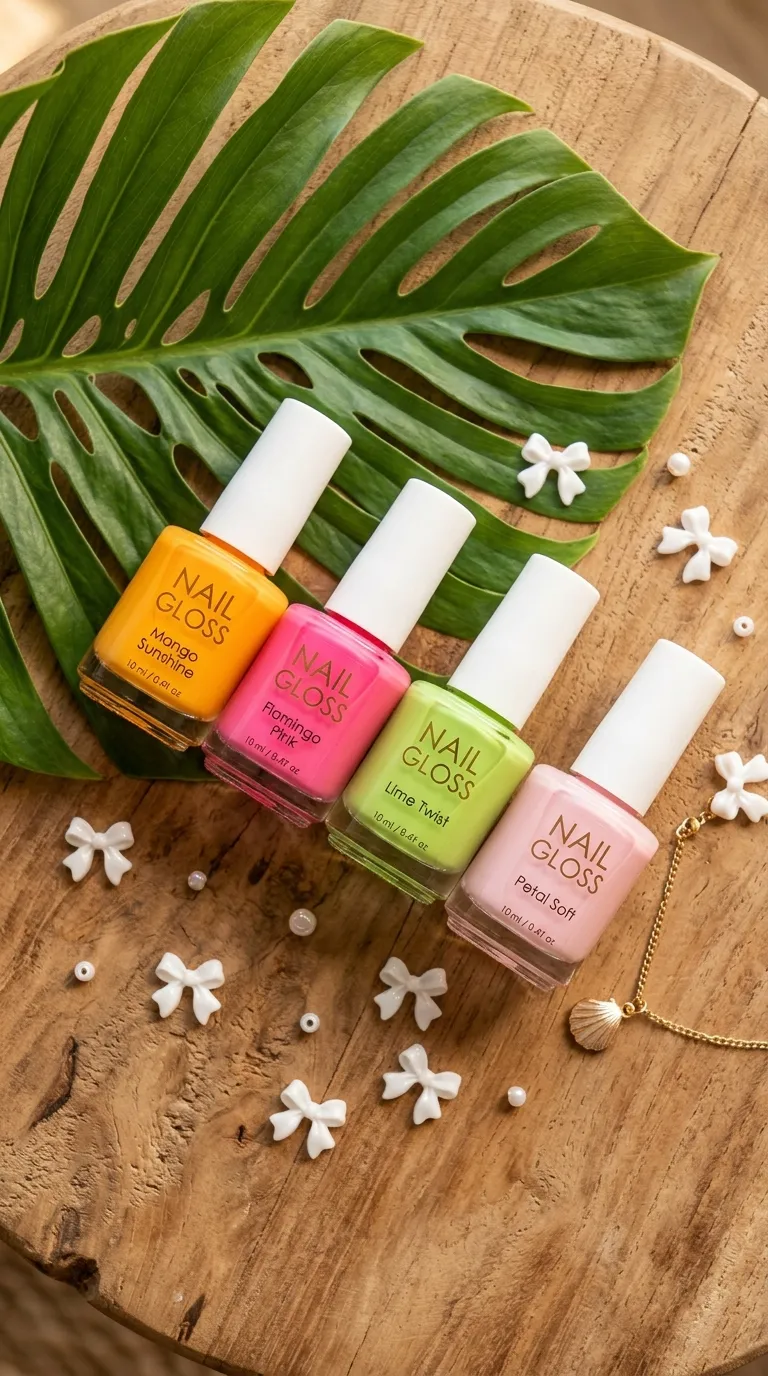
Citrus and hibiscus brights — mango orange, hot pink, and lime green pulled straight from tropical florals, usually as the base or a large accent rather than an all-over color. Our Chartreuse Green Nails 2026 guide covers the exact loud-green shade that shows up constantly in this trend.
Pastel coquette base — soft pink, cream, or butter tones that let the bow and floral accents do the loud work. Butter Yellow Nails 2026 is the closest single-color match if you want the pastel half without committing to the full tropical mix.
3D bow charms — the coquette signature, usually placed at the cuticle in matte or satin-finish gel, in white, pink, or a color pulled from the tropical palette. Our dedicated 3D Bow French Tip Nails 2026 guide goes deep on this exact charm technique.
Palm and hibiscus linework — hand-painted or stamped botanical shapes, usually confined to one or two accent nails rather than the whole set, keeping the coquette restraint intact.
Choosing the Right Shape and Length
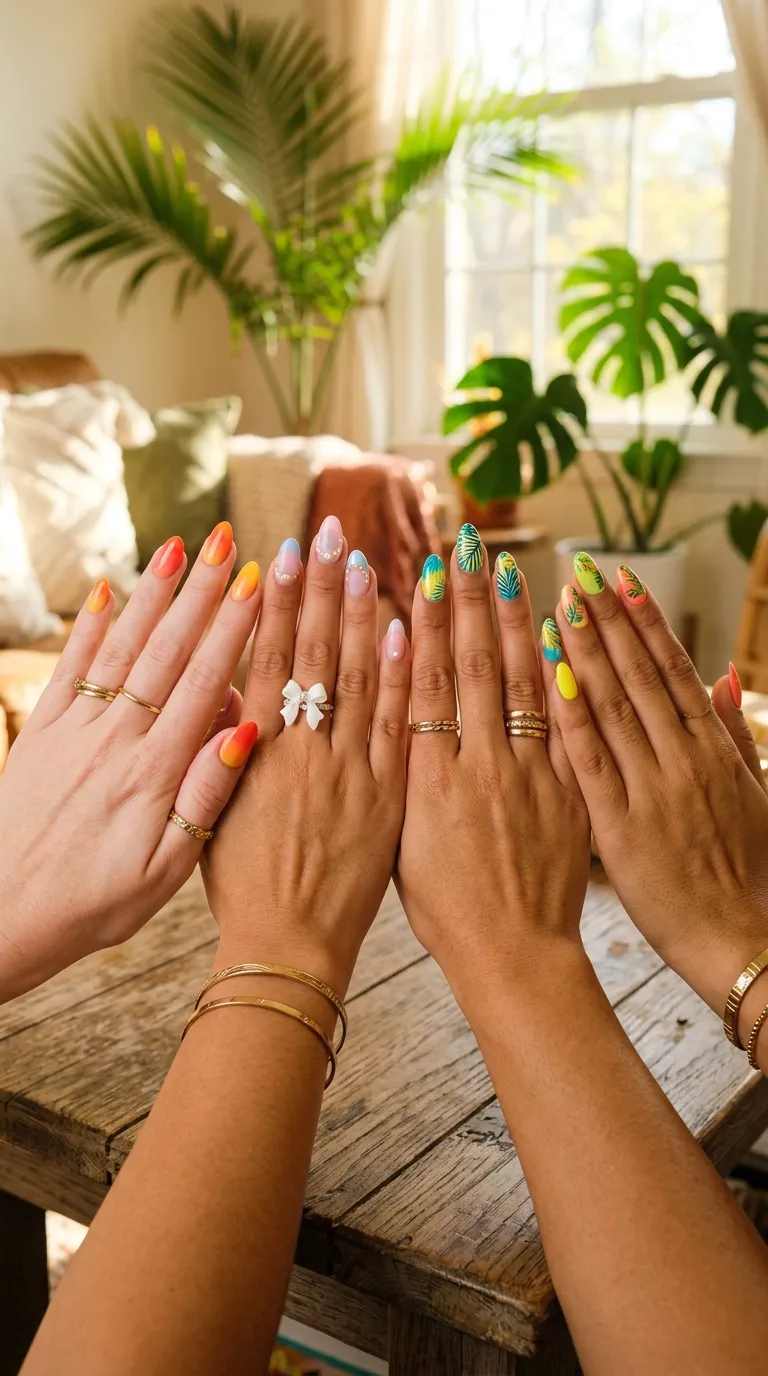
Almond and coffin shapes give both halves of this trend room to breathe — enough flat surface for a hand-painted hibiscus and enough length for a 3D bow to sit properly at the cuticle without looking cramped. Shorter square or round shapes still work, especially for the more restrained secondary looks below, but tend to suit the pastel-forward versions better than the busiest tropical mixes. If you’re deciding on shape for a warm-weather event, Vacation Nails 2026 has a broader durability comparison across shapes and lengths.
Length also affects how the bow charm sits. On very short nails, a 3D bow can end up covering most of the visible nail bed, which reads as heavy rather than delicate — sizing down to a flatter ribbon detail (see idea fifteen below) usually looks more balanced than forcing a full-size charm onto limited space. On longer coffin or stiletto shapes, the opposite risk applies: a single small bow can look lost, so pairing it with a second, smaller motif nearby helps fill the extra length without adding visual noise.
Common Mistakes to Avoid
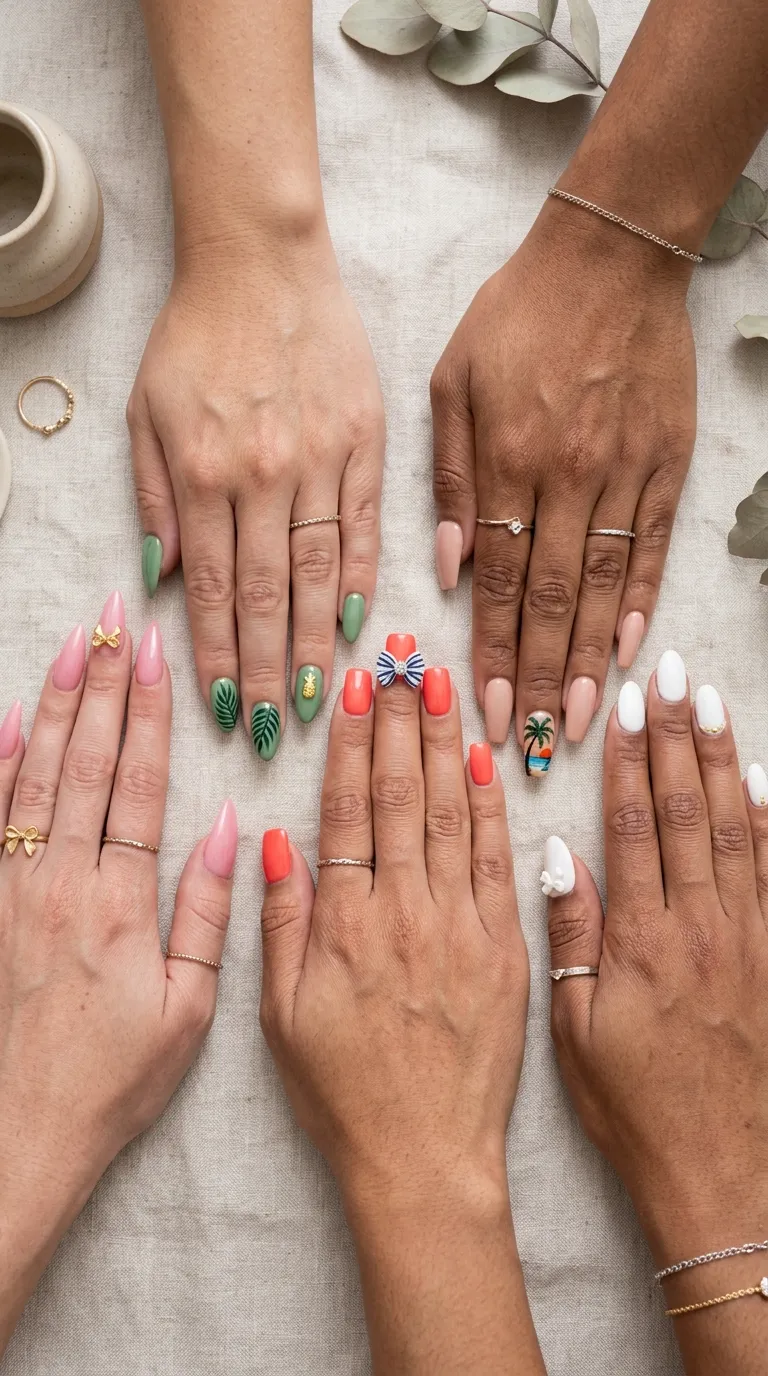
The most common misstep is letting the tropical half completely take over — five bright colors, three motifs, and a bow charm crammed on top reads as cluttered rather than intentional. The strongest tropicoqueta nails ideas pick one tropical element (a color fade, a single hibiscus, a citrus color block) and one coquette element (a bow, a ribbon line, pastel restraint) rather than stacking several of each. The second mistake is treating the bow charm as an afterthought rather than a design choice — a charm that’s obviously glued on as a last step, off-center or floating in empty space, undercuts the coquette half of the look far more than skipping it entirely would.
What It Costs and How to Ask For It at the Salon
Most versions of this trend fall into gel manicure pricing with a nail art surcharge, since the technique nearly always involves at least one hand-painted or 3D element rather than a flat single color. 3D bow charms typically add a small per-nail charge on top of a standard set; hand-painted florals and fine linework cost more if they’re covering a full accent nail rather than a small detail. When booking, naming the two halves separately tends to get better results than saying “tropicoqueta nails” alone, since not every nail artist will recognize the fan-coined term yet — try “tropical accent nail with a 3D bow charm” or “citrus ombré with a coquette bow” instead. Bringing a reference photo matters more here than with most single-technique manicures, precisely because the trend name isn’t standardized yet and different artists may picture different color balances when they hear it.
20+ Tropicoqueta Nails Ideas by Technique
1. Bow-and-Hibiscus Accent
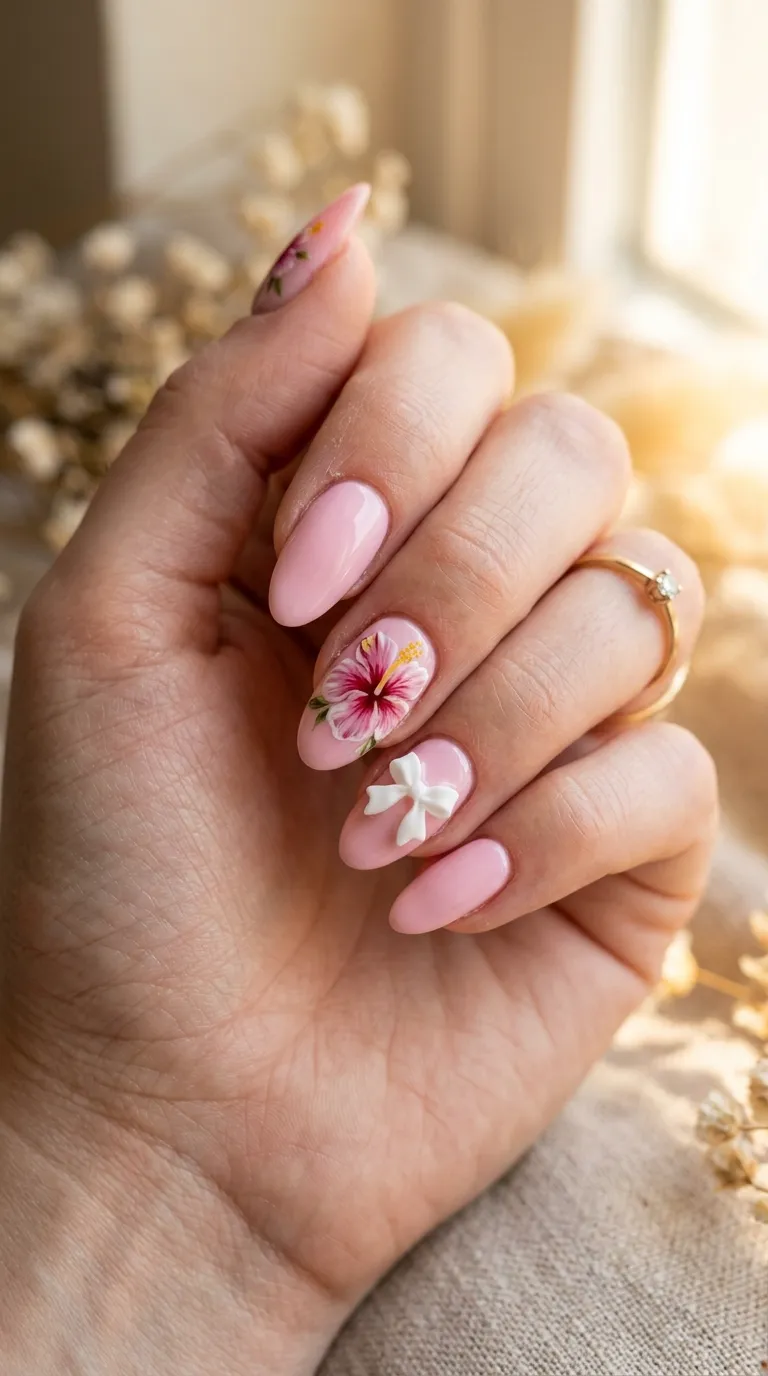
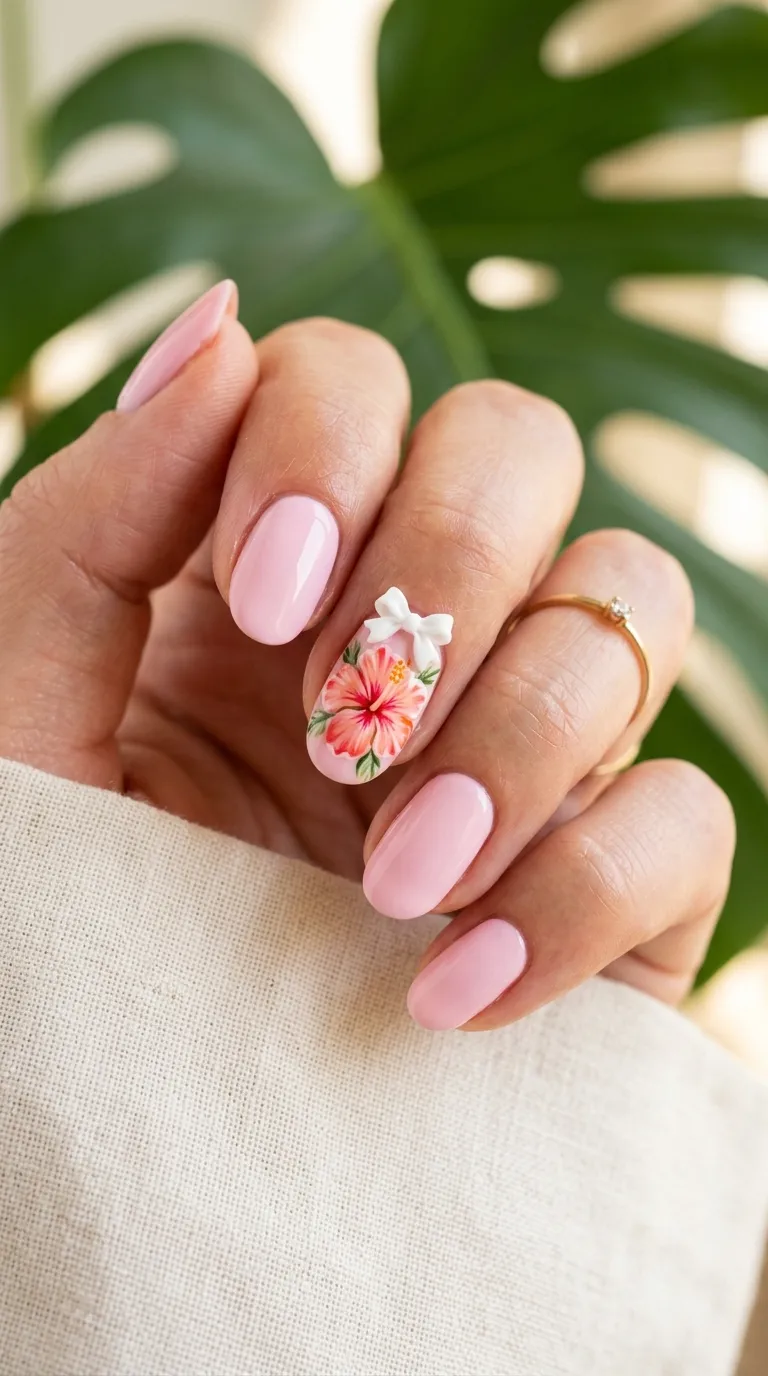
A pastel pink base across most nails, with one accent nail carrying a hand-painted hibiscus and a tiny 3D bow at the cuticle. This is the clearest one-nail summary of the whole trend. It’s one of the most requested tropicoqueta nails looks this season.
2. Citrus Ombré with Satin Bow
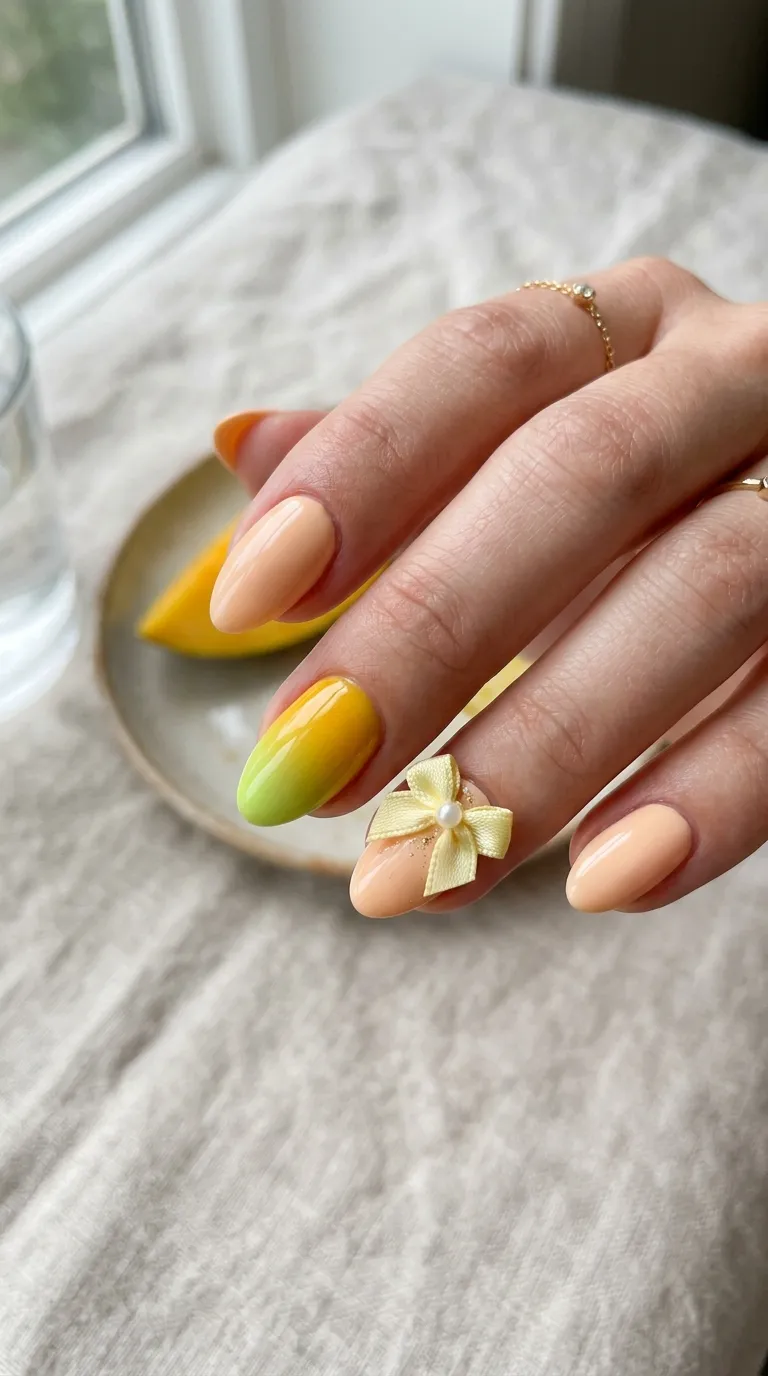
A mango-to-lime vertical fade on one or two nails, paired with a plain pastel base on the rest and a single satin bow charm. The ombré carries the tropical half; the bow carries the coquette half. This tropicoqueta nails idea works well for a first salon visit.
3. Palm Leaf French Tip
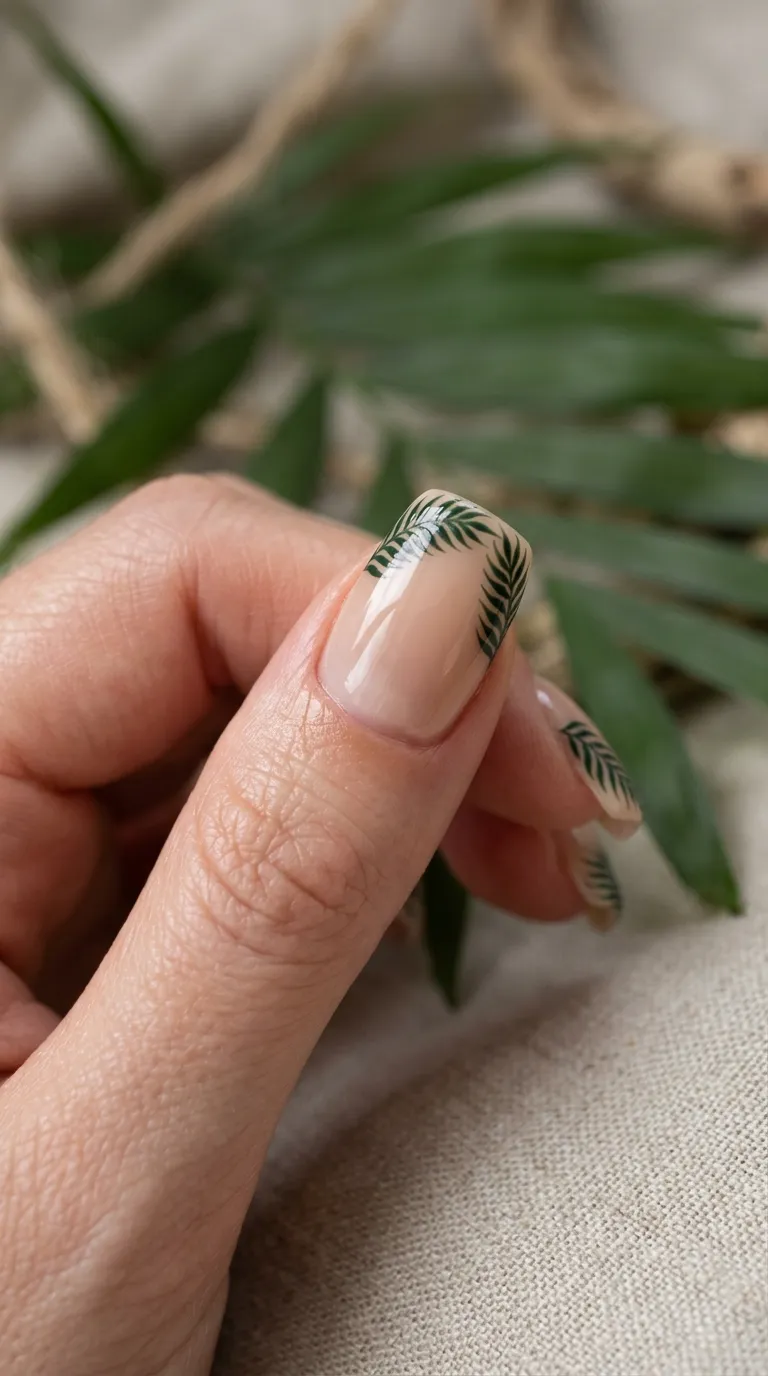
A classic French manicure where the white tip is replaced by tiny hand-painted palm fronds in deep green, kept thin enough that the look still reads as a French rather than a full tropical set. Many clients ask for this exact tropicoqueta nails combination.
4. Pink Chrome with Tropical Decal
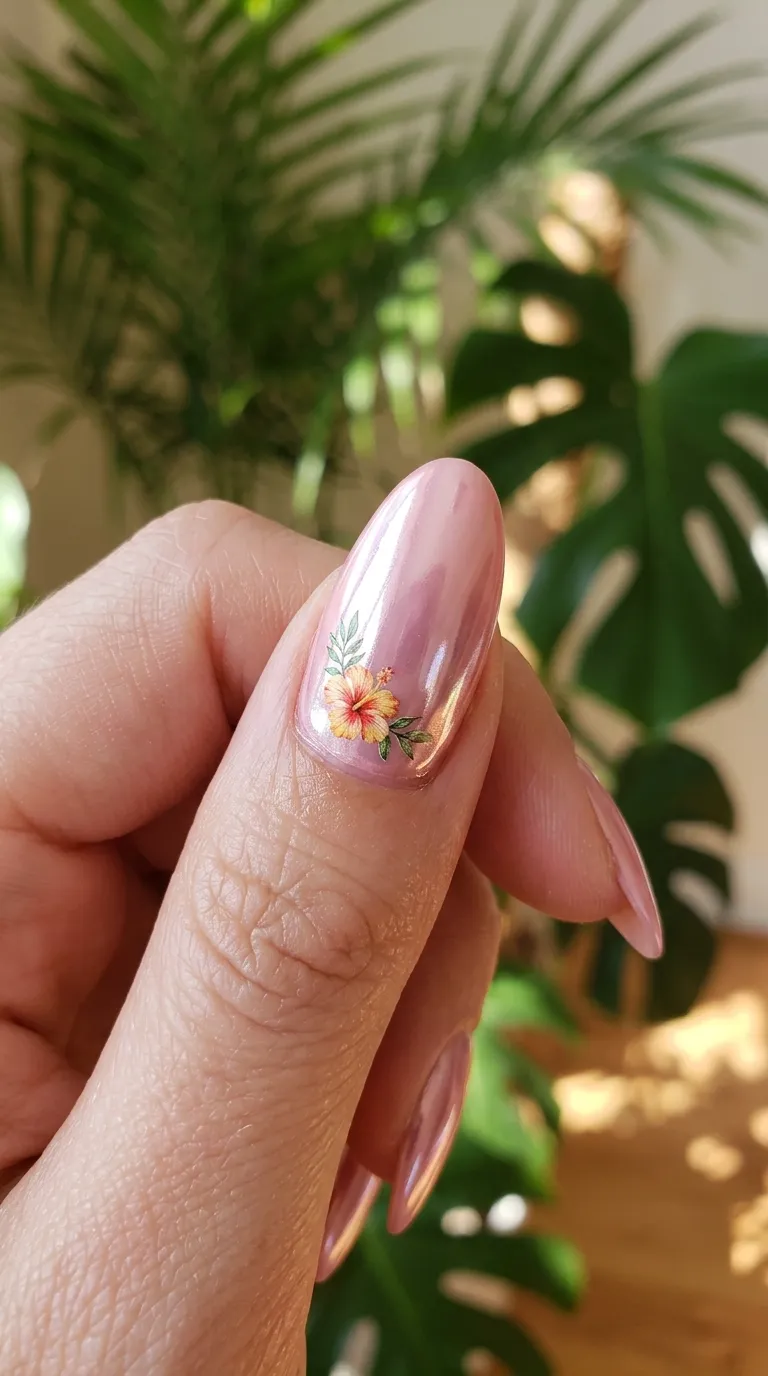
A soft pink chrome base finished with a small tropical flower water-decal on one accent nail, giving the metallic coquette shine without losing the botanical motif. It’s a low-maintenance tropicoqueta nails option for everyday wear.
5. Mango Milky Nails with Bow Cuticle Detail
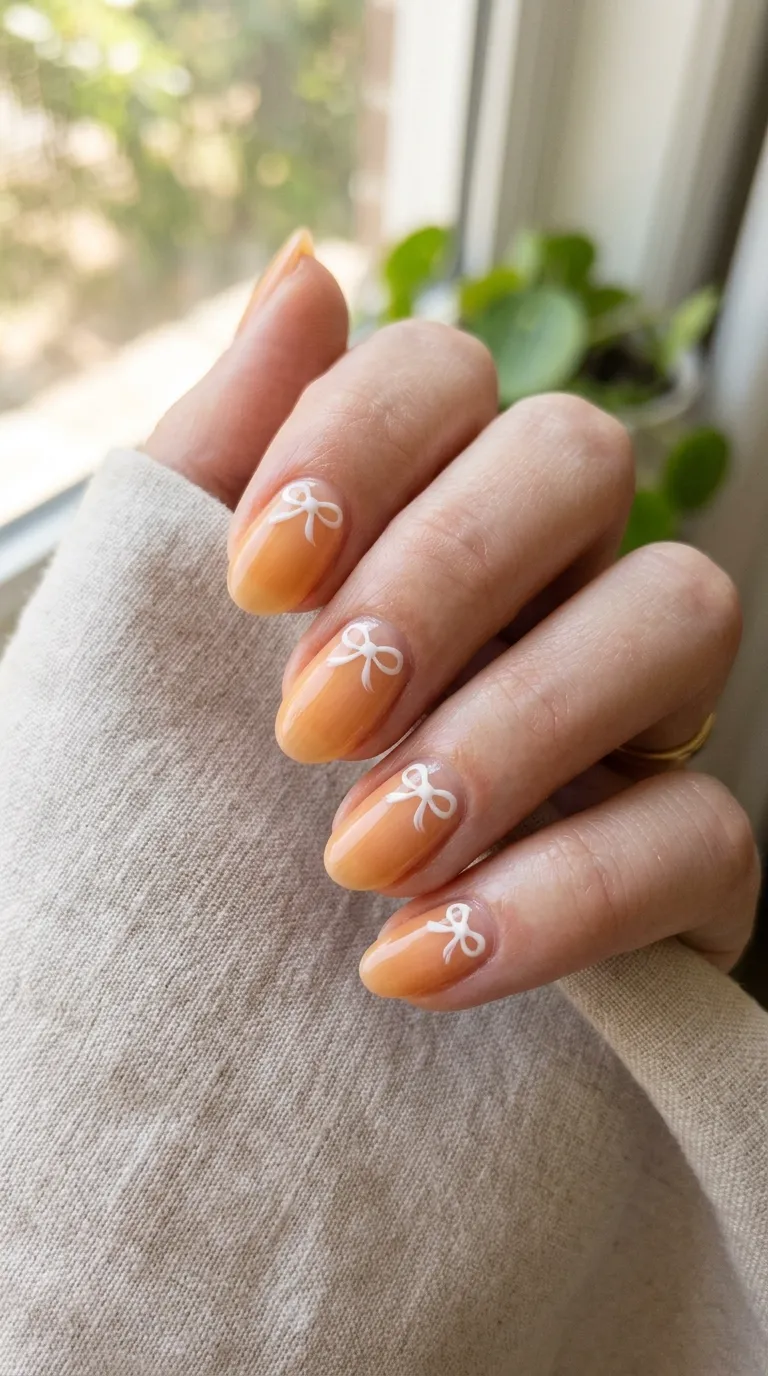
A sheer, milky mango-orange polish across the full set, with a delicate bow painted (not applied as a charm) directly at the cuticle in white gel liner. This is a favorite tropicoqueta nails pick for summer events.
6. Coconut Cream Base with Gold Charm
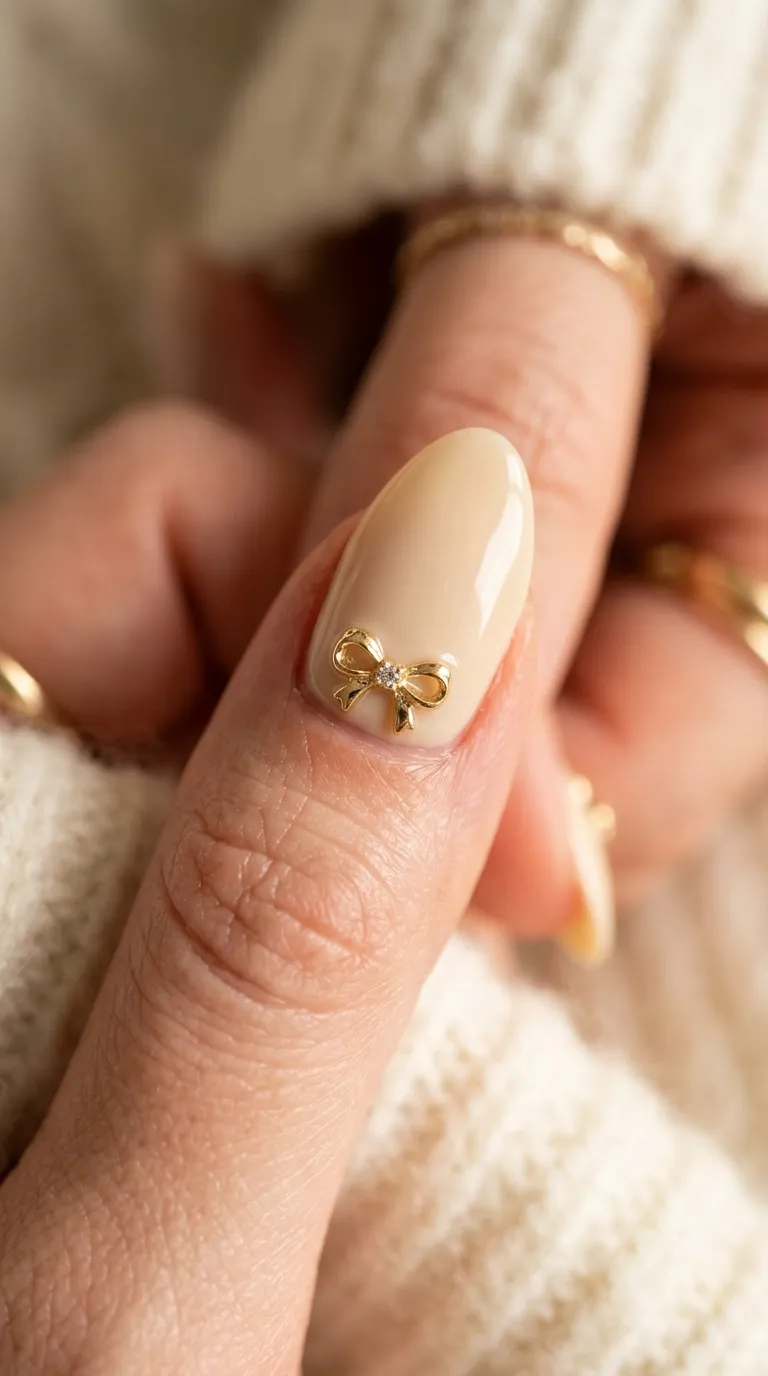
A warm cream base paired with a small gold bow or ribbon charm, leaning more resort-elegant than beach-bright — a quieter entry point into the trend. It pairs well with most other tropicoqueta nails looks on this list.
7. Hot Pink and Lime Color Block
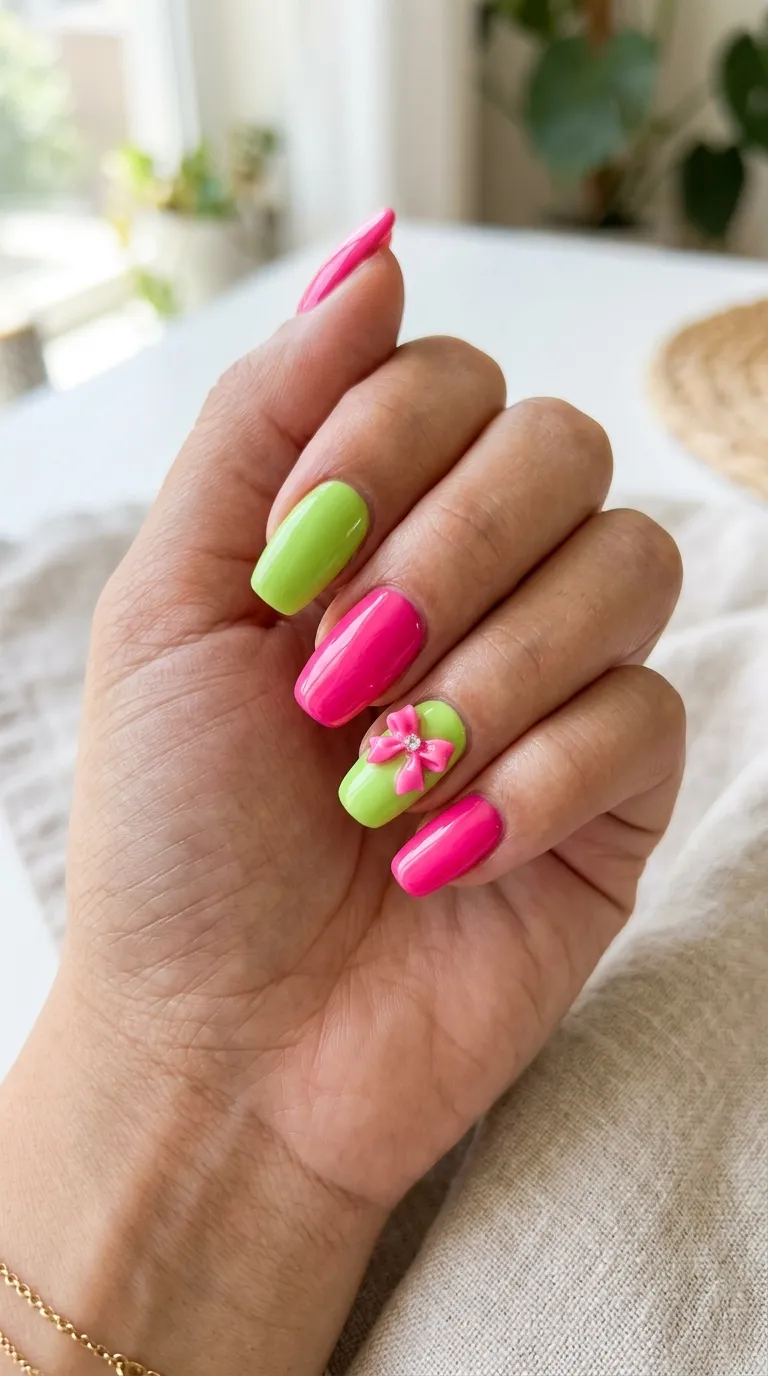
Alternating hot pink and lime green nails across the hand, no pattern needed, with one nail carrying a bow charm to tie the set together. This tropicoqueta nails style photographs especially well outdoors.
8. Watermelon Tropicoqueta
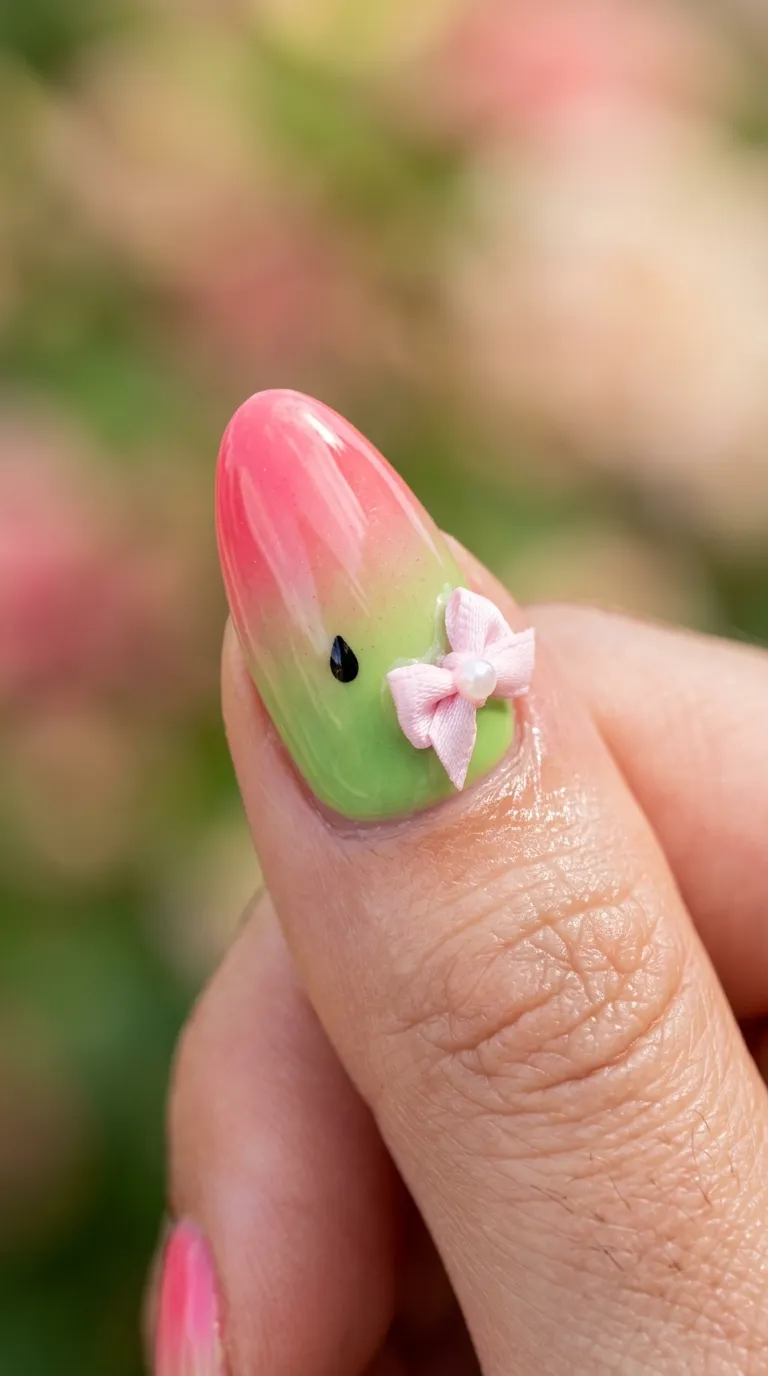
A pink-to-green gradient reminiscent of watermelon rind, finished with a tiny black seed detail and a pastel bow accent — one of the more playful, conversation-starting versions. It’s an easy tropicoqueta nails idea to recreate at home.
9. Iridescent Shell with Ribbon Line
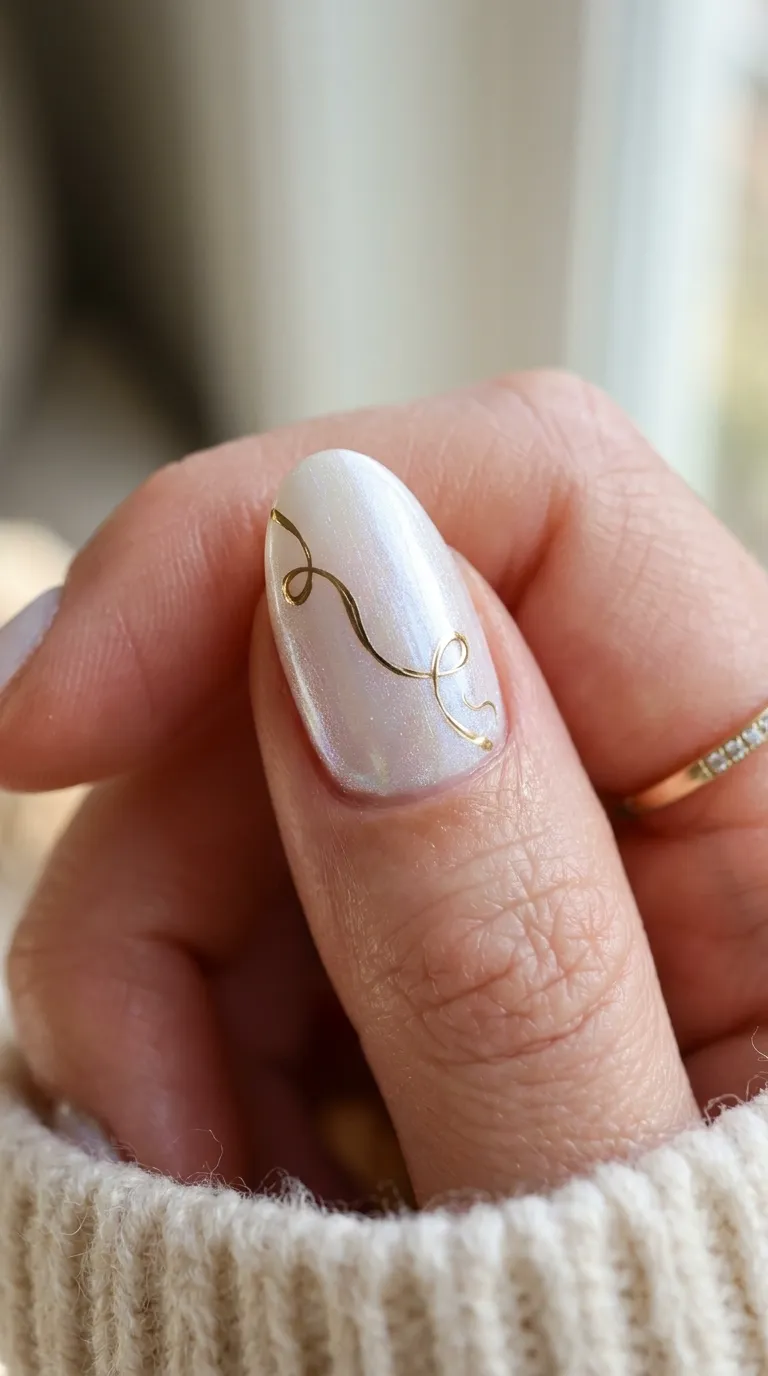
A pearlescent white or pale pink base with a thin painted ribbon line curling across one nail, borrowing the shimmer more associated with Mermaid Nails 2026 but keeping the coquette linework restrained. This tropicoqueta nails look holds up well through a full week of wear.
10. Hibiscus French Reverse
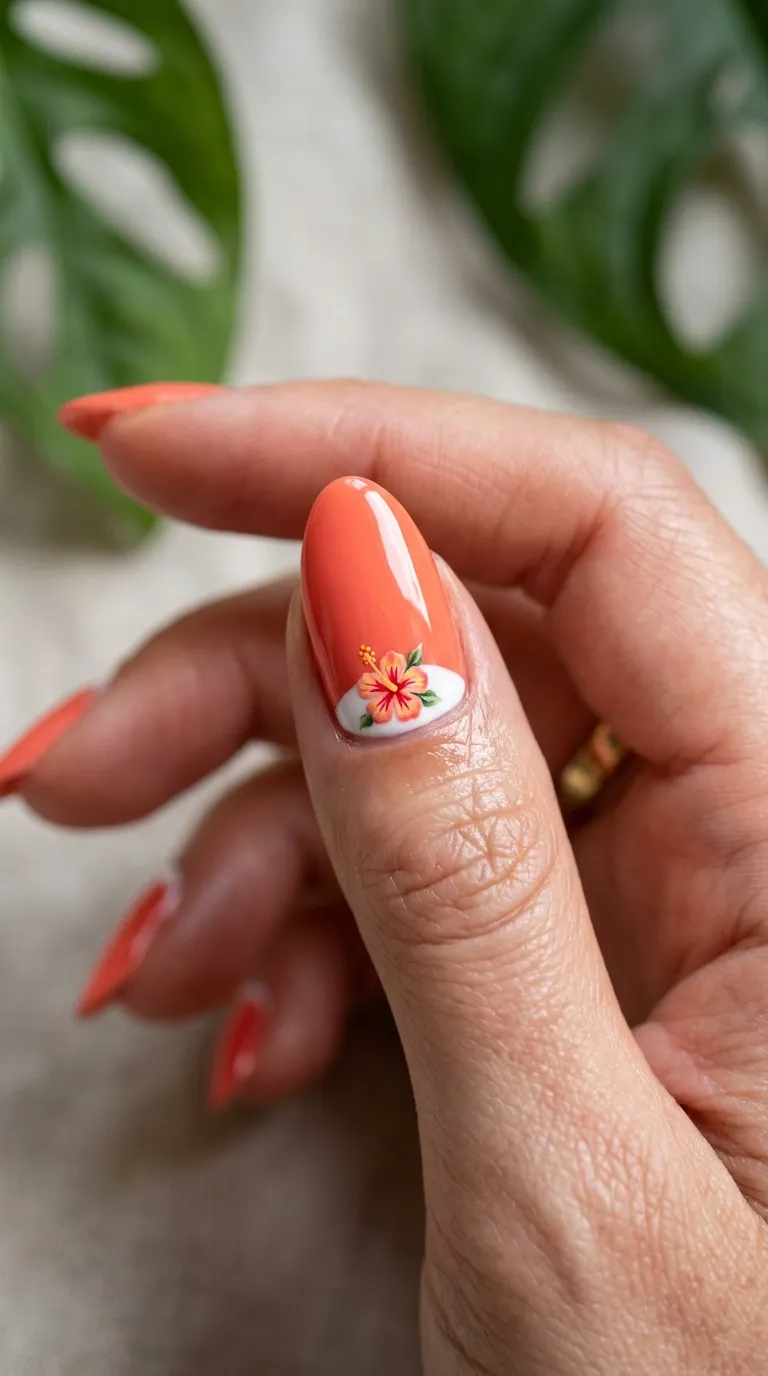
Color at the cuticle instead of the tip, in coral or hot pink, with a tiny hand-painted hibiscus layered over the color block. Pairs well with the broader reverse French technique covered in Reverse French Nails 2026. It’s a versatile tropicoqueta nails option for both short and long nails.
11. Polka Dot Tropical Accent
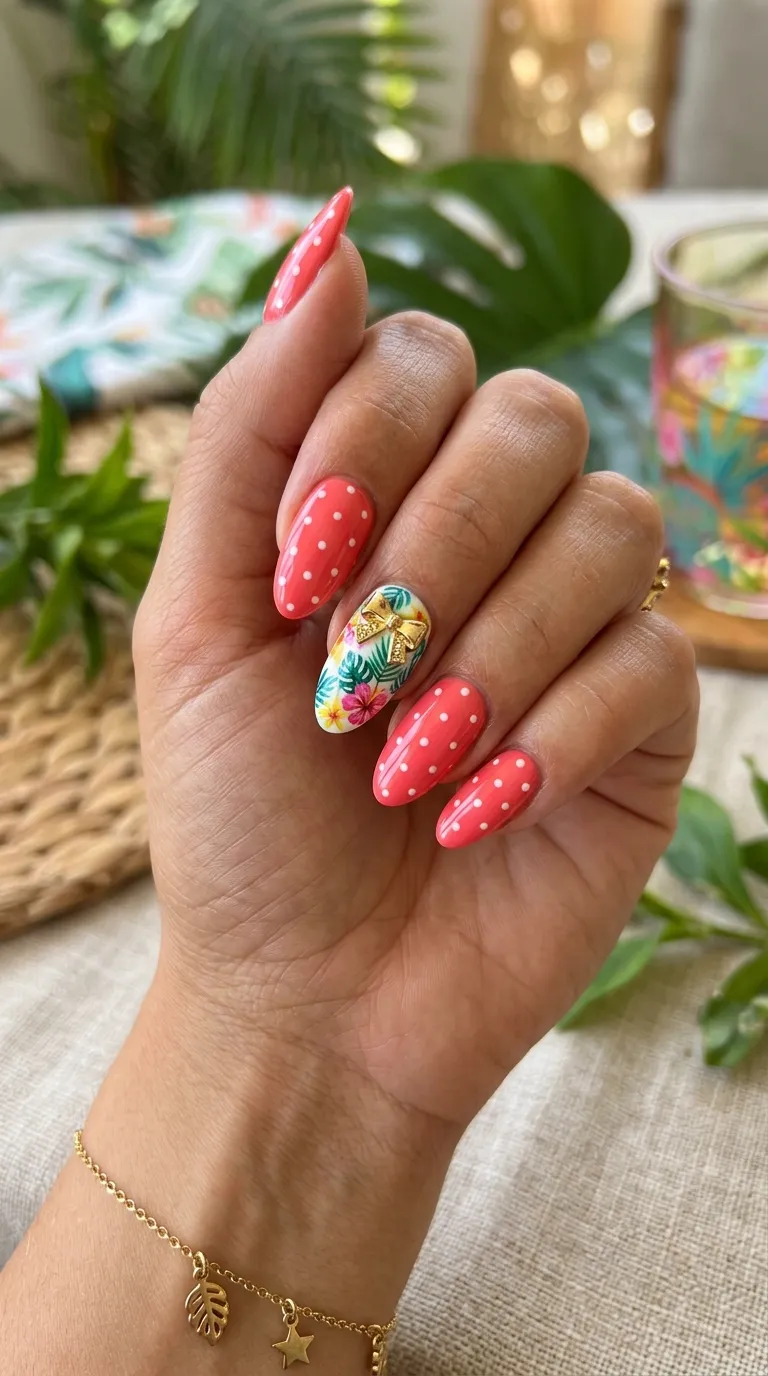
Small white polka dots over a coral or pink base on most nails, with one tropical-print accent nail and a bow charm — a pattern-driven variation. Polka Dot Nails Summer 2026 covers the dot technique in more depth. This tropicoqueta nails combination works for almost any skin tone.
12. Coral Sunset Fade with Bow
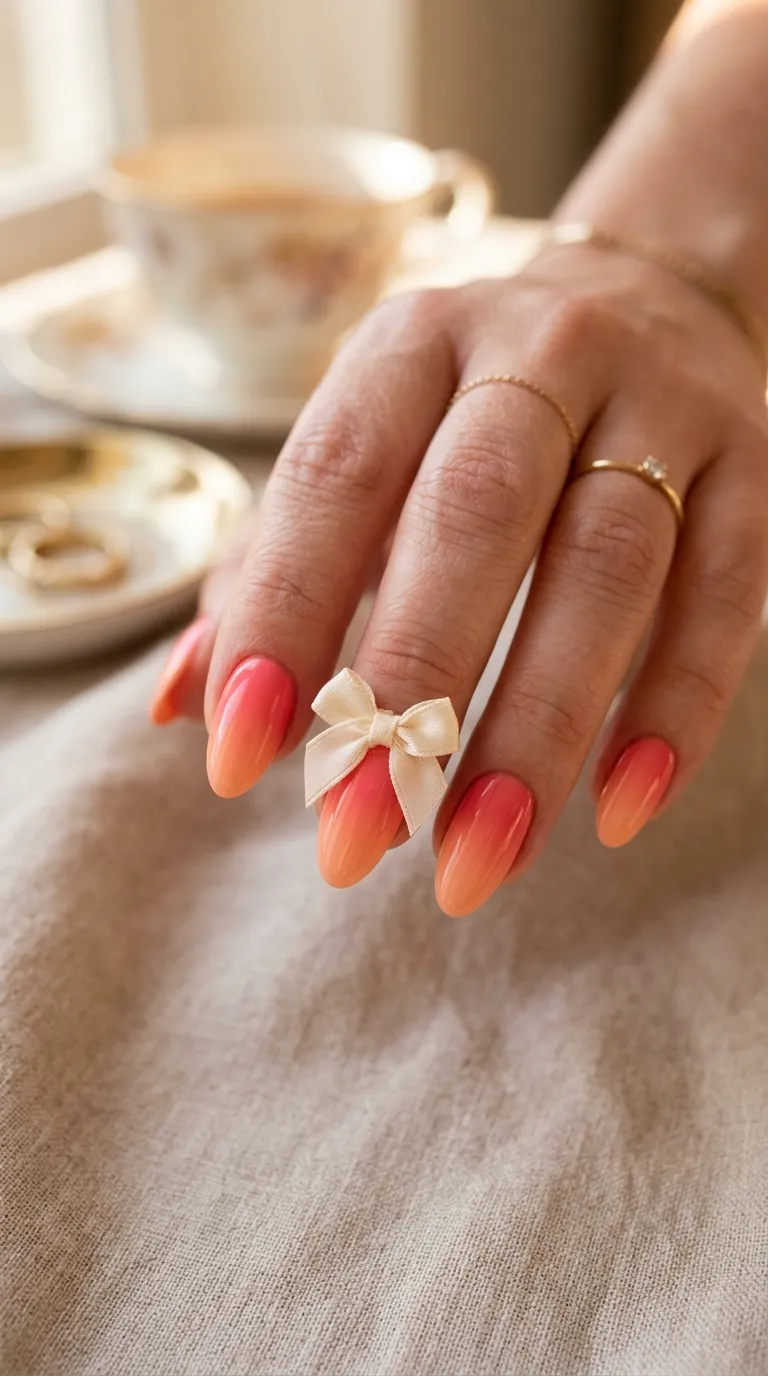
A coral-to-peach vertical fade across the full set, finished with a single satin bow on the ring finger. Our Coral Nails 2026 guide has the broader shade family this fade pulls from. It’s one of the quicker tropicoqueta nails looks to apply at a salon.
13. Pistachio and Pink Duo-Tone
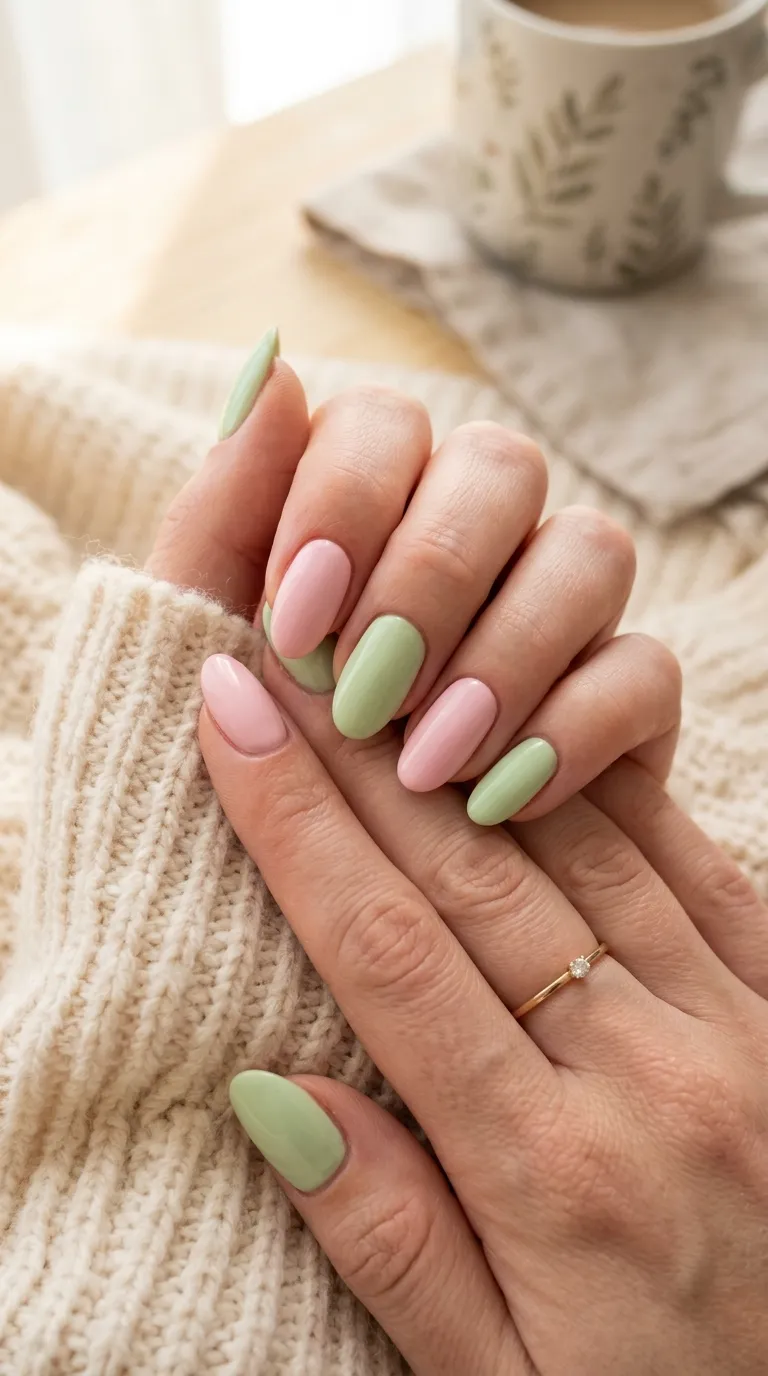
Alternating pistachio green and soft pink nails, a gentler pastel-only variation for anyone who wants the coquette half without the loudest tropical brights. Pistachio Nails 2026 breaks down that shade on its own. This tropicoqueta nails idea suits both casual and dressier occasions.
14. Beaded Charm Palm Accent
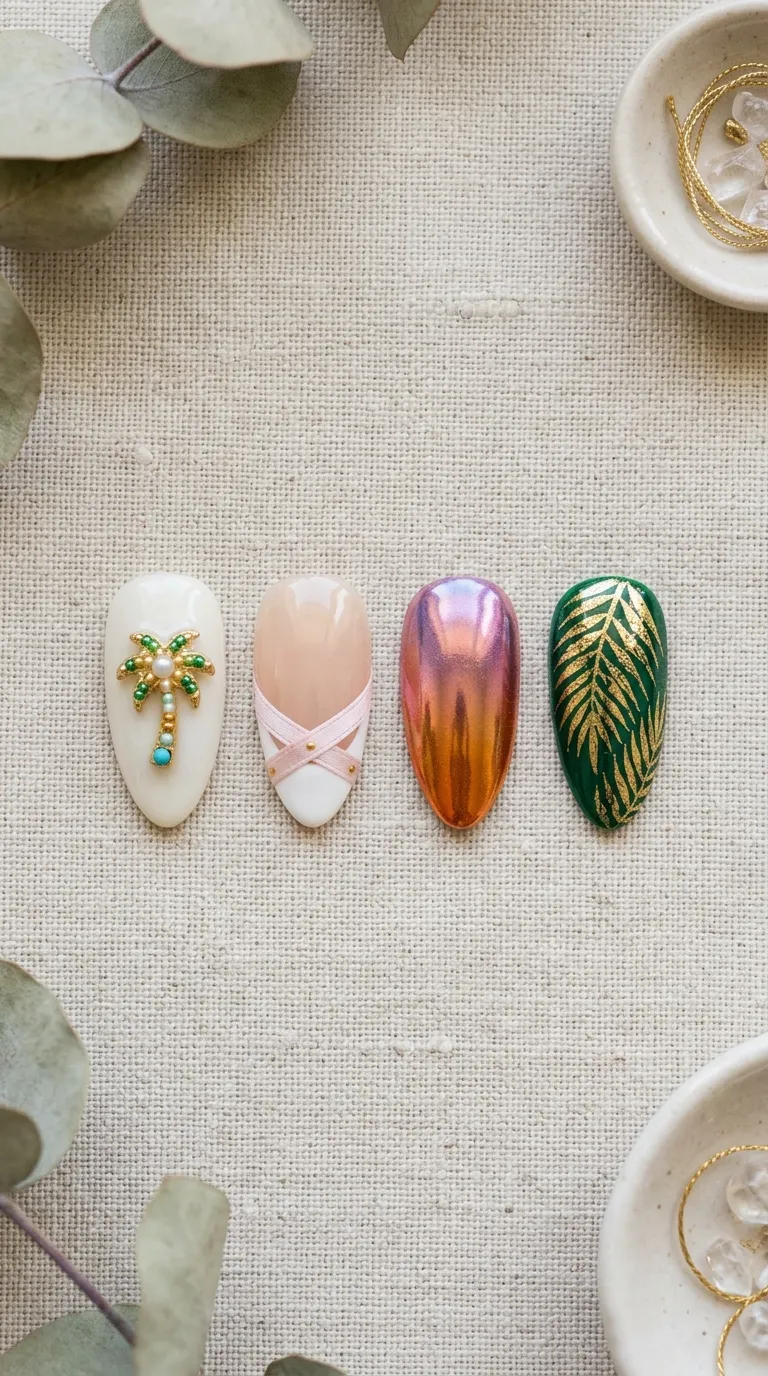
A single accent nail with a tiny palm tree charm surrounded by small pearl beads, more embellished and 3D than the flatter painted versions above. It rounds out the tropicoqueta nails lineup with a playful finish.
15. Ribbon-Wrapped French Tip
A thin painted ribbon spirals around a classic white French tip on one nail, a more subtle stand-in for a 3D bow charm on days when you want the coquette signal without the raised texture. This tropicoqueta nails variation is popular for concerts and festivals.
16. Tropical Sunset Chrome
A gradient chrome finish moving from pink to orange to yellow, mimicking a beach sunset, finished with a tiny white bow at the base of one nail to keep the coquette half present.
17. Green Pistachio and Gold Foil Palm
A soft pistachio base with a single gold foil palm leaf on one accent nail, leaning more upscale-resort than beach-bright, and a good option for anyone who wants this look for a dressier event.
18. Pink Lemonade Marble
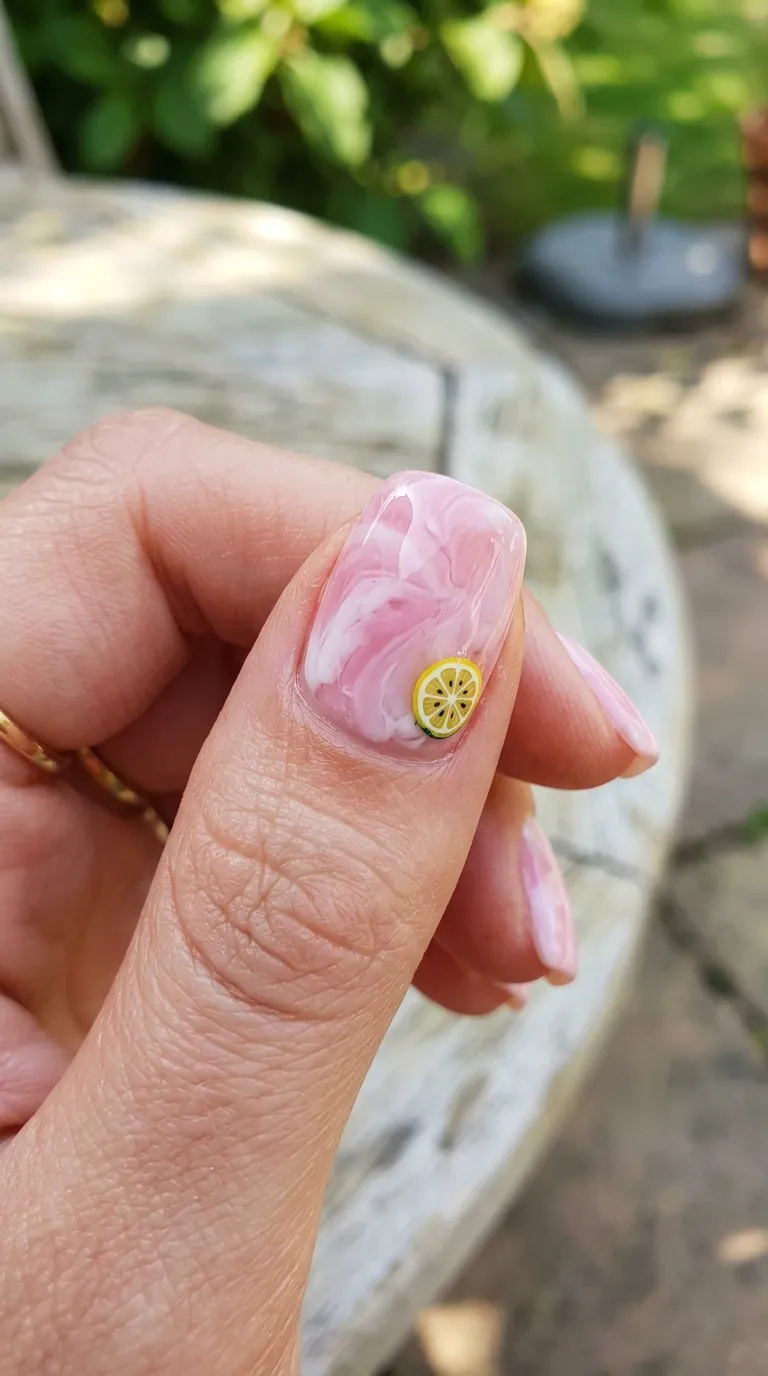
A pink-and-white marbled swirl base topped with a tiny painted lemon slice on one nail, a citrus motif that reads as playful rather than purely tropical.
19. Butterfly and Bow Duo-Accent
Two accent nails split between a small hand-painted tropical butterfly and a 3D bow charm, with the remaining nails in a plain pastel base to keep the two focal points from competing.
20. Coquette Coral Cat-Eye
A coral cat-eye gel finish — using a magnet to pull the metallic particles into a directional shine — paired with a single satin bow, blending the tropical warmth of coral with a glossier, more polished coquette finish than the matte bow looks above.
Secondary Looks: If You Want Just One Half of the Trend
Not everyone wants the full mashup. If the coquette side is what actually drew you in — the bows, the softness, the restraint — 3D Bow French Tip Nails 2026 covers that half on its own, including colorways well beyond the tropical palette. If it’s the tropical brights and botanicals you want without any bow charms at all, Funky Beach Nails 2026 and Beach Nails 2026 both go further into that territory, and August Nail Designs 2026 rounds out the rest of the season’s color options if neither extreme fits what you’re picturing.
DIY vs. Salon, and What Actually Holds Up
The flat elements — color blocking, ombré, polka dots — are realistic DIY projects with basic tools and patience. Hand-painted hibiscus florals and fine palm linework are closer to salon territory, since a shaky line reads as a mistake rather than a stylistic choice at this scale. 3D bow charms specifically need a proper adhesive gel rather than regular top coat to stay attached through daily wear; ask for this by name if you’re booking the look rather than trying it yourself, since a charm that lifts within a week is one of the more common complaints with this style. Chrome and pearlescent finishes generally need a gel base to render properly — regular polish won’t produce the same reflective effect a Icy Blue Chrome Nails 2026-style finish relies on, which is worth knowing before requesting a chrome coquette base specifically.
Skin exposure to nail products is worth a brief note too: the American Academy of Dermatology recommends moisturizing the surrounding cuticle skin regularly regardless of which polish system you’re using, since gel removal in particular can dry out the nail bed if it’s picked at rather than properly soaked off.
Longevity also depends heavily on which element you’re prioritizing. Flat color work like the citrus color block or pink lemonade marble wears down evenly and is easy to touch up at home if a single nail chips. Raised elements — 3D bow charms, foil accents, bead detailing — are more prone to snagging on clothing or hair, so they tend to hold up best on the hand you use less for everyday tasks, or on shorter nails where there’s less leverage to catch and lift the charm.
Pairing Tropicoqueta Nails With the Rest of Your Look
This trend reads strongest alongside outfits that already lean into one half of the aesthetic rather than fighting it — a simple white sundress lets a busy tropical accent nail stand out, while a brighter, patterned outfit pairs better with the quieter bow-and-pastel versions so the whole look doesn’t compete with itself. For a concert or festival specifically, the bolder citrus and chrome ideas tend to photograph better under stage lighting, while the pastel-forward looks read more clearly in daylight photos, which is worth considering if you’re planning nails around a specific event rather than everyday wear. If tropicoqueta nails end up being more tropical than coquette for your taste, Funky Beach Nails 2026 has bolder color combinations worth bookmarking alongside this guide.
Frequently Asked Questions About Tropicoqueta Nails
What does “tropicoqueta” actually mean? It’s a blend of “tropical” and “coqueta,” the Spanish word for flirtatious or coquettish, describing a nail trend that combines bright tropical color and botanical motifs with the bows and pastel restraint of coquette nail art.
Is tropicoqueta the same as regular tropical nails? No — a standard tropical manicure is usually all-over color and pattern, while tropicoqueta nails deliberately balance that boldness with coquette elements like bow charms, pastel bases, and more restrained accent placement.
What colors work best for tropicoqueta nails? Citrus brights like mango and lime paired with a pastel pink, cream, or butter base tend to define the trend most clearly, with gold or white used for bow and ribbon charms.
Can tropicoqueta nails work on short nails? Yes — color blocking, polka dot accents, and a simple citrus-to-pastel ombré all work on shorter square or round shapes; the more detailed hand-painted florals read more clearly with extra length.
Where does the tropicoqueta trend come from? It’s tied to Karol G’s visual style and fanbase, blending the tropical, Latin-pop energy of her music with the coquette aesthetic that was already trending separately in nail art and fashion.
Do tropicoqueta nails work for a wedding or formal event? The quieter versions do — a pastel base with a single small bow or gold foil palm accent reads as elegant rather than costume-like, while the brightest citrus and chrome combinations are better suited to casual wear or concerts.
How long do 3D bow charms typically last? With proper adhesive gel rather than regular top coat, bow charms generally hold for the full length of a gel manicure, roughly two to three weeks, though they’re more prone to snagging than flat nail art over that period.
Final Thoughts
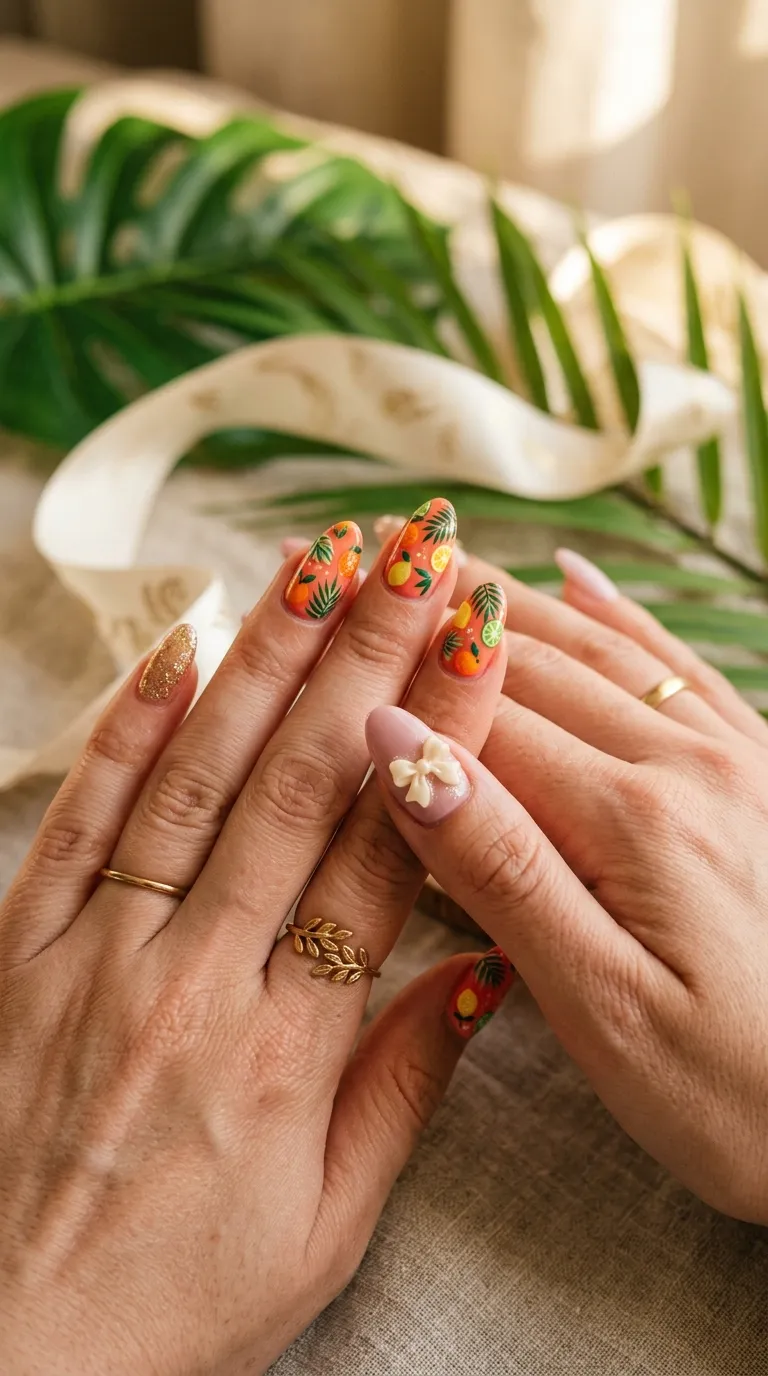
The tropicoqueta trend works best when both halves stay visible instead of one drowning out the other — a loud tropical set with a token bow charm isn’t really the look, and neither is a plain coquette set with one stray palm leaf. Pick a base (pastel or citrus-bright), choose one or two motifs rather than five, and let the bow charm or hand-painted floral actually anchor the design. If you decide you only want one half of this trend, our 3D Bow French Tip Nails 2026 and Beach Nails 2026 guides both cover their respective sides in full.
Compare Before You Choose
See the Closest Alternatives
Compare nearby shapes, colors and finishes before picking a final reference.
Recommended Next