Six months ago, ‘TPO-free’ was a phrase most gel polish shoppers had never seen. Now it is printed on bottles everywhere, and the same questions keep arriving: what is TPO, why was it banned, and how can you tell whether the polish in your hand is really free of it? This guide answers all three properly — what changed in the EU and the UK, how to read an ingredient list, what replaced TPO inside the bottle, and how to choose your next TPO free gel polish with confidence.
One reassurance before the detail: gel manicures themselves are not banned anywhere. A single ingredient has been taken out of the formula, and the industry has already reformulated around it. If you are building an at-home routine, pair this guide with our step-by-step on how to do gel nails at home; here we stay on the ingredient itself — what it did, why regulators acted, and how a modern TPO free gel polish works without it.
Below, in order: the ban explained with its dates, a two-minute label check anyone can do, the two alternative ingredients you will now see instead, five angles for choosing well, fifteen finished looks that all come from a TPO free gel polish, and honest notes on curing and wear once you switch.
What Is TPO, and Why Was It Banned?
TPO is short for trimethylbenzoyl diphenylphosphine oxide — the full name you will see on ingredient lists. It is a photoinitiator: the ingredient that absorbs UV or LED light inside the lamp and triggers the reaction that turns liquid gel into a hard, glossy coating. Without a photoinitiator of some kind, gel polish simply never cures, so every gel formula contains one. The only question a label answers is which one.
According to the answer given by the European Commission to a parliamentary question on TPO, the prohibition is the direct legal consequence of TPO’s harmonised classification as a Category 1B reproductive toxicant under EU chemicals law. Under the EU Cosmetics Regulation, a substance carrying that classification cannot be used in cosmetics unless a specific exemption is requested and granted — and no exemption was ever requested for TPO. The ban was written into law by Commission Regulation (EU) 2025/877 and has applied to every cosmetic product sold in the EU since 1 September 2025, professional salon systems included, with no sell-through period for stock already sitting on shelves.
Great Britain is following on its own timetable. According to the CTPA’s published interpretation, agreed with Trading Standards, no cosmetic product containing TPO could be newly placed on the GB market after 15 August 2026, and products already in the supply chain can only keep being sold until the off-shelf date of 14 February 2027. After that date, shops and distributors cannot supply TPO stock at all — although, on the CTPA’s reading, professionals may still use up products they already hold. Northern Ireland follows the EU rules, so the September 2025 date applies there. In the United States there is no federal ban on TPO, and American readers’ existing bottles are unaffected by any of this; the changes described here are European.
The balanced context matters, because the headlines were scarier than the science. The Category 1B classification rests on hazard studies in which animals ingested large doses of TPO — a worst-case exposure route, not a manicure. As the CTPA points out, the amount of TPO in a nail product is extremely low and it is applied to the nail plate rather than swallowed; the EU’s own Scientific Committee on Consumer Safety (SCCS) reviewed TPO in 2014 and concluded that its use in nail products was safe at the levels then permitted, up to 5%. The ban happened anyway, because the exemption route demanded proof that went far beyond safety — including that no suitable alternative existed — and the industry chose to reformulate instead of arguing. In short: regulators removed a classified ingredient on principle, brands swapped it out, and today’s TPO free gel polish is simply the post-swap formula.
How to Tell If a Gel Polish Is TPO-Free
The reliable check takes under a minute and needs no chemistry background: turn the bottle over and read the ingredient list. Cosmetics sold in the EU and UK are labelled with INCI names, and TPO appears under its full name — Trimethylbenzoyl Diphenylphosphine Oxide. If that name is on the list, the product contains TPO, whatever the front of the bottle says. If it is absent, the formula cures with a different photoinitiator and the polish is TPO-free in the only sense that counts.
Front-of-bottle claims are still useful as a shortcut. A bottle printed with ‘TPO-free’ is the brand putting the claim where regulators and competitors can both see it, and established brands reformulated entire ranges around the EU deadline, so the claim on a current product from a known brand is normally backed up by its own ingredient list. Use the claim to shortlist, then confirm on the INCI list — together the two checks take seconds.
Be more careful with unbranded and marketplace polishes. A genuine product sold in the EU or UK must carry a full ingredient list; a bottle with no INCI list at all gives you nothing to check, and the words ‘TPO-free’ in an online listing title are marketing text, not a label. The same caution applies to older stock: a polish bought before the reformulations may still contain TPO. Owning and using it at home is a different matter from selling it, but if you are deliberately switching to a TPO free gel polish, it is worth knowing what is actually in your drawer.
If the list names something long and similar-looking, do not panic — the replacement photoinitiators have look-alike names. Ethyl Trimethylbenzoyl Phenylphosphinate is TPO-L, a different ingredient that is not banned; Bis-Trimethylbenzoyl Phenylphosphine Oxide is BAPO, also permitted. What you are scanning for is one exact string: Trimethylbenzoyl Diphenylphosphine Oxide, standing alone as the entry. The next section explains what the two alternatives actually do, and it is worth checking your exact shade when a brand lists ingredients shade by shade, because reformulation dates can differ across a colour range.
TPO Alternatives: TPO-L and BAPO Explained
TPO did two jobs at once: it cured efficiently through pigmented colour, and it did so without yellowing. No single replacement matches it on both counts, so formulators now work mainly with two established alternatives — often blended in the same bottle. Knowing which is which helps you read both labels and curing behaviour.
TPO-L (ethyl trimethylbenzoyl phenylphosphinate) is the liquid of the pair. Because it is a liquid, it blends smoothly into a gel base and cures efficiently under LED light, which makes it the common choice in clear, sheer and pale formulas — the milky whites, jelly pinks and natural looks where any yellowing would show immediately. Many of the TPO free gel polish ranges aimed at home users lean mainly on TPO-L, because it behaves predictably in thin coats under a standard home lamp.
BAPO (bis-trimethylbenzoyl phenylphosphine oxide) is the heavy lifter. It absorbs light very strongly, so it can push a full cure through dense pigment — the deep reds, chocolates, navies and blacks that resist curing all the way through. Its one trade-off is a tendency to leave a slight yellow cast, which is invisible inside a dark shade but can show in a pale nude, so formulators use it sparingly in light colours or balance it with TPO-L. A professional TPO free gel polish built for salon colour work will often run a blend of the two.
You may occasionally see other photoinitiators on labels, and blends are still evolving as brands finish reformulating their back catalogues. The practical point for shoppers is not to memorise chemistry: if the full TPO name is absent and the brand states the product is TPO-free, the curing system has been rebuilt around permitted alternatives like these — and any difference you actually notice will show up as cure time, which the switching notes below cover.
Choosing a TPO-Free Gel Polish: 5 Angles
Once the label check is a habit, the rest of the choice is ordinary shopping — but five angles matter more with reformulated products than they did before, because ranges, shades and cure behaviour all changed at once. Each angle below is a check worth running before you buy a TPO free gel polish.
A Reformulated Range, or a Single Bottle?
Brands that reformulated a whole range had to re-test every shade in it, which is why two bottles from the same brand can have different ingredient lists if one is old stock. Buying from a range that has been fully converted is the lower-effort option: one label check covers the brand, and shades are consistent with each other. A single hero product from a partly converted line is fine too — just check that specific bottle’s INCI list rather than assuming the whole shelf matches.
TPO-Free and HEMA-Free on the Same Label
Readers with reactive skin often look for two claims together. HEMA is a completely different ingredient — an acrylic monomer, unrelated to photoinitiators — that is frequently discussed in nail-safety conversations because uncured product touching skin is a general concern with gel systems. The two labels mean different things, and one never implies the other: a TPO free gel polish can still contain HEMA, and a HEMA-free polish was not automatically TPO-free until brands reformulated. If both matter to you, check both, and keep uncured gel off your skin whichever formula you choose.
Home Kit or Professional Bottle?
Home kits have one quiet advantage in the reformulation era: the polishes in a kit are normally tested against the lamp sold with them, so the printed cure times are realistic for that exact setup. Professional bottles assume a professional lamp and may cure differently under a small home unit. If you already own a lamp you like, single bottles from a converted range give you the wider shade choice; if you are starting from zero, a current kit removes the guesswork. Either way, buy current stock — a kit assembled before the reformulations can still contain older formulas.
Shade Range and Finish Coverage
Early reformulated ranges launched with core shades only, and some finishes took longer to convert than others. Sheers and creams came first; dense darks needed the BAPO side of the blend worked out, and magnetic cat eye gels have their own formulas, so a brand’s cat eye line can convert on a different date from its creams. Chrome looks are the exception that proves the rule: the chrome is a powder rubbed over a cured gel base, so any TPO free gel polish in a pale shade can carry it. If a favourite shade seems to have vanished, it usually means that shade is still being reworked, not discontinued.
Lamp and Cure-Time Compatibility
Different photoinitiator blends respond slightly differently to light, so the cure time printed for a TPO free gel polish is part of the product, not a suggestion. Check that your lamp type — LED or UV — is the one the brand tested with, and use the full stated time for the first set with any new formula. Under-curing is the main practical risk when switching systems: a coat that feels hard can still be soft underneath, which shows up days later as lifting or dullness. Thin coats and full cure times cost two extra minutes and save the whole manicure.
15 TPO-Free Gel Looks to Try
Every finish that made gel popular survives the reformulation. The fifteen looks below are the ones readers ask about most, and each is achievable with a current TPO free gel polish — the shade families are ones converted ranges actually carry. Shapes and lengths are noted so you can match each look to your own nails.
1. Milky White Gloss
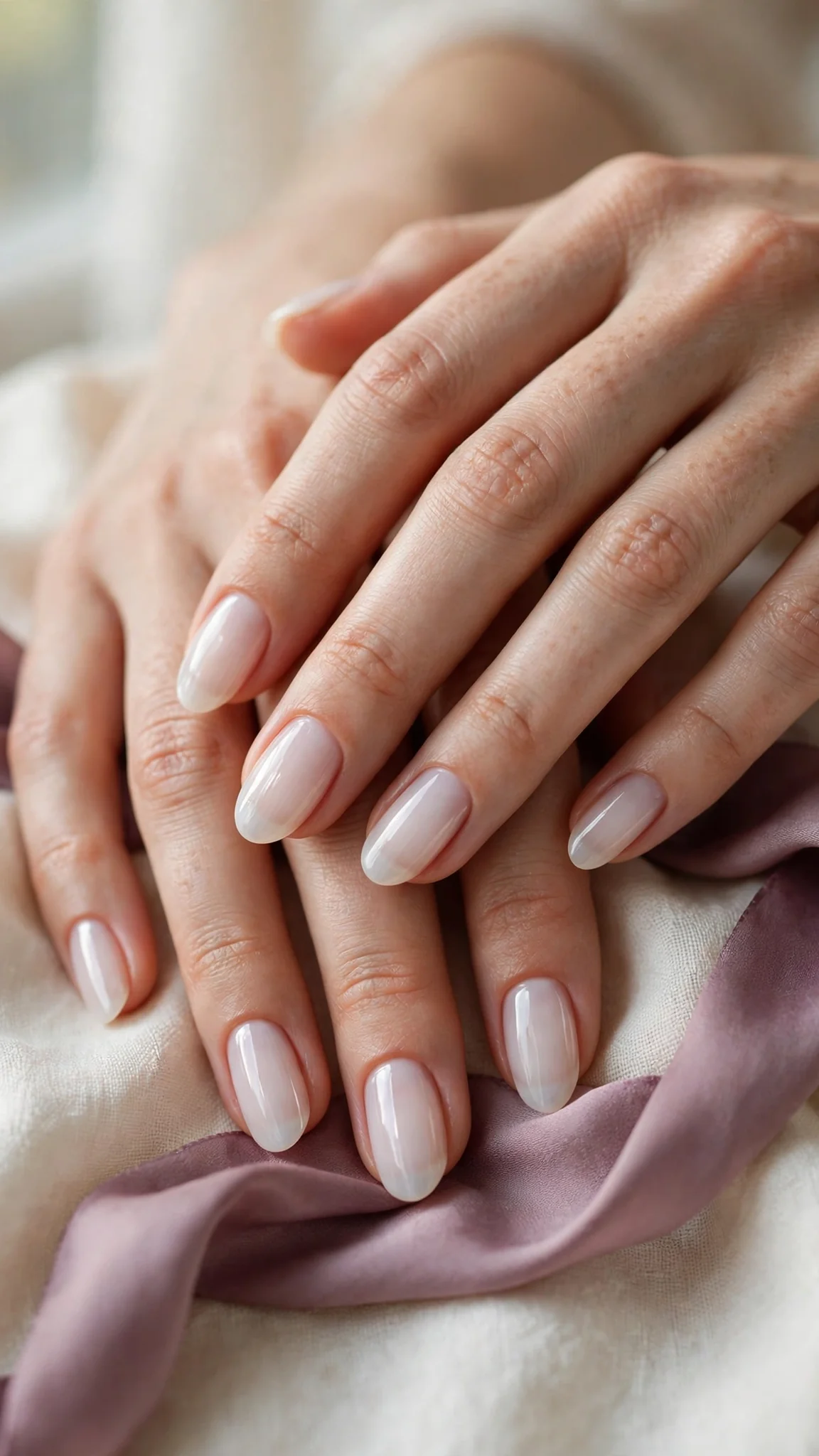
The shade that shows off a good reformulation: a translucent milky white that stays clean and bright, with none of the yellowing a clumsy photoinitiator blend would leave in a colour this pale. Two thin coats give that soft, soap-nail translucency on medium almond nails, and it flatters every skin tone. This is the TPO free gel polish look most likely to be mistaken for a salon set. Tip: cure each coat for the full stated time — pale shades hide under-curing until they wrinkle.
2. Classic French Tips

A sheer pink base with a true white tip is the oldest test of a gel system, and any good TPO free gel polish passes it easily — the white is a TPO-L-leaning formula in most brands, which is why it stays bright instead of creaming. On medium oval nails the smile line reads elegant rather than stark. Equally at home at weddings, offices and everywhere between. Tip: paint the tip in two whisper-thin passes rather than one loaded stroke for the crispest edge.
3. Sheer Ballet Pink
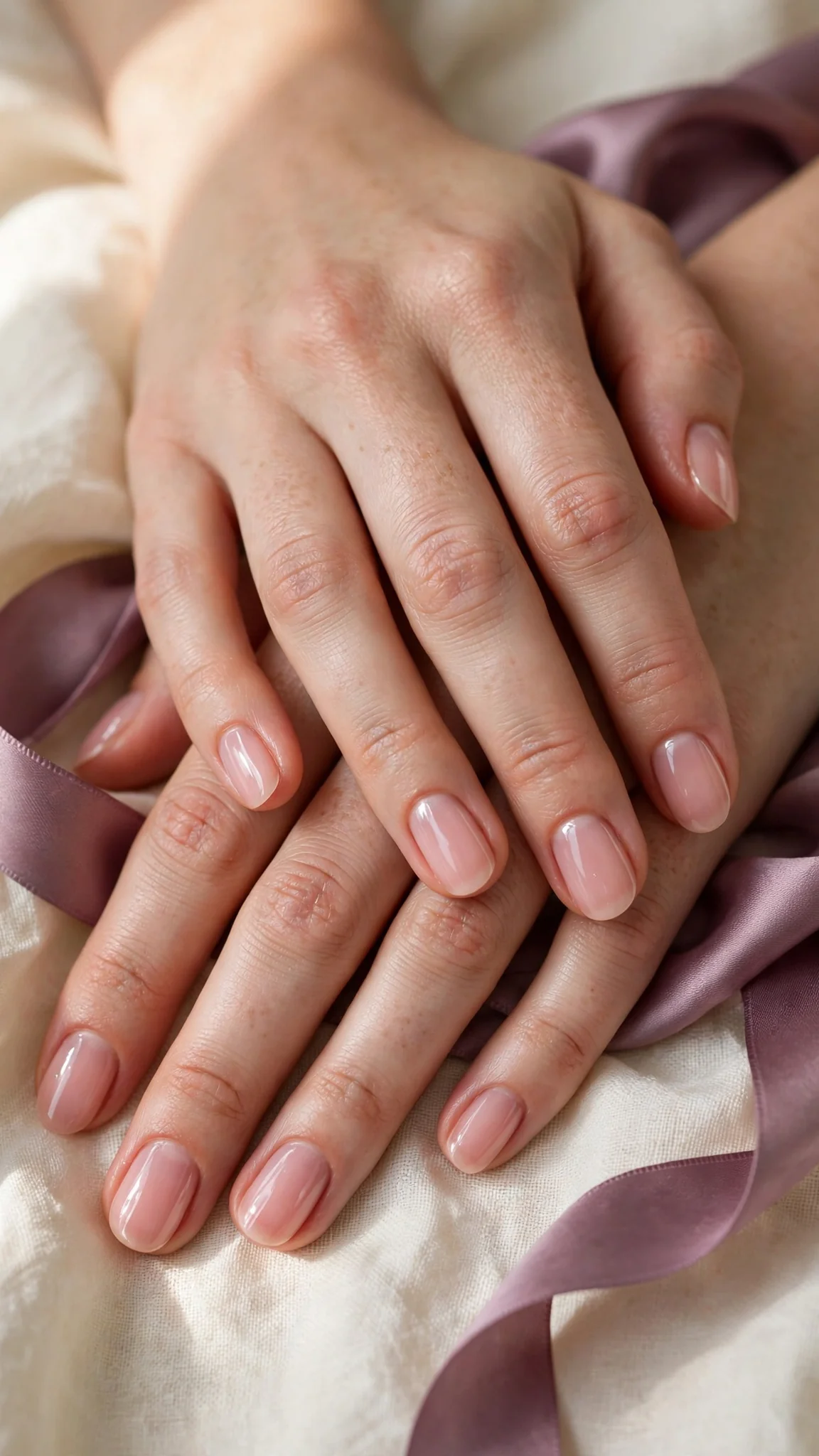
One to two coats of a translucent ballet pink that evens out the nail’s natural colour without hiding it — the manicure equivalent of tinted moisturiser. As a first TPO free gel polish, it is the most forgiving look in this list, because regrowth barely shows and small application flaws disappear into the sheerness. On short oval nails it simply looks like your nails on their best day. Tip: if your nail beds run pink already, one coat is usually enough.
4. Warm Nude Beige Gloss
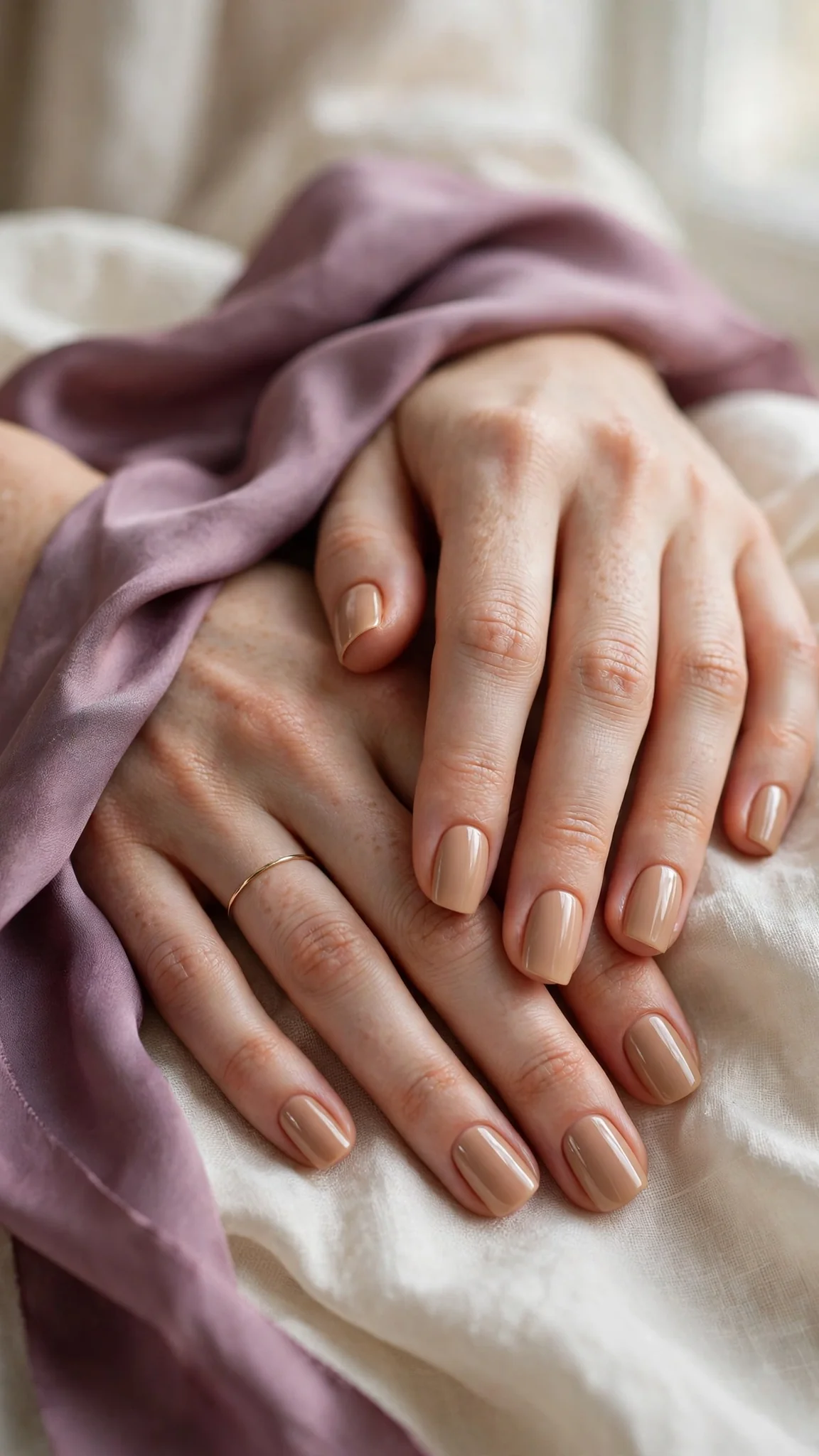
An opaque, warm-toned beige TPO free gel polish that behaves like a neutral in every wardrobe. Nudes are where undertones matter most: this warmth suits golden and olive skin particularly well, while cooler complexions may prefer a pink-leaning nude from the same range. On medium square nails the colour looks tailored and modern. Tip: hold the bottle against the inside of your wrist in daylight — the right nude almost disappears against your skin.
5. Glass Pink Jelly
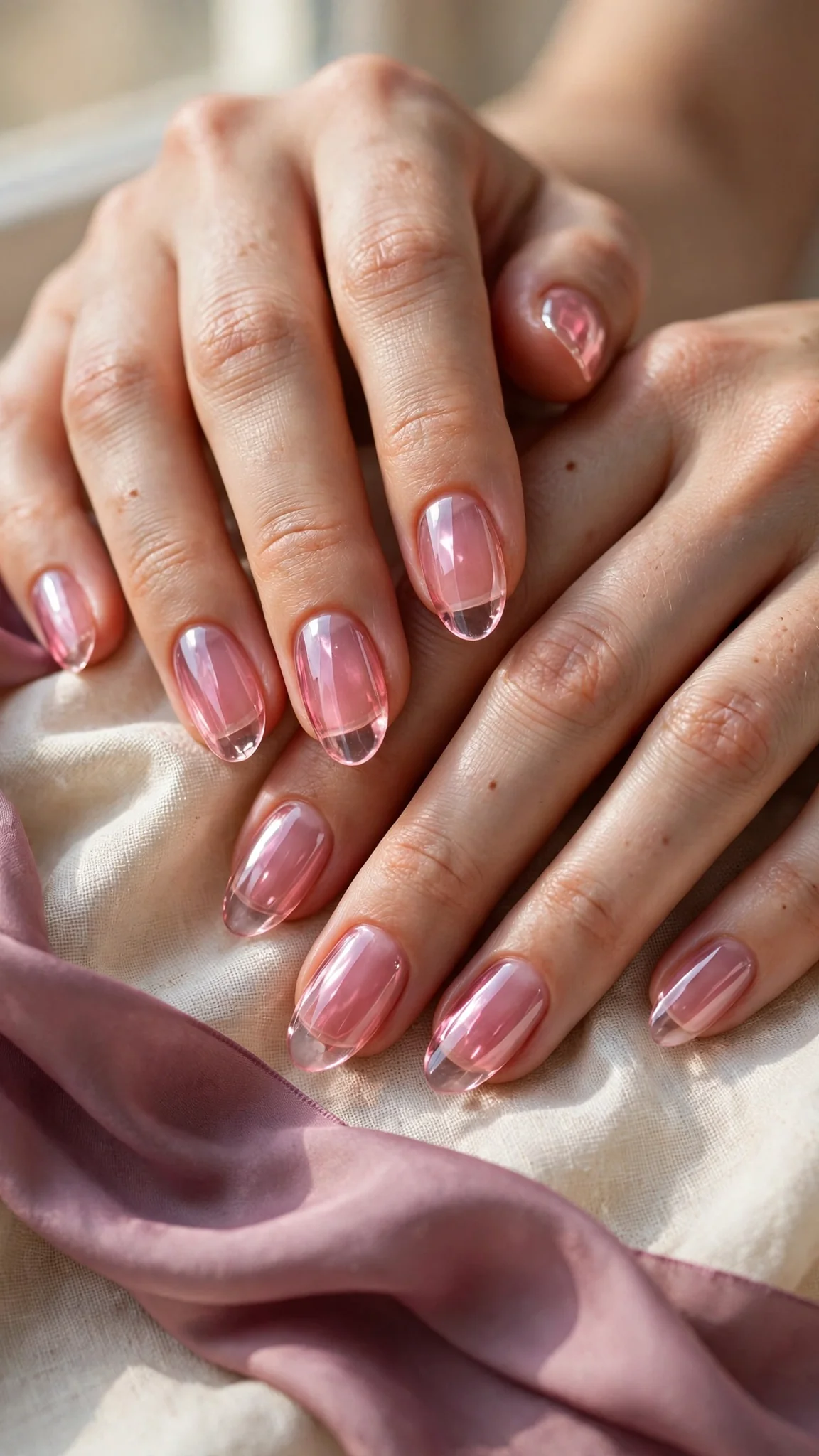
Jelly finishes are translucent, syrup-like colour — you can see the suggestion of the nail through the pink, and the gloss sits on top like glass. A jelly TPO free gel polish depends on a clean-curing, non-yellowing base, which is exactly what reformulated sheer formulas are built around. On medium almond nails the effect is fresh and slightly playful without any nail art at all. Tip: jelly shades show every bubble, so roll the bottle between your palms instead of shaking it.
6. Cherry Red Gloss
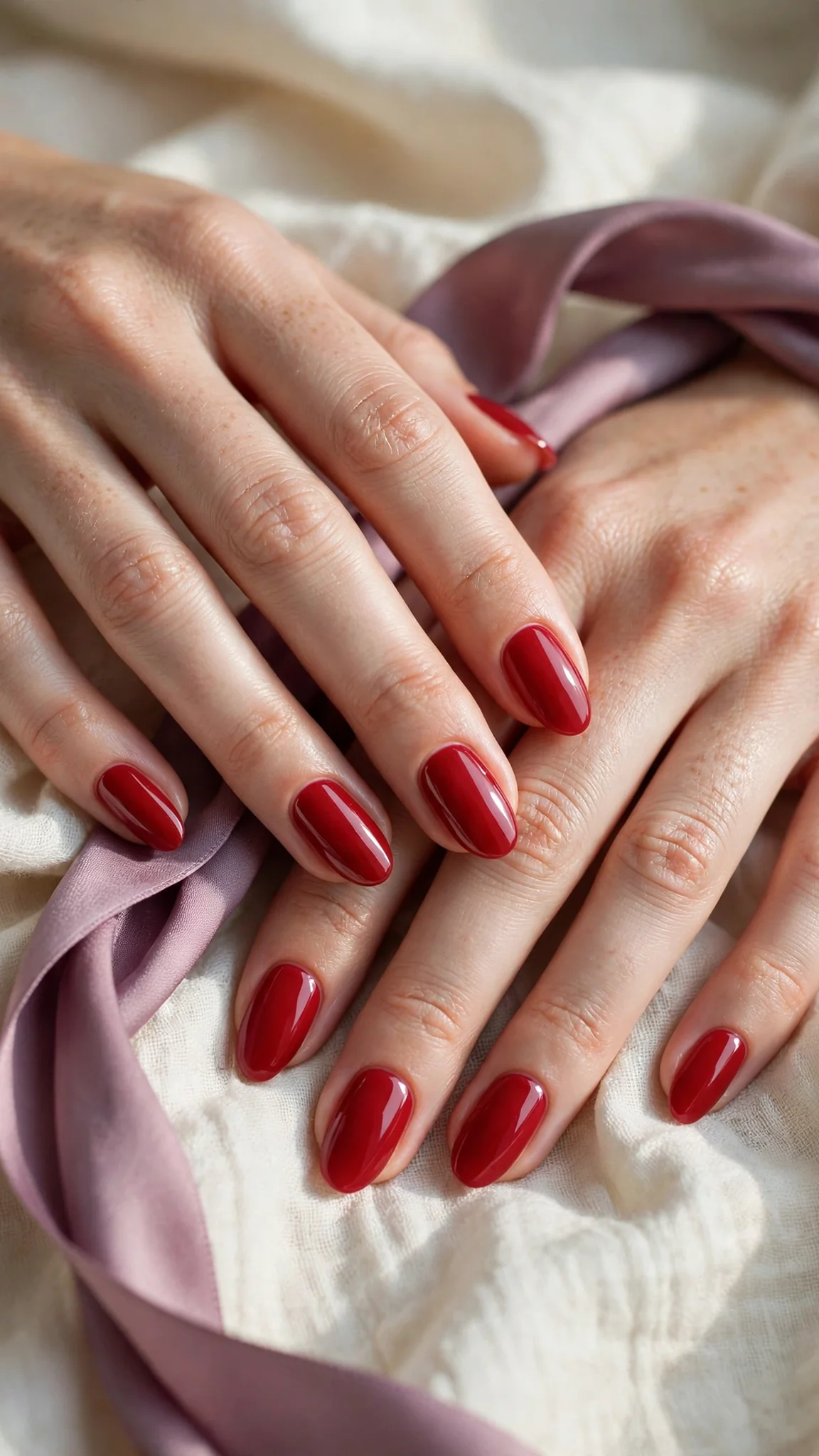
A true, blue-leaning cherry red in a cream finish — the red that suits almost everyone and photographs beautifully. Dense red pigment is BAPO territory, so a well-converted cherry is good evidence a brand has done its reformulation homework. On medium almond nails it is pure classic glamour with zero decoration needed. Tip: reds stain the surrounding skin on removal, so apply a little cuticle oil around the nail before soak-off.
7. Deep Burgundy Wine
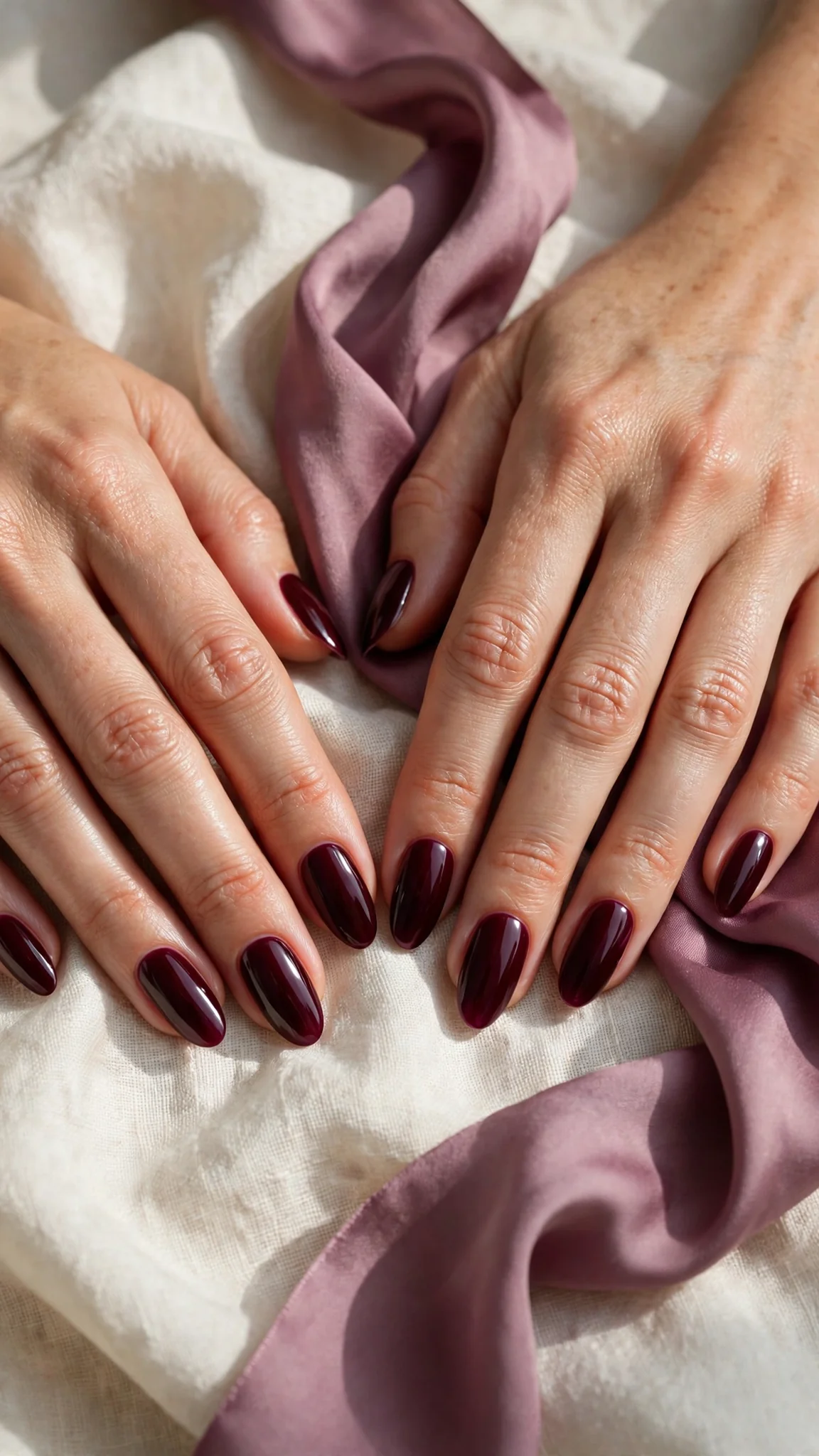
Burgundy sits between red and black in mood — dramatic in the evening, still polished at a desk. The pigment load is heavy, so give it the full cure time and keep coats thin; this is the shade family where rushing shows up as a soft centre. On long oval nails it reads expensive and deliberate. Any current TPO free gel polish range aimed at autumn will carry a version of it. Tip: three thin coats beat two thick ones for an even, bottle-true depth.
8. Chocolate Brown Gloss
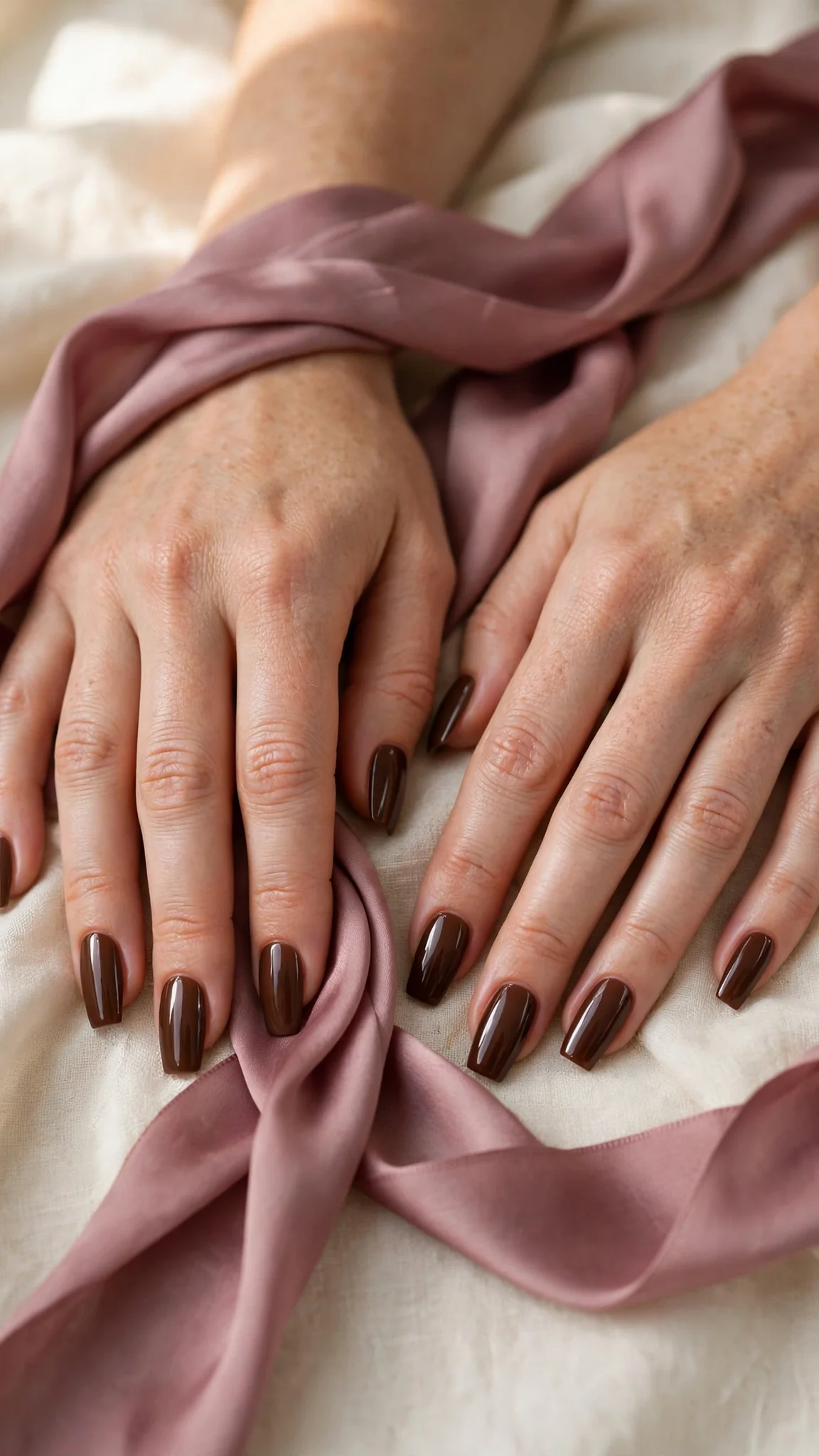
A rich, warm chocolate TPO free gel polish that has become the neutral of the last few seasons — softer than black, more interesting than nude. Browns cure kindly and wear forgivingly, hiding small chips better than pale shades do. On medium coffin nails the colour looks sleek and deliberate, and it pairs with gold jewellery especially well. Tip: a glossy top coat is non-negotiable here; chocolate goes flat and dull in a matte finish unless that is the look you want.
9. Coral Peach Gloss
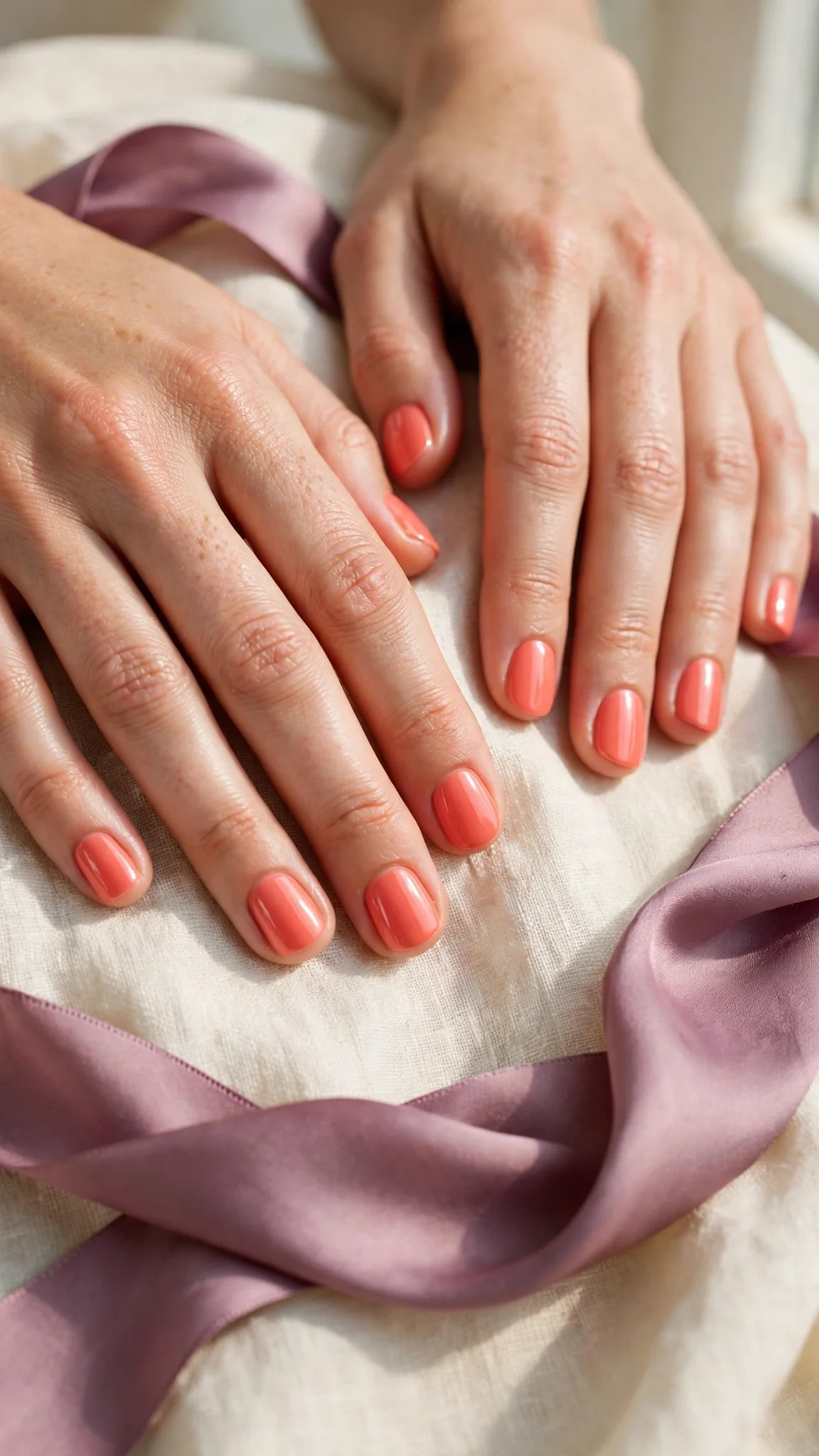
A bright coral-peach cream that reads as summer in a bottle — cheerful against tanned and deep skin, and a happy jolt of colour on fair hands in spring. Short round nails keep it casual and practical for typing-heavy weeks. A coral TPO free gel polish like this was among the first shades converted in most ranges, because the pigment cures easily. Tip: coral can apply slightly streaky; float the brush with almost no pressure on the second coat.
10. Lavender Pastel Gloss
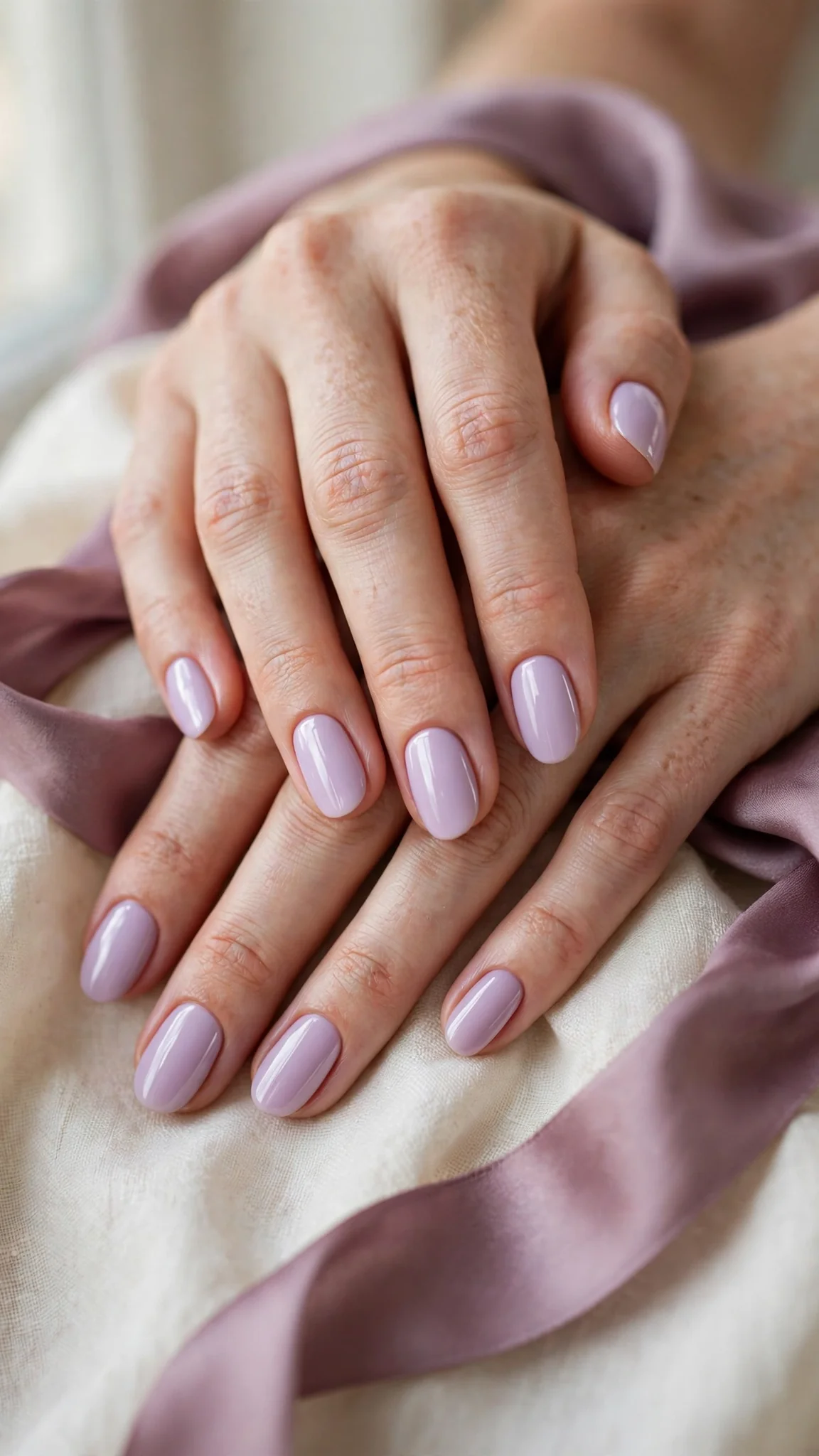
A soft, grey-leaning lavender TPO free gel polish in an opaque cream finish — the pastel that feels grown-up rather than sugary. Pastels are unforgiving of a patchy base, so the prep matters more than the polish: push cuticles back properly and dehydrate the plate. On medium oval nails the colour looks calm and clean. Tip: if the first coat looks streaky, do not panic — pastel gel levels out on the second coat if the first is thin and fully cured.
11. Emerald Cat Eye
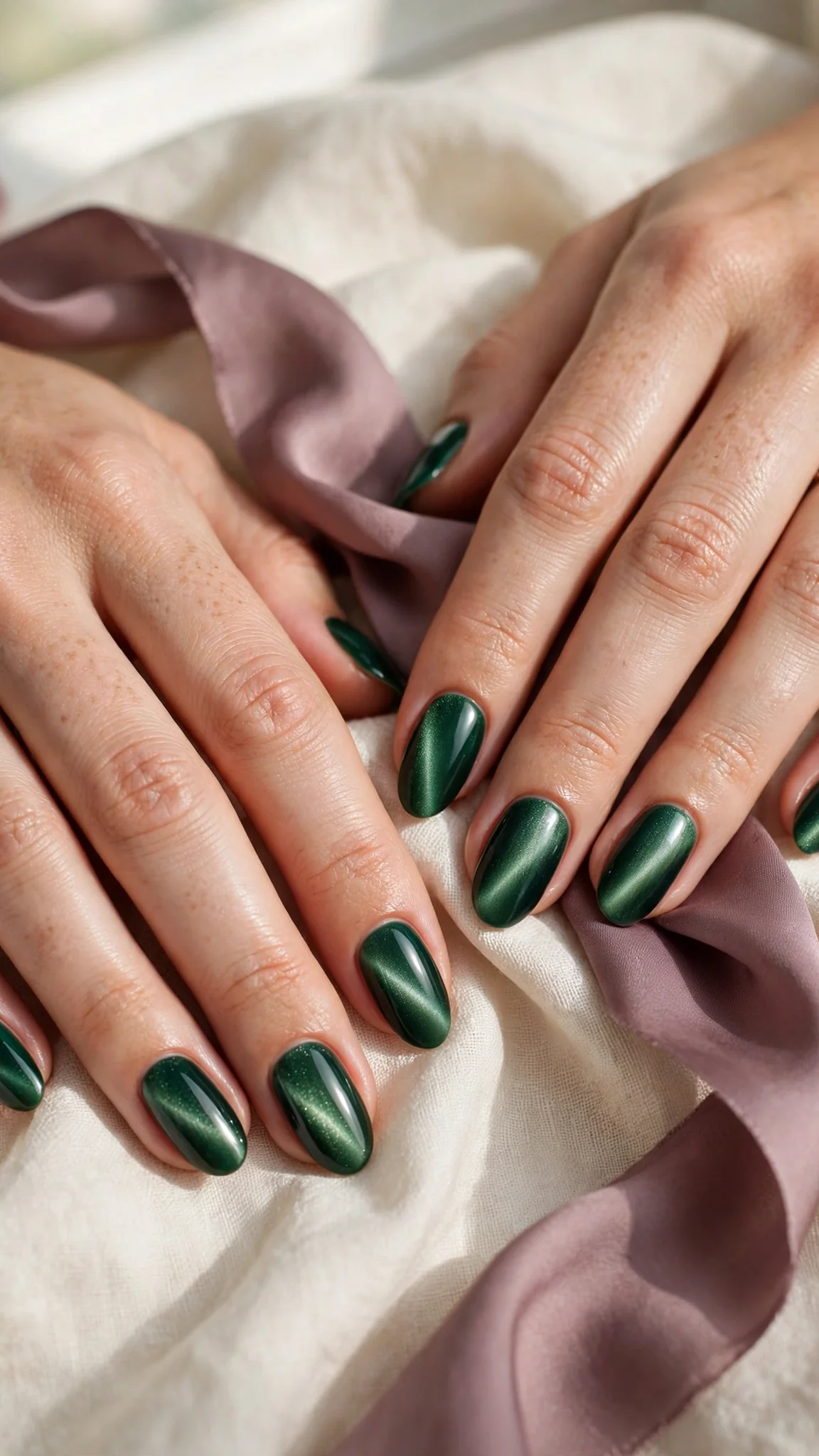
Cat eye gel suspends magnetic particles in the polish; a magnet held over the wet coat pulls them into a glowing band that shifts as your hands move. Emerald is the shade the effect was made for — jewel depth with a velvet stripe of light. Magnetic lines converted on their own schedule in many ranges, so check the label on a magnetic TPO free gel polish specifically. Tip: hold the magnet still for 10 to 15 seconds per nail, then cure immediately before the particles drift.
12. Pearl Chrome Glaze
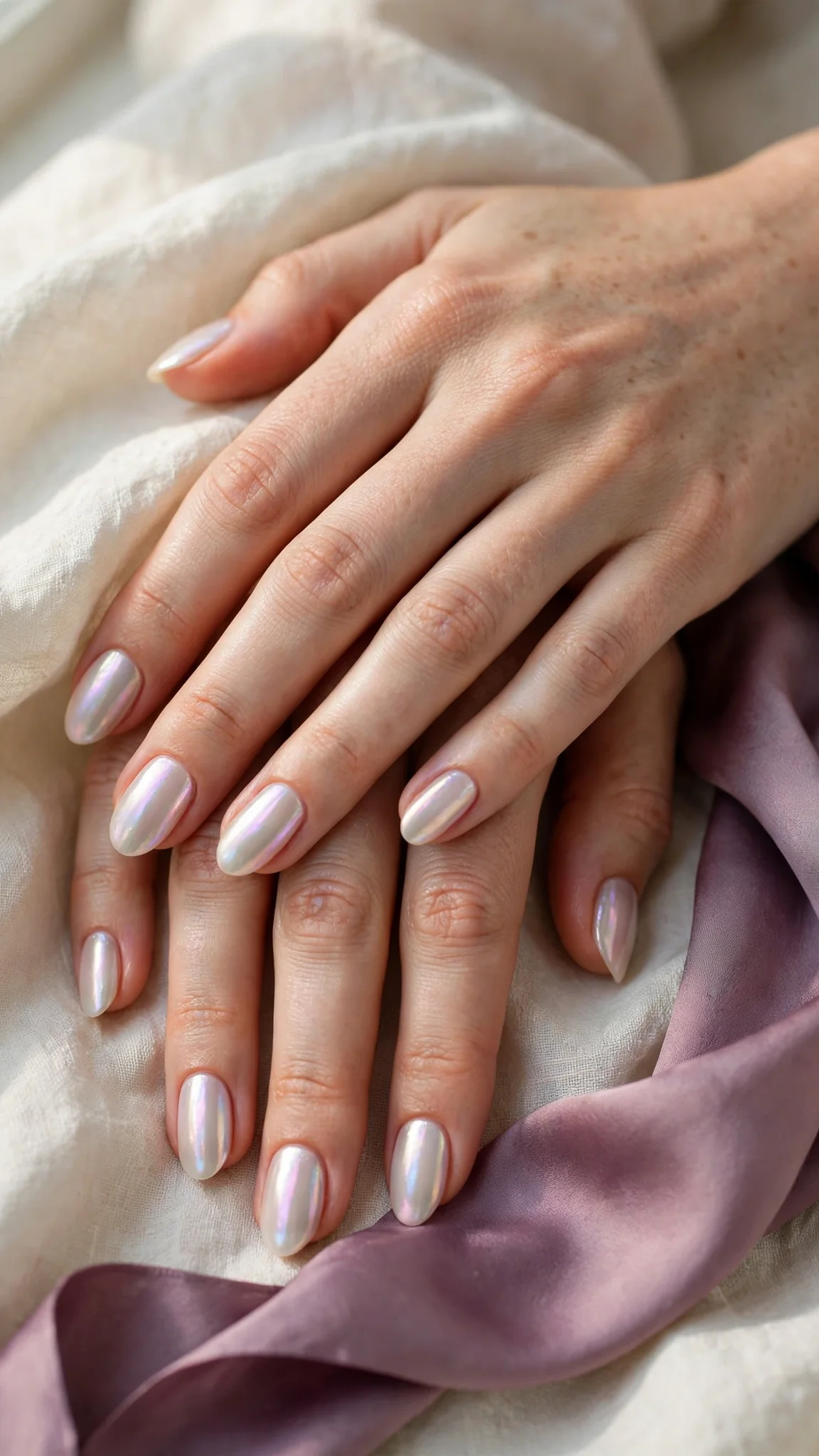
The glazed look is a fine pearl chrome powder rubbed over a cured milky or sheer base, then sealed with top coat — which means the gel underneath can be any pale TPO free gel polish you already own. The sheen shifts between white, pink and champagne depending on the light. On medium almond nails it is soft-focus elegance, and it is the most requested wedding look in this list. Tip: apply chrome to a no-wipe top coat for the smoothest mirror effect, then seal with a second top coat layer.
13. Silver Shimmer Gloss
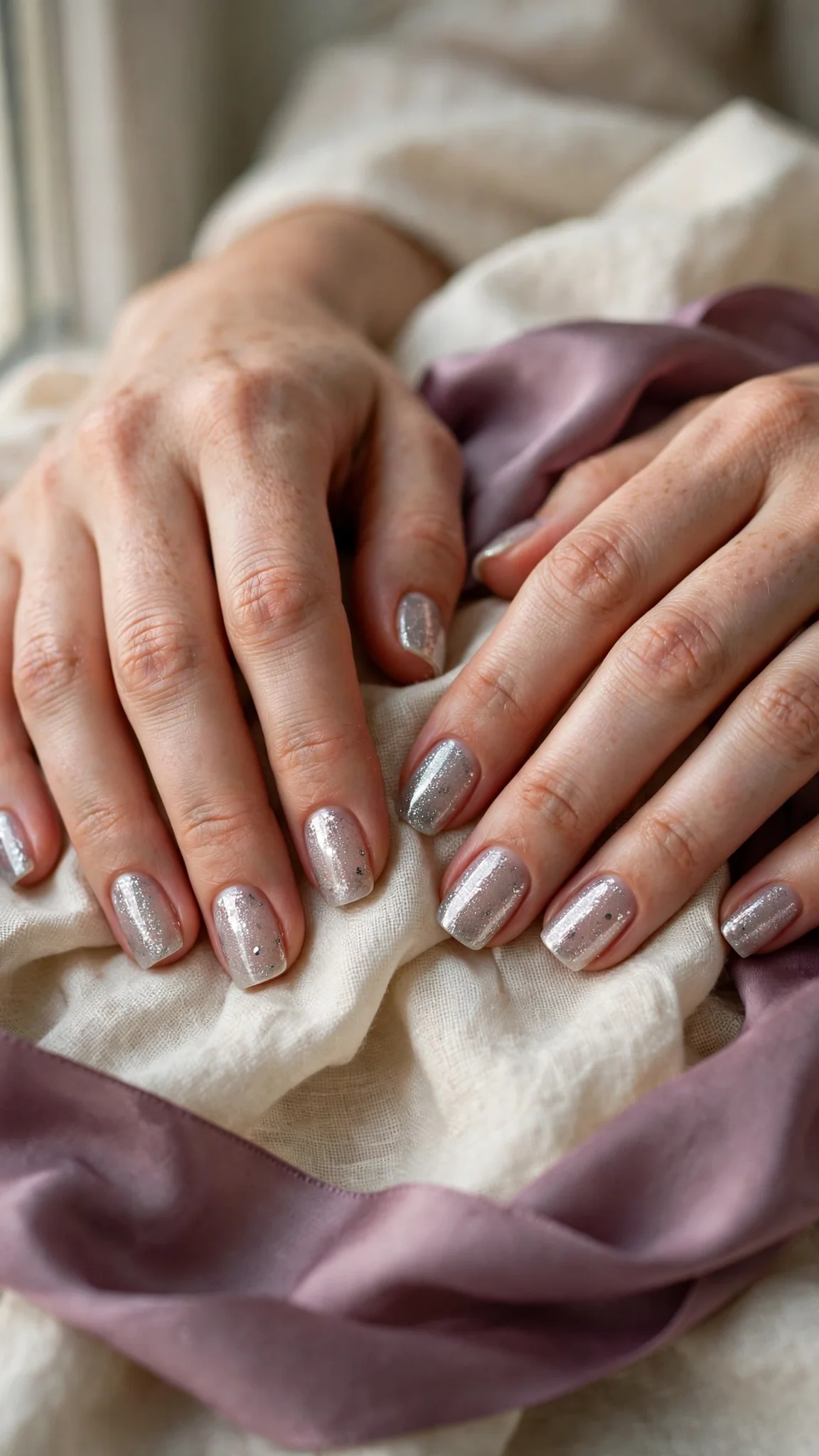
Fine silver glitter suspended in a clear TPO free gel polish base — worn alone over a sheer tint, or layered over any colour in this list to frost it. Suspended glitter is a formula job, not a pigment-curing challenge, so shimmer shades converted early and behave reliably. On medium square nails the sparkle stays chic rather than costume-like. Tip: one coat of shimmer over a dark base gives a night-sky effect that hides regrowth for days longer than a plain colour.
14. Jelly Berry Stain

The deeper sister of the glass pink: a translucent berry TPO free gel polish that looks like stained glass held to the light. Because the colour is sheer, your natural nail length shows through and the effect differs subtly from hand to hand — that is the charm of it. Two coats deepen it toward wine; one stays a fresh berry stain. Tip: keep the free edge a touch lighter by using less product there; it enhances the see-through gradient jellies are loved for.
15. Jet Black Gloss
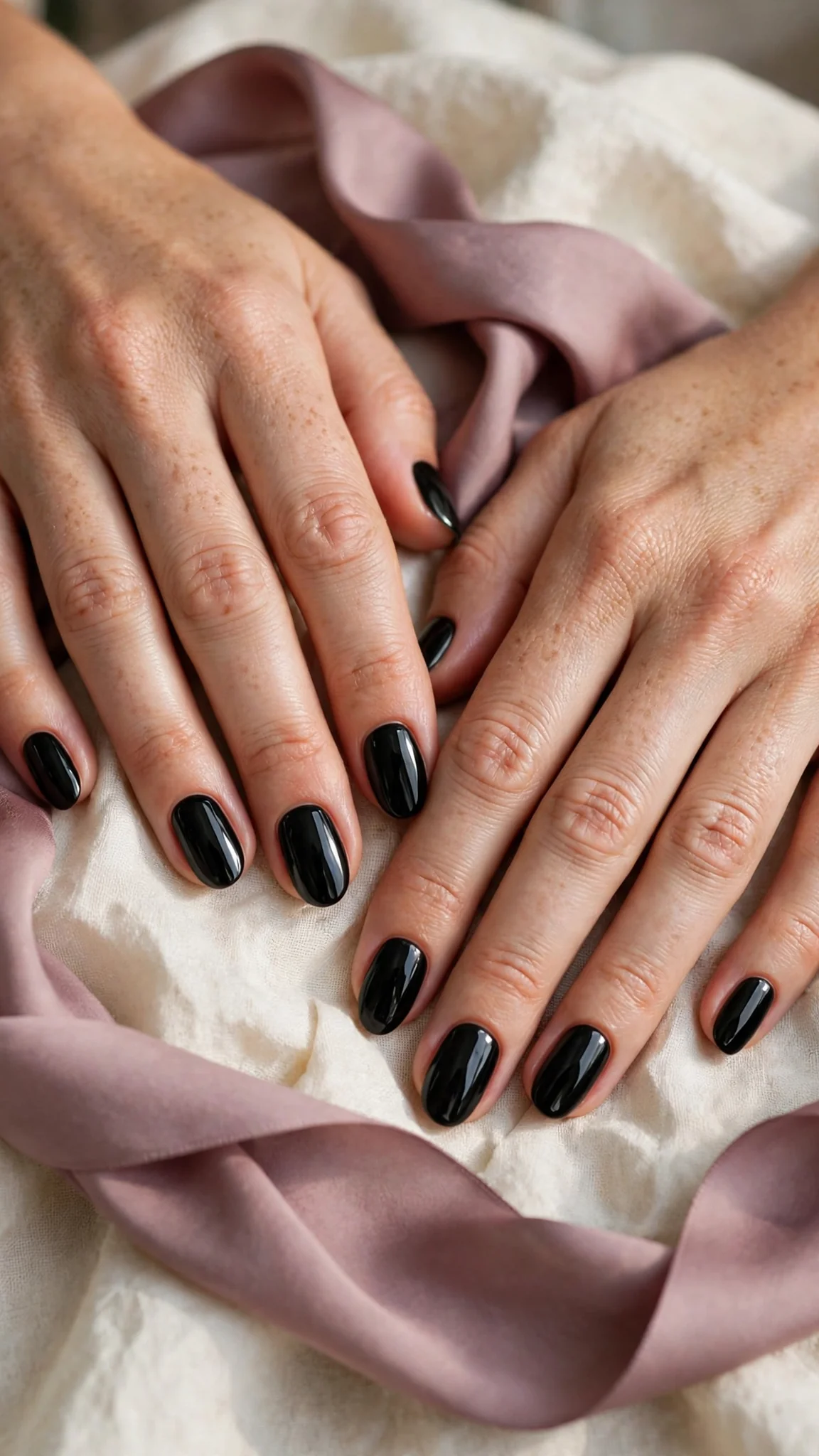
True, opaque, mirror-gloss black — the hardest-working shade in any range and the most demanding to cure, because black pigment blocks light from reaching the lower layers. This is precisely the job BAPO-heavy blends exist for, and a TPO free gel polish in black that cures rock-hard in thin coats is a brand showing its work. On medium oval nails it is sharp, minimal and endlessly wearable. Tip: apply the thinnest coats of any look here and double-check the sidewalls — black hides nothing, including an uncured edge.
Switching to TPO-Free: Cure and Wear Notes
The switch itself is undramatic: buy a current TPO free gel polish, check the label once, and use it exactly as its brand directs. The one habit worth forming is respecting the printed cure time for the first few sets with any new TPO free gel polish. A different photoinitiator blend can cure a little faster or slower than the one you are used to, and the brand’s stated time — for your lamp type, LED or UV — already accounts for that. If you are setting up your routine from scratch, our gel manicure guide covers lamp types and application basics in one place.
Wear expectations do not change with the ingredient swap. How long a set lasts is decided overwhelmingly by preparation — clean, dehydrated nail plates, thin coats, capped free edges and a complete cure — and only after that by the polish itself. A properly applied TPO-free set should give the same one-to-two-plus weeks that home users expect from gel. If a new formula lifts early, suspect under-curing or a rushed prep before blaming the polish: in practice, most ‘the new formula is worse’ reports trace back to a coat that never fully hardened.
Two smaller notes. First, systems behave best kept together: a base, colour and top coat from the same converted range are tested as a set, and mixing very old and very new formulas can muddy cure behaviour. Second, old bottles: what you already own is yours to use at home, but do not stock up on discounted pre-ban stock if you are in the EU or GB — those sales are exactly what the deadlines end, and building a stash of a discontinued formula only delays the switch you have already decided to make.
Final Thoughts
TPO-free is not a marketing season; in Europe it is simply what gel polish is now, and ranges elsewhere are converting because shoppers ask. The whole adjustment on your side is one new habit — reading the INCI list before you buy — plus respecting a printed cure time. Do those two things and a TPO free gel polish gives you everything the old formulas did, in every finish in this guide. And if this whole episode has you curious about stepping away from gel systems entirely, dip powder nail designs are the lamp-free alternative our readers switch to most — a different texture and commitment, but the same two-week wear.
Frequently Asked Questions
What does ‘TPO-free’ actually mean on a gel polish?
It means the formula contains no trimethylbenzoyl diphenylphosphine oxide and cures with a different photoinitiator instead, usually TPO-L, BAPO or a blend of the two. It is a claim about one ingredient, not a promise that the polish is natural or chemical-free; every gel polish is chemistry, and this one simply uses the post-ban recipe. You can confirm any claim yourself in seconds: the full TPO name should not appear anywhere in the INCI ingredient list.
Are gel manicures banned in Europe now?
No. Only the ingredient TPO is prohibited in cosmetic products in the EU, where the ban has applied since 1 September 2025, and it is being phased out in Great Britain, where no new TPO products could be placed on the market after 15 August 2026 and remaining stock must be off shelves by 14 February 2027. Gel manicures themselves are completely unaffected; salons across Europe simply use reformulated TPO free gel polishes now.
Can I still use the gel polish I already own?
It depends where you are, because the rules govern what can be sold and supplied rather than what sits in a drawer. In the EU, salons had to stop using TPO products when the ban applied; in Great Britain, according to the CTPA, professionals may finish stock they already hold but cannot buy more after the February 2027 off-shelf date. In the United States, TPO is not banned at all. If you would rather switch regardless, check the label on your current bottle and replace it with a TPO free gel polish.
Do TPO-free gel polishes last as long as regular gel?
Yes, when they are applied and cured properly. Wear time is decided mostly by preparation: a clean, dehydrated nail plate, thin coats, capped free edges and a full cure for the brand’s stated time. The photoinitiator starts the reaction, but it is the prep that keeps the set on. Most early lifting reported with a new TPO free gel polish traces back to under-curing under an unfamiliar lamp, not to the formula itself.
Is TPO-L the same thing as TPO?
No. Despite the similar name, TPO-L is a different ingredient – ethyl trimethylbenzoyl phenylphosphinate – and it is not covered by the ban. The confusion is understandable, because the names differ by very little, which is exactly why the exact INCI string matters. The banned entry is Trimethylbenzoyl Diphenylphosphine Oxide, listed on its own; anything with a different full name is a different substance.
How can I check a salon’s gel polish before an appointment?
Ask which gel range the salon uses, then look it up: brands publish ingredient lists for their products on their own websites, and salons in the EU have worked with TPO free gel polish ranges since September 2025. At the appointment itself, the bottle’s INCI list is printed on the back, and reading it takes seconds. A salon that converted early will usually say so on its website or social pages, because for many clients it is now a selling point.
Compare Before You Choose
See the Closest Alternatives
Compare nearby shapes, colors and finishes before picking a final reference.
Recommended Next
Vacation Nails 2026: 40+ Stunning Ideas for Every Trip and Destination
Read the guide →
Winter Nail Art: Colors, Snowflakes, and Finishes for the Whole Season
Read the guide →
Pingback: How to Do Gel Nails at Home for Flawless Results (2026)