Few salon decisions cause as much quiet hesitation as the oval vs almond nails question. The two shapes are cousins — both rounded, both elegant, both a world away from sharp square corners — and in photos they can look almost identical. Yet they behave differently on your hands: one asks for more length, the other forgives short nails; one makes fingers look longer, the other makes wide nail beds look narrower. Picking between them is not about which is prettier. It is about which one fits your nail beds, your fingers and your actual life.
This oval vs almond nails comparison goes through the two shapes aspect by aspect: silhouette, the length each one needs, strength and breakage, nail bed width, finger and hand types, typing and everyday practicality, upkeep and salon cost, and which polish designs each shape flatters. Twenty real examples are woven through the guide — ten oval, ten almond — so you can see the difference rather than just read about it. If you are still exploring shapes in general, our complete nail shapes guide is the wider map; this page is the head-to-head.
The short version of oval vs almond nails, before the detail: oval is the softer, stronger, more forgiving shape and the only one of the two that truly works on short nails. Almond is the more dramatic, finger-lengthening shape, but it needs medium length or more and a little more care at the tip. Everything below explains why — and by the end, the right choice for your hands should be obvious.
Oval Nails at a Glance
An oval nail is shaped like an egg. The side walls stay mostly straight and parallel, and the free edge curves in one smooth, continuous round — no point, no corners, nothing to catch. In any oval vs almond nails comparison, oval is the baseline shape: it is the roundest silhouette in the family and the closest to the natural curve of a fingertip. According to the standard description of the nail unit in Wikipedia’s nail anatomy entry, the visible plate ends at the free edge — and the oval shape simply follows that edge’s natural arc, tidied and extended.
The anatomy matters because it sets the minimum length. An oval can be filed at almost any length, even with the free edge barely clearing the fingertip, because the shape lives entirely in the tip’s curve — no length is spent tapering the sides. It also suits the widest range of nail beds: the parallel side walls keep narrow beds looking balanced, and the round tip softens wide beds instead of emphasising them. Our dedicated oval nails gallery shows the shape across colours and seasons; the four examples below show its range.
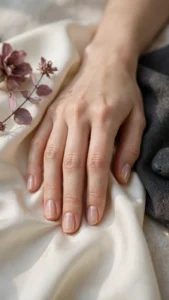
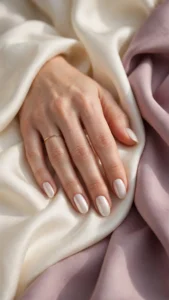
Short Oval Nails in a Milky Sheer

Oval at its shortest and simplest. The tips end just past the fingertip and every edge is rounded, so nothing snags and nothing chips at a corner — there are no corners. This is the version of the shape that suits beginners, short nail beds and anyone growing out damage.
Medium Oval Nails in Glossy Mauve
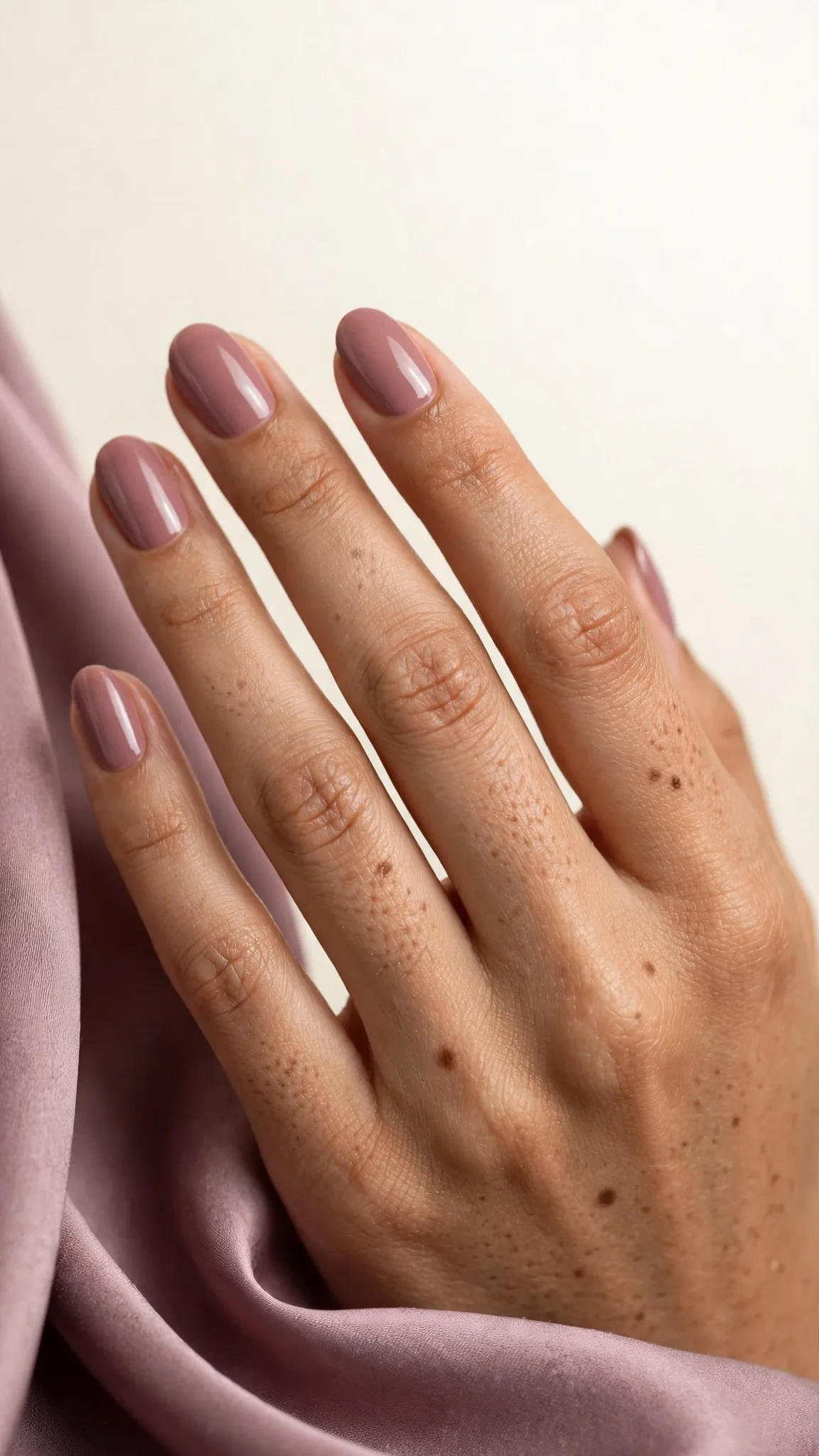
At medium length the egg silhouette becomes unmistakable: straight-ish sides, then one unbroken curve. Glossy mauve — the NailMoodBoard signature — shows how the shape flatters without any art at all. This is the length most oval wearers settle at, long enough to look polished, short enough to ignore.
Oval French Manicure

The French manicure was practically designed for this shape: the white smile line simply traces the oval’s own curve, so the result looks effortless rather than drawn on. If you wear French often, that natural fit is a genuine point in oval’s favour in the oval vs almond nails debate.
Short Oval Nails in Deep Berry

Proof that short oval does not mean plain. A deep berry gloss on short, fully rounded nails reads deliberate and expensive — the rounded edge keeps dark polish looking soft rather than severe, which is why oval is the classic pairing for vampy shades on shorter nails.
Almond Nails at a Glance
An almond nail copies the nut it is named after: the side walls taper gently inward as they leave the nail bed, and the tip finishes in a soft, rounded point. That taper is the entire difference in the oval vs almond nails comparison — almond spends width to buy elegance. The narrowing pulls the eye along the finger, which is why almond is famous for making hands look longer and slimmer, and why it dominates red-carpet and bridal manicures.
The taper also sets almond’s rules. The shape cannot start until the free edge extends past the fingertip — as a working minimum, you need roughly 3–4 mm of free edge before there is anything to taper — and it flatters narrow-to-medium nail beds best, because on very wide beds the filing needed to create the taper can weaken the side walls. Our almond shaped nails guide explores the shape in depth; the four examples below show its character.
Medium Almond Nails in Glossy Nude
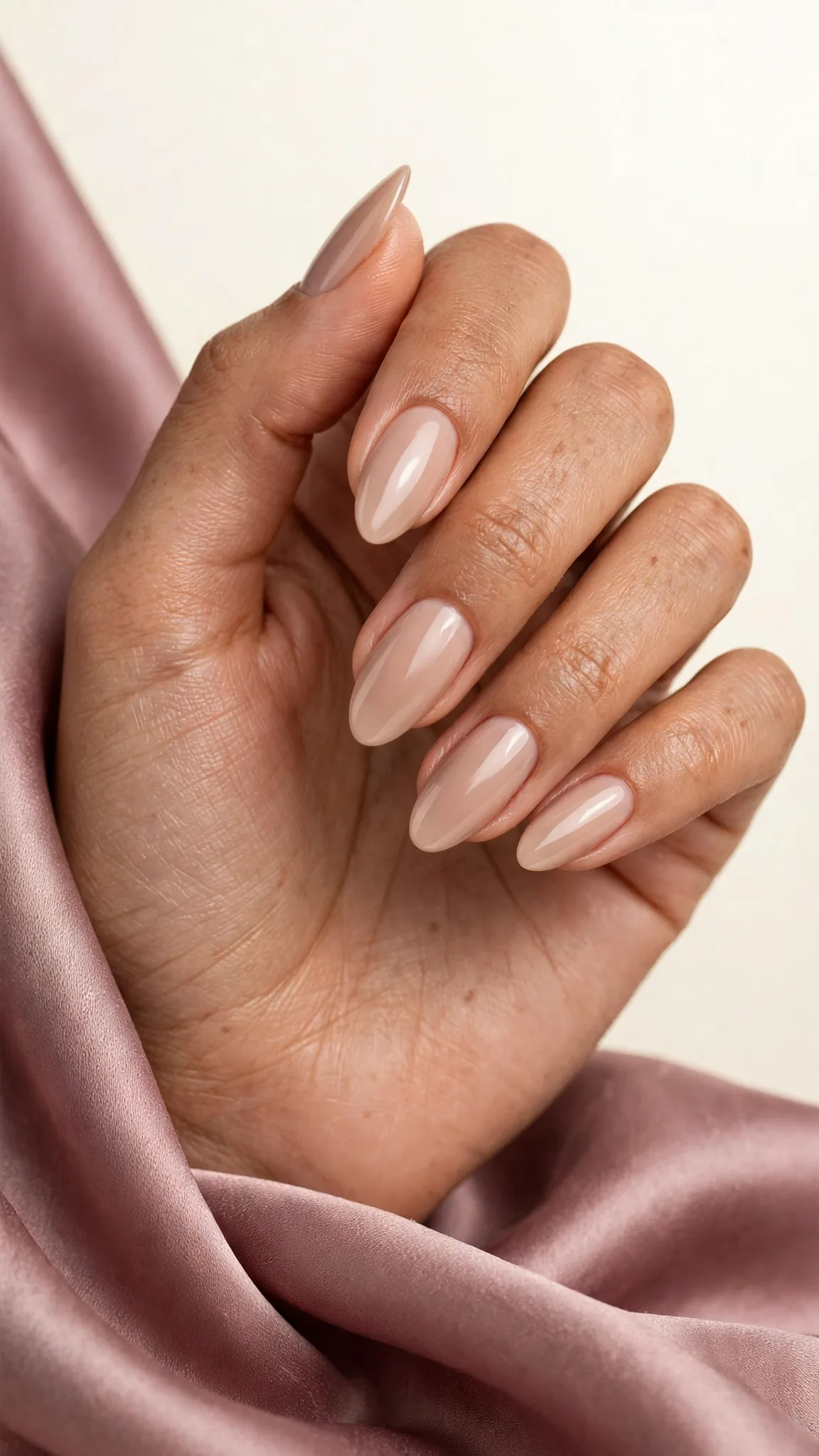
Almond at its most wearable. The sides narrow visibly from the mid-nail, and the tip closes in a soft point — compare it with the medium oval above and the difference is all in that last few millimetres. In nude gloss this is the shape’s everyday uniform.
Almond Nails in Soft Pink
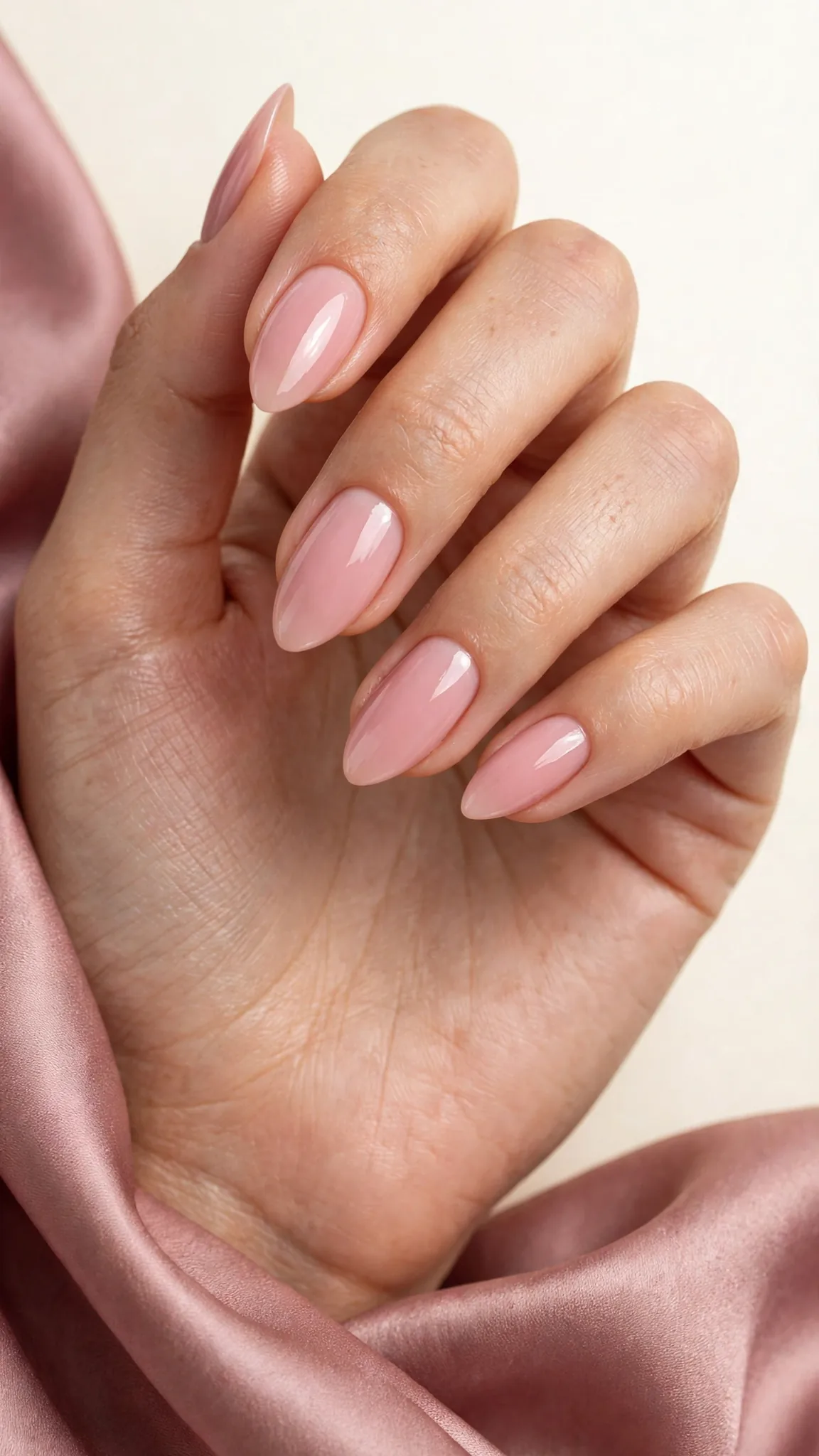
Soft pink on almond is the combination behind a thousand saved photos. The taper makes even a modest length look long, and the pastel keeps it gentle. Notice how much narrower the tip is than the base of the nail — that ratio is what defines the shape.
Almond French Manicure
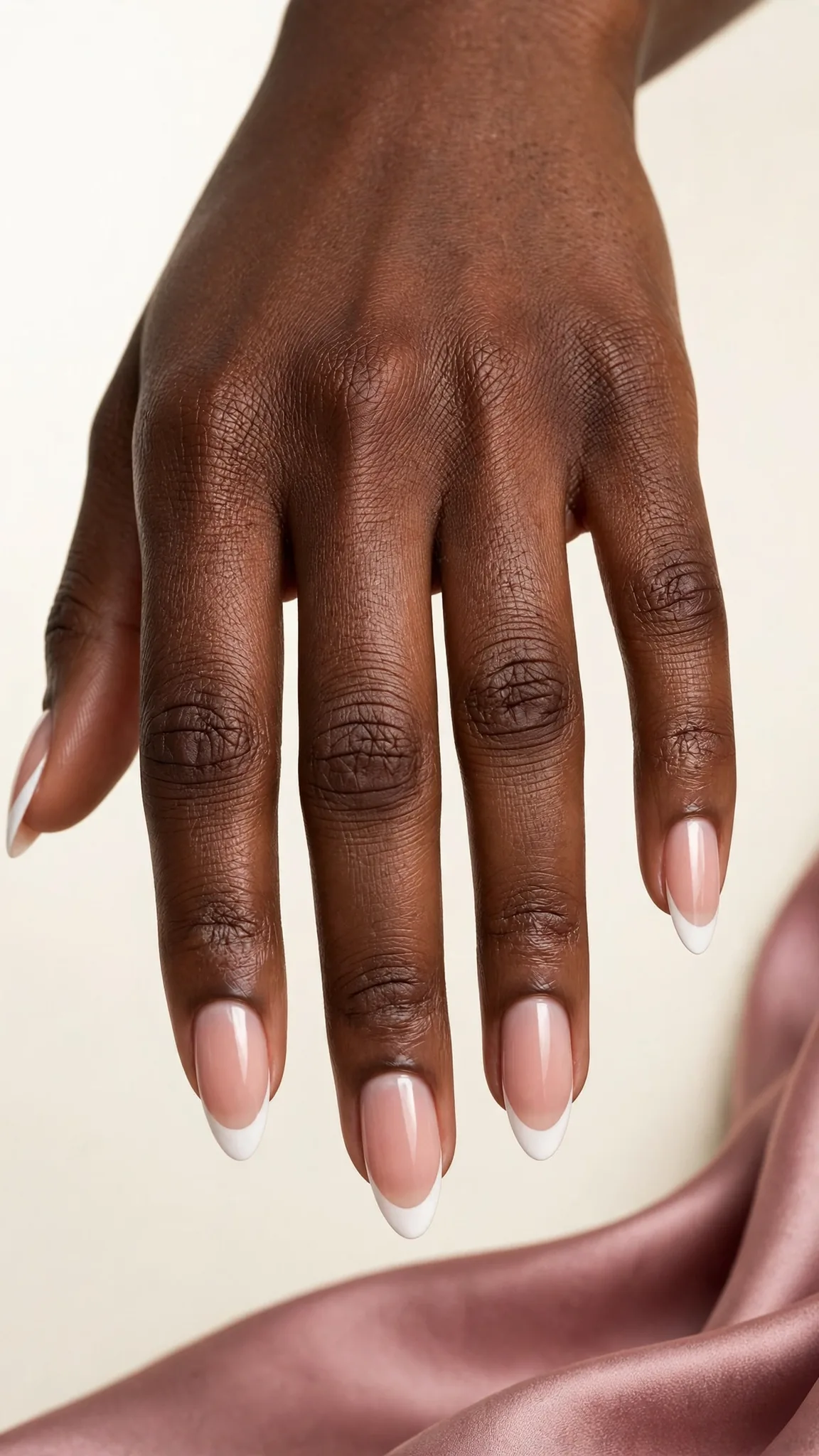
On almond, the French tip has to follow the taper, so the white edge becomes a deeper, more dramatic curve than on oval. It is a beautiful look, but it is drawn rather than natural — a small point for precision lovers when weighing oval vs almond nails for a French manicure specifically.
Long Almond Nails in Charcoal

Almond at full drama. At long lengths the taper becomes a true silhouette — this is the shape behind most statement manicures in charcoal and other near-black shades. It is also the length where almond’s one weakness, the delicate tip, needs the most respect.
Oval vs Almond Nails: Side-by-Side Comparison
Here is the whole oval vs almond nails comparison in one table, before we take it aspect by aspect. Keep your own hands in mind as you read — the best column for you depends on your nail beds and your routine, not on the photos.
| Aspect | Oval | Almond |
|---|---|---|
| Silhouette | Egg-shaped; one smooth rounded curve, no point | Tapered sides closing in a soft point |
| Minimum length | Any — works even barely past the fingertip | Medium; needs about 3–4 mm of free edge |
| Strength | Stronger — no weak point, stress spreads evenly | Tip is the weak spot; benefits from gel or overlay |
| Nail beds | Suits narrow, medium and wide beds | Best on narrow to medium beds |
| Finger effect | Natural, balanced proportions | Visually lengthens and slims fingers |
| Typing & daily tasks | Excellent at short lengths | Good at medium length with an adjustment period |
| Upkeep | Lowest — easy DIY shape to maintain | Moderate — taper needs checking each fill |
| Best designs | French, dark gloss, minimalist art | Cat-eye, chrome, gradients, bridal |
Silhouette and Tip Shape
Everything in oval vs almond nails starts here. Look at the last few millimetres of the nail. On an oval, the sides run parallel and the edge is one continuous arc — lay a coin against the tip and it would match. On an almond, the sides lean inward from about halfway along the free edge and meet in a rounded point. The two red examples below are the clearest way to see it: same colour, same gloss, entirely different outline.

The oval close-up: the tip is a single smooth curve, as wide at the edge as the nail itself. Nothing narrows, nothing points.
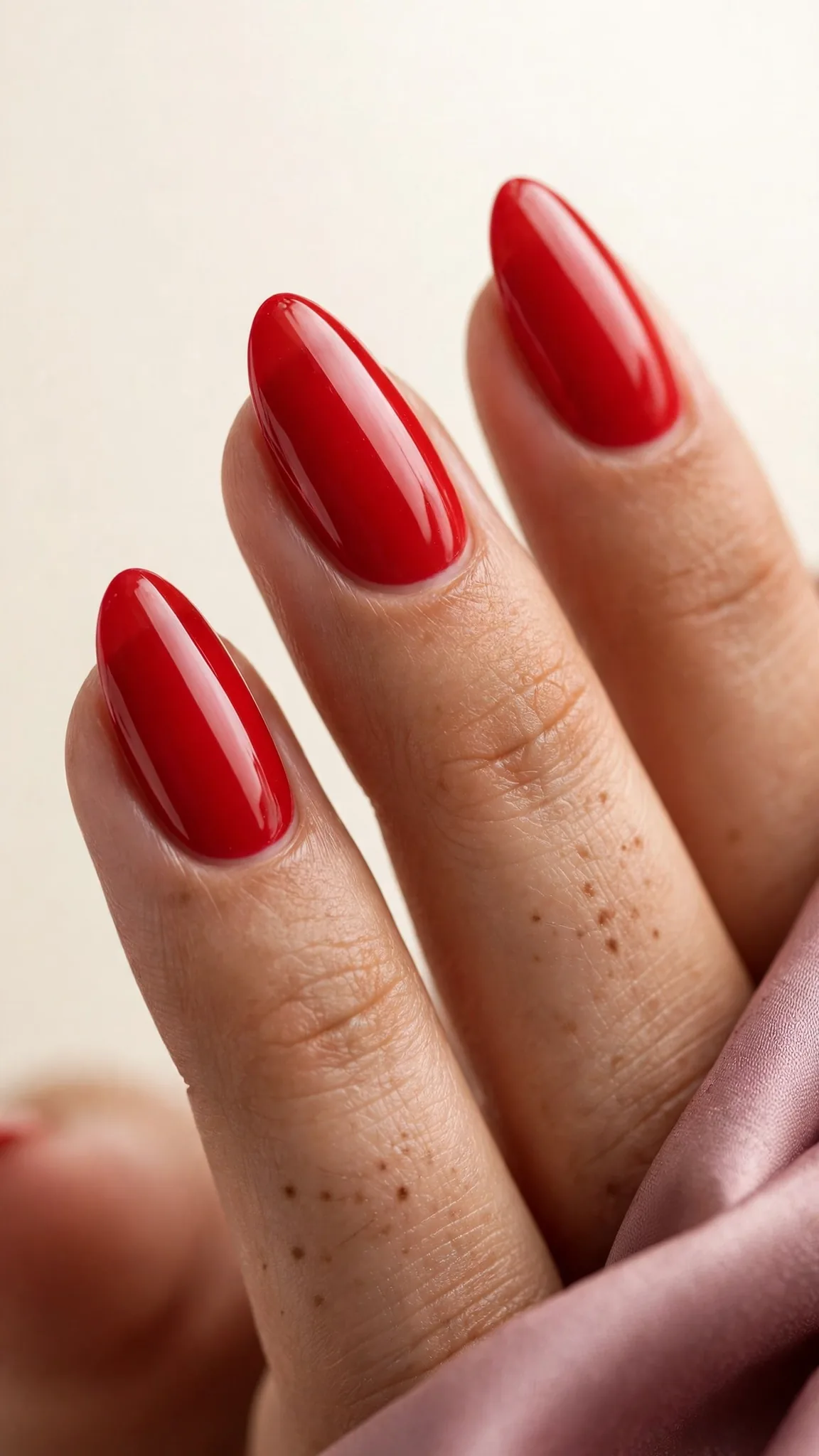
The almond close-up: the sides visibly converge and the tip finishes in a soft point. A useful salon test — if your tech files a shape and you cannot tell which of these two photos it matches, you are probably wearing the in-between shape sometimes called ovalmond (more on that below).
Length: How Much Nail Each Shape Needs
This is the most practical difference in the whole oval vs almond nails comparison. Oval is filed into the tip alone, so it works at every length — short, medium and long — and it is the only one of the two that looks intentional on nails that end right at the fingertip. Almond spends its length on the taper: below a medium length there is simply not enough free edge to narrow, and a too-short almond collapses into a roundish oval anyway. If your nails are short now, oval is your shape today and almond is your shape after a few weeks of growth.
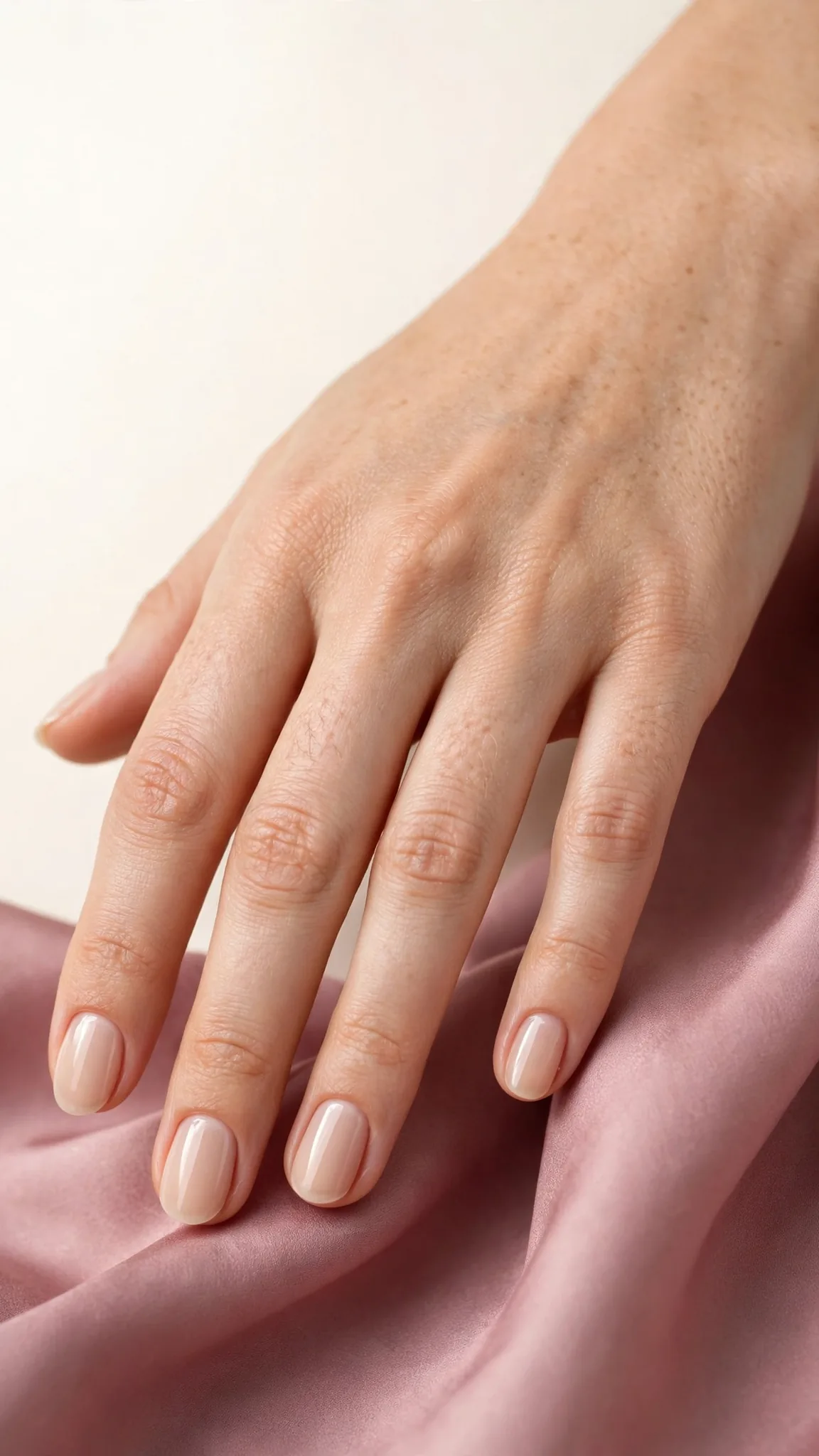
Oval’s home ground: a free edge of a millimetre or two is plenty. The shape looks finished, not unfinished.

Almond’s home ground: length is what pays for the taper, and at long lengths the shape is at its most elegant. The gap between these two photos is the real answer to most oval vs almond nails questions — how much nail do you actually have?
Strength and Breakage
Oval is the stronger shape, and it is simple physics: with no corners and no point, knocks and pressure spread across a wide rounded edge instead of concentrating on one spot. Almond concentrates stress exactly where the nail is narrowest — the tip — so almond nails are more prone to tip cracks and side splits, especially on natural nails worn long. In the oval vs almond nails strength contest there is a clear winner, with one equaliser: a gel polish, builder gel or acrylic overlay reinforces the almond tip so effectively that most long-term almond wearers simply build the reinforcement in.
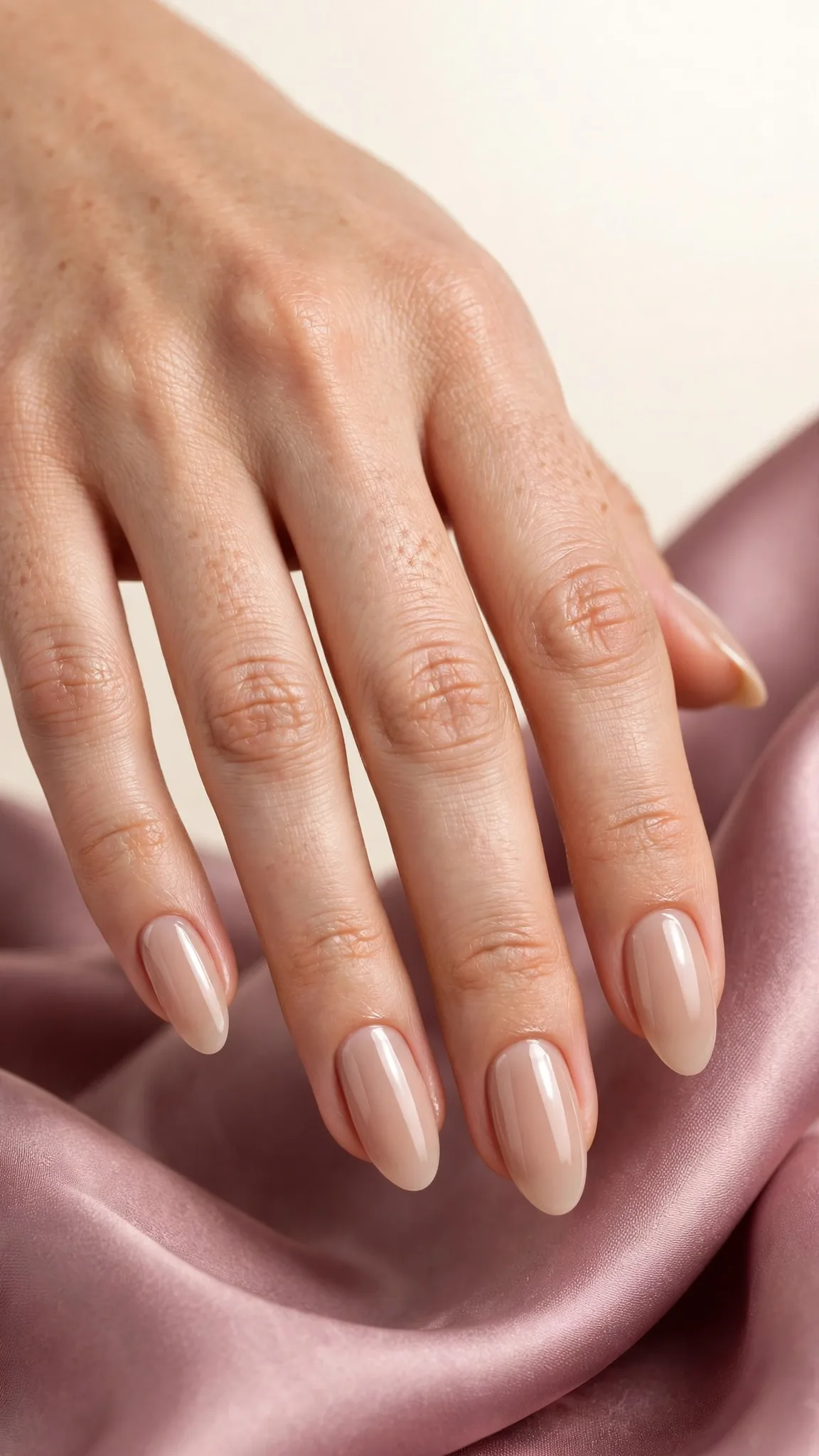
Almond done right at medium length: notice the gentle apex — the highest point of the overlay sits over the stress area, quietly doing the strengthening work while the taper does the styling.
Nail Bed Width: Narrow vs Wide Beds
Your nail beds vote in the oval vs almond nails decision whether you consult them or not. Oval is bed-neutral: parallel sides and a round tip flatter narrow, medium and wide beds alike, which is why it is the default recommendation for wide nail beds — the full-width rounded edge balances the bed instead of fighting it. Almond needs material to taper; on a wide bed, creating that narrow tip means filing deep into the side walls, which can weaken the nail and look pinched. On narrow and medium beds, by contrast, almond’s taper reads as pure elegance.
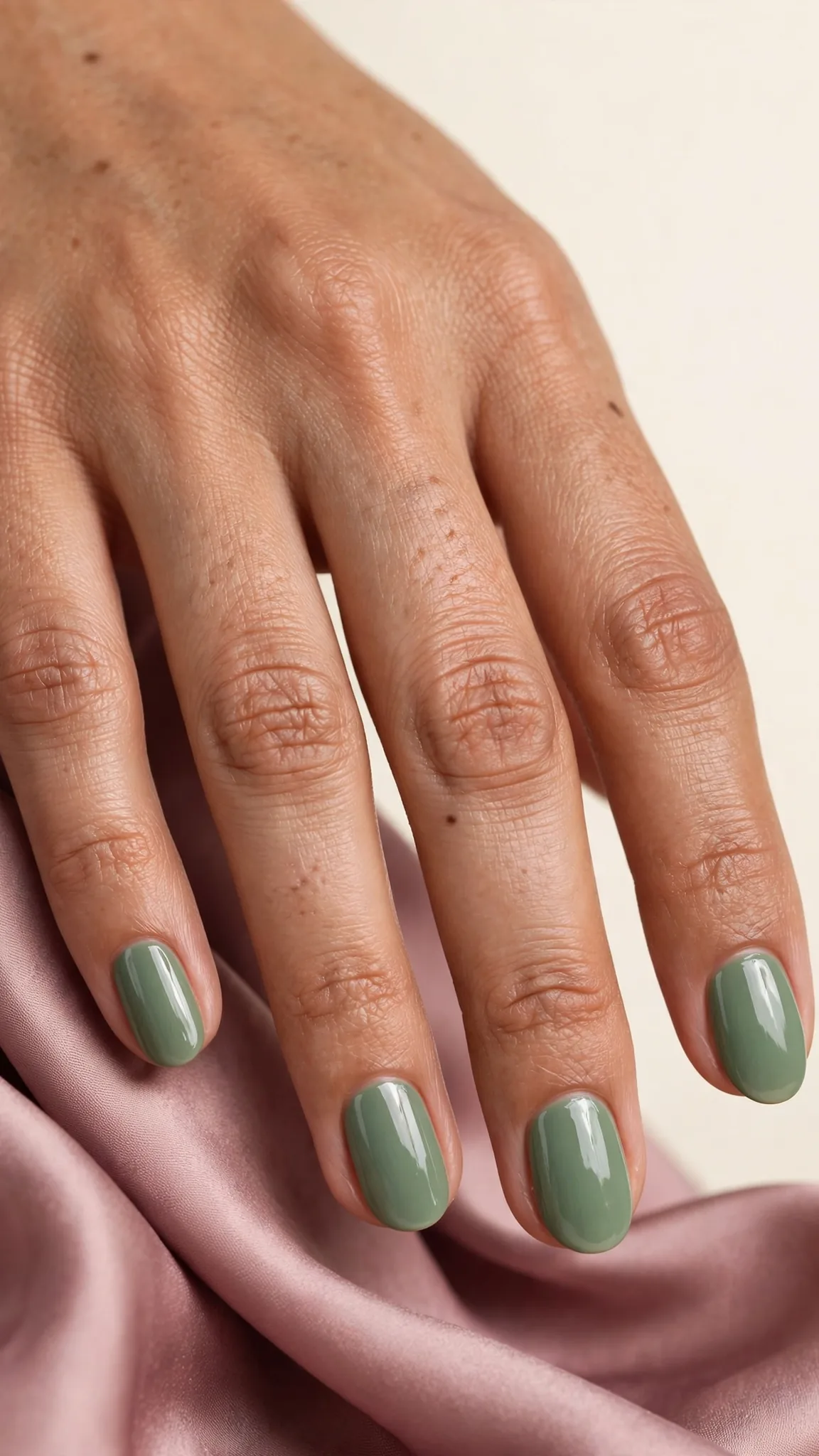
Wide beds, oval shape: the rounded, full-width tip keeps the proportions honest and the sage gloss looks calm and modern. Filing these beds into an almond point would have meant removing exactly the width that makes them look balanced.
Finger and Hand Types
Where almond wins its fame is here. The taper draws the eye outward and visually adds length, so for short fingers it is the most flattering choice in the oval vs almond nails comparison — fingers genuinely look longer and slimmer. Long, slim fingers suit both shapes: oval keeps them looking natural and balanced, while almond doubles down on elegance and can tip into dramatic. Wide hands pair best with oval’s softness at a medium length, and very long fingers with long almond nails should watch total proportion — elegance has a ceiling. If short fingers are your main concern, our guide to the best nail shapes for short fingers ranks all the contenders, almond included.

The almond effect in one photo: short fingers, and yet the hand reads long and slender, because the tapered tips extend the line of each finger past where it actually ends.
Everyday Practicality: Typing, Screens and Daily Tasks
A manicure has to survive your Tuesday, not just photograph well on Saturday. Short oval is the most practical manicure in this entire oval vs almond nails comparison: the low, rounded edge types with the finger pad, opens cans and jars without a second thought, and never stabs a contact lens. Almond at medium length asks for a short adjustment period — you type slightly flatter, pick up coins with a fingertip slide, and treat the tips as tools of limited strength. Most wearers adapt within a week. Long almond, like any long shape, is a lifestyle commitment rather than a practical choice.

The keyboard test, passed daily by short oval wearers everywhere: full fingertip contact, no clicking tips, no typos caused by the manicure. If your job is keyboard-first, this photo is a strong argument.
Maintenance and Salon Cost
Neither shape changes your salon bill by itself — you pay for the service (gel, builder, acrylic, art), not the outline — but they differ in upkeep effort. Oval is the easiest shape in the world to maintain at home: a few file strokes following the existing curve restore it, and small filing mistakes are invisible. Almond’s taper is geometry, and geometry drifts: each infill, the tech re-establishes the taper and checks that both sides converge evenly, which takes a little longer and is harder to DIY convincingly. In oval vs almond nails terms, budget almond slightly more salon dependence and oval slightly more freedom between appointments.
Polish and Design Suitability
Some finishes have a favourite shape. The French manicure’s smile line traces oval’s curve as if drawn for it, dark glossy shades look soft and classic on oval’s round edge, and minimalist art — dots, fine florals, tiny hearts — sits happily on the wide, even canvas. Almond is the stage for effects that need a runway: cat-eye and velvet polishes, whose light stripe follows the taper beautifully; chrome and glazed finishes; ombré gradients that deepen toward the point; and formal bridal sets. When readers ask us about oval vs almond nails for a specific design, the honest shortcut is: French and minimal art lean oval, magnetic and gradient effects lean almond.

Oval’s design home ground: a cream base and delicate florals spread across the full, even width of the nail — art that needs a canvas, not a point.

Almond’s design home ground: cat-eye polish was made for this silhouette — the magnetic light band runs the length of the taper and gathers at the point like a spotlight.
Which One Suits You? The Honest Verdicts
Advice columns love to end oval vs almond nails comparisons with “it depends.” It does — but on specific things, and you deserve the specific answers. Find your hands below.
If Your Nails Are Short: Choose Oval
There is no real contest here. Oval is the only one of the two shapes that exists at short length. File the round, enjoy the strength and the low upkeep, and let almond be the goal shape your nails grow toward — the switching section below explains exactly how that transition works.
If Your Fingers Are Short: Choose Almond (at Medium Length)
Almond’s taper is the closest thing manicures have to an optical illusion, and short fingers benefit from it most. Grow or build to a medium length, keep the taper soft rather than sharp, and your hands will read noticeably longer. Oval remains the comfortable second choice if medium length is not realistic yet.
If Your Nail Beds or Hands Are Wide: Choose Oval
Oval’s full-width rounded edge balances wide beds instead of pinching them, and it asks nothing of your side walls. Forcing wide beds into an almond taper removes strength exactly where you need it. A medium oval in a glossy shade is the flattering, honest fit.
If Your Fingers Are Long and Slim: Either — Your Call
You have the hands both shapes were designed around. Choose oval for a natural, understated look and almond when you want elegance with a little theatre. This is the one case where the oval vs almond nails decision really is pure taste — consider yourself lucky, and maybe match the shape to the polish: French to oval, cat-eye to almond.
If You Type All Day or Want Zero Fuss: Choose Short Oval
Practicality is a legitimate aesthetic. Short oval types cleanly, breaks rarely, files back into shape in two minutes at home and never needs you to think about your nails during a workday — the truly low-maintenance winner of the oval vs almond nails comparison.
If It Is a Wedding or a Big Occasion: Choose Almond
For the days when the manicure is part of the outfit, almond’s elongated line is the formal choice — it is why bridal sets so often wear this shape. Ivory, sheer shimmer and soft French on a medium almond is the classic occasion manicure, and it photographs beautifully in ring shots.

The occasion case for almond, in ivory and shimmer: elongated, formal and made for close-up photographs.
Can You Switch Between Them?
Yes — and in one direction it is genuinely easy. Going from almond to oval takes a single appointment or a careful home filing session: you file the point away and round the edge, sacrificing a little length to buy the stronger shape. The reverse direction of oval vs almond nails is a growing project, not a filing one: the taper needs free edge you may not have yet, so most people grow their ovals for three to six weeks — or ask for a builder gel or acrylic extension to create the length instantly — and then have the taper filed in. There is also a legitimate middle ground, the soft tapered shape many techs call ovalmond, which narrows the sides slightly without committing to a point; it is what many “almond” manicures on shorter nails actually are.
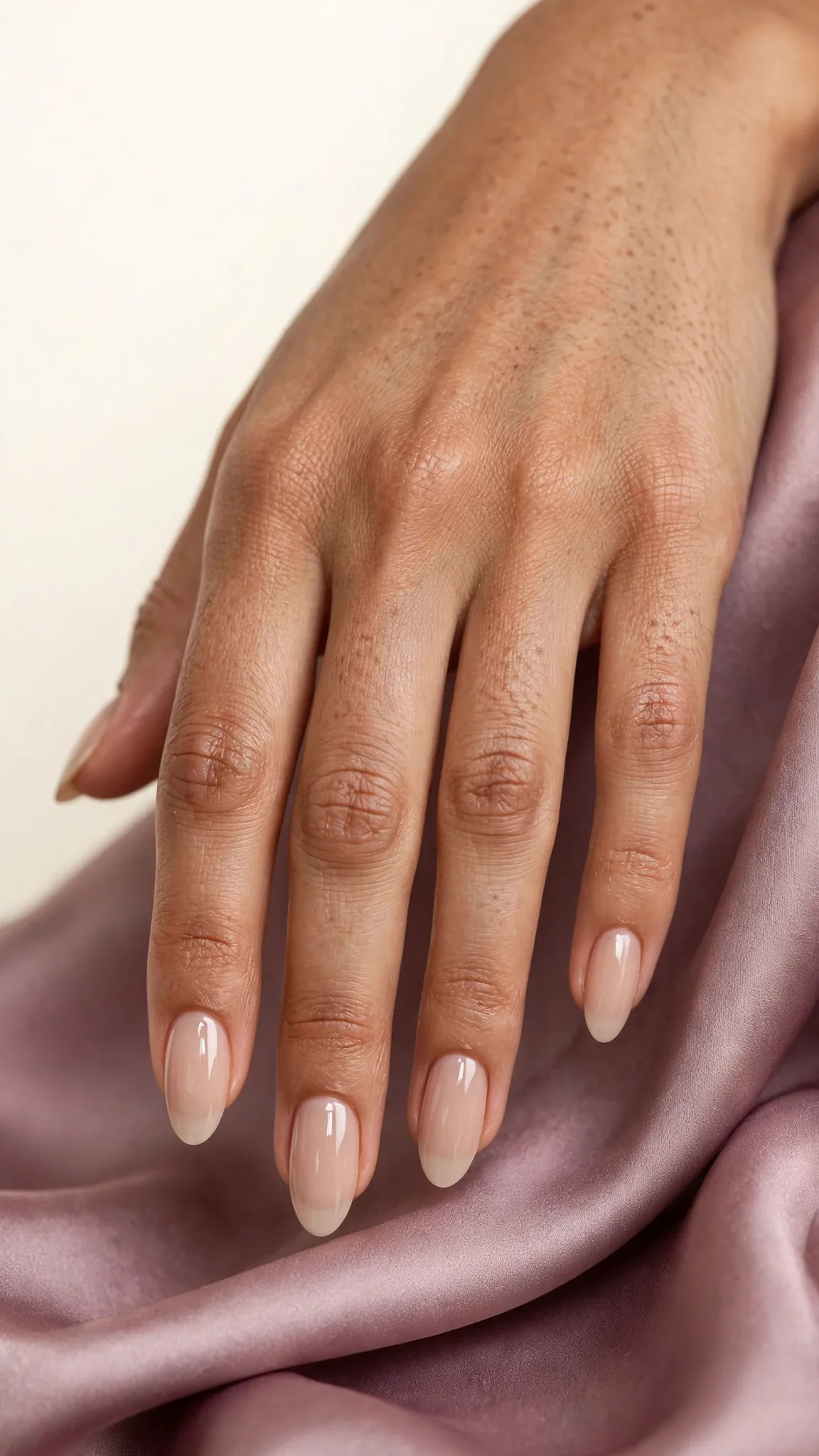
The halfway house: sides that lean inward, a tip that stays rounded. If you are mid-switch or simply undecided, this in-between shape is a destination in its own right — and a reminder that oval vs almond nails is a spectrum, not a wall.
Keeping Oval and Almond Nails Healthy
Whichever side of oval vs almond nails you land on, the care rules are shared — and they matter more than the shape. File in one direction with a fine-grit file rather than sawing back and forth, which frays the free edge; almond wearers should check the taper’s symmetry weekly, because a lopsided point concentrates stress on one side wall. According to the American Academy of Dermatology’s nail care guidance, keeping nails clean and dry, moisturising the nail and cuticle daily, and not using your nails as tools are the foundations of nail health — advice that protects a delicate almond tip and an oval edge equally. Add a cuticle oil habit and gloves for washing up, and either shape will outlast its polish.
Final Thoughts
The oval vs almond nails decision is really three small questions in a trench coat. How much length do you have? Oval works with any answer; almond needs medium or more. What do your hands look like? Wide beds vote oval, short fingers vote almond, long slim fingers abstain happily. And what does your day demand? Keyboards and zero fuss vote oval; occasions and elegance vote almond. Answer those honestly and the shape chooses itself — then go and browse the oval nails and almond shaped nails galleries with your verdict in hand, and save the photos that make your own hands look like the best version of themselves.
Frequently Asked Questions
What is the difference between oval and almond nails?
The difference is the tip. Oval nails keep their side walls parallel and finish in one smooth, fully rounded curve — an egg shape with no point. Almond nails taper: the sides narrow as they leave the nail bed and meet in a soft, rounded point, like the nut they are named after. That one difference drives everything else in oval vs almond nails — the length each needs, how strong each is, and which hands each flatters.
Which is stronger, oval or almond nails?
Oval is stronger. Its wide, rounded edge spreads the force of knocks and pressure evenly, and it has no corners or point to crack. Almond concentrates stress at its narrowest point — the tip — so it is more prone to tip cracks and side splits, especially worn long on natural nails. A gel, builder gel or acrylic overlay largely closes the gap by reinforcing the almond tip. On strength alone, oval vs almond nails is not a close contest.
Can you have almond nails if your nails are short?
Not a true almond — the shape needs roughly 3–4 mm of free edge past the fingertip before there is enough nail to taper, so it really begins at medium length. On short nails, choose oval, or wear the in-between ovalmond shape with gently leaning sides. Alternatively, a salon can build the missing length with builder gel or extensions and file the almond shape in straight away. In short, where oval vs almond nails is concerned, length decides: short nails belong to oval.
Which shape makes fingers look longer?
Almond. Its tapered sides and soft point extend the visual line of the finger, making hands look longer and slimmer — the reason it is the most recommended shape for short fingers. Oval keeps proportions natural and balanced instead. In the oval vs almond nails comparison, finger-lengthening is almond’s clearest win.
Are oval or almond nails better for wide nail beds?
Oval, clearly. Its parallel sides and full-width rounded tip balance a wide bed, while creating an almond taper on a wide bed means filing deep into the side walls, which weakens the nail and can look pinched. Almond suits narrow to medium beds best. If your beds are wide, a medium oval in a glossy shade is the flattering, stronger choice.
Can I change from oval to almond nails?
Yes. Almond to oval is a single filing session — the point is rounded away at the cost of a little length. Oval to almond usually needs the free edge grown out for three to six weeks so there is enough nail to taper, or a builder gel or extension appointment to create the length immediately. Many people stop halfway at the soft ovalmond shape, which is a lovely destination in itself.
Compare Before You Choose
See the Closest Alternatives
Compare nearby shapes, colors and finishes before picking a final reference.
Recommended Next